
If you are asking which espresso machine has the quickest extraction time for a fast-paced cafe, you are asking the right question with the wrong variable — in a busy cafe the machine that keeps the line moving is almost never the one with the shortest shot. Here is what actually sets your throughput ceiling at the peak hour, how to spec to your real volume, and the bottleneck most buyers miss.
“Extraction Speed” Is Not What Slows a Busy Café Down
A properly dialed espresso shot pulls in roughly 25–30 seconds, and that window is a quality target, not a bottleneck — pulling it faster means channeling and sour, under-extracted coffee. No commercial machine meaningfully beats another on the shot clock, because the clock is set by the coffee, the grind and the recipe, not the machine’s badge.
The real throughput of a café is set by three machine factors that have nothing to do with a single shot’s timer:
-
Parallelism — how many shots you can pull at once (number of groups).
-
Recovery — how fast the boiler reheats after back-to-back shots and steaming, so shot number twenty tastes like shot number one.
-
Steam power — in a milk-drink café, steaming the milk, not pulling the shot, is usually the slowest step in the drink.
Optimize those three and the queue moves. Chase “fast extraction” and you’ll overspend on the wrong spec. For a full breakdown of how groups map to volume, our 1 vs 2 vs 3 group espresso machine guide is the companion read to this one.
The Three Machine Factors That Set Your Throughput Ceiling
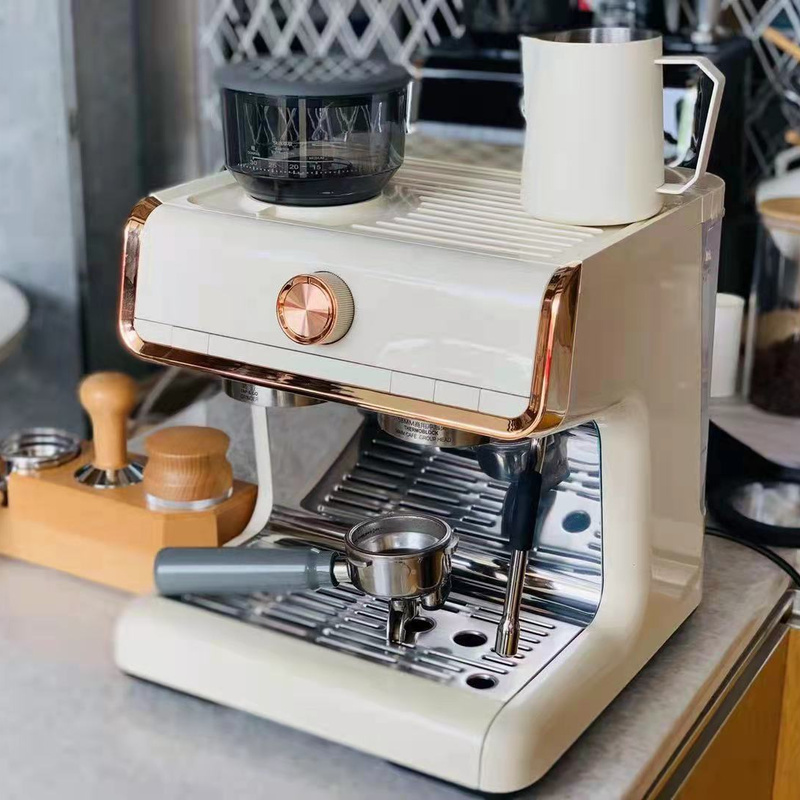
| Factor | Why it drives café speed | What to look for |
|---|---|---|
| Number of groups | Each group is one simultaneous shot; more groups = more parallel drinks at peak | 2 groups for a standard café, 3 for a high-volume bar |
| Boiler capacity & recovery | Small or slow-recovering boilers “fall behind” during a rush and drop temperature | Larger boiler volume; heat exchanger or dual-boiler with strong recovery |
| Steam power (milk cafés) | Steaming a jug is often the longest step in a latte or cappuccino | High-pressure steam boiler, two steam wands so two drinks steam at once |
Notice that “shot time” appears nowhere on this list. A machine with a big, fast-recovering boiler and strong steam will out-serve a “faster” machine with an undersized boiler every single peak hour.
Boiler Type: The Real Speed Decision
Because recovery matters more than shot time, the boiler system is where a busy café’s money should go:
-
Single boiler — brews or steams, one at a time. Fine for very low volume, a real bottleneck in a rush. Not recommended for a fast-paced café.
-
Heat exchanger (HX) — brews and steams simultaneously from one boiler. The classic high-volume café workhorse: excellent steam, strong recovery, proven reliability.
-
Dual / multi-boiler — separate brew and steam boilers hold shot temperature to within a degree even under continuous load. The specialty choice when both consistency and throughput matter.
For a busy milk-drink café, a well-built HX or dual-boiler 2-group is the sweet spot. The boiler system is also the biggest hidden price driver, which we explain in our commercial espresso machine price guide.
Match the Machine to Your Peak Volume
Spec to your busiest 60 minutes, not your daily average — a café that serves 300 cups a day may push 80 of them in the morning rush. Rough guidance:
| Peak volume | Recommended configuration | Typical setting |
|---|---|---|
| Up to ~30 cups/hour | 1-group HX, or 2-group compact | Kiosk, office, small takeaway |
| ~30–80 cups/hour | 2-group HX or dual-boiler, two steam wands | Standard busy café — the most common spec |
| 80+ cups/hour | 3-group dual-boiler, high-capacity steam | High-traffic bar, transit hub, drive-through |
These are throughput guides — final configuration depends on your drink mix (more milk drinks = more steam demand) and staffing.
The Bottleneck Most Buyers Miss: the Grinder and the Workflow
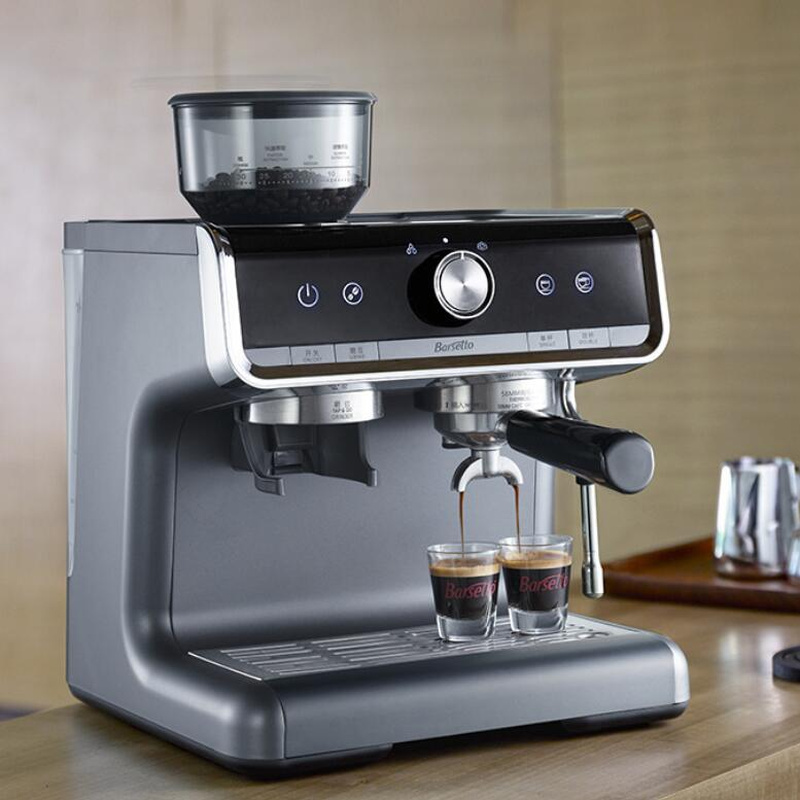
Here is the part the “quickest extraction time” question overlooks entirely: in most busy cafés, the grinder and the barista’s workflow cap throughput before the machine does. A slow or under-powered grinder makes the barista wait between doses; a poor layout adds steps to every drink. Pairing your machine with a fast, well-matched grinder is non-negotiable for a busy café — see our espresso grinder vs filter grinder burr guide and the broader commercial coffee grinder buyer’s guide to spec the right burr size and motor for your volume.
Speed at the bar is a system: machine + grinder + layout + trained staff. Buy a strong 2-group, put a proper grinder next to it, and a well-drilled barista will clear a rush that a “fast” but under-boilered machine never could.
Don’t Forget Voltage, Water and Freight
-
Voltage & power. Confirm 110V vs 220V and single vs three-phase for your country before ordering — a 3-group machine in particular has real power demands.
-
Water treatment. Scale is the number-one killer of espresso machines and it builds fastest in high-volume cafés. Budget a softener or filter from day one.
-
Sea freight & lead time. We quote these up front. If you also roast your own beans, it’s cheaper to ship the machine alongside roasting equipment on one order.
How to Get a Quote
We supply commercial espresso machines as a trusted wholesale partner — our job is to match a busy café to a machine that keeps its line moving, not to sell you the most groups you can fit on a counter. To quote you accurately in one round, tell us:
-
Your peak-hour cup volume and drink mix (how many milk drinks)
-
Whether you want 2 or 3 groups, and HX or dual-boiler
-
Quantity (single unit or wholesale lot for resale)
-
Destination country (for voltage, plug type and freight)
New to sourcing? Start with our commercial espresso machine buyer’s guide. Use the inquiry form on this page to send your requirements for a factory-direct wholesale quote, or message our team on WhatsApp: +86 184 0771 4607.
Frequently Asked Questions
What do the machines you supply for a busy bar cost?
Ex-works: the SD-103 3-group semi-automatic at USD 1,999 for a milk-heavy bar with two baristas; the YS-BAE01 and YS-BAE02 bean-to-cup at USD 459 and 609 where staff rotate; the YS-EB2016 fully automatic at USD 589 for no-barista service. Freight, duty and installation are your own lines; the price guide explains what moves the number.
Two baristas or a bigger machine — which first?
The second barista, almost always. A 2-group machine with strong steam serves 80–150 drinks an hour with two people running shots and milk in parallel; a 3-group with one person serves fewer, because the bottleneck is hands, not groups. Buy the third group when the second barista is already busy at every peak, and buy a second grinder before either.
How do I know whether my steam boiler is big enough?
Time a rush: if pressure sags after three or four jugs back to back and takes more than a few seconds to recover, the boiler or the element is undersized for your milk volume. On the spec sheet, look for boiler litres and element kilowatts together — 10–12 litres and 3 kW or more is the 2-group norm for a milk-heavy menu — and the HX vs dual boiler guide explains how to read them.
What about the water on a high-volume machine?
A busy 2-group moves 40–60 litres a week, which on hard water is a boiler full of scale within a year and a warranty claim that will not be paid. Size the filter cartridge to your daily litres, change it on volume rather than on the calendar, and keep the test log; the water treatment guide has the numbers, and we quote the set with the machine.
Can I order a sample before equipping several sites?
Yes — one machine at wholesale terms, run for a month in your busiest site, then the batch specified exactly as the sample and credited for it. Watch three things in that month: boiler recovery on a Saturday, the group gaskets after four weeks of backflushing, and how the grinder keeps up. The wholesale guide covers the order and the document pack.
Final Thoughts
An espresso machine for a busy cafe is specified from your peak hour, your milk share and your staffing — not from a shot time. Buy groups and steam for parallel work, a grinder that keeps pace, and water treatment on the same order, and the queue moves. Send us your busiest sixty minutes and your drink mix and we will match the configuration. Talk to us.
Get a Quote → WhatsApp +86 184 0771 4607Last updated: September 17, 2026
Pingback: Italian-Style Commercial Espresso Machines: What You Are Paying For | Yoshan
Pingback: Commercial Espresso Machine Price: What Moves the Number | Yoshan
Pingback: Commercial Espresso Machine Installation Requirements