
If you are pricing a commercial espresso machine, you will see 2-group machines from around five thousand dollars to nearly forty, and the difference is not always visible on the counter. Three things move the number — groups, boiler, automation — and then the channel you buy through moves it again. Here is what each does, the published ranges, the installation costs on top, and why a wholesale quote reads differently.
The Three Things That Move the Price
1. Groups. Each group is a brew head with its own valves, and on multi-boiler machines its own boiler. A 3-group costs materially more than a 2-group of the same design, and needs more power. Size by your peak hour, not by ambition — the 1 vs 2 vs 3 group guide shows the throughput.
2. Boiler type. A heat-exchange machine has one boiler; a dual or multi-boiler has two or more, each with an element and a controller. That is the biggest single step in price within a size class. The heat exchanger vs dual boiler guide explains when the step is worth it.
3. Automation. Semi-automatic is the baseline. Bean-to-cup adds a grinder and dosing; fully automatic adds a milk system and brew unit. Each step adds cost and reduces the skill you need behind the counter — see semi vs fully automatic.
Brand sits on top of all three. Two machines with the same groups, boiler and automation can differ two- or threefold by badge, and you should know which part of your quote is badge; the Italian-style guide unpacks what the badge buys.
Published Retail Ranges, 2026
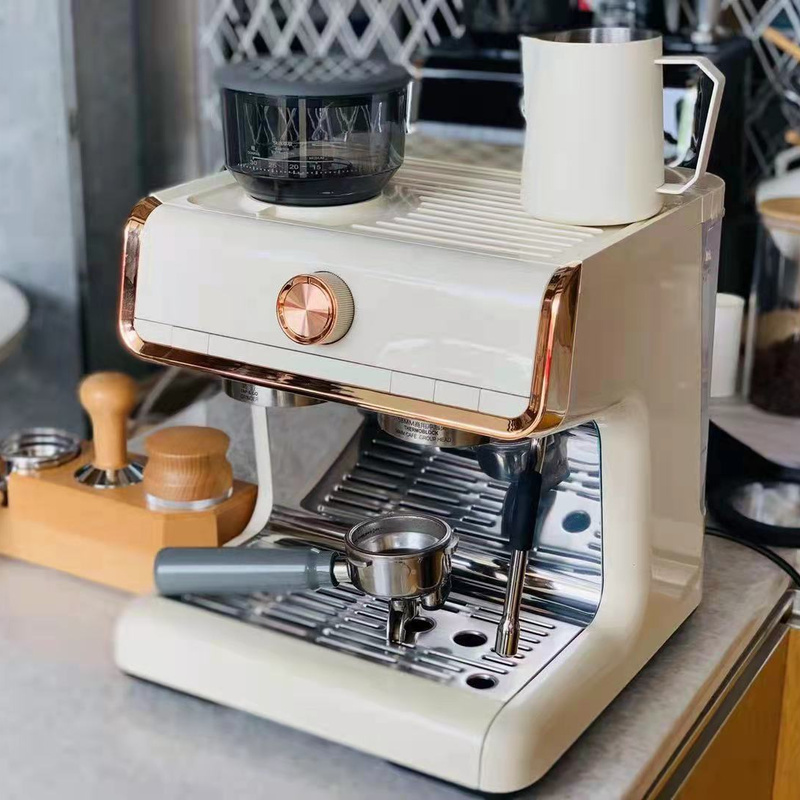
These are US and European retail figures from public sources, so you can place any quote you receive:
| Class | 2-group retail range | What you get |
|---|---|---|
| Entry commercial | ~$5,500 – $8,000 | Heat-exchange, semi-automatic, established mid-brand |
| Mid-range | ~$10,000 – $19,500 | Dual boiler or entry multi-boiler, volumetric dosing |
| High-end | ~$35,000 and up | Saturated groups, per-group boilers, flagship brands |
| Bean-to-cup / fully automatic | Wide range by capacity | Priced on cups per day and milk system |
Retail includes the dealer's freight, duty, warehousing and margin, and often a service contract. It is the right number for you if you are buying one machine from a local dealer.
The Costs on Top of the Machine
Whatever you pay for the machine, four lines sit around it and are the same size whichever channel you buy through — and they add up to roughly 20–25% of the machine price on published installation examples:
- Water treatment — a filter or softener, non-negotiable; scale kills boilers and voids warranties. See water treatment.
- Electrical — a dedicated circuit at the right voltage; the voltage and power guide has the draw by machine.
- Plumbing — supply and drain, unless you choose a tank machine.
- Grinder — one per two groups is normal; budget it with the machine.
- Spares — gaskets, screens, a solenoid; cheap now, expensive on a Saturday.
The whole-project table further down puts numbers on each line.
The Whole Project, Not the Machine
Published installation examples for a 2-group set-up show why the machine price is only the start. One cost study puts a basic 2-group project at about USD 8,150 all in, a mid-range one with automation and filtration at around 19,500, and a premium 3–4-group system at 40,700 — with the machine itself making up roughly half to two-thirds of each.
| Line | Low | Typical | High |
|---|---|---|---|
| Machine | 6,000 | 18,000 | 35,000 |
| Installation and commissioning | 1,000 | 3,000 | 6,000 |
| Grinders and accessories | 1,500 | 6,500 | 12,000 |
| Water filtration and plumbing | 400 | 2,500 | 6,000 |
| Delivery and warranty | 300 | 1,200 | 3,000 |
Published US project figures, USD, for orientation. Labour alone runs 6–24 hours at local trade rates.
One more rule of thumb falls out of the table: budget 3–6% of the machine price per year for servicing and parts — over five years that is another 2,000–5,000 on a mid-range machine.
For you, the practical use of the table is the middle column: whatever you pay for the machine, the grinders, the water treatment and the installation are real lines, and they are the same size whether the machine came from a dealer at retail or from us at wholesale. That is why the wholesale saving is worth more than it first looks — it comes off the biggest line and leaves the others alone.
Retail Versus Wholesale: Why the Number Is Different
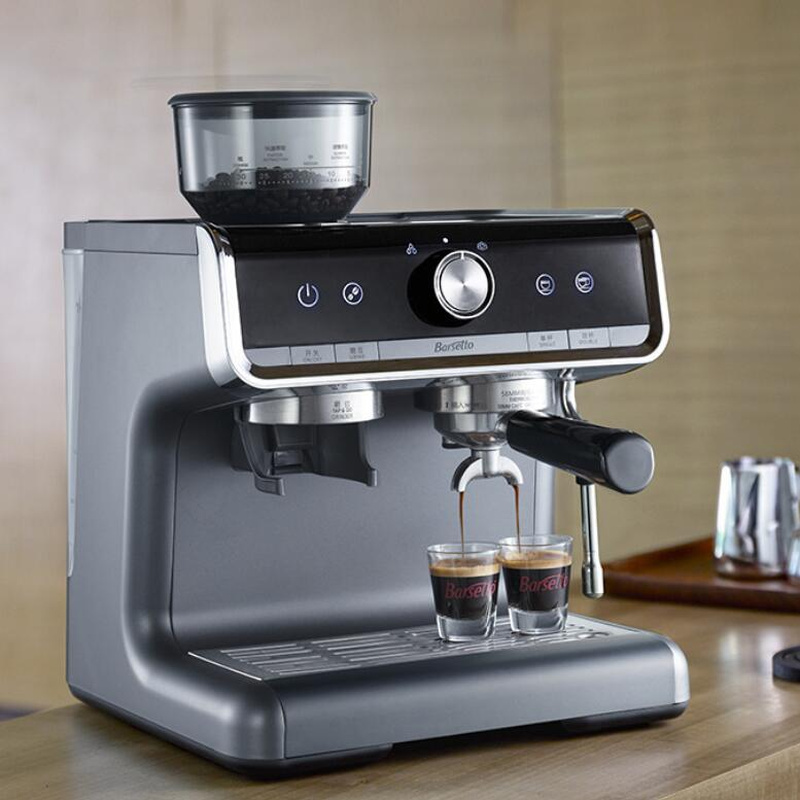
A wholesale quote from a supplier in China is a different figure because it excludes the layers retail includes: no dealer margin, no local warehousing, and — depending on the delivery term — freight and duty quoted separately rather than folded in. It also usually excludes local installation, which you arrange yourself.
So compare like with like: a retail price is landed and often installed; a wholesale price is EXW, FOB or CIF, with freight, duty and installation as your own lines. The buyer's guide lists what to put on the same sheet, and the wholesale guide explains sample-first ordering and payment against a test video.
How to Read Our Prices
Our current prices are on each machine's product page — the commercial coffee machine range, the SD-103 and the YS-3120 and the package deals that bundle a grinder with the YS-3120 or YS-3201. As published (single unit, ex-works, USD, 2026 list): YS-GM3200 1-group 549; YS-3120 2-group 1,299; YS-Tank 2-group tank-fed 1,399; YS-3201 2-group 1,499; SD-103 3-group 1,999; La Vetro 2-group 3,999 (Pro 4,199); YS-BAE01 and BAE02 bean-to-cup 459 and 609; YS-EB2016 fully automatic 589 (250 g hopper) or 659 (750 g); YS-C98pro grinder 1,099. Two or more units and ten or more units step the price down — the quote shows the tier. Each quote states the delivery term, voltage and inclusions so you can put it next to a retail number honestly. If you roast your own coffee, a roaster from our own factory ships in the same container, which is where the real saving on an opening budget usually is.
Frequently Asked Questions
Why does the same machine cost more from a dealer in my country than from you?
Because the dealer's price contains things ours does not: their freight and duty, a warehouse, a technician who arrives on a Saturday, a loan machine, and their margin. Those are real and you may want them — the busy cafe guide explains what a service network is worth. Our price is the machine at the factory gate; you add the freight and the service story yourself or through a dealer of your own.
Is a used commercial espresso machine a good way to save?
Sometimes, locally: a serviced 2-group with a known history from a cafe that closed can be a bargain if a technician has seen the boiler. What kills the saving is scale inside a boiler you cannot inspect, a board that is discontinued, and a group nobody stocks parts for. Buy used where you can watch it run for a week; buy new where you cannot.
Do package deals with a grinder change the price per unit?
They change the freight and the document pack more than the machine price: one crate set, one clearance, one voltage confirmation. The YS-3120 and YS-3201 packages bundle the compact machines with a grinder for exactly that reason, and the bean-to-cup models — YS-BAE01 at USD 459, YS-EB2016 at USD 589 — are priced as single units because they carry their grinder inside.
What moves the price most on a fully automatic?
The milk system and the cups-per-day rating: a fully automatic sized for an office at fifty cups a day and one sized for a hotel breakfast at four hundred share a name and little else, and the difference is boiler size, brew-unit duty and whether milk is fresh or powder. Price them on the daily count your site will actually see; the semi vs fully automatic guide sorts the types.
Will the price hold if I order six months from now?
The ex-works list moves rarely and a quote is held for its stated validity; what moves is freight, which you re-check when you are ready to order. A deposit fixes the price for your build. If you are budgeting for an opening months away, budget the list price in dollars and add the freight range at the time, not today's.
Final Thoughts
A commercial espresso machine price moves with groups, boiler and automation, then again with the channel. Put retail and wholesale on the same sheet — with freight, duty and installation as their own lines — and the comparison is honest. Our prices are on the product pages; send us your voltage and port for a quote to match. Get a wholesale quote.
Get a Quote → WhatsApp +86 184 0771 4607Last updated: September 17, 2026
Pingback: Espresso Machine for a Busy Cafe: What Keeps the Line Moving | Yoshan
Pingback: 1, 2 or 3 Group Espresso Machine: Which Do You Need? | Yoshan
Pingback: Heat Exchanger vs Dual Boiler: Which One Your Menu Needs | Yoshan
Pingback: Commercial Espresso Machine Voltage & Power: 3 Numbers by Country