
A commercial espresso machine is delivered as a box; it becomes a working machine only when the counter it sits on has been prepared for it. Water in, water out, a circuit that can carry the heating load, and enough space to service it. This guide lists what to prepare before the machine arrives, in the order the problems usually appear, with the figures for the two- and three-group machines we supply as worked examples.
Start with the drain, because everyone forgets it
Every shot, every flush, every steam-wand purge sends water into the drip tray. On a busy bar that is many litres a day, and a machine with no drain below it is emptied by hand or, worse, overflows into the counter.
What you need is a proper drain connection under the counter, not a bucket. In practice:
- A waste point in the cabinet directly beneath the machine, with a trap so the bar does not smell of drains.
- The drain hose from the machine falling continuously toward it. A useful rule is at least one centimetre of drop for every ten centimetres of horizontal run, and as steep as you can make it. A flat or sagging hose collects grounds, blocks, and backs up into the tray.
- An air gap between the hose and the waste, so nothing can siphon back.
- Access to clean it. Espresso drains clog with coffee fines and milk residue; make the connection reachable without moving the machine.
If the counter has no waste point, the plumber's visit to add one is the first job, before anything else on this list.
Water supply: pressure, connection and a shut-off
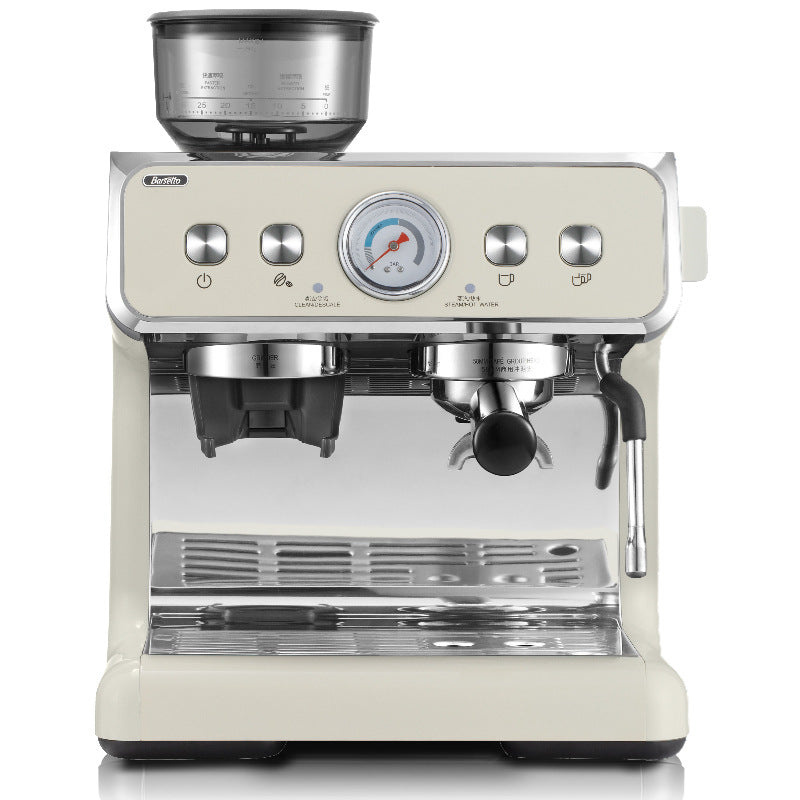
Commercial machines with a rotary pump are designed to be plumbed — connected permanently to the water supply rather than filled from a tank. All three of the machines we supply most, the YS-3120, the YS-3201 and the three-group SD-103, are direct-connection machines. Prepare:
- A cold water point under the counter with its own shut-off valve for the machine, so it can be isolated for service without turning off the bar.
- A flexible braided hose to the machine's inlet — commonly a 3/8" fitting; check the machine's manual for the exact thread.
- Inlet pressure within the machine's range. Most commercial machines want mains pressure regulated down to roughly 2–3 bar at the inlet. Too high and internal valves can be forced open and leak; too low and the pump starves. If mains pressure at the site is high or fluctuates, fit a pressure regulator on the supply line.
- A backflow preventer where local plumbing rules require one, which in many places they do.
The supply should be sized for the machine and the grinder area's other needs. A long, narrow run from a distant stopcock will drop pressure when the dishwasher runs.
Water treatment is part of the installation, not an accessory
Scale is the most common cause of premature boiler and element failure on commercial machines, and it comes from the water, not the machine. A filtration or softening system installed on the supply line, sized for the daily volume and the local water hardness, protects the machine from its first day. Cartridges have a service life measured in litres and months; put the replacement date on a calendar.
Two cautions. First, water that is too soft or demineralised — reverse-osmosis water without remineralisation, distilled water — is as damaging in a different way: it is corrosive to boiler metals, and on many machines the level probe cannot detect it, so the machine either refuses to fill or overfills. Second, chlorine and chloramine should be removed, because they attack copper and brass and taste in the cup. The full picture, including target hardness and mineral levels, is in our guide to espresso machine water treatment.
Power: a dedicated circuit sized to the machine
An espresso machine is a heater. Its power rating tells you the circuit it needs, and it should not share that circuit with anything else on the bar.
Take the two-group YS-3120 as an example: 4,200 W at 220–240 V. Divide power by voltage and it draws around 18–19 amps at full heating, which needs a dedicated 20 A circuit at minimum, and many electricians will specify 25 or 32 A to allow for the start-up load and a hot bar. The YS-3201 at 3,800 W draws close to 17 A; the three-group SD-103 at 3,600 W around 16 A. Larger machines and some three-group models with bigger boilers move into the 30 A range or onto three-phase supply.
What to prepare:
- A dedicated circuit with its own breaker, rated above the machine's full-load current with margin.
- The correct outlet or hard-wired connection for your country. Many commercial machines are hard-wired to an isolator by the electrician rather than plugged in.
- The grinder on a separate circuit. A grinder starting on the same circuit as a heating machine trips breakers.
- Earth and residual-current protection to local code — a machine full of water and mains power should never be on an unprotected supply.
Voltage and frequency must match the machine as built. A 220–240 V 50 Hz machine does not run on 110 V, and frequency affects pump motors. Confirm your supply before ordering, not after; the country-by-country picture is in our article on commercial espresso machine voltage and power requirements.
Counter: weight, depth, clearance and the hole
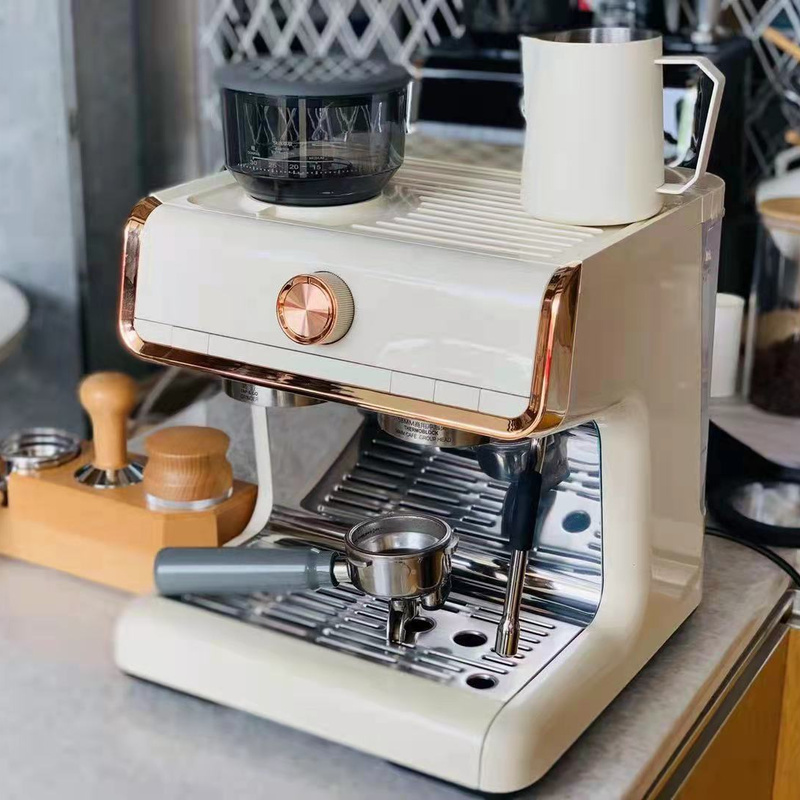
Commercial machines are heavy and deep. The YS-3120 measures about 82 cm wide, 50 cm deep and 45 cm high and weighs 42 kg empty; the YS-3201 is 58 cm deep and 52.5 kg; the three-group SD-103 is 132 cm wide and 72 cm deep. Full of water they weigh more. The counter has to carry that without flexing, and it has to be deep enough that the machine does not overhang the front edge with cups on the tray.
Around the machine, leave working and service clearance: space behind for the connections and for heat to escape, space at the sides for the technician to remove panels, and space in front for the portafilters to swing and the drip tray to come out. A common guide is a hand's width at the back and sides and a forearm's length in front. Do not box the machine into an alcove that fits it exactly; the first service call will require pulling it out.
Cut a single hole in the counter beneath the machine large enough for the water hose, the drain hose and the power cable together — roughly 8–10 cm across is typical. Position it after the machine arrives and you can see where its connections exit, not from a drawing.
Space for the grinder and the workflow
The machine is one item on the bar. Beside it sit the grinder — with its own circuit — the knock box, and room to work two portafilters. Plan the run of counter as a workstation: grinder, machine, then the milk station, so the barista moves in one direction. Our guides on choosing between one, two and three group machines and on espresso machines for a busy café cover sizing the machine to the queue; the counter has to be sized to the machine.
The installation-day sequence
- Confirm drain, water point with shut-off, filtration and dedicated circuit are in place and tested.
- Position the machine, cut or align the counter hole, connect drain first, then water, then power.
- Open the water valve, fill and heat the machine, check every joint for leaks while it warms.
- Set inlet pressure, check pump pressure at the group, calibrate volumetrics.
- Flush every group and the steam boiler several times before the first customer drink.
Most warranty claims in the first month trace back to step one being skipped: a machine connected to unfiltered water, a shared circuit, or a drain that was "coming next week".
FAQ
What water pressure does a commercial espresso machine need?
Typically a regulated inlet pressure of around 2–3 bar. Higher mains pressure can force internal valves open and cause leaks; lower pressure starves the pump. If site pressure is high or variable, fit a pressure regulator on the supply line and check the machine's manual for its exact range.
Does a commercial espresso machine need a dedicated circuit?
Yes. A two-group machine at around 4 kW draws 17–19 A at 220–240 V, which needs its own breaker rated above that with margin. Sharing the circuit with a grinder or other equipment trips breakers and can damage heating controls. The grinder should be on a separate circuit.
Can I run a commercial espresso machine without plumbing it in?
Rotary-pump commercial machines are designed for a permanent water connection and a drain, and the machines we supply are direct-connection models. Tank-fed operation is a feature of small vibration-pump machines. For a bar doing any volume, plumbed supply and drain are part of the installation, not optional.
What size drain does an espresso machine need?
A waste point under the counter with a trap and an air gap, fed by a drain hose that falls continuously toward it — at least a centimetre per ten centimetres of run, steeper if possible. The diameter matters less than the fall; flat hoses clog with coffee fines and back up into the drip tray.
Do I need a water filter for a commercial espresso machine?
Yes, sized to the local hardness and daily volume. Scale is the leading cause of boiler and element failure. Avoid the opposite extreme too: demineralised or reverse-osmosis water without remineralisation corrodes boiler metals and can defeat the level probe. Target moderate hardness with chlorine removed.
How much counter space does a two-group espresso machine take?
Around 80–85 cm wide and 50–60 cm deep for the machines we supply, plus working clearance at the back and sides and room in front for portafilters and the drip tray. Allow another 30–40 cm beside it for the grinder. The counter must carry 40–55 kg plus water without flexing.
Who should install a commercial espresso machine?
A plumber for the water point, filtration and drain; an electrician for the dedicated circuit and connection; and a technician or the supplier's guidance for commissioning, pressure setting and calibration. Doing the plumbing and electrical work in advance is what makes commissioning a one-visit job.
Final Thoughts
Prepare the drain, the water point with a shut-off and filter, a dedicated circuit sized to the machine, and a counter with room to service it — then installation is a morning's work. As a wholesale supplier of commercial coffee machines, we send the connection specifications for the YS-3120 and every other model with the order, so your plumber and electrician can work before the crate lands.
Request a quote or message us on WhatsApp at +86 184 0771 4607.
Get a Quote → WhatsApp +86 184 0771 4607Last updated: September 17, 2026
Pingback: Tank vs Plumbed Espresso Machine: Choose by the Site, Not the Spec