
If you buy for a retail shelf or a cafe supply catalogue, the manual vs electric coffee grinder question is really three questions: what each type does well, which sells to whom, and how you source both without quality surprises — because hand grinders are one of the quiet best-sellers in our enquiry inbox, right beside commercial electric units. Here is the honest breakdown we give trade buyers, with prices on the electric side.
What Manual Grinders Do Well
-
Retail margin — hand grinders are giftable for your customers, display well, and carry healthy markups at accessible price points; they sell in cafes, roastery retail corners and online stores alongside beans
-
Grind quality per dollar — a decent conical steel burr in a hand mill out-grinds cheap electric blade grinders at the same retail price
-
No voltage problem — one SKU sells worldwide; no 110V/220V variants to stock
-
Travel and home-brew trend — pour-over and travel kits keep pulling demand
The limits are equally clear for your customers: 20–40 grams at a time, human-powered, and nobody grinds for a rush-hour bar by hand.
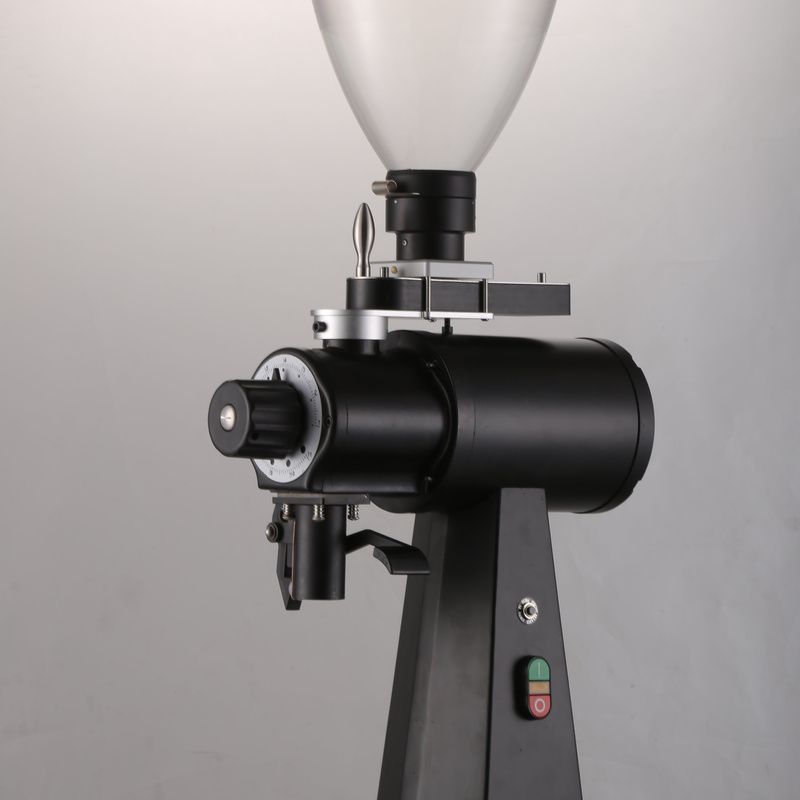
What Electric Grinders Do Well
-
Throughput — your espresso dose in seconds, batch grinding by the hopper-load
-
Consistency at volume — motor-driven burrs for your bar at stable RPM, dose after dose
-
Commercial duty — the only choice for cafe service; see our commercial coffee grinder buyer’s guide for the full spec checklist
Head-to-Head for Buyers
| Manual (hand) grinder | Electric grinder | |
|---|---|---|
| End customer | Home brewers, travelers, gift buyers | Cafes, offices, serious home espresso |
| Batch size | 20–40 g | Single dose to kilograms/hour |
| Voltage SKUs | None — one SKU worldwide | 110V/60Hz and 220–240V builds |
| Burr type | Mostly conical steel | Conical or flat (64mm+ for specialty) |
| Wholesale logistics | Carton-friendly, light, low damage risk | Heavier, needs protective packing |
| Typical retail price band | $20–$150 | $100–$1,500+ |
Quality Checks Before You Order Hand Grinders
-
Burr material and axle play — the axle should have no wobble; wobble = inconsistent grind, returns, bad reviews
-
Adjustment mechanism — clicked settings should be repeatable; test coarse→fine→back
-
Materials honesty — “stainless” claims should survive a magnet-and-spec check; aluminum bodies should state wall thickness
-
Sample first — order 2–3 units for your own bench by courier and grind a kilogram of your beans through each before committing to cartons; same rule as for 64mm electric single-dosers
The Smart Wholesale Play: Stock Both
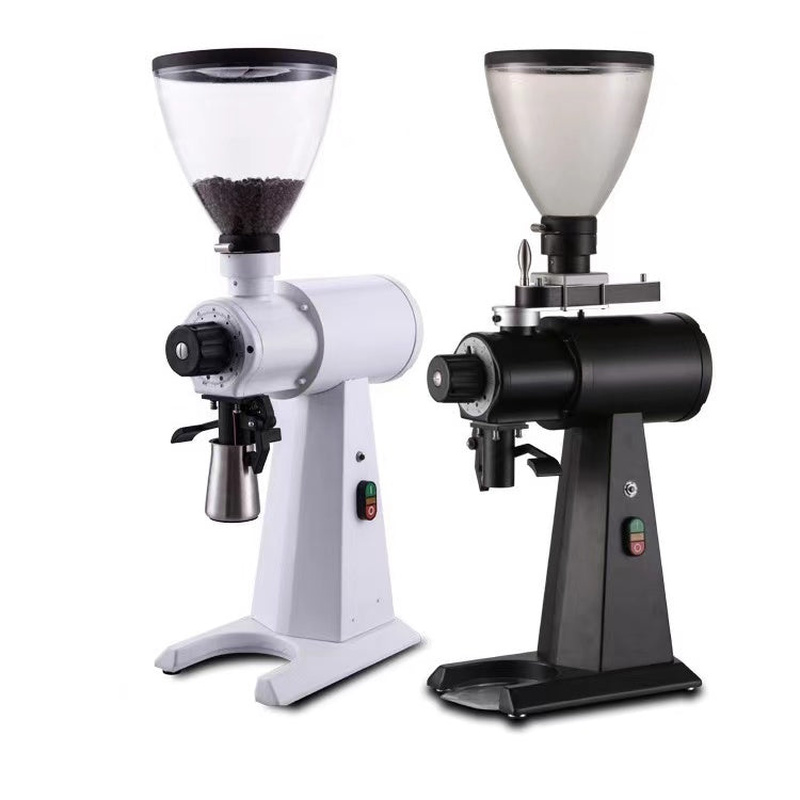
Most resellers we supply — and probably you — do not choose — they carton-mix: hand grinders for your retail shelf and gift season, electric units for your counter and B2B customers. Mixed shipments ride cheaply alongside espresso machines or a roaster, and one supplier relationship covers your whole grinder shelf. OEM branding (logo on body and box) is available on both types from modest quantities.
Sizing the Electric Side, With Prices
Hand grinders are one SKU; your electric shelf is where the sizing happens. For your counter, size the burr to the peak hour rather than the day: a 64 mm flat burr keeps up with a specialty bar to about 150 drinks in the busiest hour, and bigger burrs or a second grinder take over above that. From the range we supply, the YS-020 electric flat burr grinder at USD 119 is the bench-top entry that sells beside your hand grinders on a retail shelf; the YS-C98pro single-doser at USD 1,099 is the specialty-bar unit; and the YS-1100M and YS-2200M industrial mills at USD 608 and 688 cover bagging and Turkish-fine grinding for your B2B customers. All ship in 110 V and 220 V builds; the grinder range lists the rest and the buyer's guide sizes burrs to drinks per day.
The Shelf Plan That Works
Most of the resellers we supply run the same layout, and it is worth copying. On your retail shelf: two or three hand grinders at different price points, a compact electric burr grinder beside them as the step up, and the beans they are sold with. Behind the counter, in sight: the grinder you actually make coffee with, because customers buy what they see working. In the B2B catalogue, not on your shelf: the specialty single-doser and the industrial mills, sold to cafes and roasteries with a spares kit and a burr-replacement interval. Reorder your hand grinders by the carton and your electric units by the model, and keep a golden sample of each so a changed burr supplier between production runs shows up on your bench before it shows up in a customer's review.
Frequently Asked Questions
What margin do hand grinders carry compared with electric?
Higher in percentage, lower in dollars: a hand grinder sells at accessible retail prices with markups that a countertop electric cannot match, and it moves as a gift, a travel item and an add-on to a bag of beans. The electric unit earns less per unit in percentage terms and far more in absolute margin, and it brings the B2B customer back for burrs and service. That is why resellers stock both rather than choosing.
How do I stop hand grinders coming back as returns?
Test the sample the way a customer uses it: grind a kilo through, check for axle wobble, run the adjustment coarse to fine and back and confirm the clicks repeat, and check the "stainless" claim with a magnet and the spec sheet. Ask the factory for the burr material and the body wall thickness in writing, and keep a golden sample from the approved batch — a changed burr supplier between runs is the commonest cause of a sudden return rate.
Can a hand grinder be branded like an electric one?
Yes, and more cheaply: logo on the body and the box from modest quantities, in the same carton mix as your electric units. What to keep constant is the burr set and the adjustment mechanism, because branding a grinder that grinds badly puts your name on the complaint; the 64 mm guide covers the sample-first order that applies to both.
Which electric grinder belongs beside the hand grinders on a retail shelf?
One the same customer will consider the day the hand grinder becomes a chore: a compact electric burr grinder at an accessible price, sold with the beans. The YS-020 at USD 119 is that unit in our range. Do not put a specialty single-doser or an industrial mill on the retail shelf; those sell through the B2B catalogue with a spares kit.
How do I ship a mixed carton of hand and electric grinders?
Hand grinders are light and carton-friendly and ride in the gaps around the heavier electric units, which need protective packing; the two travel cheaply together and even more cheaply alongside espresso machines or a roaster in one container. Give us the mix and the quantities and we pack and document it as one shipment; the wholesale guide covers the sample-first order and the paperwork.
Final Thoughts
Manual vs electric coffee grinder is not a choice for a reseller; it is a shelf plan. Hand grinders sell as gifts and travel kits with no voltage variants, electric grinders do the commercial work and bring customers back for burrs, and the smart order cartons both. Test the hand-grinder sample properly, size the electric side to the peak hour, and ship them together. Send us your market and your mix. Talk to us.
Get a Quote → WhatsApp +86 184 0771 4607Last updated: September 17, 2026
Pingback: Espresso Grinder vs Filter Grinder: Burr Types, Which to Buy | Yoshan