
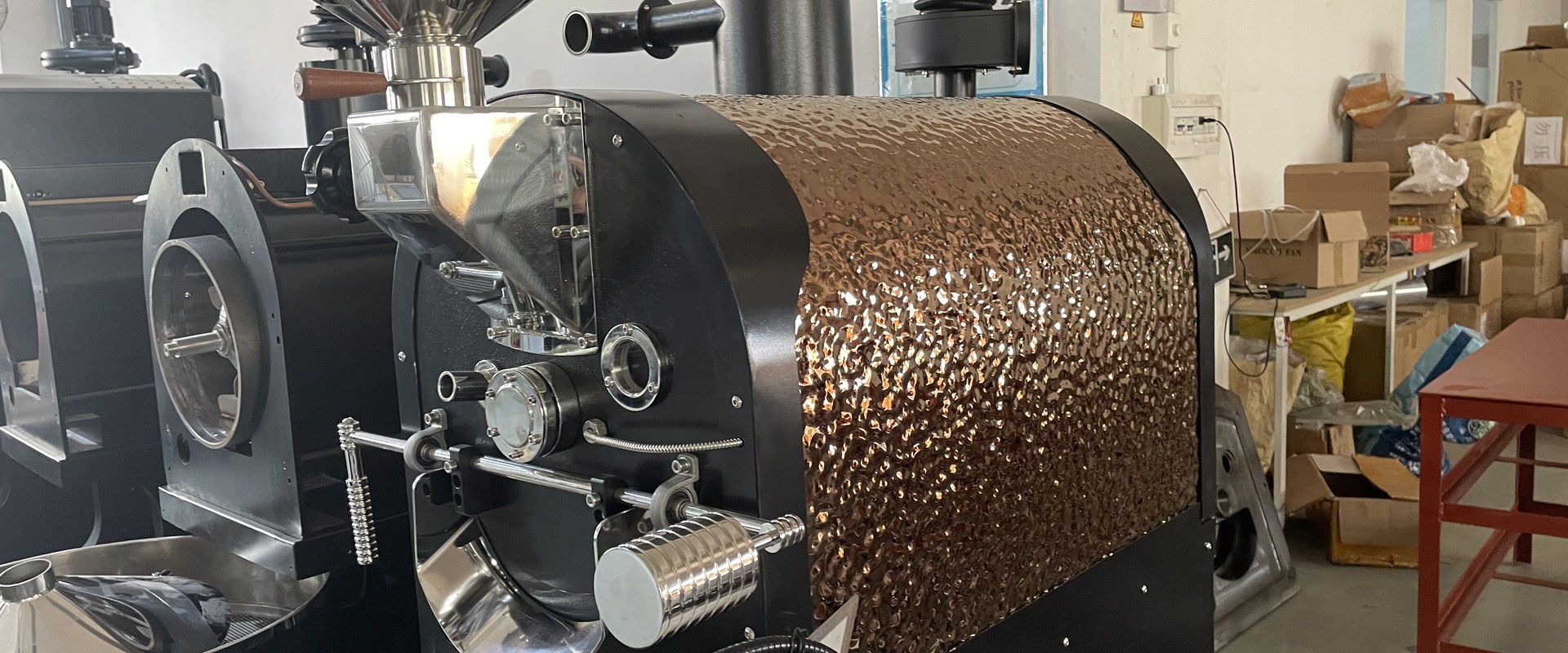
Before you wire a deposit to a factory on the other side of the world, you want to see it. That is the most common request we get, and it is the right instinct. This page is a coffee roaster factory tour in two parts: what you would see walking our floor, and — more useful — what to look for on any roaster factory's floor, ours included, so you know what you are checking.
The Six Stages Every Machine Goes Through Here
We have built commercial coffee roasters at this factory since 1990. Every machine follows the same sequence, and on a visit you can stand at each stage:
| Stage | What you see | Why it matters to you |
|---|---|---|
| 1. Drum and body fabrication | Heavy-gauge steel cut, rolled and welded in-house; cast iron drums for the SD series, stainless for DY | The drum decides whether batch six roasts like batch one. Ask to see the wall thickness |
| 2. Burner and gas train | Burners fitted and jetted for the customer's fuel — LPG or natural gas — and destination | A burner jetted for the wrong gas is the most common reason a machine roasts badly on arrival |
| 3. Controls and wiring | PLC touch-screen controls (Siemens on the YS series and larger SD Pro machines) wired to the customer's voltage and phase | This is where your 220V/50Hz or 110V/60Hz order becomes real. Ask to see the nameplate being made |
| 4. Assembly and finishing | Drum, cooling tray, chaff cyclone and body assembled; custom colour and logo applied | If you ordered your brand colour, this is where you see it |
| 5. Test roast and QC | Every machine runs and roasts a batch before it ships — heat curve, motor, airflow, controls | The machine you are buying has already roasted coffee. Ask for the curve |
| 6. Pre-shipment video and crating | The running machine filmed for you; then plastic film and a wooden export case | You see your exact machine working before it leaves. Ask for the crating photos too |
If You Cannot Come: Three Things to Ask For
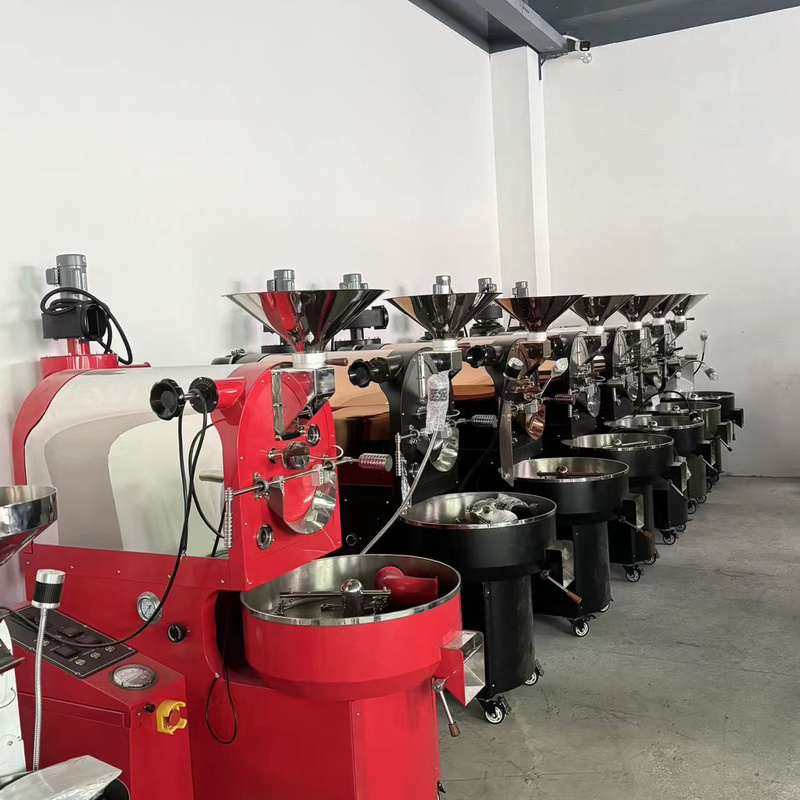
Most of our customers never visit — they are in Manila, Nairobi, Bogotá or Riyadh, and the trip does not make sense for one machine. Three things replace the visit:
- A video of your model being built or tested — not a marketing reel. Ask for it at quotation. A factory sends it the same day.
- A live video call on the test bench when your machine is finished — you watch it roast, ask the engineer questions, and see the nameplate.
- Crating photos before the container closes — so if anything is damaged in transit, you have the evidence for the claim.
All three are standard on our orders. If a supplier hesitates on any of them, that tells you something.
What to Look For on Any Roaster Factory's Floor
This is the part that is useful whoever you buy from. Five things separate a factory from a showroom with a workshop behind it:
- Raw material, not just finished machines. Steel sheet, castings, burners in boxes. A trading company's "factory" has finished machines and nothing upstream of them.
- Machines at different stages. Frames being welded next to machines being wired next to machines on test. If everything on the floor is finished, it was not built there.
- A test area with gas connected. Roasters have to be roasted on before they ship. If there is no gas line and no green coffee on the floor, nobody is testing anything.
- Spare parts on shelves. Bearings, thermocouples, burner nozzles, belts. A factory that makes machines stocks the parts for them. This is also your after-sales future — see our support guide for what that looks like in practice.
- Drawings and documents. Ask to see the wiring diagram for your model and, for Europe, the CE declaration. A factory has them in a drawer; a reseller has to ask someone. Our CE guide shows what the document should contain.
Take those five with you on any tour, ours included.
What We Build Here
One factory, four lines, so almost any capacity and style comes off the same floor:
- SD series — classic European-style cast iron drum roasters from 1.5 kg to 300 kg per batch; PLC control on the Pro models. If you are benchmarking against Probat, our Probat alternative guide compares them.
- YS series — the smart line with Siemens PLC control, 6 kg to 300 kg. Compared against Giesen in the Giesen alternative guide.
- DY series — classic 1–2 kg shop and micro-roastery machines, gas or electric, stainless drum.
- Sample roasters — the SD 100G Plus for cupping (USD 899) and the EC-500G electric for profile work (USD 1,699). Every model's factory price is on the price guide.
Plus the equipment around them — destoners, loaders, afterburners, smoke filters, filling and sealing — on the equipment page, so a full line ships as one specification.
Arranging a Visit
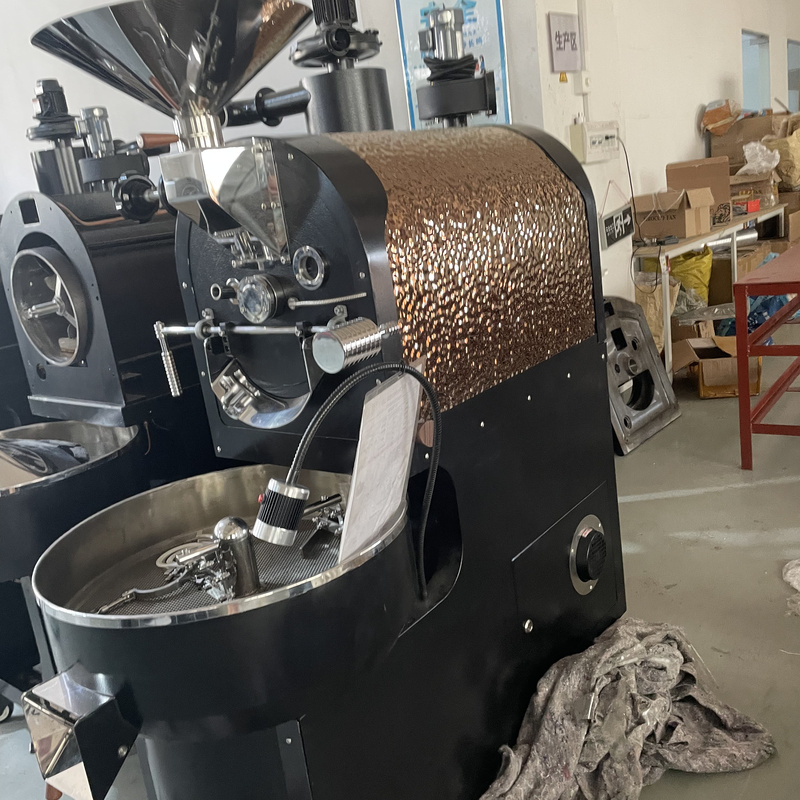
You are welcome. Tell us when you are travelling and which machines you want to see running; we arrange the floor visit, a test roast on your model, and help with local logistics. Many customers combine it with a look at machines in customer roasteries nearby — the Oman roastery case study is one such installation.
Verify Us From Your Desk in Twenty Minutes
You do not need to fly to check whether a Chinese supplier owns the floor it shows you. Sourcing agents publish the same short list, and we would rather you ran it on us than took our word.
- The business licence. Ask for it. The 18-character unified social credit code on it can be looked up free on China's national enterprise register (GSXT). Two lines matter: the business scope should say manufacturing — a scope that only says trading or consulting is a trading company, whatever the website says — and the registered address should be the place the video call is filmed from.
- A live call, not a recorded tour — the one described above, with today's date on a phone in the shot. A factory does this on the spot; a reseller schedules it for next week.
- Reverse-image the photos. Drop the supplier's factory photos into an image search. If the same welding bay appears on three other companies' websites, none of them own it.
- A third-party audit for a large order. For a production line or a container of machines, an independent one-day factory audit costs in the low hundreds of dollars and is the best-spent money in the order. We host them.
Run all four on us before the deposit and you will also have the file — licence, address, audit report — that your bank and your insurer ask for when the machine is financed.
Frequently Asked Questions
Can I bring my own engineer or a third-party inspector to the visit?
Yes, and for a production line we recommend it: an independent inspector or your own technician on the floor for a day can check the drum wall, the burner assembly and the wiring against the specification you ordered, and witness the test roast. Give us a week's notice for access and the visitor's details; the report they write is also what your bank or insurer asks for when the machine is financed.
What is the best time of year to visit?
Any week we are building your size of machine — ask, and we schedule the visit for the day your model is on the test bench rather than a random Tuesday. Avoid the two weeks around Chinese New Year, when the floor stops, and the first week of October. If you want to see a specific stage, such as drum welding or the burner fit, say so and we time it.
Can I see a machine roasting my own coffee?
Yes — courier us two to three kilos of your green in advance and the test roast on your machine, or on the same model, is done with it on the video call or during the visit, with the curve logged and sent to you. It is the fastest way to know how the drum behaves with the coffee you will actually run, and it costs you the courier.
What should I bring to a visit?
Your site's electrical reading and gas type, a floor plan with the duct route, your weekly kilos, and a list of the questions from the "any floor" checklist above with space to write answers. Bring a phone for photos of the nameplate, the drum interior and the test-bench readout; we encourage it. Leave room in the schedule for the equipment around the roaster — loaders, destoners, filters — which most visitors had not planned to look at.
Do you also show the machines you do not build?
We show what is on the floor, which is the roasters and the equipment around them. The espresso machines and grinders we supply are sourced from other factories and are not built here; if you want to see those, we arrange a separate visit to the supplier or a sample unit in our showroom, and we say plainly which is which.
Final Thoughts
A factory tour is worth doing, in person or by video, if you know what to look at: raw material, machines mid-build, a live test bench, spares on shelves, documents in a drawer. We have built roasters on this floor since 1990 and we will show you any of it. Tell us when you can visit — or ask for the video of your model today. Talk to our engineers.
Get a Quote → WhatsApp +86 184 0771 4607Last updated: September 23, 2026
Pingback: YOSHAN Coffee Roaster Manufacturer in China | 1kg–300kg Factory Direct
Pingback: Coffee Roaster OEM vs ODM: Which One Your Brand Actually Needs | Yoshan
Pingback: Probat Alternative: Where the Brand Wins, Where It Does Not | Yoshan
Pingback: How to Buy a Coffee Roaster from China: Fix These Four First | Yoshan