
If you are asking whether you need a single group head machine or a two-group set-up, you are at the first fork in buying a commercial espresso machine — and choosing wrong costs either queue speed or thousands in idle capacity. A group sets parallel shot capacity; the boiler behind it sets whether you can brew and steam at once. Here is the decision framework we give buyers, with what each configuration costs.
What a “Group” Actually Limits
Group count sets parallel capacity; the boiler behind those groups sets whether you can brew and steam at the same time without temperature drift. That side of the decision is in our heat exchanger vs dual boiler comparison.
Each group head brews independently, so group count sets your parallel shot capacity — how many espressos can extract at the same time. But the real bottleneck in most cafes is not shots, it is milk. A machine with two groups and weak steam serves drinks slower than a one-group machine with a powerful boiler. Judge the machine as a system: groups + boiler recovery + steam power.
1 Group vs 2 Group vs 3 Group: The Honest Comparison
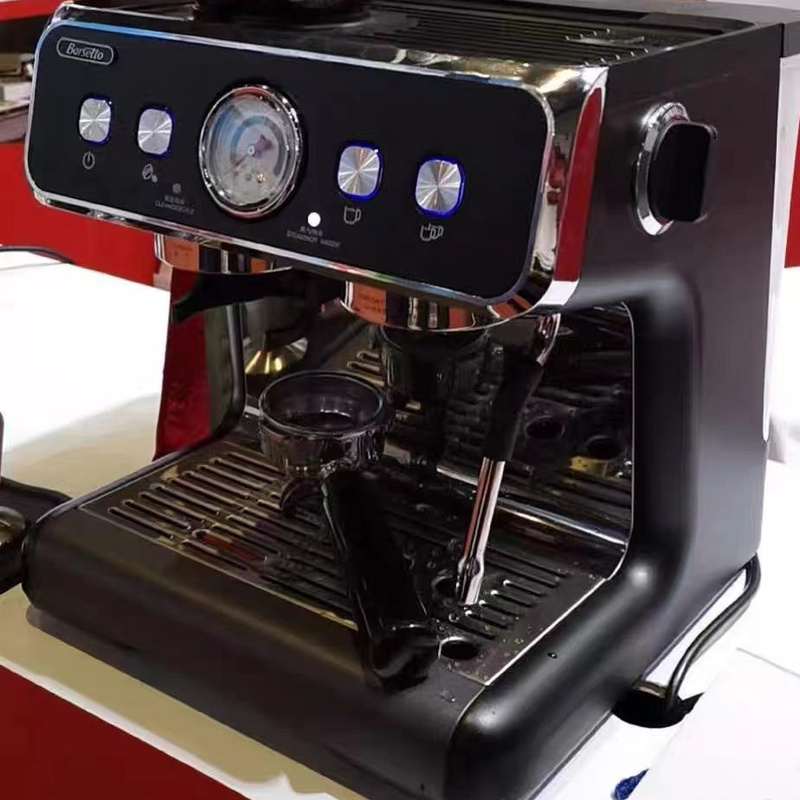
| 1 group | 2 group | 3 group | |
|---|---|---|---|
| Realistic output | Up to ~30 drinks/hour | 60–80 drinks/hour | 100+ drinks/hour (2 baristas) |
| Best for | Kiosk, office, food truck, testing a location | Standard coffee shop — the default worldwide | High-traffic cafe, hotel, chain flagship |
| Staffing | 1 barista | 1 barista at speed | Needs 2 baristas to justify |
| Power draw | Lowest; 110V versions exist | 220–240V typical | 220–240V, high amperage circuit |
| Counter space | ~40–55 cm wide | ~70–80 cm | 90+ cm |
The Fast-Paced Cafe Question
A buyer recently asked us for “the quickest extraction time — suitable for a fast-paced cafe.” The honest answer: proper espresso extracts in 25–30 seconds on any machine; nobody should shorten that. What makes a cafe fast is parallelism — two groups pulling while the steam wand textures milk, and a boiler that does not sag between drinks. If your queue is long, buy groups and steam power, not promises of faster shots. See our dedicated guide to the best espresso machine for a busy cafe for a full peak-volume playbook.
When 1 Group Is the Right Call
Single-group machines are underrated for the right buyer: kiosks and carts with limited power, offices, low-volume restaurants, and new locations proving demand before a bigger investment. Compact machines like the YS-3120 and YS-3201 serve this segment — and several package deals bundle them with a grinder for a one-shipment bar setup.
When You Need 2 or 3 Groups
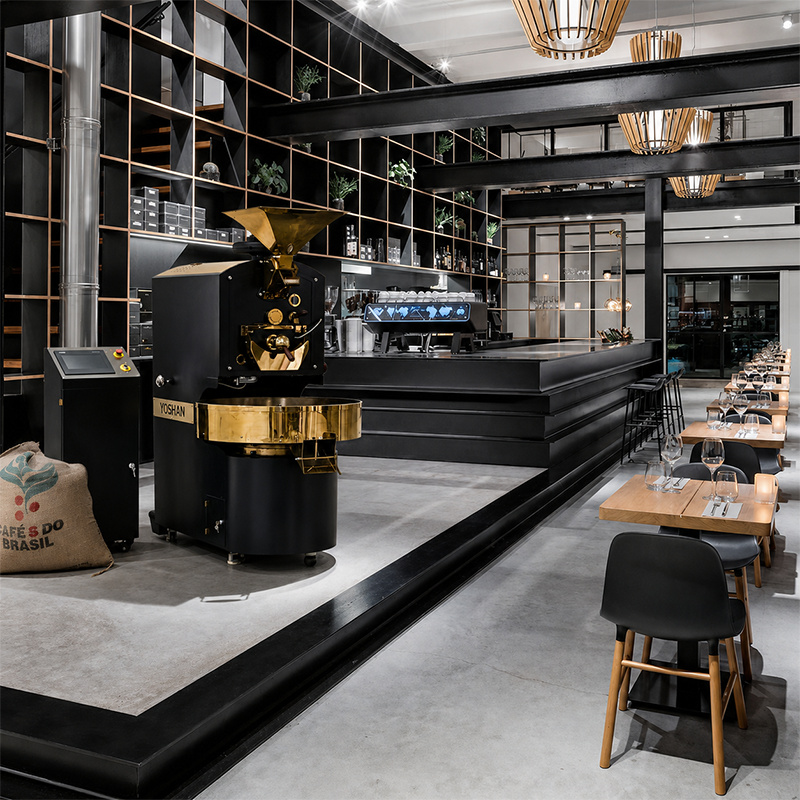
Cross 30 drinks/hour at peak and a second group pays for itself in queue time. Cross 80–100 and you are in three-group territory — like the SD-103 three-group semi-automatic — provided you staff two baristas at rush. For no-barista formats (convenience stores, hotel breakfast), skip groups entirely and consider a bean-to-cup unit such as the YS-EB2016; the full decision tree is in our commercial espresso machine buyer’s guide.
Wholesale Note for Resellers and Chains
Most orders we ship mix group counts — e.g. one 3-group for the flagship plus compact machines for satellite kiosks — in a single consolidated container, often alongside grinders and a roaster for in-house beans. Sample-first ordering (1–2 units by courier) is standard practice before container commitments — the whole process, step by step: buying espresso machines wholesale from China.
What Each Configuration Costs
Ex-works prices from our current list, for the machines we supply:
| Configuration | Machine | Price |
|---|---|---|
| No barista — one touch | YS-EB2016 bean-to-cup fully automatic | USD 589 |
| Rotating staff — grinder built in, milk by hand | YS-BAE01 / YS-BAE02 bean-to-cup semi-automatic | USD 459 / 609 |
| Compact single group | YS-3120 and YS-3201 | On the range page, with grinder package deals |
| Three groups, two baristas | SD-103 semi-automatic | USD 1,999 |
Freight, duty and installation are your own lines, and the grinder is a separate purchase per coffee you serve. The price guide explains what moves the number between configurations.
Frequently Asked Questions
How do I count my peak hour if I have not opened yet?
Take the busiest comparable cafe you know, stand in it on a Saturday morning and count drinks for an hour — or use your seats: a cafe that turns 30 seats over twice in the peak hour with most customers taking a drink is 60–80 drinks. Then add 20% for growth. Sizing to a peak you have measured beats sizing to a daily total you have guessed.
Can a 2-group machine be run by one barista?
Yes, and that is how most 2-group cafes run outside the peak: one person pulls on one group while the other rests or steams. The second group earns its keep when a second barista joins for the rush, or when one person wants to keep two shots running while texturing milk. It is why the 2-group is the default worldwide — it grows with your staffing.
Is a single-group machine enough for a food truck or cart?
Usually, provided the boiler is large enough to steam for the drinks you sell and the machine can run tank-fed where there is no plumbing. Compact single-group machines run on 110 V or 220 V and draw less than a multi-group, which matters on a generator. Pair it with a grinder that keeps up, and step to two groups when the queue does.
Which grinder goes with which configuration?
One grinder per coffee you serve, sized to your peak hour rather than to the group count: a 64 mm flat burr grinder for a single-group or 2-group specialty bar, a larger burr or a second grinder for a 3-group at volume, and a separate filter grinder if you serve pour-over. The grinder buyer's guide sizes burrs to drinks per day.
What supply does each configuration need?
Compact single-group and bean-to-cup machines run on an ordinary circuit, in 110 V or 220 V builds; a 2-group needs a dedicated 220–240 V circuit at the breaker rating on its nameplate; a 3-group draws more still and may be three-phase where the building has it. The voltage guide lists the draw by group count and the plug by country.
Final Thoughts
One group, two or three is a decision about your peak hour and your staffing, not about shot speed: count the drinks in your busiest sixty minutes, judge the boiler as part of the system, and buy the third group only when two baristas will keep it busy. Send us your peak hour, your country and your voltage and we will match the configuration and the grinder. Talk to us.
Get a Quote → WhatsApp +86 184 0771 4607Last updated: September 17, 2026
Pingback: Commercial Espresso Machine Installation Requirements
Pingback: Commercial Espresso Machine Buyer's Guide: Start at Peak Hour | Yoshan