
If you are choosing a commercial espresso machine for a cafe, the brand pages will not help you much — each one ends with its own machine. What decides the right choice is your busiest hour, your menu, your staff and your building. This guide takes those four in order, tells you which machine type each points to, and finishes with what changes when you buy from a wholesale supplier rather than a local dealer.
1. Your Peak Hour Decides the Number of Groups
Count the drinks you will serve in your busiest hour — not your daily average, your Saturday 9 a.m. — and add 20% for growth.
- Under 80 an hour: a 1-group machine, or a 2-group if you want headroom and a second barista at weekends.
- 80–150 an hour: a 2-group. This is the standard cafe machine worldwide.
- Over 150 an hour: a 3-group, and a second grinder.
A group is a brew head; more groups means more shots at once, but also more boiler and more power. The 1 vs 2 vs 3 group guide works through the throughput in detail.
2. Your Menu Decides the Boiler
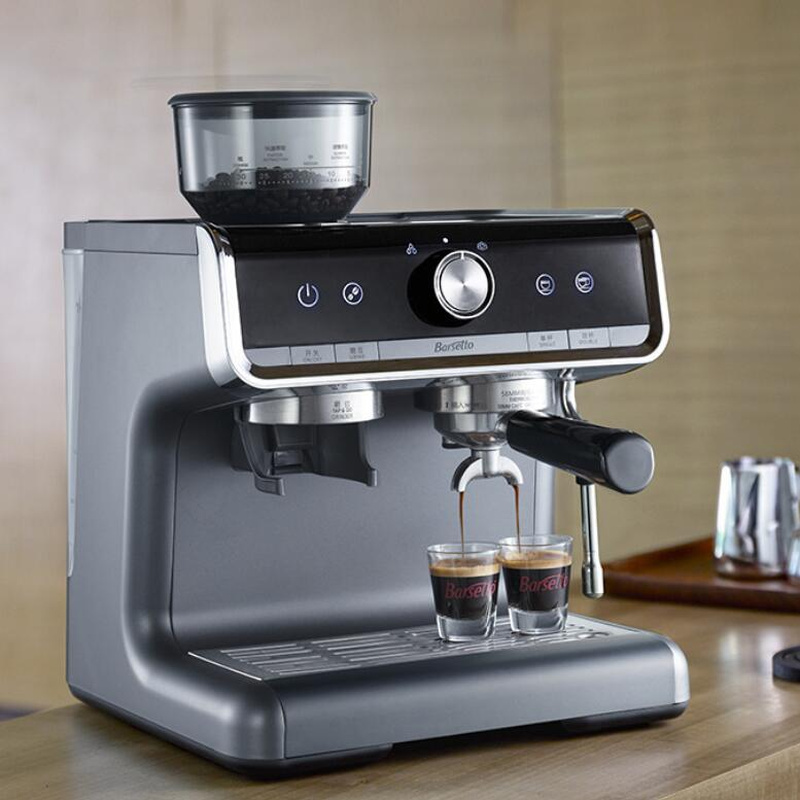
Heat-exchange. One boiler makes steam; a coil running through it heats brew water on the way to the group. Simpler, cheaper, and right for most cafes. The trade-off is that brew temperature drifts a little under heavy use.
Dual boiler (or multi-boiler). Separate boilers for brew and steam, each at its own temperature. Steady espresso temperature during a rush and strong steam at the same time. Right for a milk-heavy menu at volume, and for anyone dialling in light roasts.
The rule: if more than half your drinks are milk-based and you serve over about 100 an hour, dual boiler pays for itself. Otherwise heat-exchange. The heat exchanger vs dual boiler article goes deeper.
3. Your Staff Decides the Level of Automation
Semi-automatic. The barista grinds, tamps, starts and stops the shot. Full control, best espresso, and it needs someone who knows what they are doing on every shift. The choice for a specialty cafe with trained staff. The semi vs fully automatic comparison lays out the trade.
Bean-to-cup semi-automatic. The machine grinds and doses; the barista handles milk and finishing. Consistent shots from staff who are not baristas, without losing the counter experience.
Fully automatic. One touch, grind to cup, including milk. For offices, hotels, self-service and high-turnover sites with rotating staff.
Be honest about who will be on the machine at 7 a.m. on a Tuesday. That answer, more than any spec, picks the type.
4. Your Building Decides Voltage and Water
Power. A 2-group machine typically needs 220–240V single phase and draws from around 3 kW upward depending on the boiler; a 3-group can need more, sometimes three-phase. Your electrician needs the figure before the machine arrives — the voltage and power guide has it by group count.
Water. Plumbed machines need a supply line and a drain; tank machines (like our YS-Tank) run where there is neither — carts, kiosks, temporary sites. Either way, hard water is the number one killer of espresso boilers. Budget a filter or softener from day one; the water treatment guide explains which.
5. Service and Spares Matter More Than the Badge
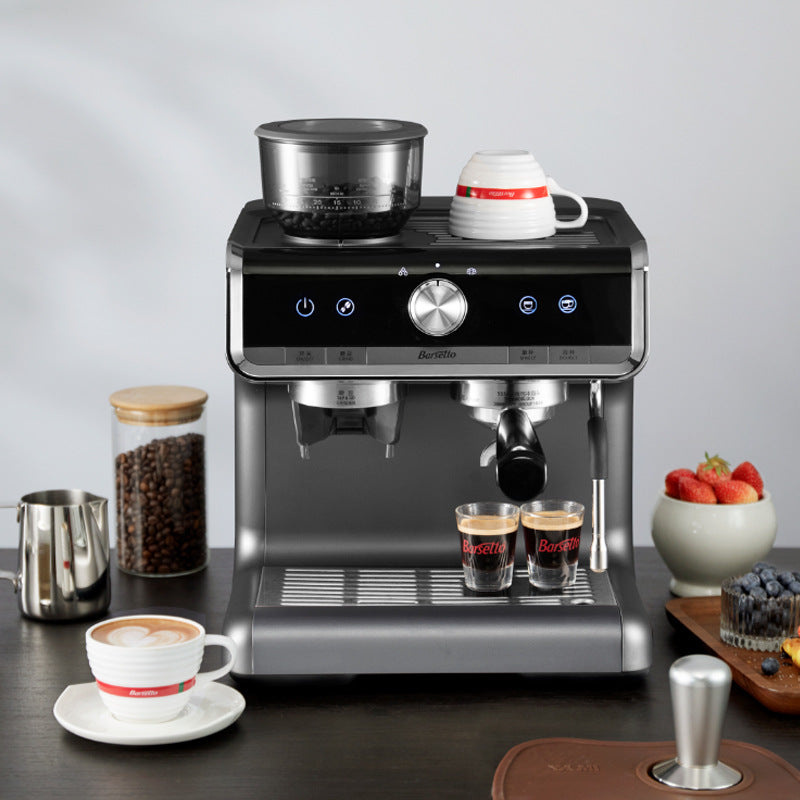
A machine down on a Saturday costs more in a day than the price difference between two brands. So before you choose on price, ask three things of any supplier — brand or wholesale:
- Where do group gaskets, solenoid valves, pump seals and heating elements come from, and how long do they take?
- Who in your city can fit them?
- What is the warranty, and what voids it (usually: running on untreated water, skipping descaling)?
The maintenance and descaling guide shows what keeping a machine alive actually involves.
What We Supply, and Where Each Fits
We are a wholesale supplier of commercial espresso machines — we do not manufacture them — and we specify each one against the four questions above. The range is on the commercial coffee machine page:
| Machine | Type | Peak hour | Fits |
|---|---|---|---|
| SD-103 | 3-group semi-automatic | 150+ | High-volume cafe, two baristas — USD 1,999 ex-works |
| YS-3120 / YS-3201 | 2-group semi-automatic, Italian layout, Procon rotary pump | 80–150 | The standard busy cafe and our best seller — USD 1,299 / 1,499; package deals with grinder |
| YS-GM3200 | 1-group semi-automatic, Ulka pump, 1.7 L tank | Under 60 | Small counter — USD 549 |
| YS-Tank | 2-group semi-automatic, tank-fed, 9 L steam boiler | 40–80 | Carts, kiosks, sites without plumbing — USD 1,399 |
| YS-BAE01 / BAE02 | Bean-to-cup semi-automatic | 40–100 | Cafes with untrained staff, hotel breakfast — USD 459 / 609 |
| YS-EB2016 | Bean-to-cup fully automatic | 40–100 | Offices, hotels, self-service — USD 589 |
| EM-650 | 2-in-1 compact | Under 40 | Small counters |
What Changes When You Buy Wholesale
Buying from a supplier in China instead of a dealer down the road changes four things, and all four can be handled:
- Sample first. Order one machine, run it for a month, then order the batch. Standard practice; ask for it.
- Payment and video. Deposit on order, balance against a pre-shipment test video of your machine running.
- Mixed container. Espresso machines ship with grinders and, if you roast, a roaster in one container — one specification, one shipment.
- Spares in the crate. Gaskets, seals, a solenoid, a heating element. Ask for them as line items.
The wholesale guide covers the trade side, and the certification guide the documents you need for import.
Before You Sign: The Four Lines Around the Machine, and the Three-Week Rule
Dealers' buying guides end with a warning worth repeating: the machine is one line of the budget, and the part that takes three weeks to arrive costs you more than the price difference between brands.
Four lines that sit around the machine. Installation and commissioning; the electrical work — a dedicated circuit at the machine's voltage, single or three-phase, which a 3-group with a large element may need; water filtration sized to your daily litres and the hardness on your supply; and the first service visit or spares kit. Published installation examples put the four together at roughly 20–25% of the machine price. Budget them on the same sheet, whether you buy from a local dealer or from us, because they are the same size either way.
The three-week rule. Take the wear-part list from section 5 and ask one more question of each: how many days away is it? If any of them is three weeks away, keep it on your own shelf — a kit for a 2-group costs a small fraction of a lost Saturday. For the machines we supply, the wear parts are trade-standard items your local technician stocks, and the model-specific ones ship by courier from stock; the certification and documents guide lists what to ask for with them.
One more choice that belongs here rather than on the spec sheet: volumetric dosing. A machine that stops the shot at a programmed volume takes the timing off a new barista's hands and is the cheapest consistency you can buy for a cafe with staff turnover; a manual-stop machine is right where one experienced person pulls every shot.
Frequently Asked Questions
Should a new cafe buy the machine before or after signing the lease?
After — but specify it before. The lease decides the supply, the water and the counter, and the machine has to fit all three, so have the model, its voltage and its water needs in hand when you walk the unit with the landlord's electrician. Order once the lease is signed and the fit-out date is real; the build and shipping take weeks, so the two timelines meet if you start them together.
How do I choose between two machines that look identical on paper?
Ask for the boiler litres and element kilowatts together, a photo of the group underside, and the pump type — those four separate two machines with the same group count. Then ask what is stocked for each and how it travels. If both pass, choose the one whose supplier answered in a day with documents rather than a brochure; that is the supplier you will be calling in year two.
Is a package deal with a grinder worth taking?
Usually, if the grinder is sized to your peak hour rather than thrown in: a 2-group with a 64 mm flat grinder covers a specialty bar to about 150 drinks in the busy hour, and the package saves the second freight and the second document pack. It is not worth taking if it bundles a grinder you will outgrow in a season; check the burr size before the price.
Can I run a commercial machine on a tank instead of plumbing?
Yes, on a 1- or 2-group tank-fed model — a kiosk, a cart or a rented unit where the landlord will not let you cut a pipe. The trade-offs are the refill routine at the rush, a drain bucket instead of a waste line, and the same water-treatment rule applied to what you pour in: a tank filled from an untreated tap scales a boiler exactly as a pipe does.
How much counter space and clearance does a 2-group need?
About 70–80 cm of width for the machine and the same again beside it for the grinder and the knock box, with the machine's rear clear of the wall for airflow and service and the drip-tray drain reachable. Leave the space above free — steam and heat rise into cabinets — and put the water filter where the cartridge can be changed without moving the machine.
Final Thoughts
Choose a commercial espresso machine from your peak hour, your menu, your staff and your building, in that order, and the machine type falls out of the answers. We supply the range that covers each type, sample-first, with the spares and documents on the quote. Send us your busiest hour's drink count and your voltage and we will match a machine. Get a wholesale quote.
Get a Quote → WhatsApp +86 184 0771 4607Last updated: September 17, 2026
Pingback: Commercial Espresso Machine Voltage & Power: 3 Numbers by Country
Pingback: Espresso Machine for a Busy Cafe: What Keeps the Line Moving | Yoshan
Pingback: PID Temperature Control on Commercial Espresso Machines
Pingback: Espresso Machine Water Treatment: Targets, Routes, Cartridges | Yoshan
Pingback: Coffee Shop Equipment List: Three Set-Ups by Store Type | Yoshan
Pingback: 1, 2 or 3 Group Espresso Machine: Which Do You Need? | Yoshan
Pingback: Importing Commercial Espresso Machines from China: A Guide