
If you are buying espresso machines wholesale from China — for a dealership, a chain, or a group of cafes — the risk is not the machines. It is the order. Four habits separate a wholesale order that runs smoothly from one that does not: a sample before the batch, a test video before the balance, a mixed container that ships everything at once, and spares in the crate. Here is how each works.
How Wholesale Differs From Buying One Machine
Buying one espresso machine, you care about the machine. Buying ten, you care about four other things:
- Consistency across the batch — every unit built to the same voltage, the same boiler spec, the same finish.
- Documents that satisfy customs and your own customers — certification, nameplates, manuals in your language.
- Spares in proportion — one gasket kit per machine is a different conversation from one kit for ten.
- A supplier that behaves the same on order three as on order one.
Everything below is about locking those four down before the deposit.
Sample First
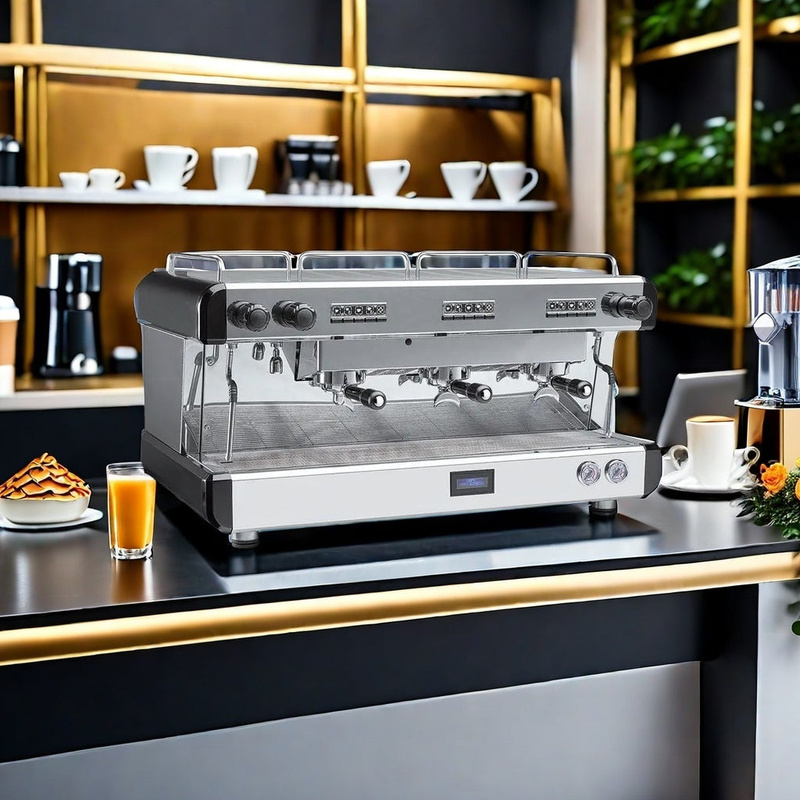
Order one machine. Run it in a real cafe for a month — the busiest one you have. Check the boiler recovers on a Saturday, check the steam, check the group gaskets after four weeks of backflushing. Then order the batch, specified exactly as the sample.
Any serious supplier agrees to this without hesitation. It costs you a month and it removes almost every risk in the batch. We supply samples at wholesale terms and credit the sample against the batch.
Deposit, Video, Balance
A deposit on order and the balance before shipment is the standard arrangement. What you add is the pre-shipment test video: each machine, or a representative sample of the batch, running — boiler up to pressure, shots pulled, steam wand working, the nameplate showing the voltage you ordered. Tie the balance to that video. It costs the supplier nothing to make and it is the nearest thing to inspecting the batch yourself.
One Container, Everything In It
Espresso machines rarely travel alone. A cafe opening needs grinders; a group that roasts needs a roaster; a dealer wants a range. A mixed container — espresso machines, grinders, and a roaster from our own factory if you roast — ships as one specification, one bill of lading, one clearance. It is cheaper per unit than three shipments and it means your opening date depends on one arrival, not three.
Ask for the packing list by container, with the machine count, the spares and the documentation listed.
The Document Pack
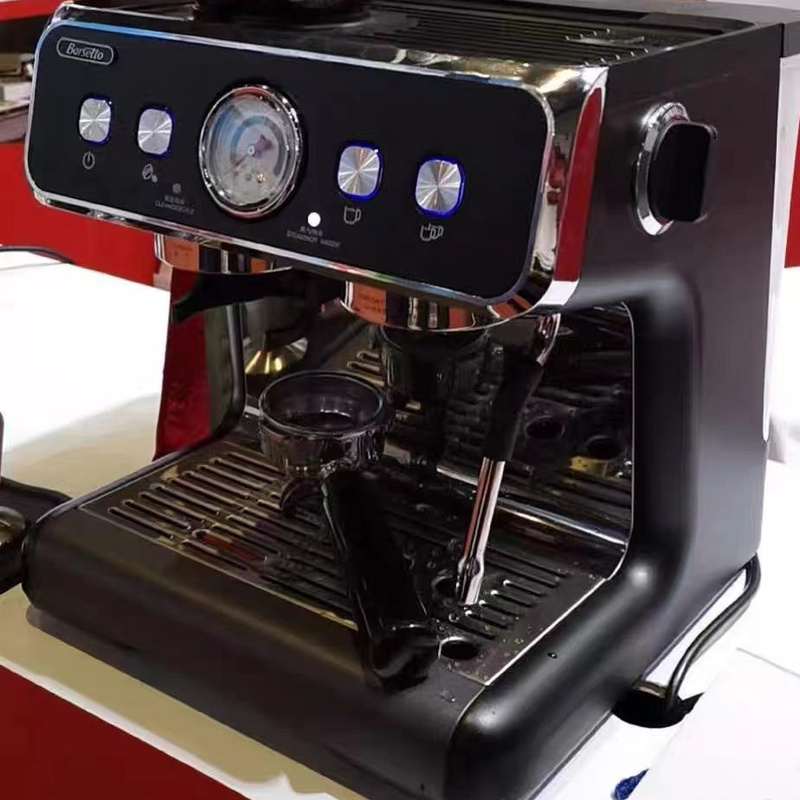
For import and for your own customers you need, per model:
- Certification — CE declaration for Europe with the electrical and machinery directives, and the pressure-equipment position on the boiler; other markets' marks as required. The certification guide lists what to check.
- Nameplate showing voltage, frequency, power and model — matching what you ordered.
- Manual and wiring diagram in your language, and a parts book with part numbers.
- Test record for each unit.
Ask for all four at quotation. A supplier that has them sends them in a day.
Spares and Warranty, Written Down
For a batch, negotiate spares and warranty on the quote rather than after — a spares kit per machine as priced line items, the warranty term and exclusion list, a response ladder and the parts freight convention — exactly the seven items set out in the after-sales guide, which apply to espresso machines as they do to roasters. Add a parts-availability commitment of five years on core components, which is a reasonable ask on a wholesale order.
What Can Be Customised on a Wholesale Order
- Voltage and frequency — 220–240V/50Hz, 110–120V/60Hz, or three-phase for large machines. Every unit in the batch built to your market.
- Colour and branding — panels in your colour, your logo on the body; dealer branding on manuals and packaging.
- Package deals — machine plus grinder plus accessories as one SKU, which is how our YS-3120 and YS-3201 package deals are set up.
- Tank or plumbed — tank-fed machines for markets with many carts and kiosks.
Customisation extends lead time; it is written on the quote.
The Part of the Price Your Customers Actually Pay For
When a cafe buyer compares your machine with an Italian brand at twice the price, the guides they read tell them the premium buys "the service network", and they are right. Equipment distributors typically work on a 20–30% margin, and in espresso machines that margin is earned after the sale: installation, a technician who arrives on a Saturday, a shelf of gaskets and solenoids, a loan machine while a boiler is out. A cafe will pay for that. A cafe will not pay for a machine nobody local can fix.
So the wholesale price from us is only the start of what you charge. Build the rest deliberately, and build it into the first order:
- Stock parts at about 2–3% of the order value on day one — gaskets, screens, solenoids, elements, pump seals, a pressure switch or two — and reorder against what you use. We price the kit as a line on the quote.
- A technician who has had the machine open. Send one person to the sample machine for a day with our video walkthrough, or have us run the strip-down on a call. The service story is only true if someone on your staff can tell it.
- A loan unit. One machine from the batch kept back, unsold, is worth more than the margin on it: it is what lets you promise "you will not close".
- Install and commission every machine yourself — water test, filter, voltage check, dial-in — and charge for it. It is where the relationship starts and where warranty disputes end.
Price the batch to your market with those four lines inside the margin, not on top of it. Dealers who do this hold customers through the second and third machine; dealers who sell on price alone are competing with the next importer's price the following year.
Frequently Asked Questions
How many machines make a first wholesale order worthwhile?
Enough to fill the gaps in a shared-container shipment around whatever else you are bringing in — typically five to ten machines with grinders — rather than a number set by us. Below that, a sample-and-repeat rhythm of one or two units by sea works and keeps your cash light; above about twenty units a full container and dealer pricing start to change the sums.
Can the batch be split across two voltages for two markets?
Yes, if each unit is specified for its market at order: motors, elements and plugs are set per machine, so a container can carry 110 V machines for one country and 220 V for another with the nameplates and manuals to match. What it cannot do is convert a machine later, so the split has to be right on the order confirmation.
Can I hold stock in a bonded warehouse rather than my own?
Yes, and for a dealer who sells across a region it is often the better shape: the container clears into bonded storage at the port, you pay duty on each unit as it leaves for a customer, and your cash sits in machines you have sold rather than machines on a shelf. We consign to the warehouse you name; the customs broker sets up the bonded entry, and the paperwork is the same as a direct import.
What if a customer of mine wants a feature the machine does not have?
Tell us; it is how the range moves. Some requests are configuration — tank-fed instead of plumbed, a different plug, a colour — and go into the next batch; some are engineering and become an OEM conversation with volume behind it. What we will not do is promise a feature on a quote that the machine does not have.
How do I handle a warranty claim from my customer without shipping the machine back?
The same way we handle yours: video with the sound on, diagnosis on a call, the part by courier and your technician fitting it with our engineer on the line. Machines do not go back across an ocean for a gasket or a board. Agree at the start whether we talk to your customers directly or through you, per client, and the process runs without you in the middle of every call.
Final Thoughts
Espresso machine wholesale from China runs smoothly when the sample comes first, the balance follows the video, the container carries everything, and the spares and warranty are on the quote. We supply on those terms as standard, and we can put a roaster from our own factory in the same container. Send us your model mix and your market's voltage. Get a wholesale quote.
Get a Quote → WhatsApp +86 184 0771 4607Last updated: September 23, 2026
Pingback: 1, 2 or 3 Group Espresso Machine: Which Do You Need? | Yoshan
Pingback: Espresso Machine Maintenance and Descaling: Keep the Warranty | Yoshan
Pingback: Commercial Espresso Machine Buyer's Guide: Start at Peak Hour | Yoshan
Pingback: Commercial Espresso Machine Certification: CE and the Boiler | Yoshan
Pingback: Italian-Style Commercial Espresso Machines: What You Pay For | Yoshan
Pingback: Manual vs Electric Coffee Grinder: What Each Sells, Stocking Both
Pingback: Coffee Roaster for the Philippines: 60 Hz, Resellers, Barako | Yoshan