
The same roaster is often offered at three control levels, and the price steps between them are not small. What you are paying for is not "better coffee" — no control panel roasts a better batch than a skilled person on a good day. You are paying for what happens on the other days: new staff, a second shift, the twentieth batch of the same blend. This guide sets out what each level does, and how to decide.
What the three levels actually are
The words are used loosely across the industry, so here is how we define them on our own machines.
Manual. The operator sets gas, airflow and drum speed by hand — knobs, buttons, a PID display — and adjusts them through the roast by watching bean temperature, colour and the trier. Nothing is stored. The machine does exactly what the person tells it, exactly when they tell it.
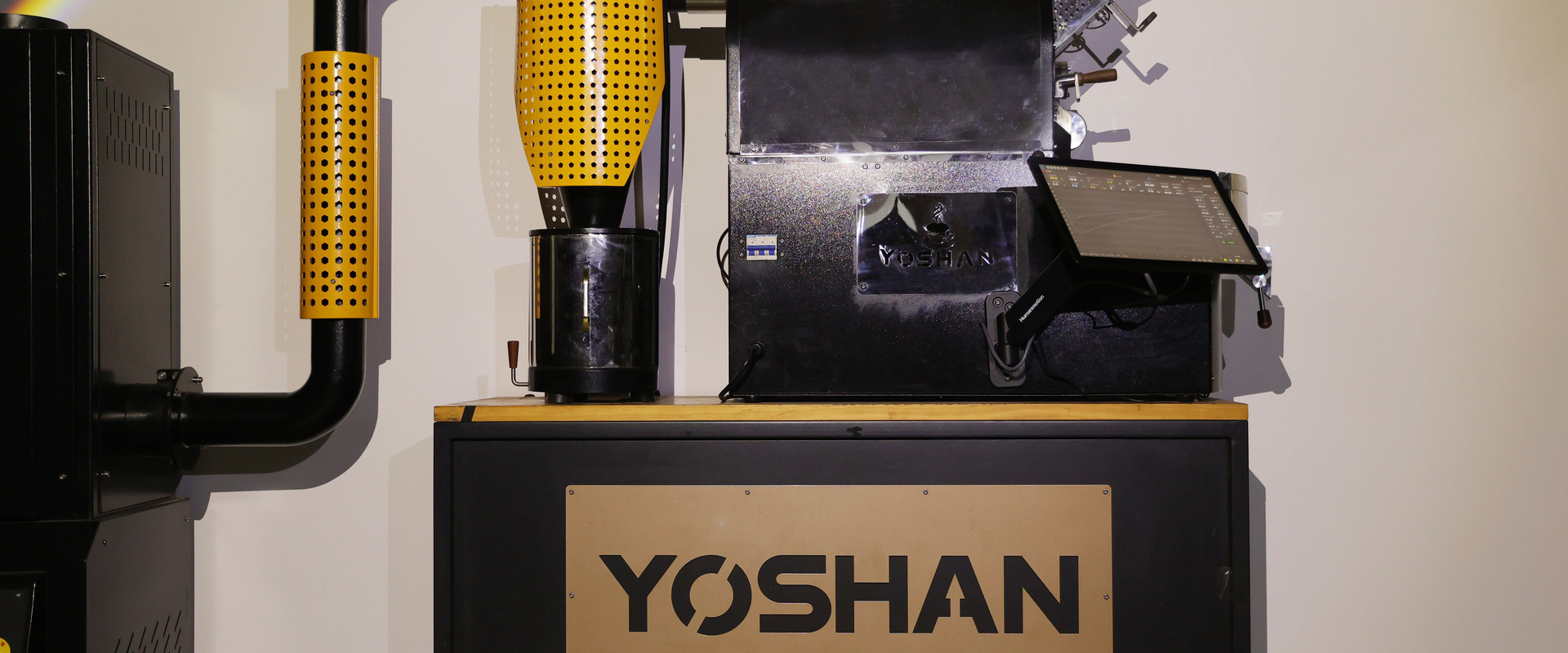
Semi-automatic. The machine has a touch-screen control station — on our YS machines a Siemens panel — through which the operator drives the roaster. Temperatures, times and set-points are visible and adjustable on screen, data is logged, but the operator still drives the roast in real time. Think of it as a manual machine with better instruments and a record of what you did.
Fully automatic. A PLC stores a complete roast profile — burner, airflow, drum speed against time or bean temperature — and replays it. The operator charges the beans, starts the program, and monitors. On our SD Pro machines this includes a profile system that records a roast you have done by hand and plays it back, and the ability to switch between manual and automatic mode on the same machine.
That last point changes the decision. It is not a choice between having control and giving it up. It is a choice about whether the option to replay is worth having.
What automation genuinely delivers
Be clear-eyed about this, because a lot of marketing is not.
Repeatability across people. A stored profile runs the same way whether the person at the machine has ten years of experience or ten days. When a roastery has more than one operator, or expects turnover, this is the single biggest benefit and it is real.
A record. Every batch logged against its profile means a problem can be traced: this batch ran long, that one charged cold. Manual roasting on a good machine can log too, but a replay system logs by default.
Lower cost of training mistakes. A new operator learning on a manual machine learns partly by ruining coffee. On an automatic machine they run a proven profile from day one and learn to read the roast without paying for it in green beans. For a business, the beans a trainee burns in the first months on a manual roaster are usually worth more than the automation itself.
Freed attention. When the machine is running the profile, the operator can be loading the next batch, cooling, bagging. On a production line this is where the labour saving actually comes from.
What automation does not deliver
It does not make each batch identical in the cup. A replay system reproduces what the machine did — the gas, the air, the drum speed. It cannot fully reproduce what the beans experienced, because the beans change: a new lot with different moisture, a colder morning, a slightly hotter drum from the batch before. Serious roasting writers have documented this for years, and their conclusion holds: automation reaches consistent results only when the conditions around it are consistent too.
That means two things sit alongside any automatic roaster. A between-batch routine that brings the drum back to the same state before every charge. And a consistent charge — the same weight, from beans stored the same way. Skip those and the automation replays a profile into a different starting point every time, and the results drift regardless of what the panel says. Our note on roast profile scaling covers why even the same profile behaves differently when batch size changes.
It does not develop profiles. Automation replays; it does not decide. Every profile in the system was first roasted by a person, tasted, adjusted and tasted again. That is why almost every production roastery uses both modes — automatic for the coffees it sells every week, manual for the coffees it is still learning. A machine that switches between the two supports that without a second roaster.
The question that decides it
Not "how much do I roast", but "who is at the machine, and will that change?"
- One experienced person roasts everything, and will for the foreseeable future. Manual or semi-automatic. Automation buys you little that this person cannot do, and the money is better spent on capacity or a destoner.
- More than one person roasts, or the person who roasts will change. Fully automatic, with switchable manual mode. This is the situation automation was built for.
- Multiple locations, private-label contracts, or a customer who audits your process. Fully automatic. The record is now part of the product.
- You are still finding your coffees. Whatever you buy, make sure it has a real manual mode. A replay-only machine is the wrong tool for development.
Volume matters only indirectly: high volume tends to bring more operators and more shifts, which is what pushes the answer toward automation.
How the three levels map onto our machines
| Control level | Our models | What you get |
|---|---|---|
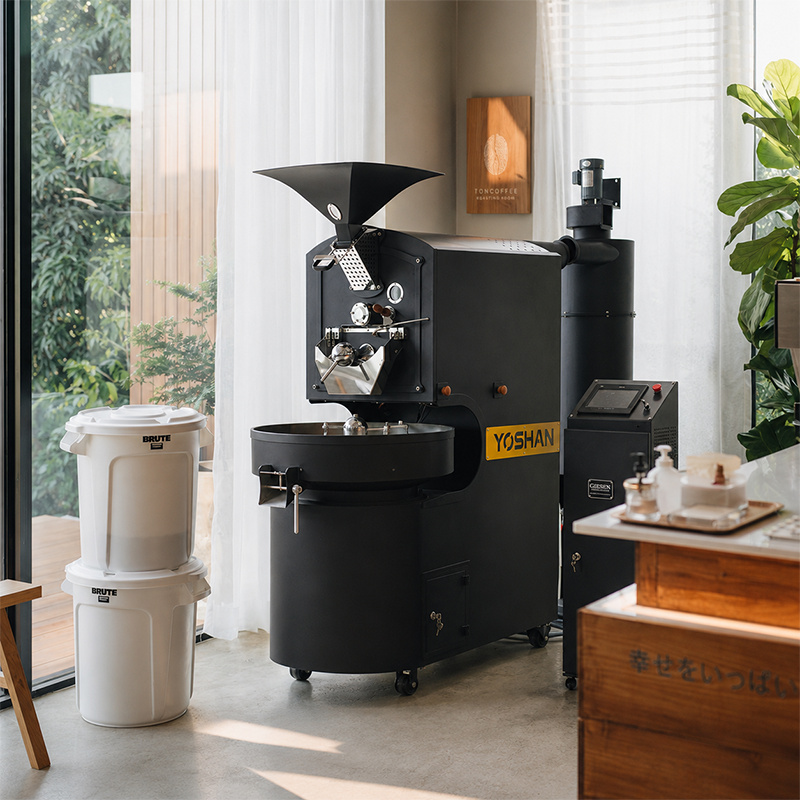
| Manual | SD-1.5 kg, SD-3 kg (manual versions), DY series | Button or PID control, cast iron or 304 stainless drum, gas or electric heating |
| Semi-automatic | YS-6 / 12 / 15 kg; YS-20 / 30 / 60 and above | Siemens touch-screen control station, data logging, dual thermocouples; larger models add auto loading |
| Fully automatic | SD-1.5 Pro through SD-360 Pro (300 kg class) | PLC touch screen, record-and-replay profile system, manual/automatic switching, double-layer cast iron drum |
The YS semi-automatic line is worth a word, because the term causes confusion. On our YS machines "semi-automatic" means the roaster is driven from the screen — you touch the panel to control the machine rather than turning valves — but you drive it. The Siemens system is described in more detail in our article on Siemens PLC coffee roaster automation. The SD Pro line is where the machine drives itself.
If you want data logging without paying for replay, note that our manual and semi-automatic machines can also connect to Artisan for profile recording — see connecting a coffee roaster to Artisan.
A practical way to decide
- Write down who will operate the machine in twelve months, not today.
- Count the number of coffees you will roast every week without changing the profile. If it is more than three or four, replay saves real time.
- Estimate the cost of a bad month of training on a manual machine — the beans, the reworked orders — and compare it with the price step to automatic.
- Insist on switchable manual mode whichever way you go.
FAQ
Does a fully automatic coffee roaster make better coffee?
No. It makes the same coffee more consistently across different operators and days, provided the beans and the drum start each batch in the same state. The quality of the profile it replays was set by a person. Automation protects that quality from variation; it does not raise it.
What is the difference between semi-automatic and fully automatic roasters?
On our machines, semi-automatic means the operator drives the roast from a touch-screen control station with logging and set-points but makes the decisions in real time. Fully automatic means a PLC stores a complete profile and replays it, with the operator monitoring. The SD Pro also switches back to manual.
Is a manual coffee roaster good enough for a commercial roastery?
Yes, if one experienced person does the roasting and will continue to. Many excellent roasteries run manual machines. The case for automation appears when several people roast, when staff change, or when contracts require a documented process. Volume alone does not force it.
Can an automatic roaster replay a profile on a different batch size?
Not reliably. A profile stores gas, airflow and drum speed; a different charge weight changes how the beans respond to them. Profiles need to be re-developed for each batch size, then stored separately. Automation makes the re-developed profile repeatable, not transferable.
Do I still need a skilled roaster with a PLC machine?
For development, yes. Every profile in the system was created and tasted by a person. For daily production of established coffees, a trained operator following the system is sufficient, which is where the staffing flexibility comes from. Most roasteries keep one skilled roaster and run production with the system.
Can I add automation to a manual roaster later?
Usually not in a way that matches a factory-built system. The control hardware, sensors and burner actuators are integrated at build. Data logging can be added later through software such as Artisan. If replay might matter within a few years, choose the Pro version now.
Which control level do most first-time buyers choose?
Café-scale buyers roasting themselves mostly choose manual or semi-automatic. Buyers planning wholesale or private label usually choose fully automatic from the start, because they expect staff to roast. The deciding factor is almost always the operator, not the budget.
Final Thoughts
Automation buys repeatability, records and cheaper training. It does not replace the roaster who builds the profile. Decide by who will run the machine in a year, and keep manual mode either way. Our fully automatic coffee roasters switch between both; the YS series gives you Siemens screen control without replay. Tell us about your team and we will recommend the level.
Request a factory-direct quote or message us on WhatsApp at +86 184 0771 4607.
Get a Quote → WhatsApp +86 184 0771 4607Last updated: September 22, 2026
Pingback: How Many Staff Does a Coffee Roastery Need? Staffing by Output
Pingback: PLC Coffee Roaster Automation: What It Does and Cannot Do | Yoshan
Pingback: How to Roast Decaf Coffee Commercially: Profile, Probe & Yield
Pingback: Roasting for Espresso vs Filter: Two Profiles, Two SKUs, Capacity Cost
Pingback: Rate of Rise in Production Roasting: RoR for Machine & Consistency
Pingback: Between-Batch Protocol for Consistent Back-to-Back Roasting
Pingback: How to Sell Wholesale Coffee to Cafés: Accounts to Roaster Capacity
Pingback: Parts of a Commercial Coffee Roaster: What Each Component Decides