
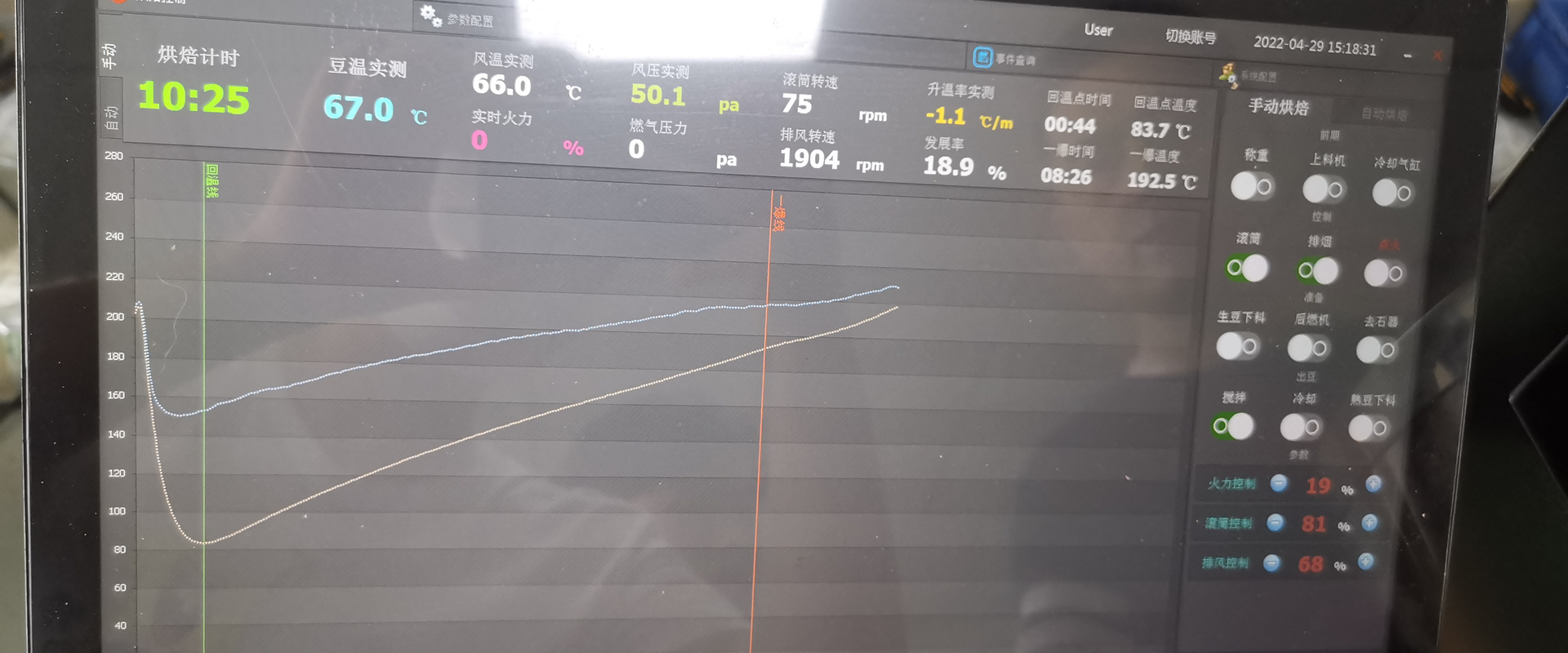
The argument about espresso roasts and filter roasts is usually held at the cupping table. For a roastery supplying cafés it is really held at the production schedule: a second profile means a second SKU, a second resting rule, a second bag, and fewer batches per week. This guide sets out what changes in the profile, why the useful split is milk drinks versus black coffee rather than machine versus dripper, and what two roasts cost in machine time.
What actually differs between the two roasts
Espresso extracts with hot water under pressure in under a minute, to a strength of roughly 7–10% dissolved solids; filter extracts at gentler temperatures over minutes to about 1.2–1.5%. The concentrated, fast extraction magnifies acidity and any unevenness in development, which is why roasters historically took espresso darker. Modern practice is more specific than "darker":
| Variable | Filter roast | Espresso roast | Why |
|---|---|---|---|
| Total roast time | Shorter | Longer, often by a minute or more | More time for the bean to become soluble and brittle |
| Development after first crack | About 20–25% of roast time | Similar ratio, but longer in absolute minutes | Rounds acidity, builds body |
| End temperature / colour | Lighter | Slightly darker, but often not by much | Avoid sourness under pressure |
| Curve shape | Steeper, faster to first crack | Flatter, gentler decline | Even development through the whole bean |
| Charge temperature | Higher | Often lower | Longer, gentler approach |
Two experienced views summarise the range. One camp roasts espresso almost always slower but hardly ever darker; another extends development so the bean is more brittle and grinds more evenly for the machine. Both agree on what a filter roast cannot do: a fast, light profile that shines in a dripper tends to taste sharp and thin as a shot.
The real split is milk versus black coffee
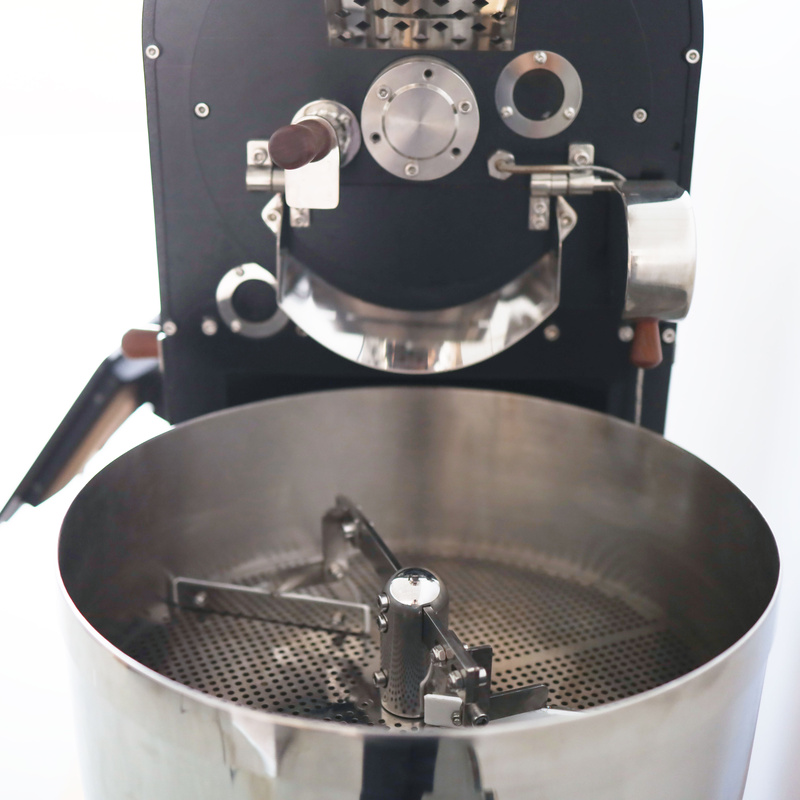
Most espresso in a café goes under milk — in many markets four drinks in five. Milk masks acidity and clarity and rewards body, sweetness and chocolate or nut character. Black coffee — espresso drunk straight, batch brew, pour-over — rewards the opposite. So the question a wholesale roaster should ask is not "espresso or filter?" but "will this coffee be drunk through milk or on its own?" A single coffee served as a straight shot and as a pour-over can share a profile; the same coffee served as a flat white probably cannot.
That reframing also explains the omni roast — one profile intended to work for both methods. It works for cafés that sell black coffee both ways and want one bag; it rarely works for a milk-drink café, whose baristas will find it sour in the jug. Decide by the account's menu, not by the brew method in the abstract.
What a second profile costs in production
This is the part flavour guides leave out, and the part that decides whether a roastery runs one profile or two.
Machine time. If the espresso roast is a minute longer than the filter roast on a 12–15 minute cycle, that is roughly 7% fewer batches per hour of the espresso SKU. Over a 20-hour roasting week on a machine roasting 5 kg per batch, it is on the order of 25–30 kg less output — a café account's worth. Batch arithmetic is in the coffee roaster batch size guide.
Scheduling. Two profiles mean grouping batches by profile so the drum's thermal state is right — an espresso batch after a run of filter batches behaves differently for the first cycle. The routine is the between-batch protocol.
Resting. Espresso roasts release carbon dioxide faster and need longer to settle — roasters commonly rest espresso for a week or more, filter for a few days. Two resting rules mean two stock ages on the shelf and a bag with a one-way valve for the espresso SKU.
Packaging and stock. A second SKU doubles the number of lots to track, labels to print and minimum stock to hold. For a roastery with three coffees that is six products instead of three.
Weight loss. A longer, slightly darker espresso roast loses a little more weight than a filter roast of the same coffee — a percentage point or two — which changes green purchasing and cost per roasted kilo; the arithmetic is in coffee roasting weight loss and yield.
What the machine has to do to hold two profiles
The espresso profile — flatter, longer, lower charge — leans on two machine properties more than the filter profile does.
Thermal mass. A flat, gentle decline through development is easier on a drum that stores heat and hands it back steadily. That is the argument for the cast-iron drums on our SD and YS series; a light stainless drum can roast the same profile but the operator adjusts more often. The trade-off is in cast iron vs stainless steel drums.
Controllable airflow. A longer development without a flat, baked result depends on moving air through the drum at the right rate late in the roast, which is the damper's job on a semi-hot-air machine.
Stored profiles. Running two profiles reliably across a week and across operators is where a PLC earns its price: on our SD Pro series both profiles sit on the touch screen and the operator selects one at charge; on the DY series they sit in Artisan as reference curves the operator follows by hand. Which control level suits which roastery is in manual vs automatic coffee roasters.
A practical rule for a wholesale roastery
- Start with one profile per coffee, decided by how the account serves it — a milk-drink profile for café espresso accounts, a lighter profile for black coffee.
- Add a second profile for a coffee only when an account's volume justifies its own batches — roughly when it fills a full batch on its own each week.
- Keep single-origin filter coffees on one profile and put the production time into the house espresso blend, which is where the volume is.
FAQ
Do you roast espresso differently from filter coffee?
Usually yes: a longer roast with more absolute development time and a flatter curve, sometimes slightly darker, so the coffee is more soluble and less sharp under pressure. Filter roasts are shorter and lighter to keep clarity. The difference is smaller than the old "espresso is dark" rule implies.
What is an omni roast?
A single profile intended to serve both espresso and filter brewing. It suits cafés that serve black coffee both ways from one bag; it rarely satisfies a milk-drink café, where a lighter omni profile tastes sour through milk.
How long should espresso coffee rest after roasting?
Roasters commonly rest espresso a week or more before it is dialled in, because the roast releases carbon dioxide faster than a filter roast, which needs only a few days. Two resting rules are one of the hidden costs of running two profiles.
Is espresso roast development time longer?
In absolute minutes, usually yes — the development ratio may be similar at 20–25% of the roast, but the whole roast is longer. That extra minute or so per batch is what a second profile costs in machine capacity.
Does roasting for espresso change weight loss?
Slightly. A longer, marginally darker roast loses a percentage point or two more than a filter roast of the same coffee, which raises the green cost per roasted kilo for that SKU.
Can one roaster run both espresso and filter profiles?
Yes. Any drum roaster can; what changes is how easily it repeats them. A machine with a cast-iron drum, controllable airflow and stored profiles on a PLC holds two profiles across a week with less drift than a manual machine with a light drum.
Final Thoughts
Decide espresso versus filter by how each account serves the coffee — milk or black — and count the second profile as a production cost before you add it. We build the SD series with cast-iron drums and stored profiles for exactly this kind of two-SKU schedule, and the DY series for roasteries running reference curves in Artisan. Tell us your menu split and we will size the machine.
Get a quote or message Leon on WhatsApp at +86 184 0771 4607.
Get a Quote → WhatsApp +86 184 0771 4607Last updated: September 23, 2026
Pingback: Roasting Coffee for Cold Brew: Profile, Grind & Packaging
Pingback: Coffee Roast Profile Development: Your First Profile | Yoshan
Pingback: Pre-Blend vs Post-Blend Roasting: The Production Arithmetic