
Ask how long it takes to train a coffee roaster and the answers range from a one-day certificate course to an eighteen-month apprenticeship, and neither is what a roastery owner needs. The practical question: how many weeks until a new hire can run the machine safely, follow the profiles, release batches and call for help at the right moment. This guide gives a six-week plan with pass criteria, and explains why the machine's control level moves the finish line.
What "trained" means here
Not a roast master. An operator who can, without supervision: start and shut down the machine safely; run the roastery's stored profiles on its regular coffees; recognise a batch going wrong and correct it or abort it; complete the batch record and make the release decision on the numbers; and stop and call when the machine misbehaves. Developing new profiles, buying green and cupping to a score stay with the head roaster — and are the longer apprenticeship the training guides describe.
Before the first batch: two things to have ready
Written profiles and a batch card. Training against a stored profile on a PLC, or a reference curve on screen, with a twelve-field batch record to fill in, gives the trainee something objective to match. The record is set out in the coffee roasting batch record.
The safety devices, shown not told. Where the gas isolator is, what the emergency stop does, why the high-limit trips and why it is never bypassed, what a chaff fire looks like in the collector. The list is in coffee roaster safety features and the room procedure in coffee roaster fire safety.
The six weeks
| Week | Focus | The trainee does | Pass criterion |
|---|---|---|---|
| 1 | Safety, cleaning, receiving | Start-up and shutdown checklist; empties chaff, cleans tray and probe; receives green and runs the intake check; fills batch cards for the head roaster's batches | Runs start-up and shutdown alone; intake check on a delivery without prompting |
| 2 | Shadowing and the curve | Watches every batch; draws the curve by hand from the screen; predicts first crack; learns the between-batch routine | Predicts first crack within a minute on the house coffees; between-batch interval held on the clock |
| 3 | First solo batches: dark roasts | Runs the darkest, most forgiving profile alone; head roaster present but silent; completes card, loss and colour, makes the release call | Ten consecutive batches released on the numbers; no safety prompts |
| 4 | Medium roasts and consistency | Runs the house espresso and filter profiles; overlays a day's curves; corrects a deliberate deviation set by the trainer | Colour within tolerance on eight of ten batches; drift across the day explained, not excused |
| 5 | The difficult coffees | Decaf, then light roasts, then any dense or low-density outliers the roastery carries | Decaf batch by probe, not eye; light roast without a crash |
| 6 | Scheduling and faults | Plans a roast day from the order sheet; handles a staged fault (blocked collector, probe unplugged); shuts down and reports correctly | Roast day run to plan; fault identified and machine isolated before calling |
The order of coffees in weeks 3–5 — dark first, then medium, then decaf, then light — is the order experienced trainers use: each step is less forgiving than the last. Decaf and light roasts are where a new operator's habit of roasting by colour fails, so they come after the probe habit is fixed; the reasons are in how to roast decaf coffee commercially.
The two mistakes to design out
Trainers report the same two. Roasting too light: a new operator, afraid of burning the batch, drops early and the coffee is thin and grassy. The fix is the number, not the eye — colour and loss on the card, and the trainer's deliberate exercise in week 4 of roasting one coffee to three levels and cupping them blind. Chasing the batch: correcting every wobble with the burner produces an unrepeatable roast. The fix is the between-batch routine and the rule "one change per batch, written on the card" — the discipline in the between-batch protocol.
Why the machine changes the timeline
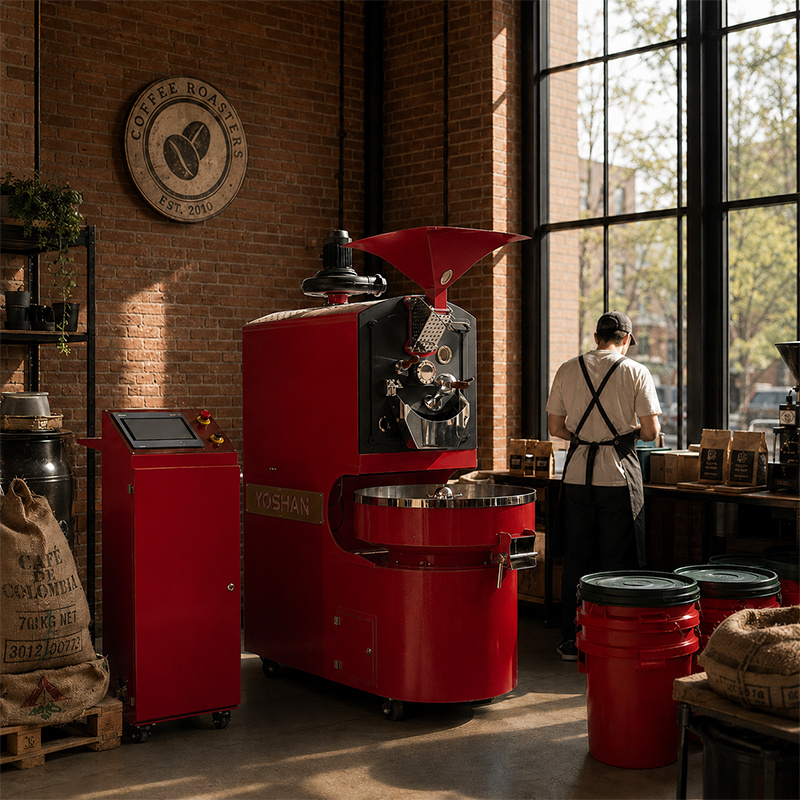
The plan above assumes a machine with stored profiles or a live curve on screen. The control level moves the finish line more than the trainee does.
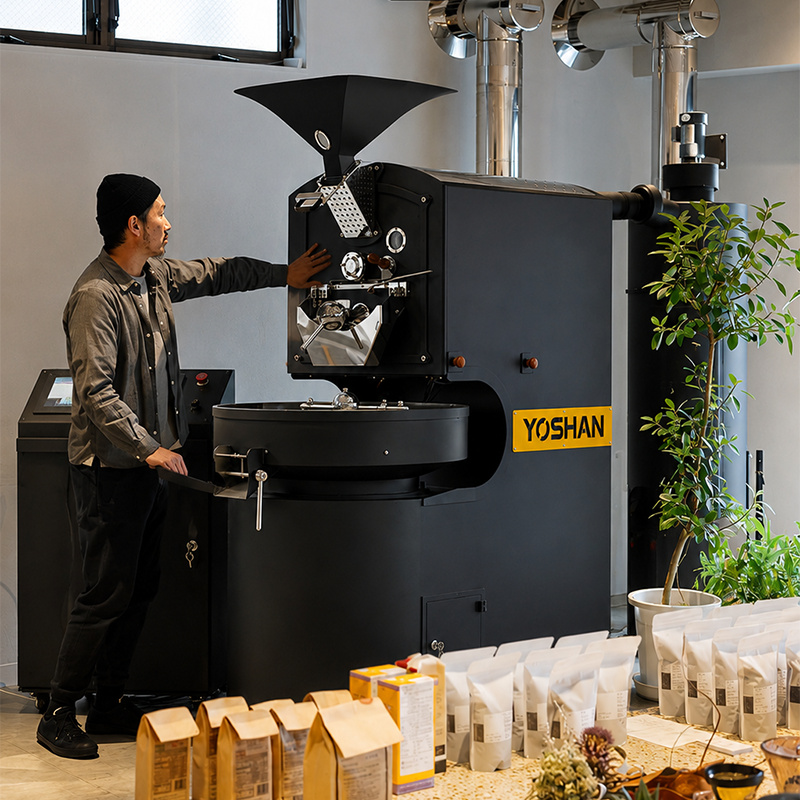
- PLC with stored profiles (our SD Pro series): the controller runs burner and damper to the curve; the operator watches for exceptions. Weeks 3–4 compress — an operator is typically releasing production batches in two to three weeks, and the head roaster's attention goes to the exceptions and the new profiles.
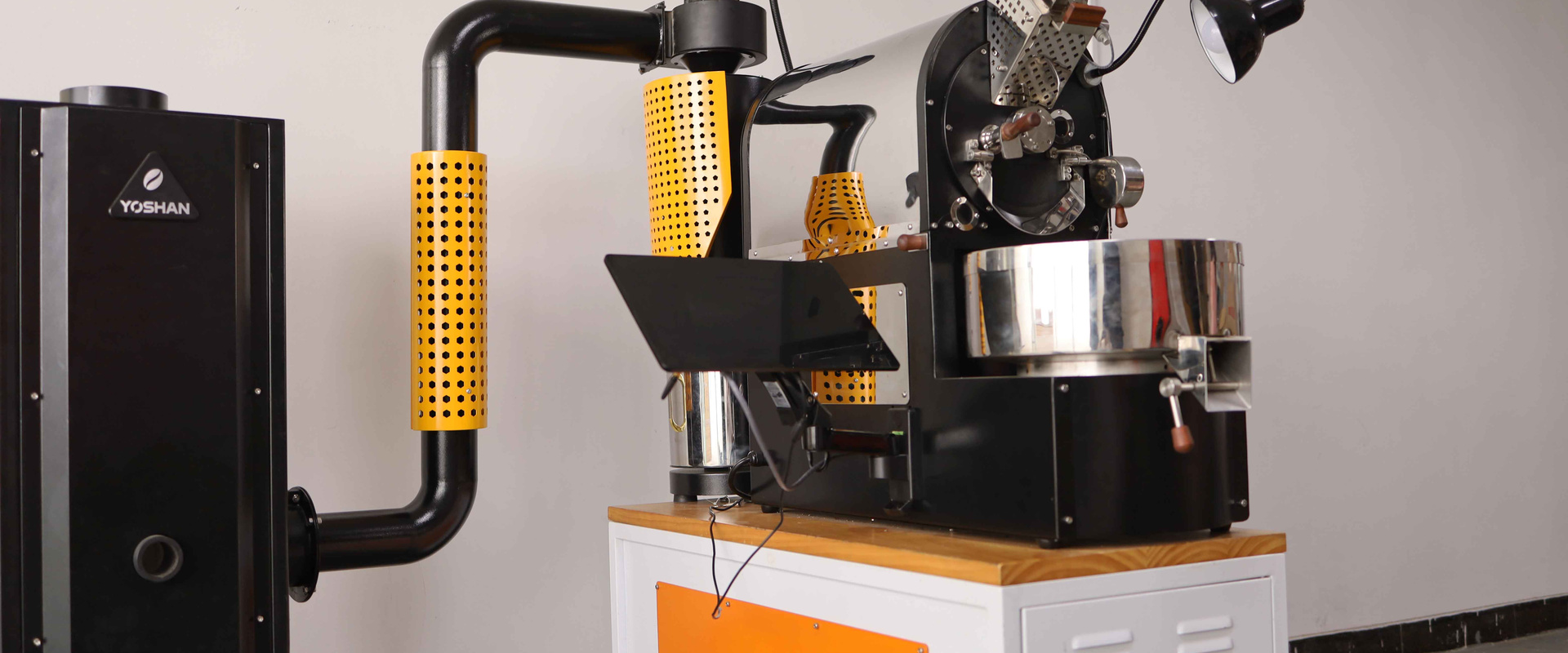
- Touch-screen control with independent motors (our YS series): curve on screen, drum speed and fans set separately; the operator adjusts by hand against a reference. The full six weeks, with week 4 the hard one.
- Manual machine with Artisan (our DY series): the operator reads the reference curve and moves the gas and damper by hand throughout. Six to eight weeks, and consistency depends on the person longer.
That is the argument roasteries with staff turnover make for automation: not better coffee, but a shorter path from hire to unsupervised operator, and less quality riding on one person. The comparison is in manual vs automatic coffee roasters.
Courses, and what they are for
A one-day foundation course covers heat transfer, machine anatomy, the roast cycle, roast levels, defects and safety — useful in week 2, before the first solo batch. An intermediate course of around three days goes into profile, colour, development time and sample roasting — useful after sign-off, for the operator you want to become a roaster. Neither replaces the six weeks on your machine with your coffees; both shorten the vocabulary problem. We provide operator training at handover and 24/7 lifetime phone and online technical support after it, which covers the "is this normal?" questions of weeks 1–3.
Sign-off and after
Sign-off is a checklist, not a feeling: the six pass criteria initialled by the head roaster, filed with the training record. After sign-off, a quarterly review — overlay a month of the operator's curves, check colour and loss trends by operator, cup a blind set — keeps the standard from drifting once nobody is watching, and is the point at which a second operator can be trained by the first.
FAQ
How long does it take to train a coffee roaster?
To run a production machine safely, follow stored profiles and release batches on the numbers: about six weeks on a manual or semi-automatic roaster, two to three weeks on a PLC machine with stored profiles. Developing profiles, buying green and cupping to a standard is the longer apprenticeship — often a year or more.
What order should a new roaster learn coffees in?
Dark roasts first, because they forgive small errors; then the house medium profiles; then decaf, which cannot be roasted by eye; then light roasts, which punish a crash; then any dense or unusual lots last. Each step is less forgiving than the one before.
What are the most common mistakes new coffee roasters make?
Roasting too light out of fear of burning the batch, and chasing every wobble with the burner so no two batches match. Both are fixed by numbers on the batch card — colour and loss — and by the rule of one written change per batch.
Is an SCA roasting course enough to run a roastery machine?
A foundation course teaches the vocabulary and the safety basics in a day and an intermediate course goes deeper over about three days; neither replaces weeks on your own machine with your own profiles. Use them to shorten the plan, not to replace it.
Does an automatic roaster make training faster?
Yes. With stored profiles on a PLC the controller runs the curve and the operator watches for exceptions, so unsupervised production typically starts in two to three weeks instead of six. It is the main operational argument for automation in a roastery with staff turnover.
What should a roaster training record contain?
The six weekly pass criteria with dates and initials, the safety walk-through signed, the batch cards from the training batches, and the quarterly review results after sign-off — the file that shows an auditor or an insurer who is competent to run the machine.
Final Thoughts
Train to a checklist, in six weeks, dark to light, with the batch card as the examiner — and choose the machine knowing that stored profiles cut the path to an unsupervised operator by half. We deliver operator training with every roaster and builds the fully automatic SD Pro series for roasteries that need the shorter path.
Get a quote or message Leon on WhatsApp at +86 184 0771 4607.
Get a Quote → WhatsApp +86 184 0771 4607Last updated: September 23, 2026
Pingback: How Many Staff Does a Coffee Roastery Need? Staffing by Output