
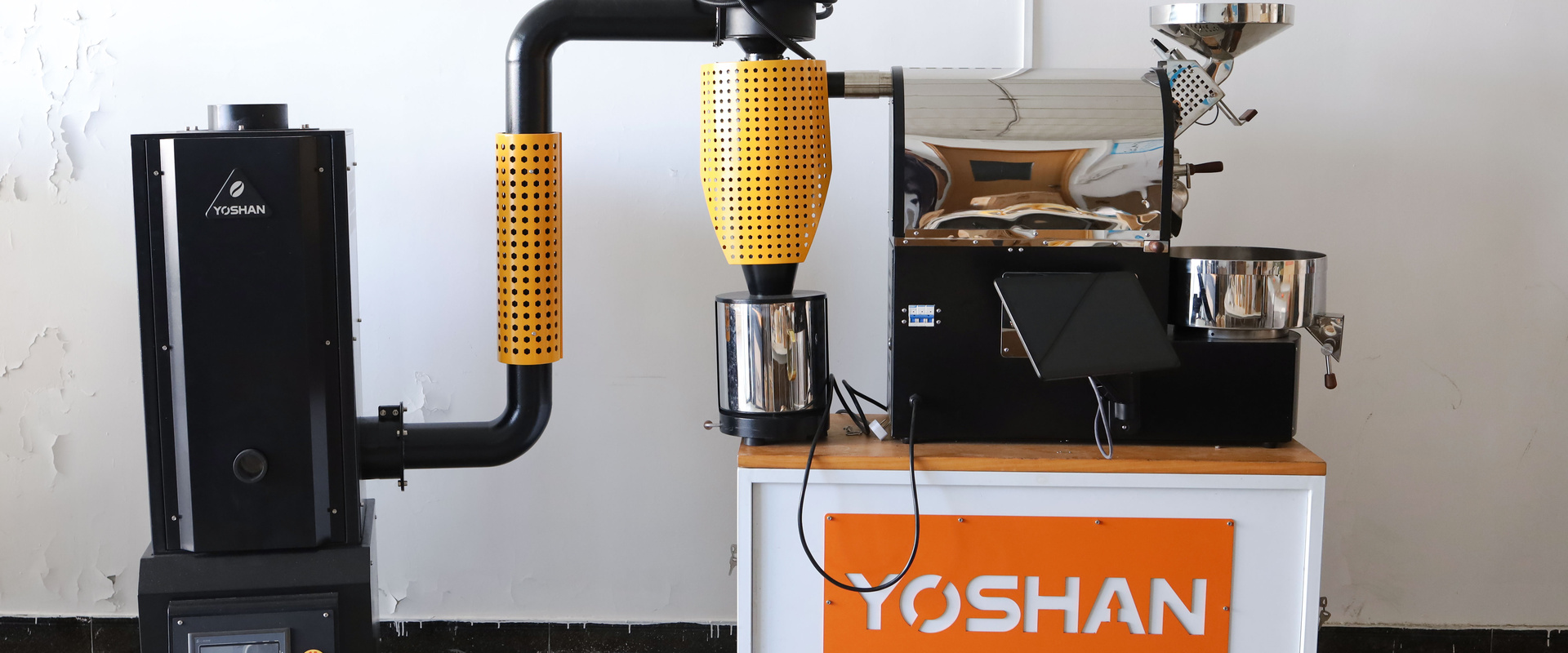
If you roast, you will hear a fire story sooner or later — usually about chaff. Roasting means holding organic material above 200 °C inside a machine that collects flammable dust all day, so coffee roaster fire safety is not paranoia, it is process. Here is why roastery fires start, the routine that stops nearly all of them, and exactly what to do in the first sixty seconds if one starts anyway.
Where Roastery Fires Actually Start
-
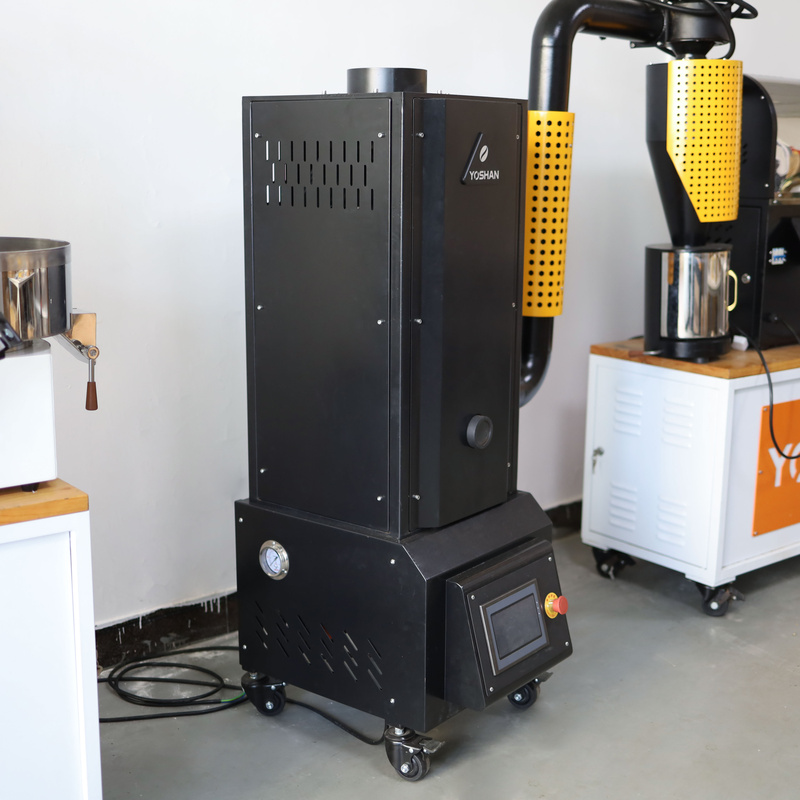
Chaff collector & cyclone (most common) — dry chaff is tinder; a spark or ember pulled through the airflow lands in a full collector and smolders, sometimes flaring up an hour after you shut down
-
Ducting tar — coffee oils condense in exhaust ducts as creosote-like tar; over months it becomes fuel a stray ember can ignite, exactly like a chimney fire
-
In-drum bean fire — pushing a dark roast too far past second crack, or a jammed batch sitting in a hot drum, ignites the beans themselves
-
Cooling tray re-ignition — beans dumped hot with the fire barely suppressed get oxygen from the cooling fan and reignite outside your machine
The Prevention Routine (Stops ~95% of Incidents)
| Frequency | Action |
|---|---|
| Every session | Empty your chaff collector — before AND after roasting; never leave chaff in your machine overnight |
| Weekly | Vacuum the cyclone interior and cooling tray screen; check for chaff pockets around the drum face |
| Monthly | Inspect the first meter of exhaust duct for tar; wipe accessible sections |
| Every 3–6 months | Full duct clean (more often at dark-roast volume) — tar buildup is your roastery equivalent of a chimney fire waiting |
| Always | CO2 or dry-chemical extinguisher within reach; staff know the gas shutoff location |
This slots straight into the broader maintenance schedule; duct design that stays cleanable is covered in the ventilation guide.
The First Sixty Seconds: In-Drum Fire
-
Cut the gas (emergency stop or valve) — remove the heat source first
-
Close the airflow damper — fire needs oxygen; choking the air usually kills a drum fire in place
-
Keep the drum rotating — a stopped drum lets beans pile and warps the drum with concentrated heat
-
Do NOT dump into your cooling tray — the cooling fan is a bellows; smoldering beans flare instantly in open air. Only dump once you are confident the fire is out, tray fan OFF, extinguisher in hand
-
If flames persist: a brief water mist through the bean trier port — steam suppresses; do not flood a hot drum
Chaff/Cyclone Fire
Shut the fans (stop feeding it air), keep the collector sealed, and discharge the extinguisher at the base if it is actively flaming. A sealed metal cyclone starves most chaff fires by itself — which is why you never roast with the collector door ajar. Afterwards, treat the whole duct run as suspect and clean it before the next roast.
What the Machine Should Contribute
-
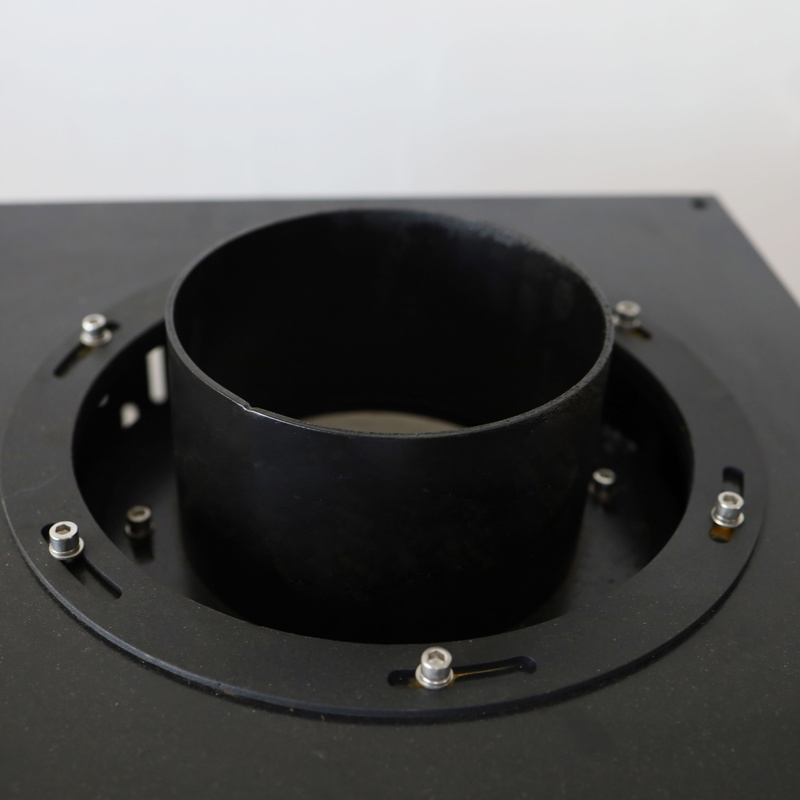
Temperature alarms — exhaust-temp spike warning is the earliest fire signal; PLC models (our YS series) alarm and can auto-cut the burner
-
Flame-failure protection — gas valve closes if the flame goes out (standard on CE-configured burners; verify on any machine you buy — see the CE guide)
-
Accessible chaff collector — if emptying is awkward, humans skip it; our collectors open without tools for exactly this reason
-
Steel construction with sealed electricals away from the chaff path
Insurance and Inspections
Fire inspectors and insurers increasingly ask roasteries for: your machine’s conformity documents, your duct-cleaning log, and extinguisher placement. Keep a one-page cleaning log next to your roaster — five seconds after each session, and it doubles as your insurance evidence. Buyers in strict jurisdictions: pair your roaster with an ESP filter or afterburner to control what leaves the stack.
Training the Routine Into Your Team
A fire routine that lives in the owner's head is not a routine. Print the sixty-second sequence — gas off, air closed, drum turning, nothing into the tray — and put it at eye height where the operator stands; walk every new roaster through it on their first day, with the gas shut-off and the extinguisher pointed out, not described. Run the drill once a quarter with the machine cold: who cuts the gas, who closes the damper, who calls. Log the chaff emptying and your duct cleaning on a sheet by the machine, and keep the sheet, because it is what your insurer and your fire inspector will ask to see. Every drum from the DY-1 to the SD-60 Pro has your chaff collector opening without tools and the gas shut-off within reach for exactly this reason.
Frequently Asked Questions
How do I tell a chaff fire from normal smoke?
Normal exhaust is steady, grey, and changes with the roast; a chaff fire produces a sudden thicker plume, often with a sharp acrid smell, sometimes with the exhaust temperature reading climbing when nothing on the profile explains it — and it can appear an hour after you shut down. If the plume changes without you touching the gas, treat it as a fire: fans off, collector sealed, extinguisher in hand.
What should be in a roastery fire kit?
A CO₂ or dry-chemical extinguisher within reach of the roaster and a second by the exit, a fire blanket, a metal bin with a lid for hot chaff, heat-resistant gloves, and a laminated card with the gas shut-off location and the sixty-second routine on the wall where the operator stands. Add a smoke detector rated for the room, wired to alarm rather than to trip the power to the exhaust fan.
Which of your machines have fire-related protection built in?
All gas burners are fitted with flame-failure protection that closes the gas valve if the flame goes out; the SD Pro and YS machines add exhaust-temperature alarms on the PLC and can cut the burner automatically, and every model has a chaff collector that opens without tools so emptying it is never skipped. The CE guide explains how to verify the gas safety devices on any machine.
Does an electrostatic filter or afterburner change the fire risk?
An afterburner adds a second burner to the exhaust and must interlock with the roaster so it cannot run without airflow; an electrostatic filter collects oil on its plates, which is fuel if the plates are not washed every few weeks. Neither is a hazard when maintained, and both are logged items an inspector asks about; the smoke filter guide covers the cleaning interval.
What does my insurer want to see?
Three things, usually: the machine's conformity documents, a duct-cleaning and chaff-emptying log with dates, and extinguisher placement with service tags. Keep a one-page log by the roaster — a tick after each session — and photograph the duct interior when it is cleaned. A roastery with those on file makes a claim straightforward; one without them makes it an argument.
Final Thoughts
Coffee roaster fire safety is a routine: empty the chaff every session, clean the duct on schedule, keep the extinguisher where you stand, and know the sixty-second sequence before you need it — gas off, air closed, drum turning, nothing into the tray. The machine helps with flame failure and alarms; the routine is yours. Send us your model and we send the checklist for it. Talk to our engineers.
Get a Quote → WhatsApp +86 184 0771 4607Last updated: September 17, 2026
Pingback: Coffee Roaster Batch Size: Min & Max Load Explained
Pingback: Coffee Roaster Afterburner: Do You Need One, and Which Type | Yoshan
Pingback: Coffee Roastery Permits & Inspections: The Five Reviews to Pass
Pingback: Coffee Roaster for India & South Asia: Power, LPG, Paperwork | Yoshan
Pingback: Training a Coffee Roaster Operator: A Six-Week Plan to Sign-Off
Pingback: Coffee Roaster Troubleshooting: Burner, Drum, Probes & Airflow