
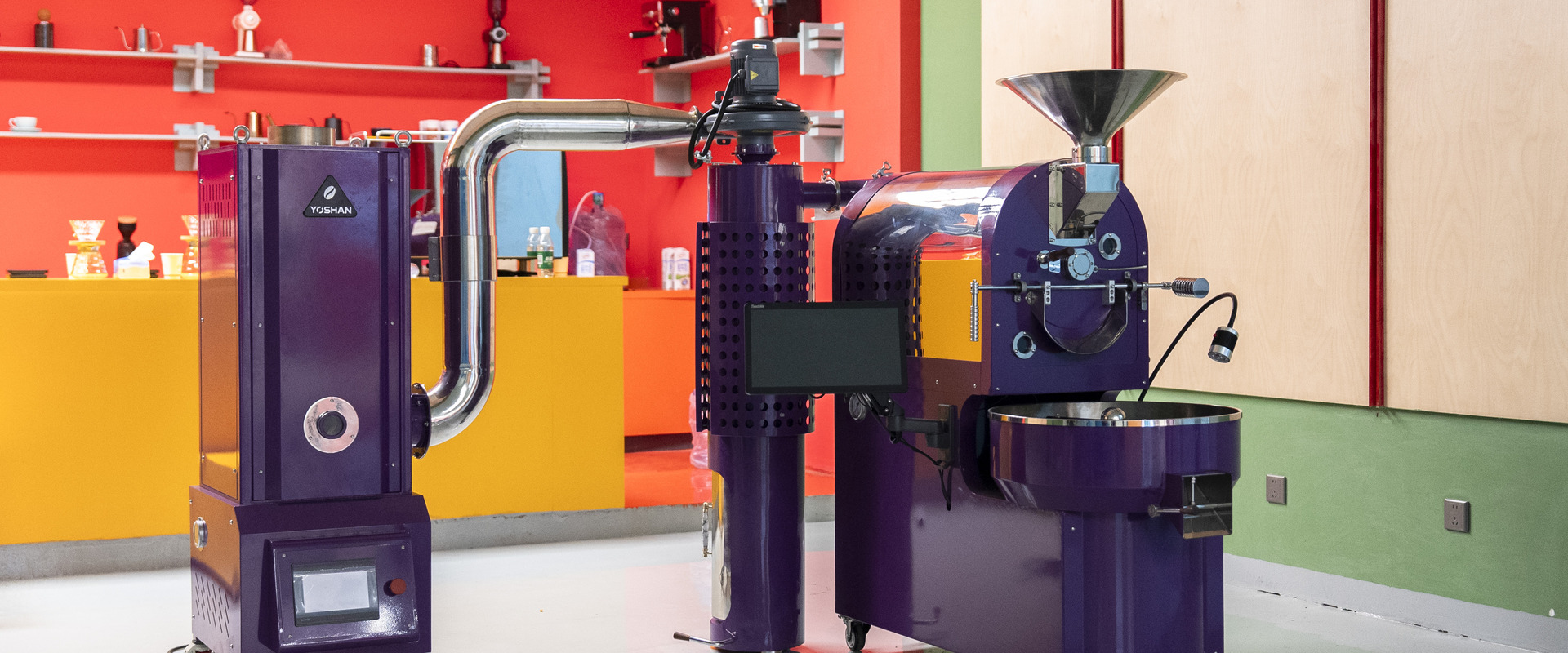
If you are writing a coffee shop equipment list, the generic checklists will give you forty items and no idea what to buy first. Your list depends on one thing: what kind of shop you are opening. So here are three lists — a cart or kiosk, a neighbourhood cafe, and a cafe that roasts its own coffee — each with the order to buy in, and the four things every one of them needs.
Set-Up 1: Cart, Kiosk or Counter With No Plumbing
The constraint is space and water. Everything has to fit on a counter and run from a tank.
| Item | What to look for | Where it fits |
|---|---|---|
| Espresso machine, tank-fed | 1- or 2-group, built-in water tank and waste, 220–240V single phase | Our YS-Tank models on the commercial coffee machine page |
| Espresso grinder | 58–64 mm burrs, hopper | YS-C98pro class — USD 1,099 |
| Compact alternative | 2-in-1 machine with grinder built in | EM-650 for the smallest counters |
| Milk fridge, under-counter | Sized to a day's milk | — |
| Knock box, tamper, pitchers, scale | The barista kit | — |
| Water: tank filtration | Filter jug or in-tank cartridge | Non-negotiable even on a tank machine |
Buy first: the machine and grinder as a matched pair, then the fridge. Everything else is smallwares.
Set-Up 2: Neighbourhood Cafe, 80–150 Drinks an Hour at Peak
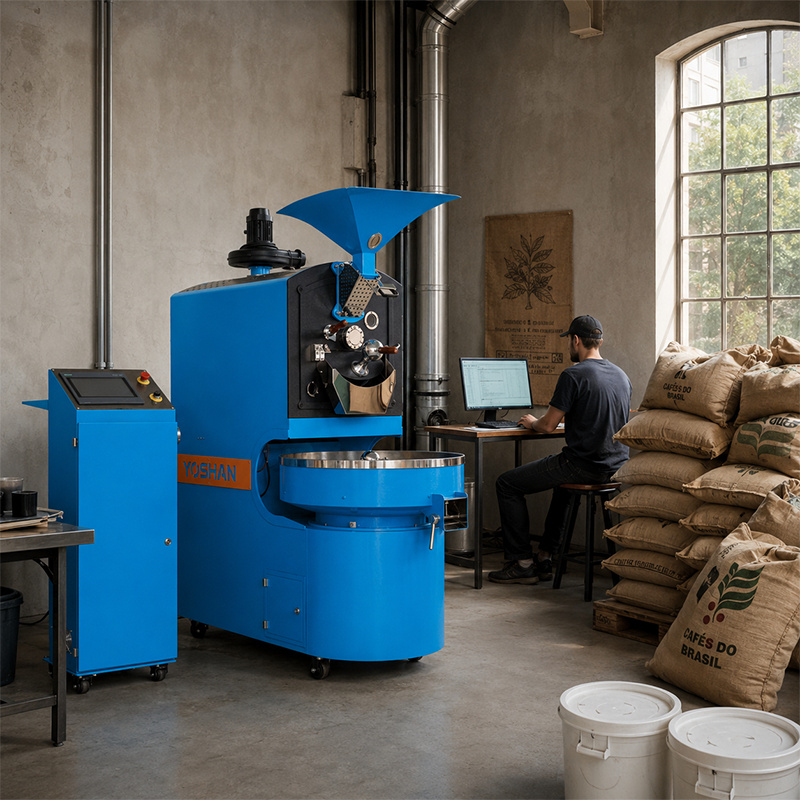
The constraint is throughput at the rush.
| Item | What to look for | Where it fits |
|---|---|---|
| Espresso machine, plumbed | 2-group, heat-exchange or dual boiler by menu | YS-3120 / YS-3201 class — the buyer's guide sizes it |
| Espresso grinder | 64–75 mm flat burrs | YS-020 class (USD 119) or YS-C98pro (USD 1,099); see the grinder guide |
| Filter grinder | Separate grinder for batch brew or pour-over | Second grinder — one cannot do both |
| Batch brewer | Sized to morning filter volume | — |
| Water treatment, plumbed | Softener or filter sized to your hardness | Water treatment guide |
| Refrigeration | Milk fridge at the bar, display fridge for food | — |
| Ice machine | Only if your menu is iced-heavy | — |
| Bean-to-cup backup | Optional: for the shift without a barista | YS-BAE01 / BAE02 — USD 459 / 609 |
Buy first: espresso machine, two grinders and water treatment together — they are one system. Then refrigeration. The equipment package deals bundle machine and grinder for this reason.
Set-Up 3: Cafe That Roasts Its Own Coffee
Everything in Set-Up 2, plus the roasting corner. This is where the economics change: a cafe buying roasted coffee pays a roaster's margin on every kilo; a cafe roasting its own keeps it.
| Item | What to look for | Where it fits |
|---|---|---|
| Coffee roaster | 1–3 kg for the cafe alone; 6 kg if you add wholesale | DY-2 USD 3,399 or SD-3 USD 4,599 to start; SD-6 Pro / YS-6 USD 12,999 / 7,499 to grow — built at our own factory, prices ex-works |
| Chaff cyclone and duct | Ships with the roaster; duct to outside air | — |
| Green coffee storage | Cool, dry, off the floor | — |
| Sample tins, scale, cupping bowls | For checking every batch | — |
| Bulk grinder (if selling bags) | Ground-to-order retail | Bulk grinder guide |
| Bags and sealer | Valve bags, hand or semi-auto sealer | Packaging equipment |
Buy first: the roaster, sized from your weekly kilos — the sizing guide does the maths — and settle voltage, gas and exhaust before it ships.
The Four Things Every Set-Up Needs
- Water treatment. Scale kills espresso boilers and voids warranties. Fit it before the first shot.
- A spares kit. Group gaskets, shower screens, a solenoid, grinder burrs. Cheap in the crate; expensive on a Saturday. See the maintenance guide.
- Cleaning kit. Backflush detergent, group brushes, milk-system cleaner, grinder brushes. Daily, not weekly.
- Scales. One at the grinder, one at the machine. Consistency starts with weighing.
The One Machine That Changes Your Margin
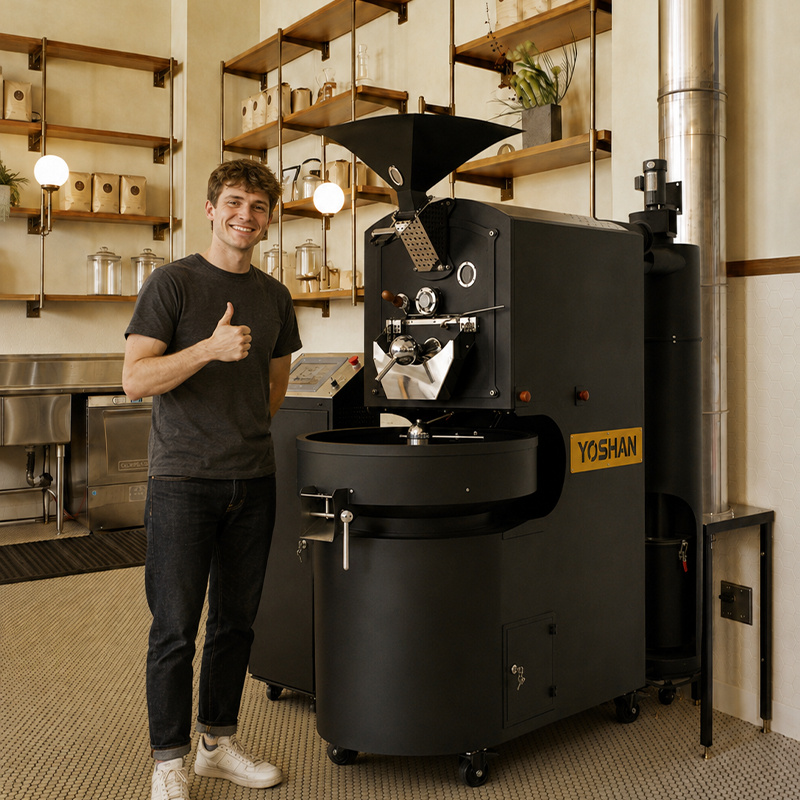
Every other item on these lists costs you money to run. A roaster is the one that earns it back: the difference between what you pay a roaster per kilo and what green coffee plus gas costs you is usually half or more of your coffee cost. It is also the only item on the list we build at our own factory rather than supply. If you are opening a cafe and thinking about roasting later, size the roaster now and plan the exhaust into the fit-out — retrofitting it is the expensive way round. The ROI guide puts your own numbers on it.
One Container, Everything In It
Opening on time depends on everything arriving together. Espresso machine, grinders, water treatment and — if you roast — the roaster ship as one specification in one container, one clearance, one delivery. The wholesale guide explains sample-first ordering and how payment against a test video works.
When to Order What: Working Back From Opening Day
The list tells you what; the calendar tells you when, and the order matters more than most first-time owners expect, because the long-lead items are the ones that decide the opening date.
Twelve to sixteen weeks out — the machines. Espresso machine, grinders and, if you roast, the roaster. Sea freight alone is several weeks; build time comes before it; customs and delivery after. Order these first, with the voltage, gas and plug type confirmed by your electrician, and everything else fits around their arrival.
Eight weeks out — the building. Water treatment plumbed in, a dedicated circuit at the right voltage where the machine will sit, a drain, and — for a roaster — the exhaust route to outside air and whatever your council said about it. These are trades with their own lead times, and a machine sitting in a crate waiting for a plumber is the commonest way to lose a fortnight.
Four weeks out — refrigeration, brewers, furniture. Available locally, short lead, easy to move.
Two weeks out — smallwares and consumables. Pitchers, tampers, scales, cleaning kit, the first green or roasted coffee, cups and lids.
Opening week — commissioning. The machine installed and dialled in, staff trained on the closing routine, the water filter logged, the spares kit on the shelf. If you roast, the drum seasoned and a baseline profile built before the first saleable batch.
Run it backwards from your date and the machines are the first thing you buy, not the last.
Frequently Asked Questions
Do I need an ice machine?
If more than a fifth of your drinks are iced, yes, and it is the appliance most new cafes leave off the list: a bar making iced lattes and cold brew through a summer goes through more ice than a bag-and-freezer routine can supply, and buying ice daily costs more than the machine within a season. Size it to summer peak, plumb it with a filter, and leave clearance for its heat.
What can I lease rather than buy?
Refrigeration, dishwashers and often the espresso machine, which local suppliers lease with service contracts; roasters, grinders and smallwares are usually bought. Leasing keeps opening cash down and puts service on someone else's calendar, at a monthly cost that over five years exceeds the purchase. Buy what you will keep and know how to service; lease what you want someone else to fix on a Saturday.
How do I plan power for the whole list, not just the espresso machine?
Add up connected loads: the espresso machine on its own circuit, the grinders and brewers on ordinary circuits, refrigeration and an ice machine on theirs, and — if you roast — the roaster's motors or element. A 2-group cafe without roasting fits a normal commercial supply; add an electric roaster or a 3-group and you are asking the electrician about a bigger board. The voltage guide gives the draws.
What is the minimum list to open for a soft launch?
The espresso machine and one grinder, water treatment, a fridge, a scale and a knock box, cups and lids, and a card reader — everything else can arrive in the first month. A soft launch on the minimum list tells you which of the optional machines you actually need; most cafes discover the second grinder and the ice machine in week two and the batch brewer never.
How do you help a first-time owner who does not know what to order?
Send us your store type from the three above, your expected peak hour, your menu split and your voltage, and we come back with the list for that set-up priced from the espresso machines and grinders we supply, with the roaster from our own factory if you plan to roast, and the order in which to buy. It takes a day and commits you to nothing.
Final Thoughts
A coffee shop equipment list is short once you know your store type: a tank machine and grinder for a cart, a plumbed 2-group with two grinders and water treatment for a cafe, and a roaster on top if you want to keep the roasting margin. We supply the first two and build the third. Send us your store type and your voltage. Get a quote for the whole set-up.
Get a Quote → WhatsApp +86 184 0771 4607Last updated: September 17, 2026