
You own the roaster now, or you are about to, and you want to know what looking after it actually involves. Most coffee roaster maintenance schedules list tasks by day, week and month. This one is sorted the way you will use it: by who does the job — you, your electrician or gas fitter, or a call to us — with the parts that wear and the one habit that decides half the machine's life.
The One Habit That Decides Half of It
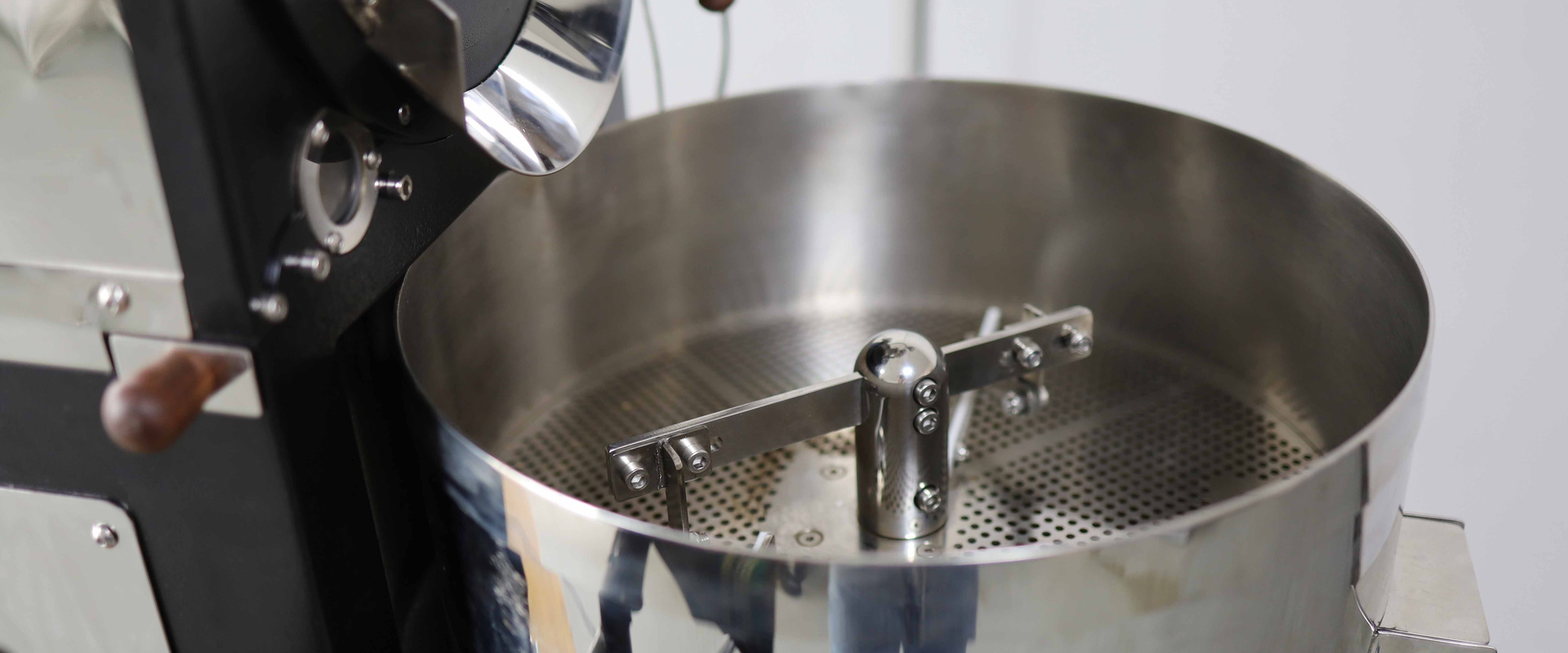
Chaff. The papery skin that comes off the beans collects in the cyclone, the ducting, the cooling tray and around the drum. Left alone it restricts airflow, so your temperatures drift; it coats the probes, so your readings drift; and it is dry, oily and next to a burner, so it is the most common cause of roaster fires. Production roasters who have run machines for decades say the same thing: chaff build-up is the first cause of unstable roasts and the first cause of fires.
Empty the cyclone after every session on a small machine, daily on a large one. Everything else on this page is secondary to that.
The Schedule, by Who Does It
| When | You do | Your electrician / gas fitter does | Call us |
|---|---|---|---|
| Every session | Empty the chaff cyclone; brush the cooling tray screen; wipe the sight glass and the trier (sampling spoon); listen for new noises, smell for gas | — | — |
| Weekly | Vacuum chaff from the cooling tray base and fan; check the duct joints for leaks; clean the bean probe tip gently; check drum belt tension by hand | — | — |
| Monthly | Clean the exhaust duct as far as you can reach; check the drum bearings for play or noise; inspect burner flame — even, blue, no yellow tips | Check the gas connection and regulator for leaks with detector fluid | If the flame pattern or drum noise has changed and you cannot see why |
| Every 3 months | Deep-clean ducting; check chaff cyclone seals; back up your saved profiles | Check electrical terminals for heat marks; test the emergency stop and safety interlocks | — |
| Annually | Replace drum bearings if any roughness; replace belts; replace the bean and drum probes if readings have drifted | Full gas train inspection; motor and fan bearing check; earth and insulation test | Calibration check of probes against a reference; PLC firmware and backup on PLC models |
Print that table and put it beside the machine. Two things worth doing that are not on it: keep a log of every batch (Artisan or the PLC does it for you), and photograph the flame and the drum once a month so you can see change over time.
How to Tell the Airflow Is Blocking Before It Costs You a Batch
Chaff does not announce itself; the roast does. Restricted airflow shows in the numbers and the smell days before the cyclone looks full, and reading it early is the cheapest maintenance you will ever do.
| What you notice | What it usually means |
|---|---|
| Same gas setting, first crack arriving later each week | Less air through the drum — heat is not reaching the beans; duct or cyclone filling |
| Smoke leaking at the drum door or trier when the fan is on | Exhaust cannot pull; blockage downstream of the drum |
| Exhaust temperature reading climbing batch to batch at the same charge | Hot air stalling in the duct instead of leaving |
| Cooling tray taking longer to cool the same weight | Tray screen or cooling fan clogged with chaff and oil |
| Smoky, flat, "baked" cups from a profile that used to be clean | Airflow too low for the profile — the roast is stewing in its own smoke |
Any two of those together, stop and clean the duct end to end, not just the cyclone. Roasters who run large machines take the ducting apart monthly and re-seal the joints; on a 3–6 kg machine every quarter is usually enough, but the table above overrides the calendar. The oil that coats the duct from dark roasts is also fuel, which is why a monthly look inside the first duct section is a fire check as much as a performance one.
If the numbers drift and the duct is clean, the probe is the next suspect — a coated bean probe reads late — and after that, call us with the log.
The Parts That Wear, and What to Keep on the Shelf
A drum roaster — whether a DY, an SD or a YS — has a short list of parts that fail on a schedule rather than by accident:
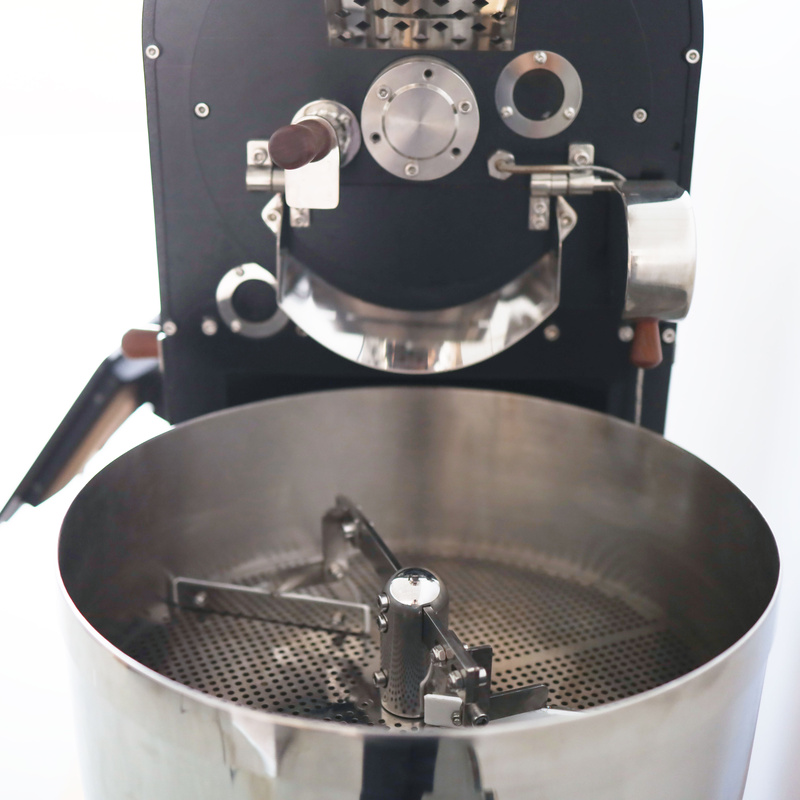
- Bean and drum thermocouples — the temperature probes. They drift before they fail. Keep two.
- Drum bearings — they announce themselves with a rhythmic noise. Keep one set. Our after-sales guide has a real bearing-swap case done by a customer on a video call.
- Belts — drum drive and cooling fan. Keep one of each.
- Burner nozzle and gas jets — especially if your gas supply is dirty or you have switched between LPG and natural gas.
- Door and cyclone seals — cheap, and a leaking seal is a chaff leak.
- Sight glass — cracks from thermal shock if you clean it hot.
Order a starter kit with the machine; it ships in the same crate for almost nothing. Common parts then travel by courier, typically within a week.
When to Call, and What to Send
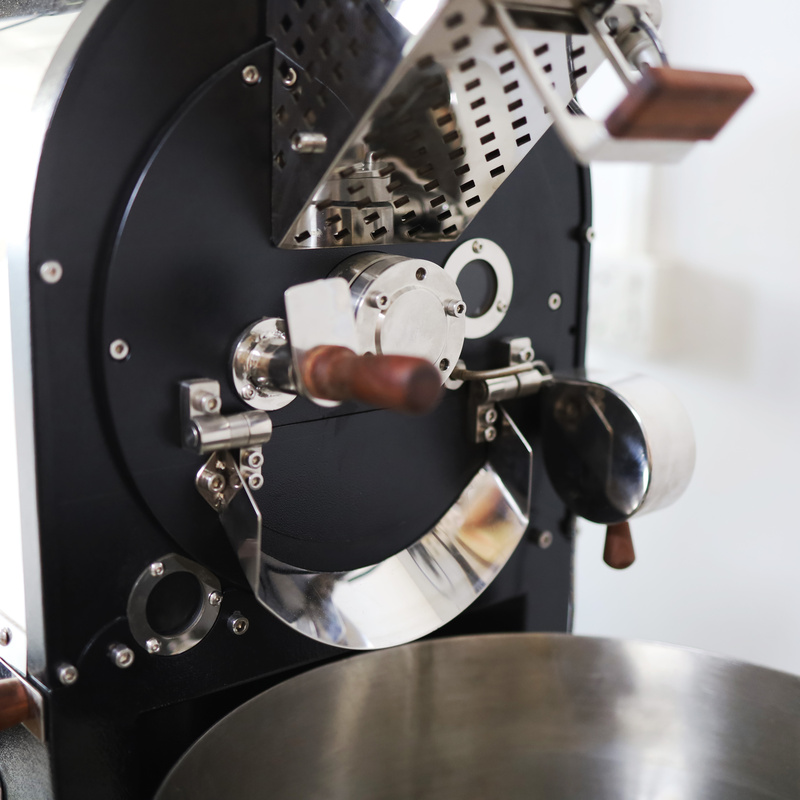
Call us — on WhatsApp, with video — when:
- A noise or vibration is new and you cannot locate it.
- The flame is yellow, lifting or uneven after you have checked the gas supply.
- Temperature readings do not match what you see and taste, after cleaning the probes.
- Anything electrical trips, smells or shows heat marks.
- The PLC shows an error you do not recognise.
Send a short video with the sound on, the model and serial from the nameplate, and what changed recently (gas bottle, cleaning, a new coffee). That gets most faults diagnosed the same day.
What Maintenance Has to Do With Your Warranty
Your warranty covers defects in components — controls, motors, burner parts. It does not cover wear items — probes, belts, seals, bearings after their expected life — or damage from chaff fires, blocked ducts or a dirty gas supply. That is standard across the industry, and it is why the schedule above matters: the things that are not covered are exactly the things the schedule prevents.
Keep the log. If a claim ever comes up, a maintained machine with records is a straightforward claim.
If you are still at the buying stage, the two guides that sit either side of this one are commissioning and drum seasoning — what you do before the first batch — and after-sales support — what happens when something does fail.
Frequently Asked Questions
How do I keep the log without it becoming a chore?
One line per session on a sheet taped beside the machine: date, batches, cyclone emptied (tick), anything unusual. Once a month, photograph the sheet and the flame and file both. That is thirty seconds a day, and after a year it is the only record that shows a bearing started growling in March or the flame went yellow after the new gas bottle — and the first thing an insurer or a warranty claim asks for.
What lubricant do the bearings take?
A high-temperature food-grade grease, applied sparingly at the interval on your machine's sheet; ordinary grease breaks down next to a hot drum and the excess collects chaff. The drum bearings on our machines are greased at the factory and want attention at the annual check, not weekly. If a bearing needs grease more often than that, it is telling you about alignment or a seal, not lubrication.
Can I run the roaster while a wear part is on order?
Usually, if you know what it is: a drifting probe means roasting by colour and sound until the new one arrives; a worn belt means shorter sessions and no back-to-back batches. A bearing that growls, a flame that lifts or anything electrical that smells means stop — those are the faults that turn a part into a repair. Keep the starter kit stocked and the question rarely arises.
Should I service the machine before a long shutdown?
Yes — the shutdown is when damage happens. Empty the cyclone and the cooling tray completely, run the drum empty and hot for ten minutes to drive off moisture, shut the gas at the bottle, and cover the machine against dust. On restart, treat it as a commissioning day: dry run, listen, low heat, then a seasoning batch. Coming back to a machine after three months of chaff sitting in a damp cyclone is how the fire stories start.
Which maintenance jobs need the gas shut off?
Anything that opens the burner compartment or touches the gas train — cleaning the burner ports, checking jets, inspecting the flame sensor — and any work inside the drum. Shut the valve at the bottle or the wall, not just at the machine, and let the drum cool to hand-warm first. Routine cyclone emptying and tray brushing do not need the gas off, but they do need the burner out and the drum stopped.
Final Thoughts
A commercial coffee roaster is a simple machine that lasts fifteen to twenty years if the chaff comes out, the probes stay clean and the wear parts are swapped before they fail. Sort the schedule by who does what, keep a starter kit on the shelf, and send us a video when something changes. Ask our engineers — or order your spares kit with the next enquiry.
Get a Quote → WhatsApp +86 184 0771 4607Last updated: September 17, 2026
Pingback: Drum Roaster vs Fluid Bed: Which Fits a Growing Business | Yoshan
Pingback: Coffee Roaster Fire Safety: Where Fires Start and the First 60 Seconds
Pingback: Coffee Roaster Batch Size Guide: Usable Window, What Breaks | Yoshan
Pingback: Coffee Roaster Troubleshooting: Burner, Drum, Probes & Airflow
Pingback: Coffee Roast Defects: Tipping, Scorching, Baking and the Fix | Yoshan
Pingback: Coffee Roaster Drum Bearings: When to Replace & How to Source Abroad
Pingback: Coffee Roaster Spare Parts: 9 Items to Keep on the Shelf
Pingback: Cast Iron vs Stainless Steel Coffee Roaster Drum: Real Differences
Pingback: Coffee Roaster Commissioning: Crate to First Saleable Batch | Yoshan
Pingback: Coffee Roaster Afterburner: Do You Need One, and Which Type | Yoshan
Pingback: Parts of a Commercial Coffee Roaster: What Each Component Decides