
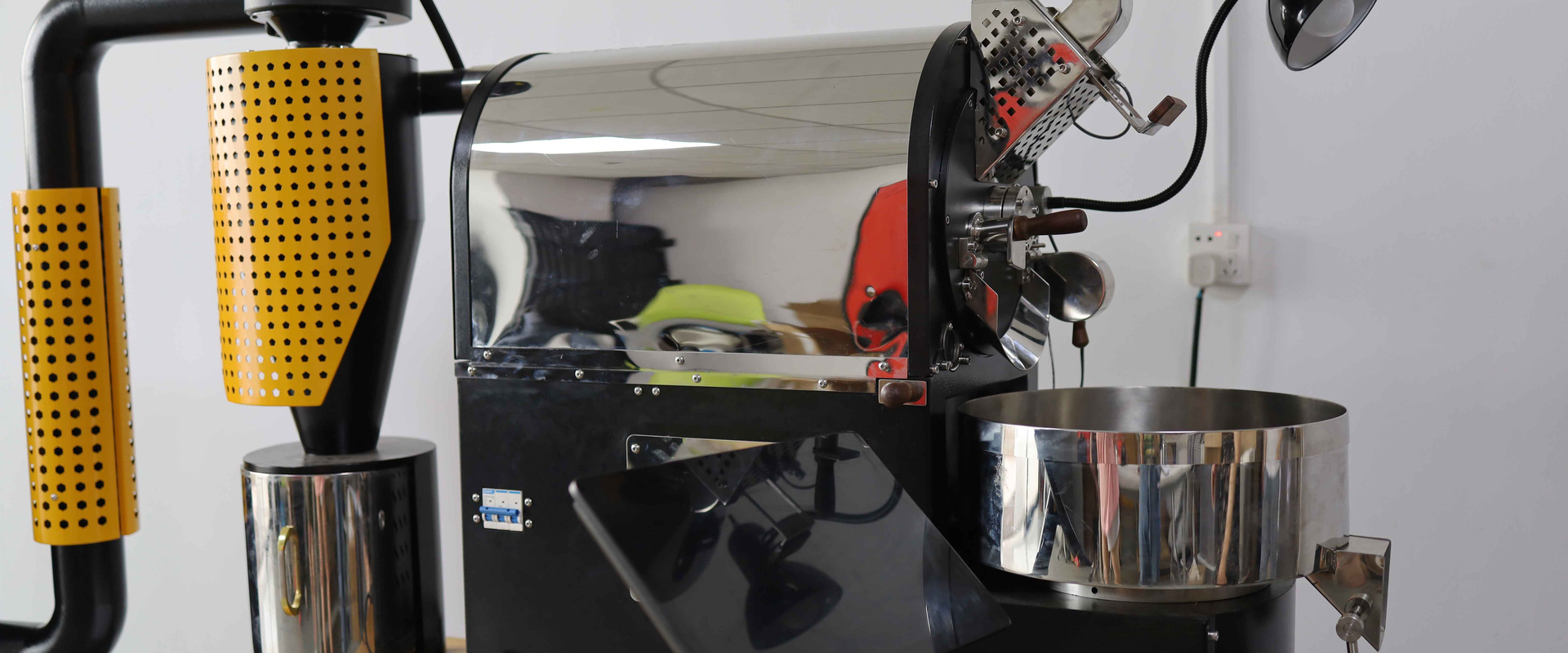
If you are buying a coffee roaster for India, Sri Lanka, Bangladesh, Nepal or Pakistan, you probably know more about coffee than we know about your market — the questions we get from Bengaluru cafes, Coorg estates and Colombo distributors are consistently sharp. What trips projects up here is almost never the roasting. It is the power supply, the LPG bank and the customs file, so those come first, with what is ours to supply and what is yours.
1. Power: 230 V at the Socket, the Panel Is the Question
The whole region runs 230 V single phase at 50 Hz, with 400–415 V three-phase in commercial premises. We wire to your supply — but we need to know which before the build.
| Machine | Load | Supply to arrange |
|---|---|---|
| Sample roaster, electric | 1.5–3 kW | Ordinary 230 V 15 A point |
| 1–2 kg electric (DY-1 / DY-2) | 3–6 kW | Dedicated single-phase circuit with its own breaker |
| 3–6 kg gas (SD-3, YS-6) | 0.5–1.5 kW, motors and controls | Ordinary point plus the LPG connection |
| 12–30 kg gas | 1.5–4 kW | Commonly 415 V three-phase for drum and fan motors |
| Afterburner or ESP filter | 3–15 kW | Its own circuit, never shared |
Two regional details. Supply stability: voltage dips and outages are a normal condition in parts of the region, and a roast cut mid-cycle is a lost batch — and if the exhaust fan stops with the drum hot, a safety event. If your site is unreliable, budget a stabiliser sized to the machine, and make sure any generator carries the fan and drum motors, not just the lights. Phase order: on three-phase machines a reversed sequence spins the drum and fan backwards — a five-minute fix at commissioning if someone checks, a bad first day if nobody does. The voltage guide and the commissioning guide cover both.
2. Gas: Commercial LPG, in a Bank
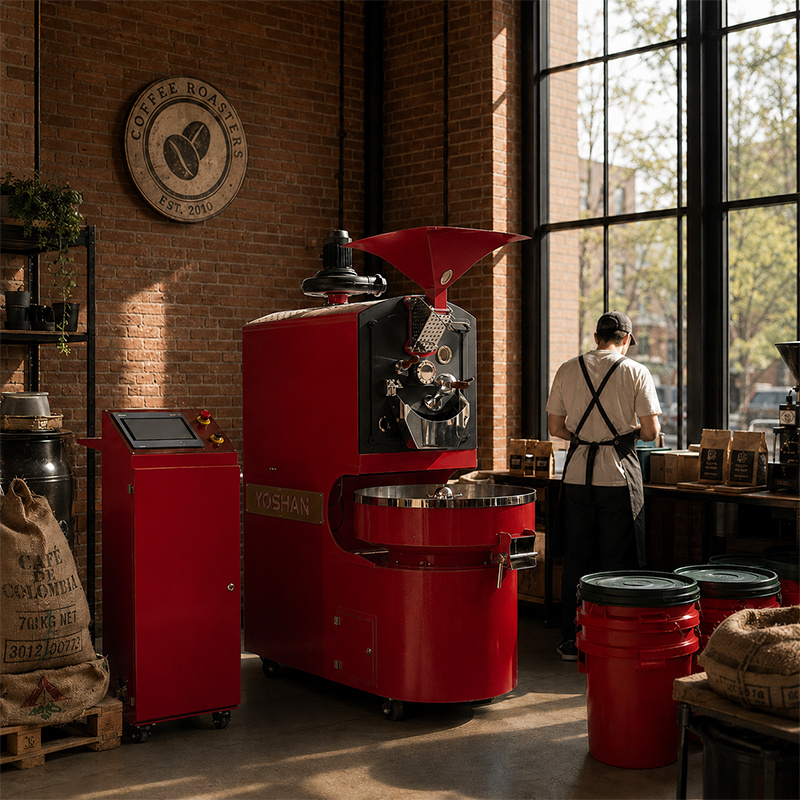
Above about 3 kg most South Asian roasteries run gas, and that means LPG from commercial cylinders; piped natural gas exists in parts of urban India and Pakistan but is the exception.
- Tell us the fuel at order. LPG and natural gas need different injectors and regulator settings; converting after delivery is an installer's job you can avoid with one line in your enquiry.
- Commercial cylinders, not domestic. A roaster running for hours freezes a small domestic cylinder and loses pressure mid-roast. A manifolded bank with an automatic changeover regulator is the normal installation.
- Pressure drop at the end of the day is one of the commonest false alarms we handle on WhatsApp — check the bank before you blame the burner.
- Approval is local. Cylinder storage, fire clearances and, in India, the petroleum and explosives rules are for your licensed gas contractor and the local fire authority; have that conversation before the machine ships.
Where gas approval looks slow, electric is a real option to about 6 kg — the gas vs electric guide and the running costs guide give the trade-offs.
3. Paperwork: What Your CHA Will Ask For
Procedural rather than difficult, and usually rushed.
- An importer code first. In India the IEC from the DGFT, before the order, not when the vessel is arriving; other markets have their equivalents.
- A customs broker early. Give the CHA the machine description, code, invoice value and weight, and get the expected duty and documents in writing. Roasting machinery generally sits under headings such as 8419 or 8438 — have them confirm for your machine, because the code drives the rate.
- Budget landed cost. Basic customs duty plus cess, then IGST on the assessed value — machinery is commonly assessed at 18%, and IGST is normally creditable against your output GST if you are registered, which changes the real cost materially. Confirm both with the CHA and your accountant.
- What we provide: commercial invoice, packing list, bill of lading, certificate of origin, and the declaration of conformity with component certificates where you need them. If you will claim a preferential rate, tell us before shipment so the right certificate of origin is issued.
- BIS: mandatory registration applies to specified categories, and industrial roasting machinery is not typically among them — but individual electrical components can be listed and rules change, so ask your CHA for your consignment. The CE guide shows the file we send regardless.
4. Ports and Timing
| Destination | Port of discharge | Port to port |
|---|---|---|
| West and central India | Nhava Sheva, Mundra | 18–28 days |
| South India | Chennai, Cochin, Tuticorin | 15–25 days |
| East India, Nepal transit | Kolkata, Haldia | 15–25 days |
| Sri Lanka | Colombo | 14–22 days |
| Bangladesh | Chattogram | 15–25 days |
| Pakistan | Karachi, Port Qasim | 18–28 days |
Direct or transhipped via Singapore, Port Klang or Colombo; your forwarder picks the service. With 25–40 days of production, plan ten to fourteen weeks from deposit to first roast; Nepal-bound machines clearing an Indian port under transit procedures need extra. The shipping guide has the landed-cost lines.
5. The Market You Are Roasting Into
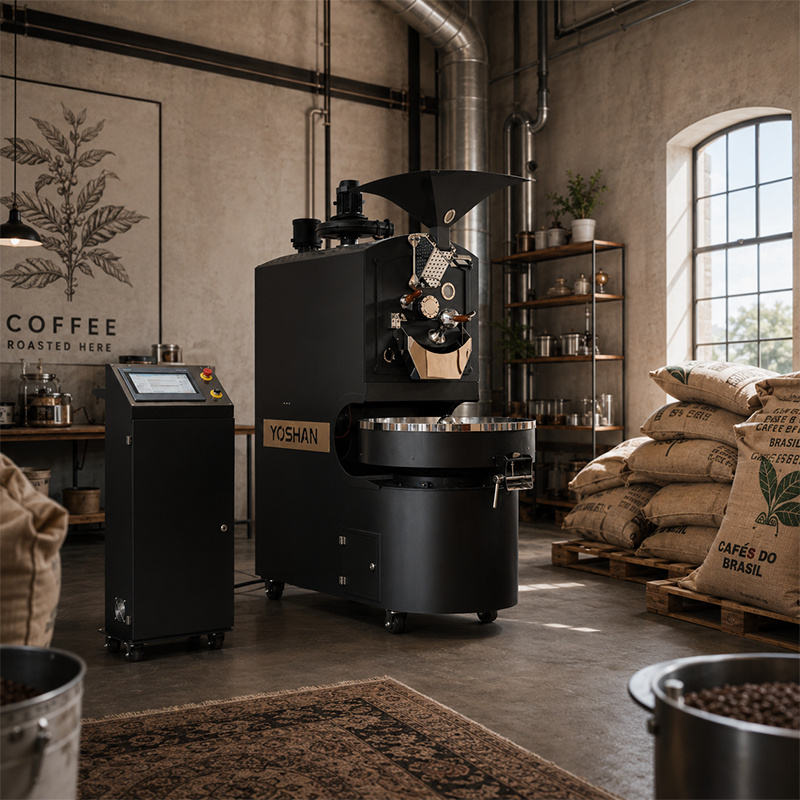
Two facts shape what a roaster should be in this region. First, India is a producing country whose crop is roughly seventy percent robusta, and much of the specialty energy is in roasting the domestic arabica from Karnataka, Kerala and Tamil Nadu close to where it grows. Second, domestic consumption — around 95,000 tonnes a year and rising — is still mostly soluble coffee, with per-capita consumption a small fraction of the global average. So the fresh-roasted market is young and growing fast: the cafe segment is expanding at roughly ten percent a year and specialty chains are opening dozens of outlets. That produces three real buyer types — the cafe group roasting for its branches, the estate roasting its own lots, and the roaster supplying cafes in one city — and each sizes differently, which is what section 7 is for.
6. Roasting for the Local Market
Robusta is the majority crop. Denser and harder than most arabica, it wants a slightly higher charge temperature and more patience through development, and it sheds more chaff — which loads your cyclone and makes chaff discipline non-negotiable. The fire safety guide explains why.
Filter coffee and chicory. South Indian filter coffee is a dark roast, often blended with chicory up to a third or more. Chicory roasts differently and burns readily; roasteries handle it as a separate run with its own profile and a clean-down, or on a dedicated small machine. Tell us if it is in your plan. Dark profiles also mean more smoke and oil in the exhaust, which raises the priority of your abatement planning.
Monsooned coffee. Monsooned Malabar is markedly lower in density and lighter in colour; it takes heat faster and scorches easily. Expect a lower charge temperature and to trust colour and sound over your usual time markers.
Humidity and green storage. Monsoon-season moisture changes stored green, and green that has taken on moisture roasts slower. If your profiles drift seasonally, look at the green store before the machine; the batch size guide covers the routine that protects repeatability.
7. Sizing, With Prices
| Your operation | Capacity | Why | Factory price, ex-works |
|---|---|---|---|
| Cafe roasting for its own counter | 1–3 kg | Electric is viable, no gas approval, fits a back room | DY-2 USD 3,399; SD-3 USD 4,599 |
| Roastery supplying several cafes | 6 kg gas | 11–19 kg of green an hour at sensible batches | SD-6 Pro USD 12,999 with loader; YS-6 USD 7,499 |
| Estate roasting its own crop | 12–20 kg gas | Handles harvest peaks; add a sample roaster for lot evaluation | YS-12 USD 9,980; SD-15 Pro USD 16,999; SD-20 Pro on the quote |
| Regional brand or contract roasting | 30–60 kg with destoner and abatement | Volume plus the ancillaries a line needs | SD-30 Pro full set USD 51,499; SD-60 Pro full set USD 61,999 |
Estates want a sample roaster (SD 100G Plus, USD 899) for lot evaluation; urban sites usually need smoke abatement; anyone roasting seriously needs a destoner ahead of the drum. The equipment list covers the line, the YS series page the PLC machines, and the price guide every model.
Frequently Asked Questions
Which machine for a filter-coffee house in Chennai roasting 50 kg a week?
An SD-3 at USD 4,599 on commercial LPG, loaded at 2–2.5 kg, covers 50 kg of roasted coffee in two afternoons and holds the heat a dark South Indian profile needs. If chicory is part of the blend, add a DY-1 at USD 2,599 as the dedicated chicory drum rather than cleaning the main machine between runs; tell us the ratio at enquiry.
Should an estate buy a sample roaster before the production drum?
Yes, and ideally the season before. An SD 100G Plus at USD 899 lets you roast and cup every lot from the harvest at 100 g, decide which to sell green and which to roast, and build the profile you will scale — so the 12 or 15 kg drum arrives with its first coffees already chosen. Estates that skip this end up using the production machine as a cupping tool and losing a day of output each time.
What size stabiliser do I need?
Size it to the machine's connected load with headroom: for a gas roaster that is the motors and controls — a few hundred watts to about 1.5 kW on 3–6 kg drums — so a small single-phase stabiliser is enough; for a three-phase 12–30 kg machine, a three-phase unit rated above the nameplate figure. We put the load on the quote so your electrician can specify it, and we recommend one wherever dips are routine.
Can a distributor in Colombo or Dhaka brand the machines?
Yes — colour and logo from a single unit on the larger models, your name on the manual and nameplate, and the certification file issued with your brand on it. Distributors usually start with one showroom machine, then order mixed containers as clients sign; the OEM and ODM guide explains what can change and what cannot, and reseller pricing applies from the first order.
Do you deliver to Nepal or Bhutan?
Yes, through an Indian port under transit procedures — usually Kolkata or Haldia — then overland. Your forwarder handles the transit documentation and it adds time, so plan on the long end of the delivery window. Tell us the final destination at order so the packing and the certificate of origin suit the transit route rather than an Indian import.
How do I keep profiles stable through the monsoon?
Fix the two things the weather changes: store green in a dry, ventilated room off the floor and away from the roaster's exhaust, and log moisture when a lot arrives and again a month later. Then keep batch size and the between-batch routine identical, so the only variable is the coffee. If the curve still drifts, adjust charge temperature to the moisture reading rather than chasing it batch by batch.
Final Thoughts
A coffee roaster for India or South Asia is a straightforward project once the supply, the LPG bank and the customs file are settled first — and once the machine is specified for what you will actually roast, whether that is robusta, a chicory blend or your own estate's arabica. Send us your city, your supply, your fuel and your weekly kilos. Talk to our engineers.
Get a Quote → WhatsApp +86 184 0771 4607Last updated: September 23, 2026
Pingback: Coffee Roaster for Ethiopia & East Africa: Voltage, Gas, Ports