
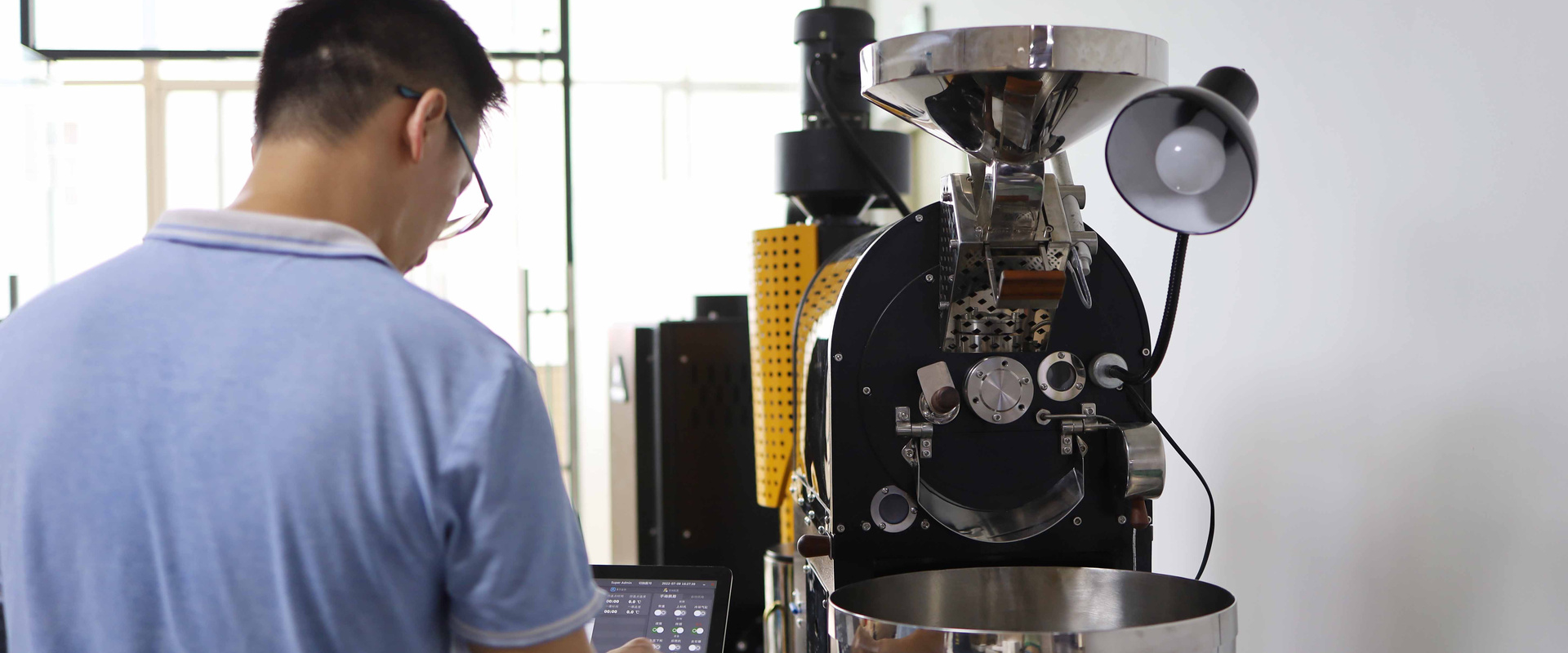
A roaster is a gas burner, a motor and a few hundred kilograms of hot metal in a room with people and flammable chaff. The safety features are not extras; they are why the machine can run for the length of a roast. Most buyers never ask, assuming they are there. This guide lists what should be, in three layers — gas, heat, operator — and shows how to have each demonstrated before the balance is paid.
Three layers of protection
It helps to sort the features by what they protect against, because the three groups fail in different ways and are checked differently.
Gas layer — stops fuel from flowing when it should not: flame lost, pressure wrong, leak present. Thermal layer — stops the machine from overheating itself or the coffee: over-temperature, drum stopped, fan failed. Operator layer — stops the person from being hurt: emergency stop, guarding, interlocks.
A machine can be fully compliant in one layer and thin in another. Ask about all three.
Gas layer
Flame failure protection
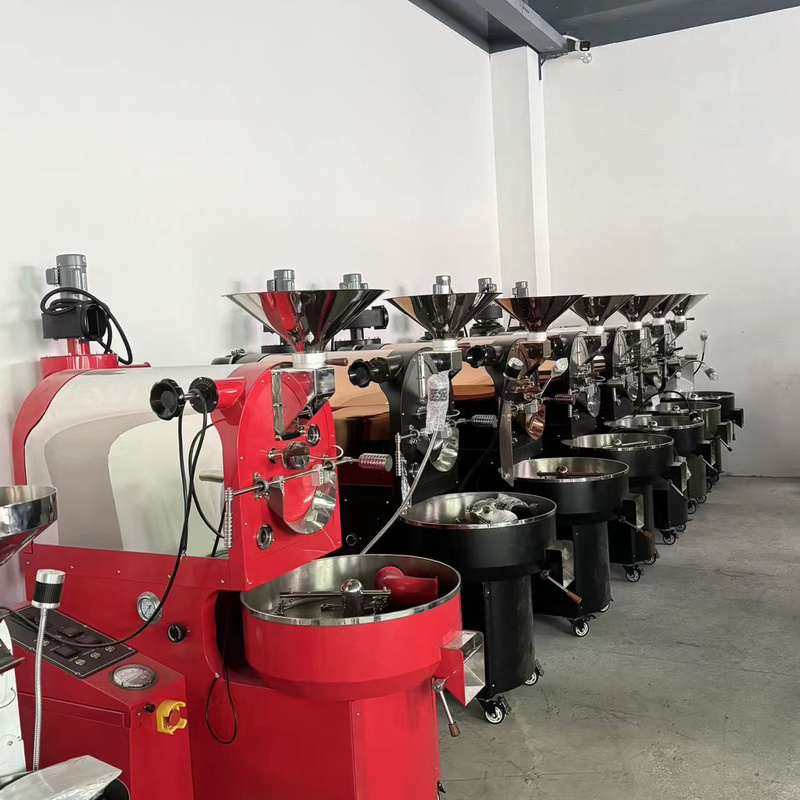
What it does. A sensor — a thermocouple in the flame, an ionisation probe, or an optical sensor — confirms the burner is lit. If the flame goes out, the gas valve closes within seconds, so gas cannot accumulate in a hot drum and ignite.
Why it matters. A burner that blows out with the valve open fills the roasting chamber and the room with unburnt gas. This is the single most important device on a gas roaster and no gas machine should ship without it.
How to see it. In the pre-shipment test, have the operator light the burner, then close the manual gas cock upstream while the machine runs. The flame dies; the panel should show a flame or gas fault and the automatic valve should lock out, requiring a reset before relighting. If the machine simply tries to keep going, walk away.
Ignition sequence and purge
What it does. On lighting, the controller runs the fan to clear any residual gas from the chamber before opening the valve and firing the igniter, and only holds the valve open once the flame is proven.
Why it matters. Lighting into a chamber that already contains gas is how roasters go bang. Automatic ignition with a purge removes the operator's lighter and the guesswork.
Gas pressure protection
What it does. A low-pressure switch, and on some machines a high-pressure switch, closes the valve if the supply pressure falls outside the burner's range.
Why it matters. Low pressure produces a weak, unstable flame that can lift off and go out — and if the flame sensor is slow, that is a gas release. High pressure over-fires the burner. Pressure at the site is a real variable, covered in LPG vs natural gas coffee roasters; the switch is what protects the machine when it drifts.
Manual shut-off within reach
Not a machine feature but an installation one: a manual gas cock at the machine and another at the room entrance, so gas can be isolated without approaching a fire. Inspectors look for this; see coffee roaster fire safety.
Thermal layer
Over-temperature cut-off
What it does. A limit on exhaust or drum temperature, independent of the roasting controls, that cuts the burner if exceeded. On PLC machines it is a set-point in the controller; on manual machines a separate limit thermostat.
Why it matters. A stalled operator, a runaway dark roast or a chaff fire in the drum all push temperatures past anything a profile needs. The cut-off stops the burner feeding the problem.
How to see it. Ask for the set-point and ask to see it triggered — on a PLC machine that can be done by lowering the limit temporarily during the test run.
Drum rotation and motor protection
What it does. Motor overloads trip if a motor stalls or draws excess current; on better machines a rotation sensor confirms the drum is turning and cuts the burner if it stops.
Why it matters. A drum that stops with the burner lit and coffee inside scorches the beans within a minute and ignites them within a few. A belt failure is the usual cause — one reason a spare belt is on our spare parts list.
Fan and airflow protection
What it does. An interlock so the burner cannot run without the exhaust fan running, and on some machines a pressure or airflow switch that cuts the burner if the flue is blocked.
Why it matters. Without airflow, combustion gases stay in the drum and the room, and chaff accumulates where it can ignite. A blocked flue — a bird's nest, a collapsed duct, a cyclone packed with chaff — is a common cause of both.
Cooling tray and exhaust temperature monitoring
Larger machines monitor cooling-tray and exhaust temperatures and alarm if they climb unexpectedly, which is the earliest warning of a chaff fire in the ducting.
Operator layer
Emergency stop
What it does. A red mushroom button that cuts the burner and, on most machines, the drives, in one action. It should be reachable from the operating position without stepping around the machine.
How to see it. Press it during the test run. Everything should stop. Then confirm how it resets — it should require a deliberate reset, not simply releasing the button.
Guarding and interlocks
What it does. Covers over belts and couplings; a cooling-tray stirrer that stops when the tray guard is lifted; a drum door that cannot be opened with the drum rotating on machines where that is a hazard.
Why it matters. The stirrer arm on a cooling tray is the part most likely to injure a hand, because operators reach in to grab a sample or clear a stuck bean. An interlock that stops the arm when the guard lifts is a small thing worth insisting on.
Trier and door design
The trier should withdraw without exposing the operator to hot air or dropping beans on the burner. The drum door should latch positively and open away from the operator.
Having the features demonstrated
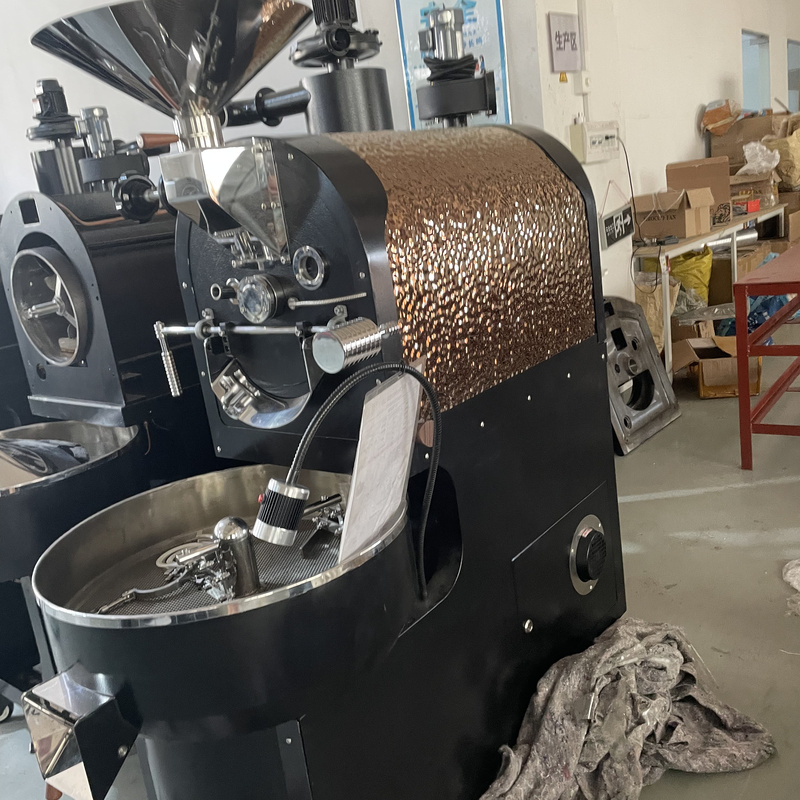
All of this belongs in the pre-shipment test — the same running video that protects the balance payment, described in our guide to ordering a coffee roaster from a factory. Ask specifically for:
- the flame-failure lockout, by closing the gas cock while running;
- the emergency stop, pressed and reset;
- the over-temperature set-point, shown on the panel and ideally triggered;
- the fan interlock, by attempting to light with the fan off;
- the cooling-tray guard interlock, by lifting the guard with the stirrer running.
Five minutes of video. A factory that builds these in will show them without hesitation. Our machines carry flame supervision, automatic ignition with purge, motor overloads, emergency stops and over-temperature limits as standard, and the PLC machines add rotation and airflow monitoring; ask for the demonstration on your own serial number.
What certification does and does not tell you
Our roasters are CE certified under the Machinery and Low Voltage Directives, with RoHS and ISO 9001 behind them — see CE certified coffee roasters. That covers the machine's mechanical and electrical safety; the burner side is documented separately, and requirements differ by country, so tell us your country at quotation and we will confirm which burner documentation your inspector will accept. None of it replaces seeing the features work on your machine, and none of it covers the installation, which is where most incidents actually originate: no manual shut-off, a flue with no cleanout, chaff never emptied. Machine safety and site safety are two halves.
FAQ
What safety features should a commercial coffee roaster have?
Flame failure protection that closes the gas valve when the flame is lost; automatic ignition with a pre-purge; gas pressure protection; an over-temperature cut-off independent of the roasting controls; motor overloads and drum rotation monitoring; a fan interlock; an emergency stop; and guarding with interlocks on the cooling tray. Ask about all three layers — gas, thermal, operator.
What is a flame failure device on a coffee roaster?
A sensor in or near the flame that confirms the burner is lit and closes the gas valve within seconds if it is not. It prevents unburnt gas accumulating in a hot drum after a blow-out. It is the most important safety component on a gas roaster and should lock out, requiring a reset, when triggered.
How can I check safety features before the roaster ships?
Ask for them demonstrated in the pre-shipment video on your serial-numbered machine: gas cock closed while running to show flame-failure lockout, emergency stop pressed and reset, over-temperature set-point shown, ignition attempted with the fan off, cooling-tray guard lifted with the stirrer running.
Does CE certification mean the roaster is safe?
It means the machine conforms to the Machinery and Low Voltage Directives — mechanical and electrical safety — which is a useful baseline and required in some markets. Burner documentation is confirmed by country. It does not replace seeing the features operate on your own machine, and it does not cover the installation — shut-offs, flue cleanouts, chaff management — where most incidents start.
What happens if the drum stops with the burner on?
Coffee in a stationary drum over a lit burner scorches within a minute and can ignite within a few. Motor overloads and, on better machines, a rotation sensor that cuts the burner protect against it. The usual cause is a failed drive belt, which is why a spare belt belongs on the shelf.
Why does the burner need a fan interlock?
Without the exhaust fan running, combustion gases and smoke stay in the drum and the room, and chaff accumulates where it can catch fire. The interlock prevents the burner lighting or running without airflow, and an airflow switch on larger machines cuts the burner if the flue becomes blocked.
Where should the emergency stop be?
Within reach of the normal operating position — at the control panel — without stepping around the machine. Pressing it should cut the burner and drives in one action, and resetting it should require a deliberate act rather than simply releasing the button.
Final Thoughts
Gas, heat and operator: three layers, each with a device you can see working before you pay the balance. Ask for the five-minute demonstration on your own machine and treat it as part of acceptance. Every roaster we build carries flame supervision, purge ignition, overloads, over-temperature limits and emergency stops as standard — from the DY series to the industrial lines — and we film them on request.
Request a factory-direct quote or message us on WhatsApp at +86 184 0771 4607.
Get a Quote → WhatsApp +86 184 0771 4607Last updated: September 17, 2026
Pingback: Coffee Roastery Insurance: What Underwriters Ask
Pingback: CE Certified Coffee Roaster: Declaration, Not the Sticker | Yoshan