
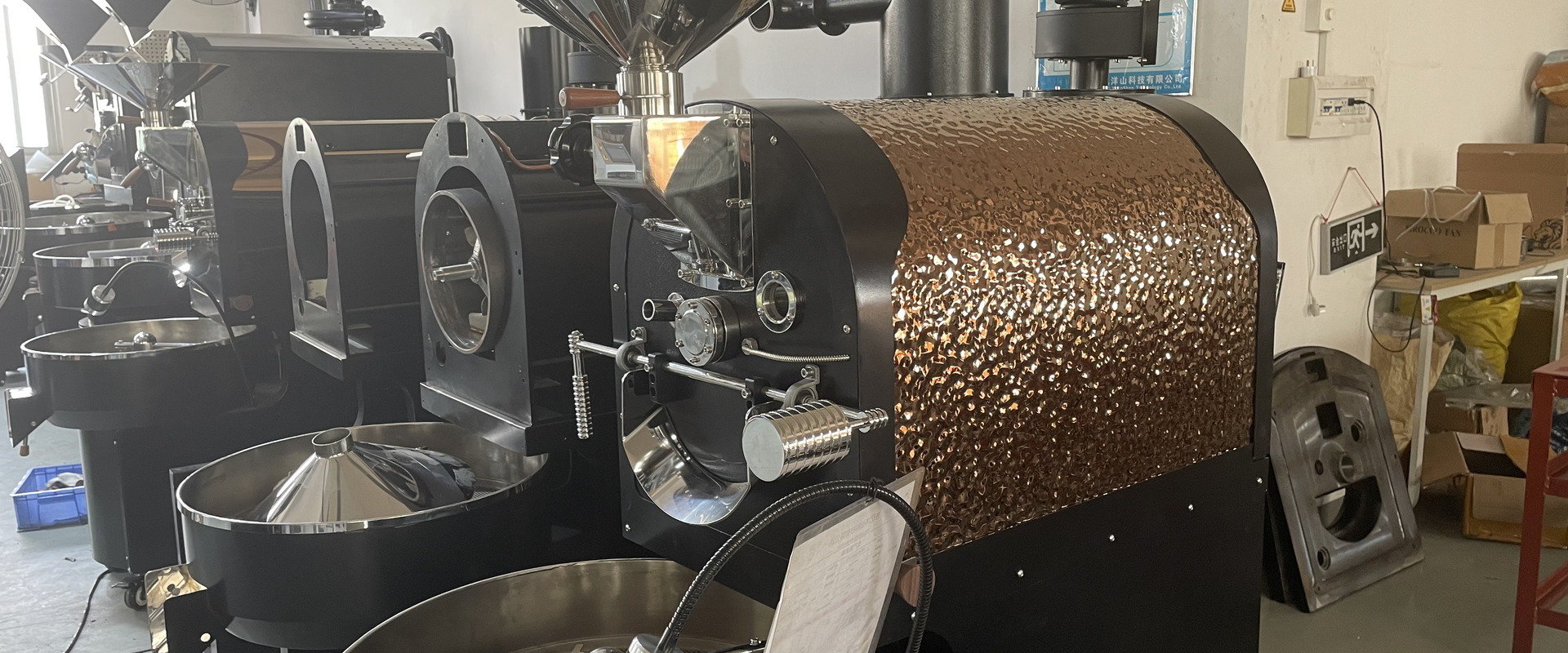
Insurance agents who have never seen a coffee roaster tend to file it with deep fryers and open flames, and price it — or decline it — accordingly. Brokers who specialise in roasteries say the difference between a fair premium and a refusal is usually the answers the roastery can give about its machine. This guide lists the policies a roastery typically carries, then the seven questions an underwriter asks about the roaster, with the documents and practices that answer them.
The policies, in any country's terms
Names differ by market; the categories do not.
| Cover | What it pays for | Why a roastery needs it |
|---|---|---|
| Property (building and contents) | Fire, theft, storm damage to premises, roaster, stock | The roaster is a gas or high-power electric appliance; property policies often need a roasting endorsement |
| Equipment breakdown | Mechanical or electrical failure inside the machine — motor, element, control | Standard property cover excludes internal breakdown; a drum motor or PLC failure is this policy |
| Business interruption | Lost income and continuing costs while you cannot roast | Parts for a specialist machine take days to arrive; a fire takes weeks |
| Public and product liability | Injury to visitors; harm from the product — foreign matter, contamination, allergens | Required by most wholesale accounts and markets; a common request is cover in the region of one million in local currency |
| Stock | Green and roasted coffee lost to fire, water, pests, temperature | Green stock can be worth more than the roaster |
| Goods in transit / marine cargo | The machine on its way to you; coffee on its way to customers | See the EXW point below |
| Employer's liability / workers' compensation | Staff injury | Statutory in most countries once you employ |
Equipment breakdown and business interruption are the two roasteries most often skip and most often need: a seized drum motor stops wholesale deliveries for a week, and neither is covered by a basic property policy.
The seven questions about the roaster
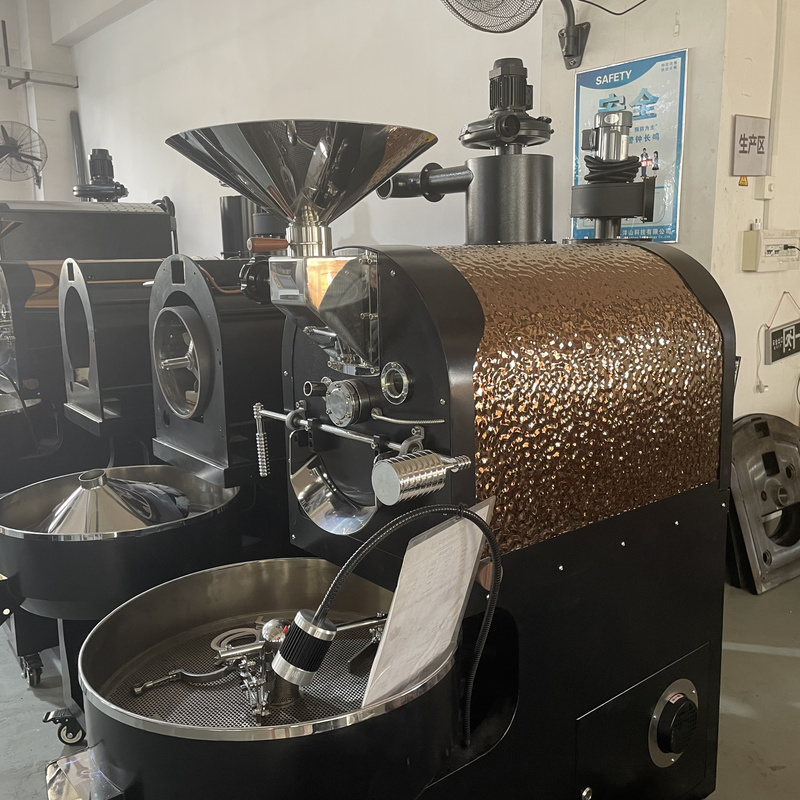
These are what a competent underwriter — or a broker preparing the case — wants to know. Answer them in writing before the application.
1. What is the heat source, and how is it protected? Gas (LPG or natural) or electric elements; supply pressure; and the safety devices on the burner — flame-failure sensor, high-limit thermostat, emergency stop, gas isolation valve within reach. Our gas machines carry these as standard, and the list is in coffee roaster safety features. Natural-gas supply on our range is at least 3 kPa; an LPG installation adds the bottle store to the questions.
2. Where does the exhaust go, and what treats it? Flue material and route (double-wall insulated stainless to outside), clearances from combustibles, cleaning access, and whether an afterburner or electrostatic filter is fitted. An afterburner is a second burner running at high temperature — declare it. The flue is the number-one fire path in a roastery; coffee roaster ventilation requirements covers what a well-built one looks like.
3. How is chaff handled? Chaff is dry and flammable and the usual origin of roastery fires. The cyclone and collector design, how often the collector is emptied, where chaff is stored and how far from the hot flue. Our YS series mounts the collector separate from the machine body for this reason. The room procedure is in coffee roaster fire safety.
4. What documents does the machine carry? CE certification under the Machinery and Low Voltage Directives; the manual; the safety-device list; the serial number and nameplate; the commercial invoice showing value. For the gas side, the burner documentation confirmed for your country. The certifications we hold are listed on our certifications page.
5. What is the maintenance and cleaning regime, and is it recorded? Underwriters price recorded maintenance lower than promised maintenance. A cleaning schedule with sign-offs, the batch record showing daily operation, and a log of bearing greasing and flue cleaning are evidence; the schedule is in the commercial coffee roaster maintenance schedule and the record in the coffee roasting batch record.
6. What stock is held, where, and how? Green coffee value on hand, storage conditions (off the floor, dry, pest-controlled), and roasted stock. Stock cover is priced on the peak value, so a roastery that buys a year's coffee on a forward contract and holds it should say so.
7. Who is trained to operate it? Named operators, the training record and sign-off, and the rule that the machine is never left unattended while hot. The training plan in training a coffee roaster operator produces exactly the file an underwriter likes to see.
What lowers the premium, in practice
Brokers list the same levers: fire suppression appropriate to the room and a serviced extinguisher within reach of the roaster; a flue cleaned on schedule with a record; an afterburner or filter where the batch size justifies it; the chaff collector emptied and stored away from heat; a gas leak test at installation and after any work; an alarm and, for larger sites, a sprinkler system; and a higher excess (deductible) if cash flow allows. None of these is exotic; all of them are things a well-run roastery does anyway and fails to write down.
The EXW point: insure the shipment yourself
Roasters bought direct from the builder are quoted EXW — ex works, at the factory door. From the moment the crate leaves our factory in Shenzhen the risk of loss or damage in transit is the buyer's, which is why a marine cargo policy for the machine's journey is part of the purchase, arranged through the freight forwarder or the buyer's own insurer. The sum insured is the invoice value plus freight; the crate dimensions and weight on the packing list are what the insurer asks for — our YS-6, for instance, ships at around 600 kg net. The shipping sequence is in coffee roaster shipping from China. Once landed and installed, the machine goes onto the property and breakdown policies at its landed value — invoice, freight, duty and installation — not at the EXW price.
A one-page insurance file
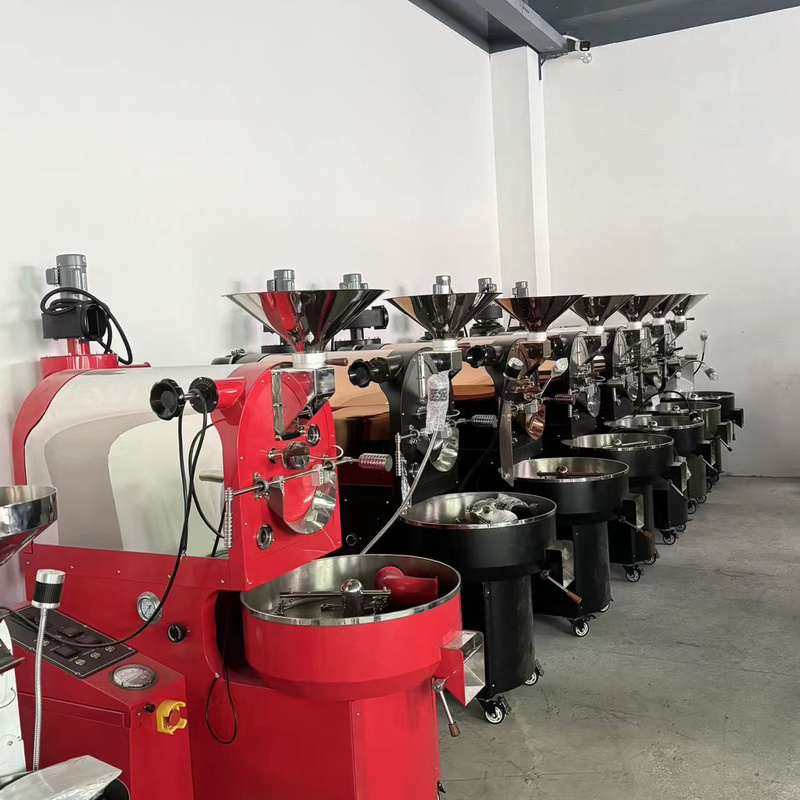
Keep, in one folder, for the broker and for every renewal: the machine's invoice, packing list and CE file; the safety-device list and manual; the gas pressure test and flue completion certificates; the cleaning and maintenance log; the operator training record; the green stock valuation; and the marine cargo certificate from delivery. A roastery that hands over this file is priced as what it is — a food processor with a controlled heat source — rather than as an unknown.
FAQ
What insurance does a coffee roastery need?
Property cover with a roasting endorsement, equipment breakdown, business interruption, public and product liability, stock cover for green and roasted coffee, goods-in-transit for the machine's delivery and for deliveries to customers, and statutory employee cover once you employ. Names differ by country; the categories do not.
Is a coffee roaster hard to insure?
Only when the insurer does not understand it. Agents unfamiliar with roasting file the machine with fryers and open flames. A written description of the heat source, safety devices, flue, chaff handling, documents and maintenance record usually turns a refusal or a high quote into a normal one.
Does equipment breakdown insurance cover a coffee roaster?
It is the policy that does: mechanical and electrical failure inside the machine — drum motor, heating element, controller — which basic property insurance excludes. Pair it with business interruption, because the parts and the repair take time.
What does an underwriter ask about a coffee roaster?
The heat source and its safety devices; the flue route, material and any afterburner or filter; chaff handling and storage; the machine's CE file and manual; the maintenance and cleaning record; stock held and how; and who is trained to run it.
Who insures a coffee roaster during shipping from the factory?
The buyer. Machines bought direct from the builder are sold EXW, so risk passes at the factory door and a marine cargo policy for invoice value plus freight is arranged by the buyer or their forwarder. Once installed, the machine is insured at its landed value.
What documents lower a roastery's insurance premium?
Recorded rather than promised practice: the cleaning and maintenance log, flue cleaning records, gas leak test and flue completion certificates, the operator training file, the machine's CE certification and safety-device list, and a fire-suppression service record.
Final Thoughts
Answer the seven questions in writing, keep the one-page file, and insure the shipment yourself from the factory door. We supply the CE certification, safety-device list, manual and packing documents an underwriter asks for with every commercial coffee roaster, and can confirm burner documentation for your country before you apply.
Get a quote or message Leon on WhatsApp at +86 184 0771 4607.
Get a Quote → WhatsApp +86 184 0771 4607Last updated: September 23, 2026
Pingback: Shipping a Coffee Roaster from China: Landed Cost in 5 Lines | Yoshan
Pingback: Coffee Roaster Fire Safety: Where Fires Start and the First 60 Seconds