
You want a coffee grind size chart you can pin by the grinder — and one that tells your staff why the espresso setting that worked last week is wrong this week. Here is the chart, in microns and in plain feel, followed by the part most charts leave out: how roast level, bean age and burr wear move the numbers, and how to dial in on a commercial grinder.
The Chart
| Method | Grind | Approx. particle size | Feels like |
|---|---|---|---|
| Turkish / Arabic | Extra fine | 100–200 µm | Flour; needs a dedicated mill |
| Espresso | Fine | 200–400 µm | Fine table salt, clumps slightly |
| Moka pot | Fine–medium | 400–600 µm | Fine sand |
| AeroPress (short) | Medium-fine | 500–700 µm | Sand |
| Pour-over (V60, Kalita) | Medium | 600–900 µm | Coarse sand |
| Batch brewer / drip | Medium | 700–1,000 µm | Coarse sand to rough |
| Chemex | Medium-coarse | 800–1,100 µm | Rough sand |
| French press | Coarse | 1,000–1,400 µm | Sea salt, breadcrumbs |
| Cold brew | Extra coarse | 1,200–1,600 µm | Peppercorns cracked |
Micron figures are averages — every grinder produces a spread, and the spread matters as much as the middle. That is why burr quality shows up in your cup even when two grinders are "on the same setting".
Dialling In Espresso on a Commercial Grinder
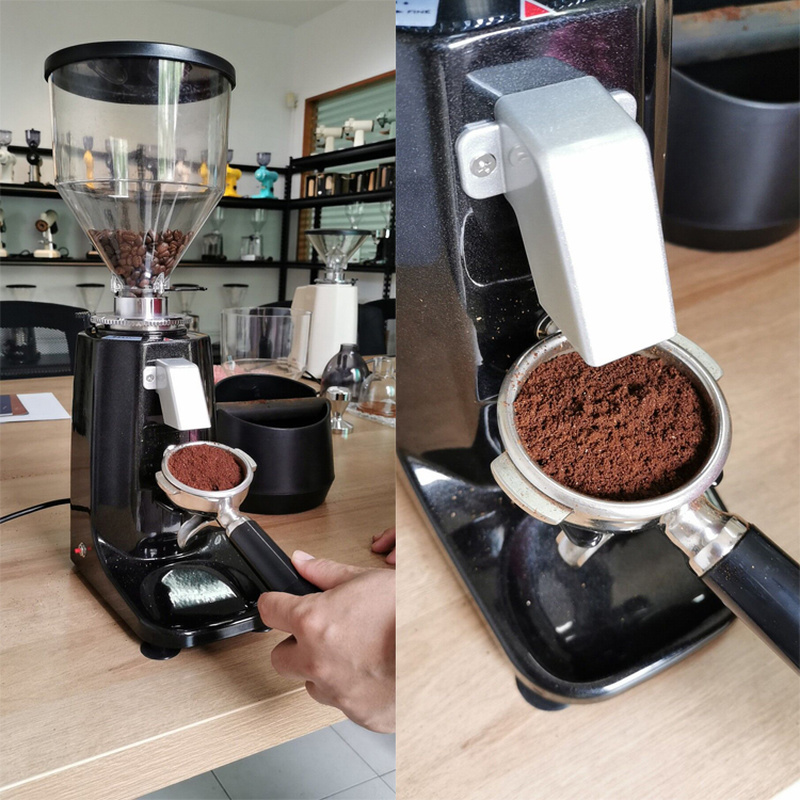
The chart gets you close; the shot gets you there. The routine for any 2-group bar:
- Fix your dose. Weigh it — 18 g in a double basket is a common start. Do not change it while dialling grind.
- Fix the yield and time. A common target is around twice the dose out, in 25–32 seconds. Write the target on the grinder.
- Adjust grind only. Shot too fast and thin — go finer. Too slow and bitter — go coarser. One notch at a time on a stepped grinder; a few degrees on a stepless.
- Purge after every change. The burr chamber holds coffee at the old setting; the first grams out are not the new grind. Retention makes this worse — the retention guide explains.
- Re-check at 11 a.m. Your grinder grinds slightly differently warm than it did cold. On a busy bar the setting drifts with heat, which is one reason to size burrs to your volume — see the grinder buyer's guide.
The Spread Matters as Much as the Setting
The chart gives you a target size. What it cannot show is that two grinders on the "same" size produce different spreads of particles — flat burrs a tight, uniform spread, conical burrs a two-peaked one with more fines — and the spread is half of what you taste. The grinder buyer's guide explains what each burr shape does to the cup; the practical consequences for your bar are two. First, when you change grinders, or even burrs, re-dial every coffee — the number on the dial is meaningless across machines, and the spread has changed even if the average has not. Second, if your shots taste inconsistent at the same setting through the day, suspect heat and wear before you suspect the coffee: a hot grinder and dull burrs both widen the spread and push more fines, and the chart quietly stops applying.
Why Roast Level Moves the Setting
This is the line most charts miss, and it is the one your staff need.
Darker roasts are more brittle and porous. They shatter into more fines at the same setting and extract faster. So you will usually need a coarser setting on a dark roast than on a light one to hit the same shot time.
Lighter roasts are denser and harder. They resist extraction, produce fewer fines, and usually need a finer setting — and often a slightly higher brew temperature and a longer ratio to taste balanced.
Fresh coffee gasses more. Two days off roast, the shot runs slower and foams; two weeks off, faster. The same bag needs a slightly coarser setting early and finer later.
Practical rule if your bar changes coffees: expect to move the grind every time the roast level or the roast date changes, and log your setting per coffee. For a roastery adjusting its own roasts, the profile development guide covers the roast side of the same equation.
Burr Wear Makes the Chart Drift
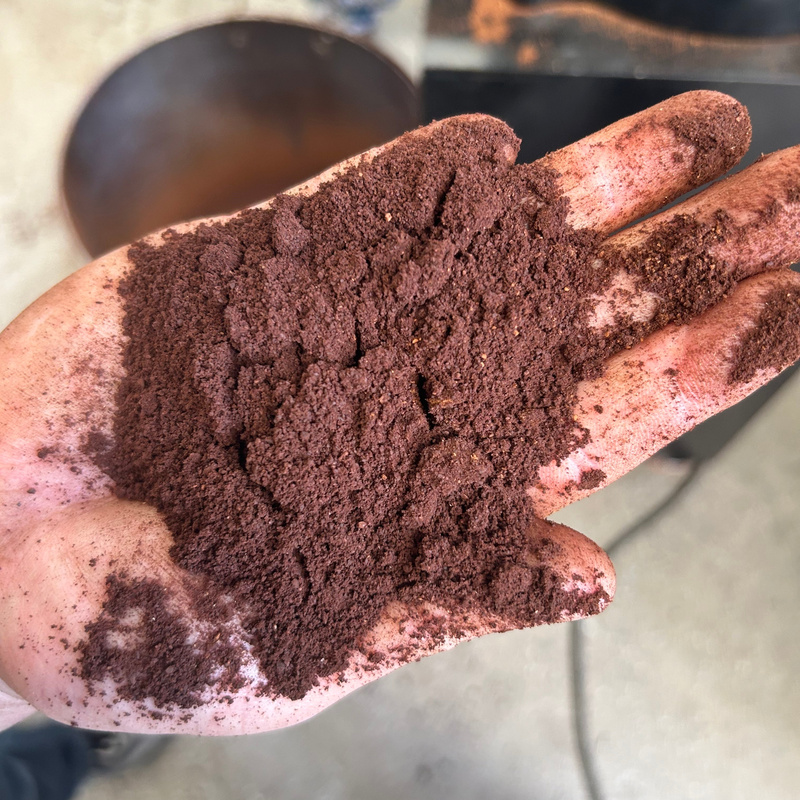
Burrs dull on a kilo interval. As they wear, the grinder produces more fines and less uniform particles at the same setting, so the shot runs slower and tastes muddier even though nothing on the dial changed. The tell: you keep going coarser over weeks to hold the same shot time. That is the burrs, not the coffee. Replace on interval — the burr replacement guide has the kilo figures — and the chart comes back.
Why Espresso and Filter Need Two Grinders
Look at the table: espresso sits at 200–400 µm, pour-over at 600–900. Switching one grinder between them several times a day means you purge, waste coffee, and are never quite right at either. If you serve both, keep an espresso grinder and a filter grinder; if you sell retail bags, add a bulk grinder ground to order. The espresso vs filter grinder guide explains why the burr geometry differs, and our grinder range covers each.
Frequently Asked Questions
How do I keep a grind setting consistent across two baristas?
Fix the recipe, not the dial: dose, yield and time written per coffee, so each barista adjusts to the same target rather than to a number the other one left. Re-dial at the start of each shift with one test shot, log the click, and taste against the retained reference; the dial drifts with heat and beans, and the sheet is what keeps two hands on one recipe.
Does a grinder's speed change the grind, not just the throughput?
Yes: higher burr speed pushes more fines and more heat for the same setting, which is why two grinders dialled to the same particle size can taste different at the rush. Where a bar runs continuously, a larger, slower burr holds the grind; where it grinds in bursts, speed matters less than retention. Ask for the burr RPM on the spec sheet alongside the size.
How much coffee does dialling in waste, and how do I cut it?
A few doses per coffee per day on a hopper grinder — 40–60 g — and near zero on a single-doser, which is a kilo or two a month on a busy bar. Cut it by starting each day from yesterday's logged click rather than the middle of the range, and by grinding into a cup to check the texture before you pull a shot. The retention guide covers the other daily loss.
Can I grind for retail bags from the same chart?
The micron neighbourhoods are the same, but a retail bag has to hold a grind for weeks without being re-dialled, so set for the brew method printed on the bag and slightly coarser than a bar would use fresh, because pre-ground coffee extracts faster as it ages. Grind on a bulk or shop grinder, not the bar's espresso grinder; the bulk grinder guide explains why.
Which of your grinders covers which part of the chart?
The YS-020 bench-top flat burr grinder at USD 119 covers filter to espresso for a small counter; the YS-C98pro single-doser at USD 1,099 is the espresso and light-roast tool for a specialty bar; the YS-1100M and YS-2200M mills at USD 608 and 688 cover bagging and, on the 2200M, the Turkish-fine end. All in 110 V and 220 V.
Final Thoughts
A coffee grind size chart gets you to the right neighbourhood; shot time, roast level and burr condition get you to the right house. Pin the chart, log the setting per coffee, and replace burrs on interval. If your grinder cannot hold a setting through a rush, it is undersized — we supply cafe, single-dose and industrial grinders sized to your volume. Ask us.
Get a Quote → WhatsApp +86 184 0771 4607Last updated: September 17, 2026
Pingback: Commercial Coffee Grinder Buyer's Guide
Pingback: Coffee Cupping Lab Setup: Minimum Bench, Protocol, QC Log | Yoshan