
If you are about to order grinders in volume, you have probably asked about burr size, motor power and voltage. Almost nobody asks about coffee grinder retention — and it is the specification most likely to bring complaints from your customers three months later. Retention is the coffee that stays inside your grinder; static is what makes it stay and then scatter across your counter. Neither is on the spec sheet, and both take twenty minutes to test.
Retention and Static Are Two Different Problems
| Retention | Static cling | |
|---|---|---|
| What it is | Grounds trapped in the burr chamber and exit chute | Charge built up by friction, making grounds stick and scatter |
| Cause | Chamber geometry, chute angle, dead corners, gaskets | Dry beans, dry air, plastic chute, fast burr speed |
| Effect on the cafe | First shot of the day tastes stale; dose weight drifts | Mess on the counter, clumping, an inconsistent puck |
| Fixable after purchase? | Barely — it is built into the casting | Mostly, yes |
| Who should care | You, before you order | Your customer, after training |
That last row is the commercial one. Static is a workflow problem your customer solves with a spray bottle. Retention is a design problem nobody solves once the container has landed. Test for it at the sample stage.
What Counts as Good
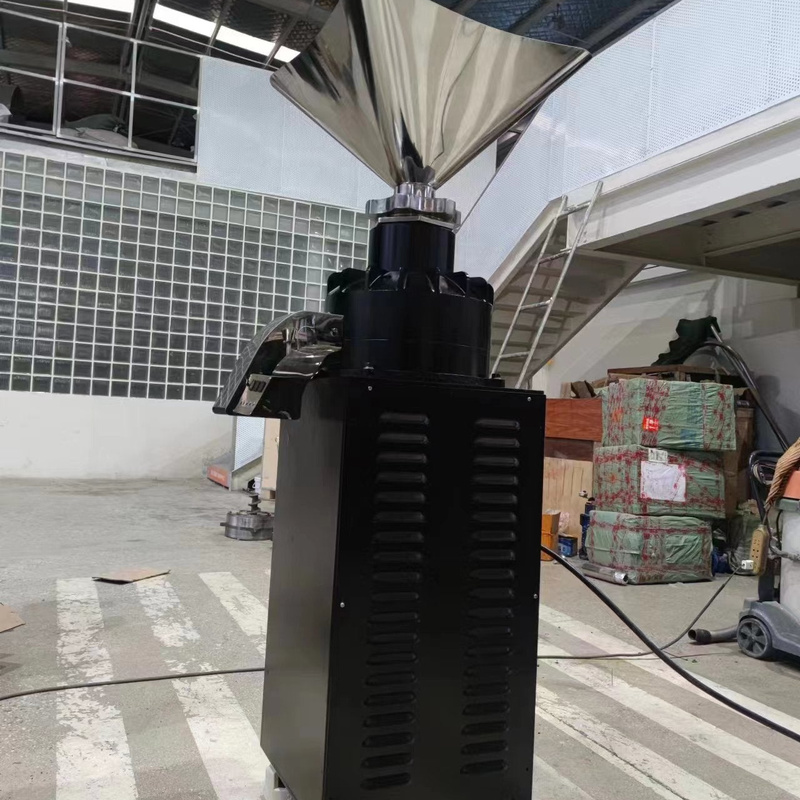
Figures vary with grind size, bean oil and humidity, so treat these as bands for your own tests, for a fresh, clean grinder at espresso fineness:
| Grinder type | Good | Acceptable | Reject |
|---|---|---|---|
| Single-dose specialty (64 mm flat) | under 0.5 g | 0.5–1.5 g | over 2 g |
| On-demand cafe espresso grinder | under 2 g | 2–5 g | over 7 g |
| Doser (chamber) grinder | under 8 g | 8–15 g | over 20 g |
| Shop or retail bulk grinder | under 5 g | 5–12 g | over 15 g |
A doser grinder retains by design — the chamber is meant to hold grounds. That is a workflow choice, not a defect, and for your traditional volume cafes a doser at 12 g is saleable. For your specialty accounts switching beans several times a day, it is not.
The 20-Minute Sample Test
Run it on every sample before you commit. You need a 0.1 g scale, 200 g of your beans and a soft brush.
- Clean and zero. Brush the chamber and chute; grind and discard 50 g so the machine is in working condition.
- Weigh in, weigh out. 100.0 g of beans in, everything ground, weigh what comes out. The difference is retention. Over about 3 g on an on-demand grinder deserves an explanation.
- Purge test. Another 100 g. If the second figure is close to 100 g, the chamber has reached equilibrium — normal. If it is still 5 g short, grounds leave only when displaced, and every dose is partly yesterday's coffee.
- Dose accuracy. Set 18 g, pull ten doses, weigh each. Note the spread, not the average: within ±0.3 g is what your customers accept; above ±0.5 g they will complain about inconsistent shots.
- Heat and duty cycle. Thirty doses back to back, then touch the burr housing and re-check dose weight. Heat shifts the burr gap; if weight and grind size drift noticeably, the grinder is not for a busy bar.
- Static. Grind into a clear container at the finest setting and watch. Some clumping is normal; grounds climbing the walls and jumping out is not.
Record all six per sample and keep them. When a factory changes a chute moulding between runs — it happens — your baseline is the only evidence you have.
What Causes High Retention
- Chute angle. Below about 45°, grounds sit rather than fall — the number-one cause, invisible from outside.
- Dead volume around the burr carrier — gaps that collect grounds and never clear.
- Plastic exit chutes — cheap to mould, excellent at holding charge.
- Anti-clump screens — they reduce clumping and increase retention; ask whether they are removable.
- Rough castings — fines cling to unfinished surfaces; run a finger inside the chamber on the sample.
Burr geometry matters to your figures too: flat burrs generally retain more than conical burrs of the same size, because grounds are pushed out sideways rather than falling with gravity — one of the trade-offs in the burr types guide.
Static: What Your Customers Can Fix
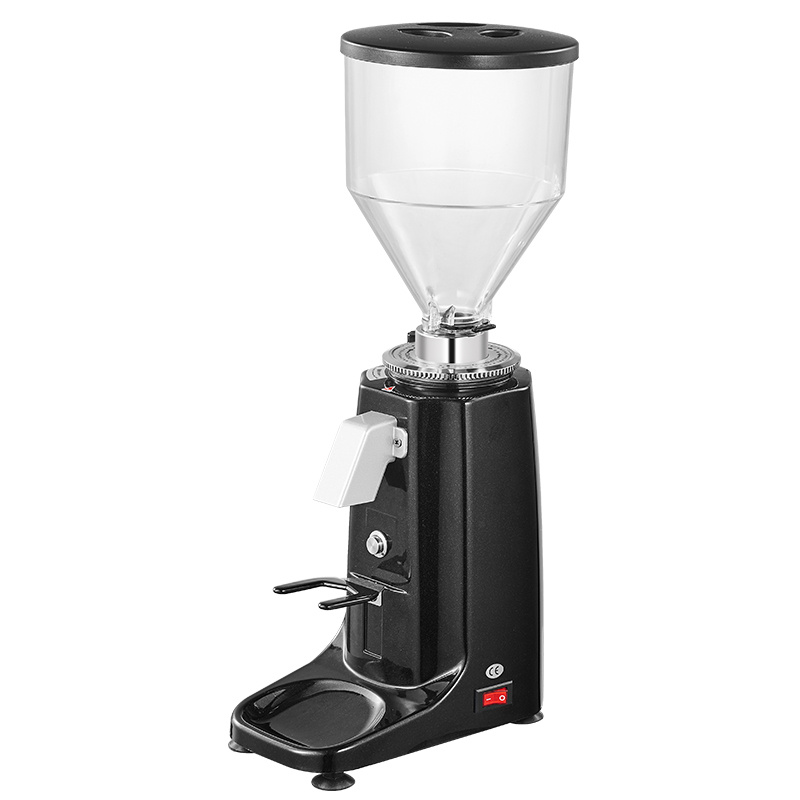
Static is solvable after the sale, so it becomes a training line in the manual you supply:
- A drop of water on the beans. Stir a few drops through the dose before grinding. It removes most static, adds no measurable moisture, and costs nothing.
- Grounding. Some grinders have a floating metal chute with no path to earth; a short wire to the chassis fixes it. Ask whether the chute is bonded.
- Humidity. Static spikes in dry climates and air-conditioned rooms. Your customers in the Gulf and in high-altitude cities will report far more of it than your customers in Southeast Asia, on the same machine.
Also: very light, very fresh coffee is the worst case, and dark, older coffee the best. If your customer buys two days off roast, expect static complaints whatever the grinder.
The Commercial Case, in Kilos
Put a number on it for your customer, because it is the number that sells your grinder. A cafe pulling 200 espressos a day, with 3 g of purge waste per shift and a 0.4 g average dose overshoot:
| Loss | Per day | Per year (350 days) |
|---|---|---|
| Purge waste | 3 g | ~1.1 kg |
| Dose overshoot (0.4 g × 200) | 80 g | ~28 kg |
| Roasted coffee lost | 83 g | ~29 kg |
Twenty-nine kilos of roasted specialty coffee is real money, and the overshoot, not the retention, is the larger share. That argument sells a better grinder to a price-sensitive owner more reliably than burr diameter does.
What to Write Into the Purchase Agreement
Four clauses we recommend you put in your order, as the distributors we supply do:
- A retention ceiling in grams, by the 100 g weigh-in/weigh-out method, at espresso fineness.
- A dose repeatability tolerance — for example ±0.3 g over ten consecutive 18 g doses.
- No unannounced changes to chute, chamber or burr supplier between runs, with a retained golden sample as reference.
- Pre-shipment sampling — three units per hundred re-tested before the container is sealed.
These are ordinary quality clauses and no serious supplier objects to them.
What We Do, and What It Costs
For every grinder we supply we send the sample with its own retention and dose-spread figures recorded by our engineer, and a burr-alignment video for the batch before it ships, so your baseline exists before your test does. The YS-020 bench-top flat burr grinder is USD 119 and the YS-C98pro single-doser USD 1,099, ex-works; the grinder range lists the rest, the 64 mm guide covers the specialty class, and the buyer's guide sizes burrs to drinks per day.
Frequently Asked Questions
Can retention be improved after purchase?
Only at the margins. A bellows or a knocker pushes more of the retained coffee out; a removable anti-clump screen reduces the trap; a bonded chute cuts the static that holds grounds in place. What none of that changes is the chute angle and the dead volume in the casting, which is where most retention lives — so a grinder that fails the sample test will still fail it with accessories fitted.
Does grind size change the figure?
Yes, which is why every band above is at espresso fineness. Fine grounds cling and bridge far more than filter-coarse ones, so the same grinder can retain 3 g at espresso and under 1 g at pour-over. Test at the fineness your customers will actually use, and if you sell to both, test at both and quote both figures.
Which matters more to a cafe owner — retention or dose accuracy?
Dose accuracy, by a wide margin, and the kilo table above is the reason: a 0.4 g overshoot on 200 shots a day wastes twenty-five times more coffee than a 3 g purge. Retention is what you feel in the first shot of the morning; dose spread is what you pay for all year. Test both, but sell on the second.
How do I compare two samples fairly?
Same beans, same roast date, same room, same fineness, same order of tests, run within the same hour, and both grinders warmed with the 50 g purge first. Retention moves with humidity and bean oil, so a test on Tuesday against a test on Friday is not a comparison. Write the conditions on the record sheet with the results.
Will the factory really accept these clauses?
Any factory that measures its own product will, because the clauses ask for nothing it does not already know. Resistance to a stated retention ceiling or to a golden sample usually means the figure is not measured, or that the moulding changes between runs — which is exactly what the clause protects you from. We supply the numbers with the sample and put them on the order.
Final Thoughts
Coffee grinder retention and static look the same on the counter and are different problems in the purchase: one you test for before the container, one your customer fixes after training. Run the twenty-minute test on every sample, write the four clauses into the order, and sell on dose accuracy. Send us your quantity and we send samples with the numbers. Talk to us.
Get a Quote → WhatsApp +86 184 0771 4607Last updated: September 17, 2026
Pingback: Commercial Coffee Grinder Buyer's Guide: Size the Burrs | Yoshan
Pingback: Doser vs On-Demand Commercial Coffee Grinders