
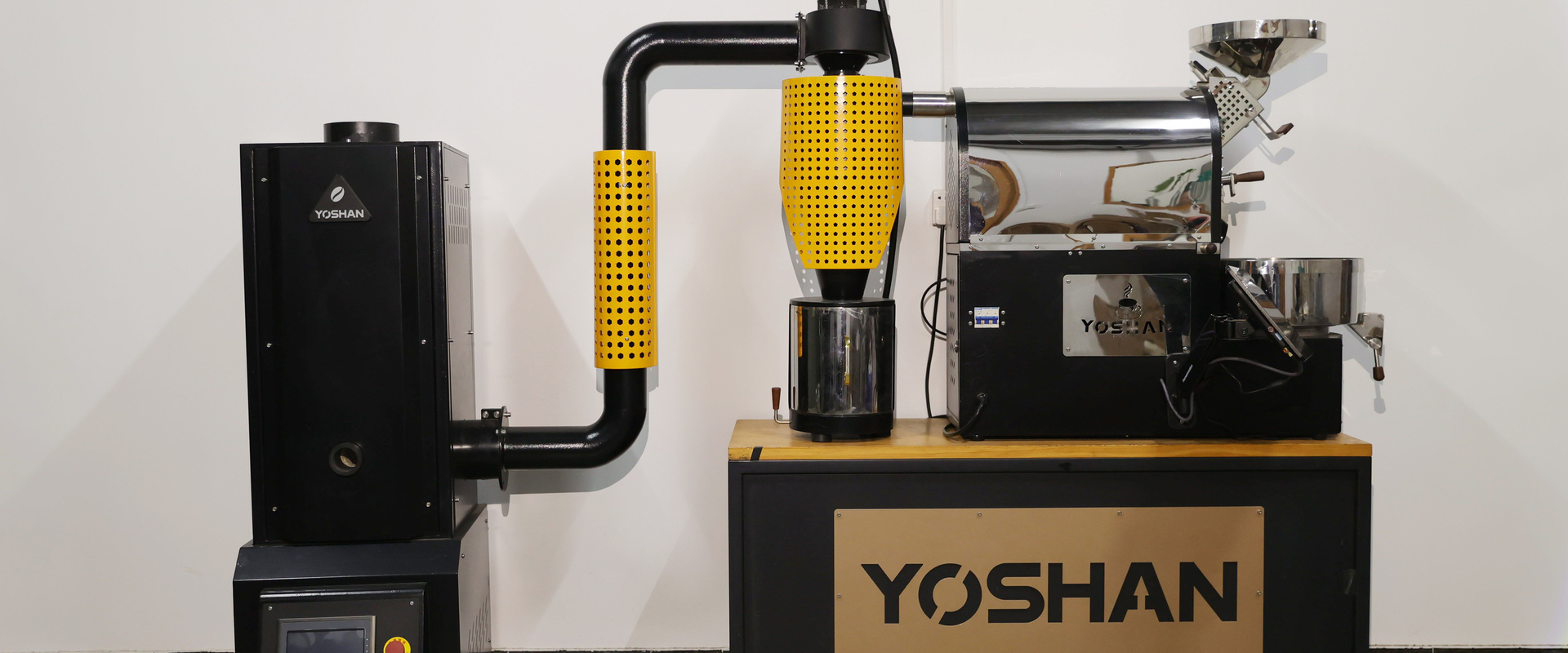
If you plan to import a coffee roaster to the UK or Europe, the machine is the easy part. Between the quote and the first batch there are six gates — power, certification, gas, odour, tax and size — and every delayed European installation we have seen got stuck at one of them. Here they are in the order you will meet them, with what you need to do and what we do.
Gate 1: Power, Plugs and the 13 A Ceiling
A UK wall socket gives you 230V at 13 A — about 3 kW. That is enough for the motor, fans and controls of any gas-heated roaster we make up to 15 kg. It is not enough for electric heating: a DY on electric draws over 4 kW and needs a dedicated circuit from a qualified electrician; an electric SD Pro needs three-phase 400V, which many high-street units do not have.
So: gas-heated on a standard supply, or electric with an electrician's circuit. Continental Europe is the same story at 230V/50 Hz, with three-phase more commonly available in commercial units. Send us the supply and we build to it — the voltage guide shows what to check.
Gate 2: CE, UKCA and January 2027
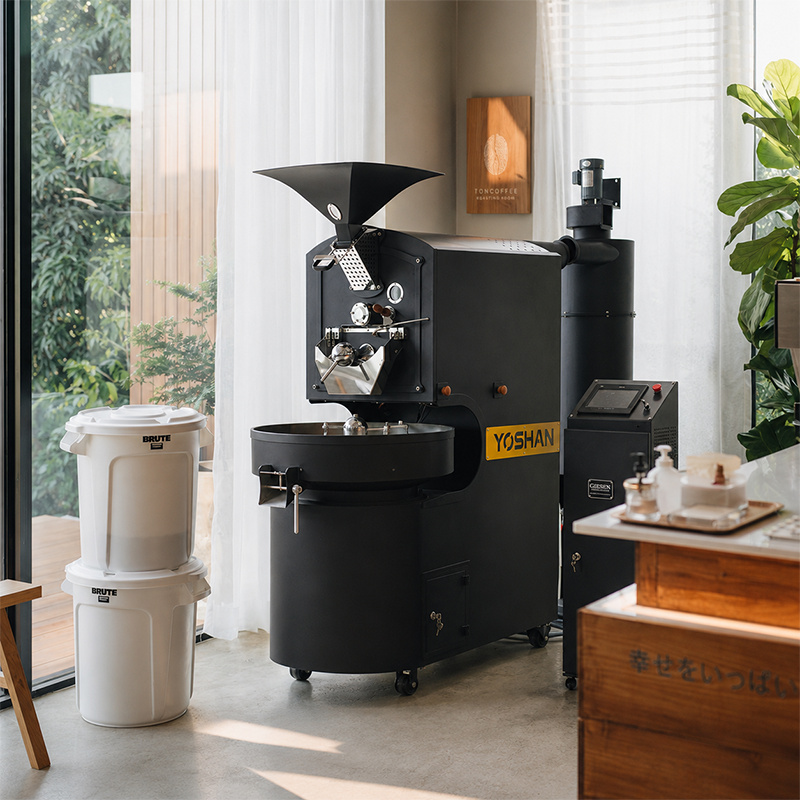
For the EU, the machine must carry CE marking with a Declaration of Conformity covering machinery, electrical safety and — for gas builds — the gas appliances regulation. From January 2027 the Machinery Directive is replaced by the Machinery Regulation; the machine you buy in 2026 is placed on the market under the current rules, and your DoC should say which. The CE guide explains how to read the document.
For Great Britain, UKCA is the domestic marking, with CE accepted for many categories on a basis that has shifted more than once since 2021. As the importer, you are legally responsible for the product's compliance and must hold the technical file — not just see a sticker. Ask your customs agent which marking applies to your machine today, tell us, and ask us for the technical file before the deposit. We supply it.
Gate 3: Gas — the Installation, Not the Machine
In the UK the gas connection must be made by a Gas Safe registered engineer; in the EU, by the national equivalent. That engineer's sign-off is what your insurer and landlord will ask for. Involve them before the machine ships: they will want the gas train drawing, the appliance category, the inlet pressure and the gas type (natural gas is the norm; LPG for rural or mobile sites). We jet the burner for whichever you tell us and provide the drawing.
Gate 4: The Gate Nobody Warns You About — Odour and Planning
Roasting smells. In a UK town centre, the smell of roasting coffee is a statutory nuisance complaint waiting to happen, and in many councils a commercial roaster in a mixed-use building needs planning consent or at least a conversation with environmental health. In parts of the EU, odour abatement is required outright above a certain scale.
Do this before you sign a lease: ask the council or municipality, in writing, what they require for a roaster of your size at that address. The answer decides whether you need an electrostatic filter, an afterburner, or nothing beyond a duct to a suitable height — our afterburner guide walks through which. We put the abatement equipment on the same drawing as the roaster so the stack is sized for it.
Gate 4 in Practice: The Three Conversations "Ask the Council" Actually Means
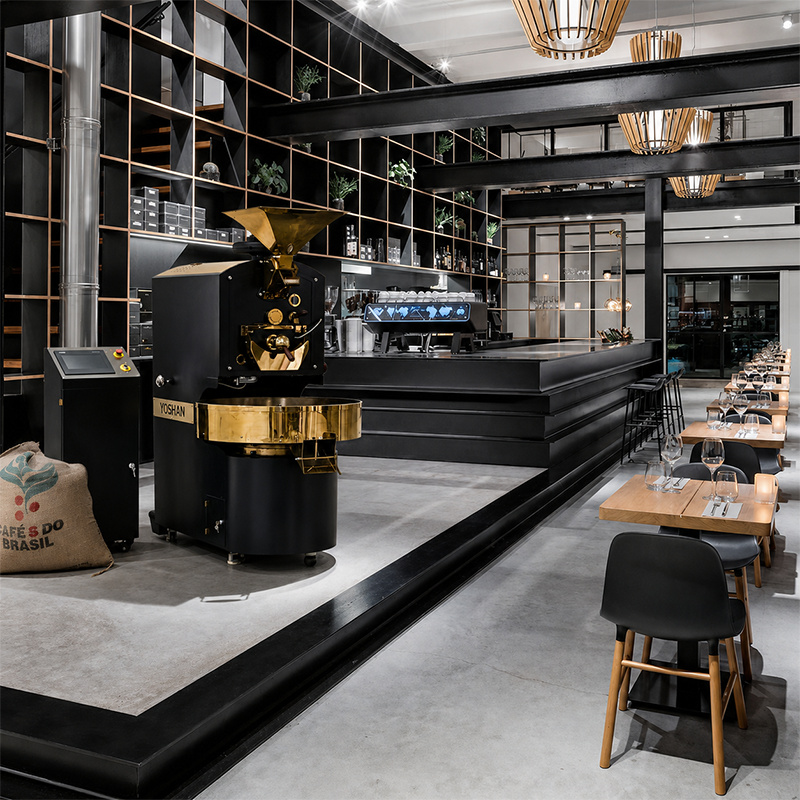
In the UK, "ask the council" is three separate desks, and each can stop you on its own.
Planning. If the unit was not last used for light industry, roasting is a change of use and needs consent; even where the use class fits, a roaster in a mixed-use street commonly comes with an odour assessment as a planning condition, and a flue that terminates above the eaves or roofline of the nearest building. Roasters who skipped this have been made to apply retrospectively with the machine already installed — the most expensive order in which to do it.
Environmental health. Separate from planning, and the one with teeth after you open. Under the Environmental Protection Act 1990 a smell that "unreasonably and substantially" interferes with a neighbour's home is a statutory nuisance, the council must investigate a complaint, and an abatement notice can stop you roasting until you fix it. That is the reason to fit the electrostatic filter or afterburner from the drawing stage rather than wait for the first complaint. The afterburner guide shows which unit your size needs.
Food registration. Roasting is food production, so you register as a food business with the council at least 28 days before you start. It is free and low-risk, but it triggers a hygiene inspection, and an unregistered roastery is an easy enforcement target.
Continental Europe follows the same three-way split with different names — the municipality for permits, the environmental agency for emissions and odour, and the national food authority — and in Germany and the Netherlands odour abatement above a certain scale is a rule rather than a complaint. Put all three conversations in writing before you sign the lease; the answers decide whether the drawing needs a filter, an afterburner or just a taller stack.
Gate 5: Freight, Duty and VAT
Sea freight from our factory to Felixstowe, Southampton, Rotterdam, Antwerp, Hamburg or Le Havre takes several weeks port to port. Then:
- Duty is charged on the CIF value — machine plus freight plus insurance — at the rate for the roaster's commodity code. Food-processing machinery generally sits at the low end of the 0–12% range; confirm the code with your agent.
- Import VAT (20% in the UK; local rate in the EU) is charged on CIF plus duty. If you are VAT-registered it is recoverable as input tax; the duty is not.
- You need an EORI number, a commercial invoice, packing list and bill of lading. We supply the documents; your customs agent makes the entry.
Price all of this before you compare quotes — a CIF quote with spares can look dearer than an EXW quote with nothing and be the better deal. The shipping guide has the full sequence.
Gate 6: Which Capacity Fits a European Roastery
European roasteries tend to be small, urban and space-limited, which pushes the sweet spot down:
| Your situation | Weekly roasted volume | Machine | Why |
|---|---|---|---|
| Cafe roasting its own coffee | 25–60 kg | SD-3 or DY-2 | Single-phase, small footprint, cyclone and short duct — USD 4,599 / 3,399 ex-works |
| Cafe plus wholesale, town-centre unit | 60–150 kg | SD-6 Pro or YS-6 | Still single-phase on gas; the size most UK enquiries end up at — USD 12,999 with loader / 7,499 |
| Dedicated roastery, industrial unit | 150–400 kg | SD-12 or SD-15 Pro, YS-12 | Loader, and odour abatement usually required — USD 15,999 / 16,999 / 9,980 |
Prices are ex-works in USD; duty on the CIF value and import VAT come on top, as in Gate 5 — the price guide lists every model. Work from your weekly kilos, not from the space you have — the sizing guide shows how. Buyers in France and Quebec will find the same guidance in French in our torréfacteur guide.
Frequently Asked Questions
Which UK ports and hauliers handle a crated roaster best?
Felixstowe and Southampton for full and shared containers, with a haulier who has a tail-lift or a forklift at your end; a crated 6 kg machine is under a tonne but does not come off a van by hand. Ask the forwarder to deliver on a curtain-sider with a pallet jack if your unit has no dock, and check the door width against the crate dimensions we send before delivery day.
Is an EU-registered importer needed if I am in Great Britain?
No — as the GB importer you hold the technical file yourself, and no EU authorised representative is involved. It is the reverse for a Northern Ireland or an EU customer, where EU rules apply and an EU-based responsible person may be needed for some product categories. Your customs agent knows which applies to your address; we prepare the file either way.
Can I install the machine in a listed or shared building?
Often, but the flue is the problem: a listed building limits where a duct can exit and how it looks, and a shared building brings the odour question to the neighbours above. Get the conservation officer's and the freeholder's positions in writing before the lease, and plan an electrostatic filter or afterburner into the drawing rather than hoping; the afterburner guide above has the three questions.
What does a Gas Safe engineer need from you before the visit?
The gas train drawing, the appliance category and nominal inlet pressure from the nameplate, the gas type the burner is jetted for, and the manual — all of which ship with the machine and can be sent ahead. Book the engineer for the day after delivery, not the day of, so the machine is positioned and levelled first; the commissioning guide sets out the order.
Are your machines suitable for the light-roast, filter-led style common in UK specialty?
Yes — the semi-hot-air drums with adjustable airflow keep a light roast clean, and the separate cooling tray drops a batch in one to two minutes so a light roast stops where you meant it to. What UK roasters tend to add is a sample roaster for the number of single origins they rotate; the SD 100G Plus at USD 899 sits beside the production drum for that.
Final Thoughts
Importing a coffee roaster to the UK or Europe goes smoothly when you clear the six gates in order: supply, certification, gas engineer, council, tax, size. We build to 230V and 50 Hz, supply the CE technical file and gas drawings, and put any abatement on the same drawing as the roaster. Send us your unit's supply, your council's answer and your weekly volume and we will quote it ready to install. Get a quote.
Get a Quote → WhatsApp +86 184 0771 4607Last updated: September 22, 2026