
Every guide on how to dial in an espresso grinder describes the same loop — pull a shot, taste, adjust, repeat — and every one is written for a single person. A café has an opening barista, a lunch shift and a closer, a new bag on Tuesday and rain on Thursday, and the loop has to be a procedure: who runs it, when, in how many shots, written where, and when the grinder is left alone. This guide gives that procedure.
The recipe everyone starts from
The numbers the guides converge on for a double shot: 18 g in, about 36 g out, in 25–30 seconds — a 1:2 ratio, with some bars running 1:2.5 and a few seconds longer. It is a starting point, not a law; the roaster's own recommendation for the coffee overrides it, and taste overrides both. The rules of adjustment are simple:
| Shot | Likely taste | Move |
|---|---|---|
| Runs fast — under about 25 s to 36 g | Sour, thin, weak | Grind finer |
| Runs slow — over about 30–35 s | Bitter, harsh, dry | Grind coarser |
| On time but sour | Under-extracted | A touch finer, or a slightly longer ratio |
| On time but bitter | Over-extracted | A touch coarser, or a shorter ratio |
Change one thing at a time. Grind first; dose and ratio only once grind is close.
The three-shot method
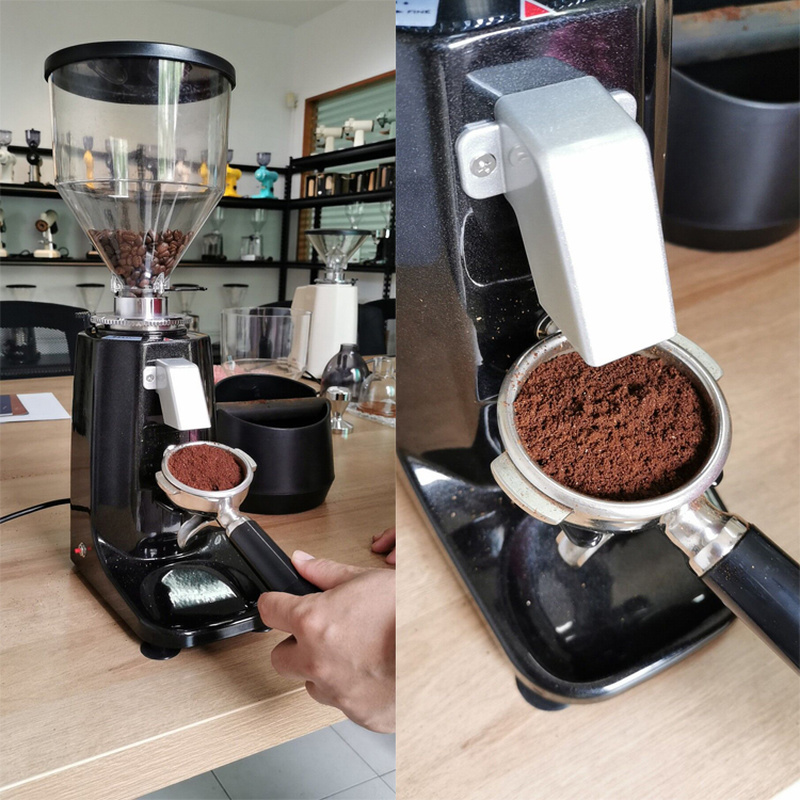
Designed to finish in three shots on most mornings and five on a difficult one.
- Shot 1 — baseline. Yesterday's setting, the standard dose weighed, the shot timed from the moment the pump starts and weighed on a scale. Taste it black. If it is in the window and tastes right, stop here — most mornings on a rested coffee end at shot one.
- Shot 2 — a deliberate move. Move the grind one clear step in the direction the table says: one or two clicks, or a definite few millimetres of collar on a stepless grinder. Purge a dose so the chamber holds only the new grind. Pull, time, weigh, taste.
- Shot 3 — halve the move. If shot 2 overshot, come back half the distance; if it improved but not enough, go the same distance again. Purge, pull, taste.
- Confirm with one more shot at the chosen setting if the coffee is going into milk for most customers — taste it in milk, because that is how it is sold.
- Write it down.
Large first move, then small: guides that test this find the target is bracketed by the third shot far more often than by creeping one click at a time.
The step timed grinders need
On a grind-by-time grinder — which is what most café grinders are, including the on-demand models we supply — the grind setting and the dose are coupled. Finer grind means slower throughput, so the same seconds deliver less coffee. Adjust the grind and the 18 g dose is now 17.4 g, and the next shot runs fast for a reason that has nothing to do with the grind.
So the procedure has one extra line after any grind change: weigh three doses and reset the timer to the target dose, then pull the shot. Some guides say to hold the grind time fixed and only move the grind; that works only while the change is small. The safe rule is grind, then re-time, then shot — and it is the reason grind-by-weight grinders are sold, as set out in grind-by-weight vs grind-by-time.
When to dial in, and who
| Trigger | Who | How much |
|---|---|---|
| Opening, every day | The opening barista, alone | Purge the overnight retention, shot 1; move only if out of window |
| New bag or new lot of the same coffee | The opener, or the lead barista | Full three-shot method; note the roast date |
| Change of coffee | Lead barista | Full method, plus dose and ratio from the roaster's card |
| Weather turn — humid or rainy day | Whoever notices the shots drifting | One deliberate step, usually coarser in humidity |
| Shift handover | Nobody | The setting is on the board; the incoming barista pulls one shot and reads it, and moves only if it is out of window |
| Midday drift | Lead barista | One step, logged |
The rule that saves a bar from itself: one person owns the setting per shift. Three baristas each nudging the collar produces a grinder that is never right.
What is written down, and where
A card or a line on the bar whiteboard, updated whenever the setting changes: coffee and roast date; grind setting (click number, or the number on the stepless collar's scale); grind time in seconds and the dose it gives; target yield and time; the last shot's actual time; initials. Two minutes a day, and it is the record that tells you the grind moved four clicks finer over a fortnight as the bag aged — or that the burrs are wearing. How to give a stepless grinder a scale worth writing down is in stepped vs stepless grinder adjustment.
When not to touch the grinder
Most "the grind is wrong" moments are something else, and adjusting the grinder for them makes two problems out of one.
- One bad shot among good ones: distribution, tamp or a channelled puck. Re-prepare, do not re-grind.
- Fast shots right after a rush: warm burrs and a warm chamber grind slightly finer and then coarser as they cool; wait, or accept a shot, rather than chase it. The heat behaviour is in coffee grinder rpm and heat.
- The first shots of a new grinder: burrs need several kilos of coffee — guides quote around 5–10 kg — to seat before they settle; dial in daily and expect drift for the first week.
- Shots drifting slowly finer week on week with the same coffee: worn burrs, not a grind problem — the signs are in when to replace grinder burrs.
- Weak or sour shots with the grinder unchanged and the machine gauge reading low: the machine, not the grinder — check brew pressure, as in espresso brew pressure explained.
Two grinders make it easier
A bar running a house espresso and a decaf or single origin on one grinder re-dials every time it switches. A second grinder — even a smaller one — holds the second coffee's setting and halves the dial-in work; the arithmetic is in how many grinders does a café need. The on-demand grinders we supply, from the 60 mm YS-020/021 series through the 64 mm YS-900 series to the flat-burr YS-C98pro, are the second-grinder class for a bar of that kind, and the first-grinder class for a café up to a few hundred shots a day.
FAQ
How do you dial in an espresso grinder?
Start from a known dose — commonly 18 g for about 36 g of espresso in 25–30 seconds — pull a baseline shot and taste it. Fast and sour: grind finer; slow and bitter: grind coarser. Make one clear move, purge a dose, pull again, then halve the move. Write the setting down.
How many shots does it take to dial in?
One on most mornings with a rested coffee that was right yesterday; three with the large-then-small method on a new bag; five on a difficult coffee. Creeping one click at a time takes more shots than a deliberate first move.
Why do I need to purge the grinder after adjusting?
Because the chamber and chute still hold coffee ground at the old setting. Grind and discard a dose — or a few seconds' worth — after every adjustment so the next shot is made entirely at the new grind; otherwise the test shot lies.
Does changing the grind change the dose on a timed grinder?
Yes. Finer grinding slows throughput, so the same seconds deliver less coffee. After any grind change, weigh three doses and reset the grind time to the target dose before pulling the next shot.
How often should a café re-dial the grinder?
Check with one shot every opening; run the full method on each new bag or lot, on a change of coffee, and when weather shifts extraction. One person owns the setting per shift, and the incoming shift reads the board rather than re-dialling.
When should you not adjust the grinder?
For one bad shot among good ones (fix the puck), for fast shots right after a rush (warm burrs), for a new grinder's first week (burrs seating), for a slow drift over weeks (worn burrs), and for weak shots with a low machine gauge (check the machine's brew pressure first).
Final Thoughts
Baseline, one deliberate move, halve it; purge after every change; re-time the dose on a timed grinder; one owner per shift and the setting on the board. As a wholesale supplier of commercial coffee grinders, we supply the on-demand YS-020 and its larger stablemates that this procedure is written for.
Get a quote or message Leon on WhatsApp at +86 184 0771 4607.
Get a Quote → WhatsApp +86 184 0771 4607Last updated: September 23, 2026
Pingback: Coffee Grind Size Chart: Microns by Method and Roast Level | Yoshan