
If your buyers keep asking for an E61 espresso machine by name — often without knowing exactly why it earned the reputation — this page is the answer you can pass on: what the E61 group head actually does, when it is worth specifying, the honest trade-offs against saturated groups, which of its parts are universal, and what to check when sourcing one at wholesale.
What an E61 Group Head Is
The E61 is a group head design dating to Faema’s 1961 “Eterna” machine — the first with a pump and a thermosyphon-heated group. The modern E61 keeps three defining traits:
-
Thermosyphon circulation — hot water loops continuously between boiler and the heavy chromed-brass group, so your group holds brewing temperature instead of running cold between shots
-
Mechanical lever pre-infusion — lifting your lever opens a progressive water path that gently wets the puck before full pressure, forgiving small dosing errors
-
A standardized, serviceable design — gaskets, screens, cams and valves follow common specs available from parts suppliers everywhere on earth
Why Buyers Specify It
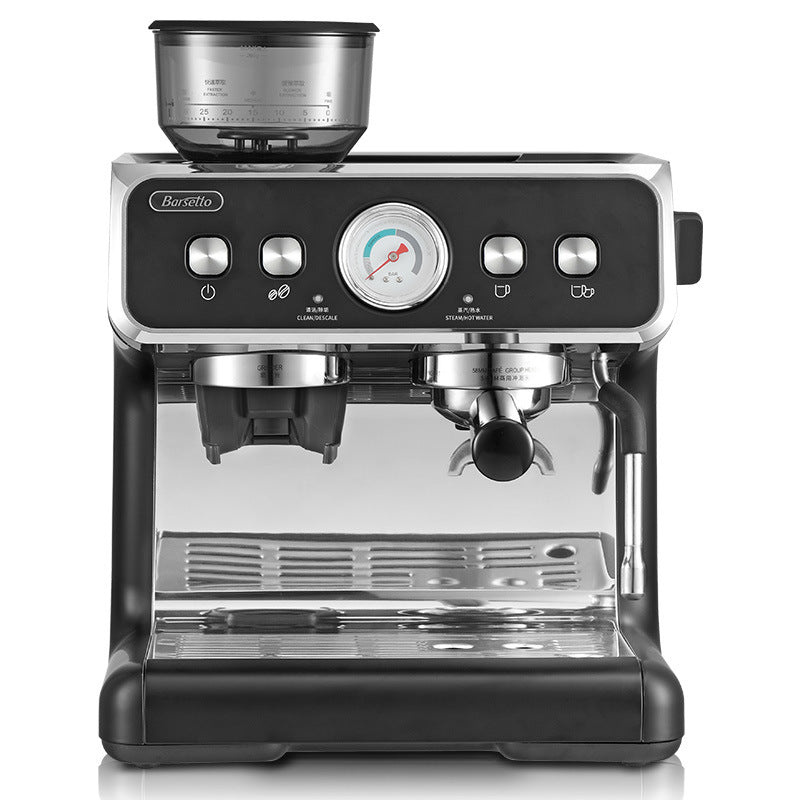
| Benefit | What it means in service |
|---|---|
| Thermal stability | Consistent shot temperature through a rush without electronic PID complexity |
| Parts ubiquity | Group gaskets and screens are standard sizes — any parts shop, any country, stocks them |
| Serviceability | The group rebuilds on the bench with hand tools; no proprietary cartridges |
| Barista appeal | The exposed chrome group and lever are a visual signature customers recognize |
E61 vs Saturated/Integrated Groups: Honest Trade-offs
-
Warm-up time — your massive brass group needs 20–35 minutes to stabilize; saturated-group and thermoblock machines wake faster
-
Temperature adjustability — a classic E61 follows its boiler; changing brew temp is slower than on PID-controlled saturated groups. Modern E61 machines add PID to close this gap for you
-
Weight and cost — brass is heavy and machined; at the same price point a non-E61 machine may offer more boiler or more automation
-
Cleaning discipline — your lever cam wants routine backflushing and a drop of food-safe lube; skip it for a year and the lever stiffens (the routine is in our maintenance guide)
Rule of thumb for your range: specialty cafes and roastery bars like yours that value shot quality and field-serviceability choose E61; high-volume or self-service venues choose saturated groups or automatics — the broader decision tree is in the espresso machine buyer’s guide.
Sourcing E61 Machines at Wholesale
-
Confirm it is a true E61 group — ask for a photo of your group interior and the gasket spec; “E61-style” sometimes means the outer shape only
-
Check your boiler behind it — heat-exchanger vs dual boiler changes steam capacity for milk-heavy menus (group count logic: 1 vs 2 vs 3 group)
-
Voltage — your E61 machine runs 220–240 V as standard; compact single-group 110 V versions exist for the Americas (voltage requirements)
-
Spares in the box — gaskets, screens and a lever-cam lube should ship with your machine; ours do
-
Sample first — 1–2 units by courier before carton commitments, per the wholesale checklist
Which Parts Are Universal — and Which Are Not
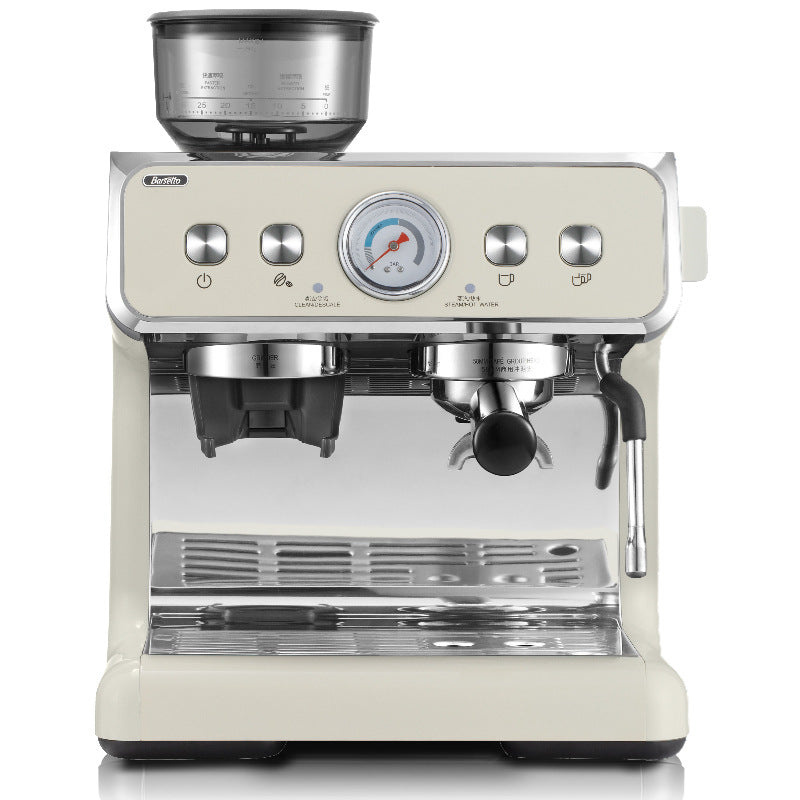
The E61's reputation for serviceability rests on a concrete fact: its wear parts are standard across the trade. The 8.5 mm × 73 mm group gasket, the shower screen and its screw, the lever cam and its seals, and the 58 mm portafilter and basket fit are the same on an E61 machine whatever badge is on the front, and any espresso technician has them in a drawer. What is specific to your machine behind your group is your boiler, its heating element, the pressurestat or PID board, and the body panels — those come from the supplier, so ask what is stocked and how it travels before you buy a batch. The Italian-style guide lists the universal parts in full, and the maintenance guide gives the gasket and screen intervals that make the E61 an easy machine to keep.
Frequently Asked Questions
Is an E61 machine harder for new staff to use?
No — the lever is one motion and the group forgives small dosing errors through its pre-infusion, which is why training bars like it. What new staff must learn is the cooling flush on a heat-exchanger E61 after an idle spell, and the daily backflush; put both on the closing checklist. The HX vs dual boiler guide explains the flush.
Which of your machines is E61?
What spares should ship with an E61 machine?
Two group gaskets and two shower screens per group, a tube of food-safe lever-cam lubricant, a blind basket for backflushing and the screws — the items a bar uses in its first six months. Ours ship with them; for a batch, ask for a spares kit per machine as a priced line and a parts-availability commitment on the model-specific items, as the wholesale guide recommends.
Does the E61 group need a PID?
A classic E61 follows its boiler and holds temperature by thermal mass rather than electronics, which suits a steady bar; a PID on a heat-exchanger E61 tightens the band and gives a readout but still infers brew temperature through the exchanger. If you need a set point per coffee, that is a dual-boiler decision rather than an E61 one; the group works on either.
How long does an E61 group last?
Decades, with gaskets and screens changed on schedule and the lever cam lubricated — it is a machined brass block with no electronics, which is the point. What ends an E61 machine's life is usually the boiler behind it on untreated water, not the group; the water treatment guide is the page that protects it.
Final Thoughts
An E61 espresso machine earns its name for three things — a group that holds temperature by mass, a lever that pre-infuses, and parts that any technician anywhere stocks — and it costs weight, warm-up time and per-degree adjustability against saturated groups. Specify it for quality-led bars that value serviceability, check that it is a true E61, and ship the spares with it. Send us your market and your voltage. Talk to us.
Get a Quote → WhatsApp +86 184 0771 4607Last updated: September 17, 2026
Pingback: Italian-Style Commercial Espresso Machines: What You Pay For | Yoshan
Pingback: Heat Exchanger vs Dual Boiler: Which One Your Menu Needs | Yoshan