
Every espresso machine spec sheet carries a pressure figure, and the figures do not agree: 9 bar on commercial machines, 15 or 19 bar on home machines, "up to 20 bar" on the box. They measure different things. This guide explains the one number that matters — pressure at the coffee — why it is 9, how to check it on a commercial machine the day it is delivered, and when the rotary-pump bypass valve should and should not be adjusted.
Pump pressure is a rating; brew pressure is what the coffee gets
A pump's rating is the pressure it can generate with the outlet closed — a static, no-flow number. Small vibration pumps in home machines are rated 15–18 bar and the figure gets printed large. Brew pressure is what arrives at the puck while water is actually flowing through it, and on almost every machine it is regulated down to about 9 bar by a valve that bleeds off the excess: an over-pressure valve (OPV) on vibration-pump machines, a bypass valve on rotary pumps.
So a "15 bar" home machine and a "9 bar" commercial machine can pull the same shot, and a machine advertising 20 bar has no advantage — if anything, a high pump rating with weak regulation pushes the puck too hard and produces bitter, channelled shots. The number to ask for is brew pressure at the group, and whether you can see it on a gauge.
Why 9 bar
Nine bar became the standard with the first pump-driven machines in the 1960s: high enough to extract espresso strength in under half a minute, low enough to avoid the harsh over-extraction that comes above it. Spring-lever machines before that peaked around 10–12 bar and declined through the shot, which is what modern pressure-profiling machines imitate. Most commercial machines are set at the factory to deliver about 9 bar at the group, and roasters and technicians treat 8–10 bar as the working band, with light roasts sometimes pulled a little under 9 and dark roasts a little over.
Pressure is one of four variables, and the least sensitive. Grind, dose, distribution and water temperature change a shot far more than half a bar does, which is why technicians say most "pressure problems" are grind problems. What to check before touching the machine is in commercial espresso machine troubleshooting.
Reading the gauges on a commercial machine
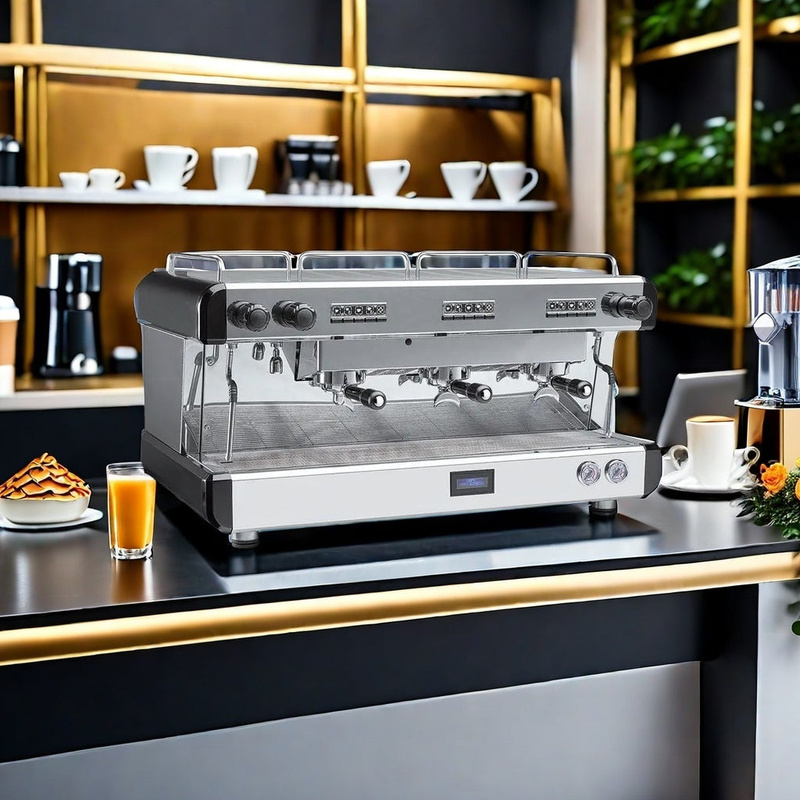
Commercial machines carry two or three gauges. The boiler (steam) gauge shows steam-boiler pressure — commonly 1–1.5 bar — and has nothing to do with brewing. The pump or brew gauge shows the pressure in the brew circuit while the pump runs. The machines we supply are gauged this way: the two-group YS-3120 with three gauges, the YS-3201 and the three-group SD-103 with two, all specified at 9 bar with a rotary pump.
Two things to know about the brew gauge. It reads higher than the pressure at the puck, because it sits upstream of the group and there is a loss along the path — technicians commonly set a gauge to read about 10 bar to get 9 at the coffee, and the machine's manual states the target for that gauge. And it only means something during flow: the needle at idle, or against a blind basket, is static pressure, which is a different test.
The delivery-day test: blind basket
Run this when the machine is installed and every few months after; it takes two minutes and tells you whether the pump and regulation are healthy before any coffee is involved.
- Warm the machine fully — twenty to thirty minutes.
- Lock in a portafilter with a blind (blank) basket, the same one used for backflushing.
- Start the pump on that group and watch the brew gauge.
- A healthy machine climbs to its regulated maximum — typically 9–10 on the gauge, and a little higher static on some machines — within a few seconds and holds there steadily.
- Warning signs: a slow climb, a peak well below the usual reading, a needle that hunts up and down between roughly 6 and 10 bar, or a reading that sags as the pump warms. Each points to the pump, the bypass valve or scale in the pump circuit rather than the coffee.
If the blind-basket test passes and shots still run fast or slow, the machine is not the problem — change the grind.
When the reading is wrong: the rotary-pump bypass
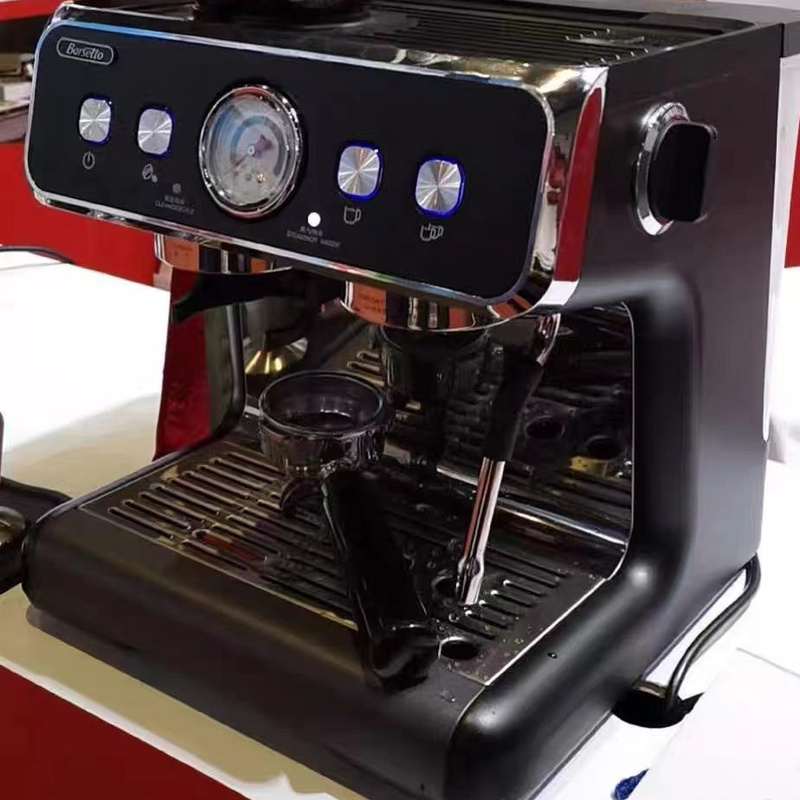
On rotary-pump machines — every commercial machine we supply — brew pressure is set by a bypass (regulating) valve on the pump body, adjusted from outside the pump with the machine's side panel removed; no disassembly of the pump itself. The procedure technicians follow:
- Confirm the inlet: a plumbed machine needs mains water arriving in the range the pump expects — installers commonly quote roughly 20–60 psi (about 1.4–4 bar) at the pump, through a pressure regulator on the line. Low or fluctuating inlet pressure shows up as low or fluctuating brew pressure and no amount of bypass adjustment fixes it. Inlet set-up is in tank vs plumbed espresso machines.
- Run water from a group so the reading is taken under flow.
- Turn the bypass screw a small amount — clockwise raises pressure, anticlockwise lowers it on most pumps — and let the reading settle.
- Stop at the gauge reading the manual specifies for 9 bar at the group.
- Lock the screw and check again with a blind basket.
Vibration-pump machines instead have an OPV — a brass valve with a spring and adjustment nut near the pump outlet — adjusted with the machine unplugged and cooled, in small increments, checked with a pressure-gauge portafilter. The comparison between the two pump types is in rotary vs vibration pump espresso machines.
When to leave it alone
Three situations where the right answer is not to adjust:
- New machine, reading close to spec. Factory settings drift only slowly; a reading within about half a bar of the manual's figure is normal. Adjust grind, not pressure.
- Reading that hunts or sags. That is a pump or scale fault; adjusting the bypass masks it for a week. Descale, then have the pump checked.
- Wanting a "profile". A single bypass setting cannot produce a rising or falling pressure curve. Machines that do that carry paddle or programmed pressure control and are a different purchase — pre-infusion, the low-pressure start most commercial machines do have, is explained in pre-infusion on commercial espresso machines.
Over-pressure valves and bypass valves do drift over years — technicians report finding them out by half a bar to two bar at service — which is why the blind-basket check belongs in the maintenance calendar, alongside the group gasket every six to twelve months.
FAQ
What is the difference between pump pressure and brew pressure?
Pump pressure is the pump's rated maximum with no flow — 15–18 bar on small vibration pumps. Brew pressure is what reaches the coffee during the shot, regulated down to about 9 bar by an over-pressure valve or a rotary-pump bypass. Only brew pressure affects the espresso.
Is 15 bar better than 9 bar for espresso?
No. A 15 bar (or 19 or 20 bar) figure is the pump rating; the machine still regulates to around 9 bar at the group, and if it does not, shots come out bitter and channelled. Ask for brew pressure at the group and a gauge that shows it.
What pressure should a commercial espresso machine be set to?
About 9 bar at the group during flow, with 8–10 bar the accepted working band. The brew gauge upstream of the group usually reads a little higher — around 10 bar — to deliver 9 at the coffee; the manual states the target for that gauge.
How do I test espresso machine pressure?
Warm the machine, lock in a blind basket, run the pump and watch the brew gauge. A healthy machine reaches its regulated maximum within a few seconds and holds steady. A slow climb, a low peak, or a needle hunting between about 6 and 10 bar points to the pump, bypass valve or scale.
How do you adjust the pressure on a rotary pump espresso machine?
With water flowing from a group, turn the bypass screw on the pump body in small steps — clockwise to raise, anticlockwise to lower on most pumps — until the gauge shows the manual's figure for 9 bar at the group, then lock it and recheck with a blind basket. Confirm inlet pressure first; a starved pump cannot be adjusted into range.
Why does my espresso machine pressure fluctuate?
During a shot, usually the puck — channelling or an uneven grind. Against a blind basket, a needle that hunts means the pump, its bypass valve or scale in the circuit, or an inlet supply that is low or variable. Check the inlet regulator and descale before adjusting anything.
Final Thoughts
Ignore the pump rating, read the brew gauge under flow, and run the blind-basket test on delivery and at each service. As a wholesale supplier of commercial coffee machines, we ship rotary-pump machines specified at 9 bar — the gauged two-group YS-3120 among them — and confirm the gauge target for each with the manual.
Get a quote or message Leon on WhatsApp at +86 184 0771 4607.
Get a Quote → WhatsApp +86 184 0771 4607Last updated: September 23, 2026
Pingback: Commercial Espresso Machine Troubleshooting Checks for Cafés
Pingback: Used vs New Commercial Espresso Machine: The Third Option Guides Skip
Pingback: E61 Espresso Machine: What the Group Does, When to Specify It | Yoshan