
Grind-by-weight grinders are sold on one promise: the same dose every time, to a tenth of a gram, without a scale on the bar. It is true, and less than half the story. A timed grinder run well can be as consistent in the cup; a gravimetric grinder run badly is not. This guide sets out what each system does, the measured differences, how a café gets most of the benefit from a timed grinder, and when grind-by-weight pays.
How each system doses
Grind-by-time. The barista programs a run time — say six seconds for an 18 g double. The motor runs for that time and stops. The mass delivered depends on how fast coffee moves through the burrs during those seconds.
Grind-by-weight (gravimetric). The grinder weighs the portafilter, or the grounds as they fall, on a built-in load cell and stops the motor when the target mass is reached. The barista programs grams, not seconds. Some models slow the motor for the last fraction of a gram to land closer.
Both are on-demand grinders — the older doser-chamber design is a separate question, covered in doser vs on-demand commercial coffee grinders.
Why a timed dose drifts
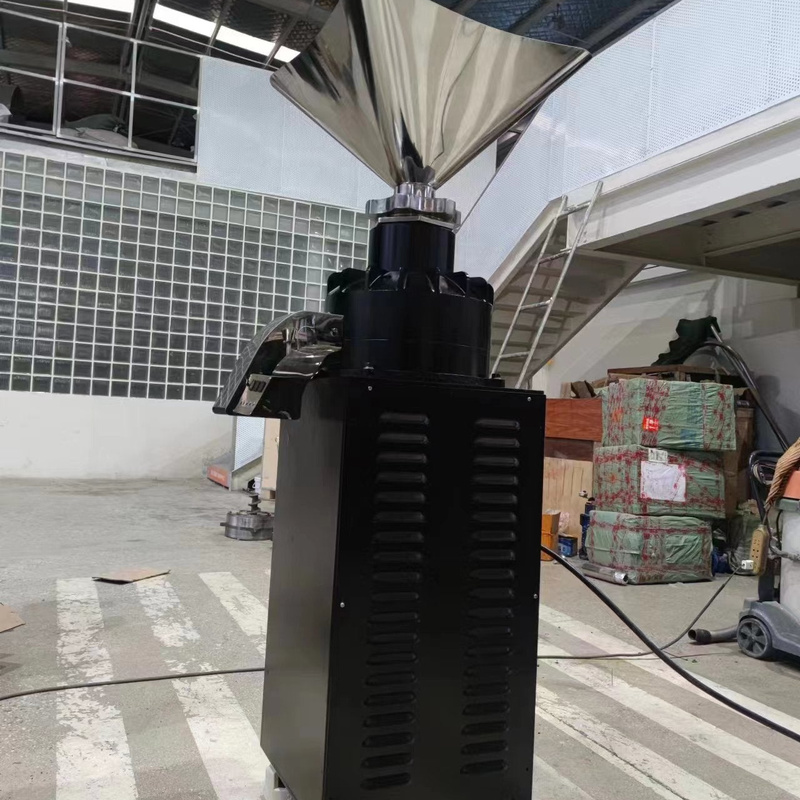
Time-to-mass is not a constant. Four things move it during a shift:
| Cause | Effect on a timed dose | Size of effect |
|---|---|---|
| Hopper level | A full hopper pushes beans into the burrs faster than a nearly empty one | Up to around 1.5 g between full and empty on the same setting, in a manufacturer's own test |
| Grind adjustment | Finer grind slows throughput; the same seconds deliver less | Enough to need re-timing after every adjustment |
| Bean density and roast | Denser, lighter-roasted beans grind slower; oily dark roasts clump | Changes when the coffee changes |
| Static and clumping | Grounds cling and drop unevenly | Adds scatter shot to shot |
A gravimetric grinder is immune to the first three because it measures the result, not the input, and its own accuracy is commonly quoted at about ±0.1 g. What it cannot fix is the fourth entirely, nor anything downstream — distribution, tamping, the shot itself.
What the measurements actually show
The most useful published comparison ran twenty doses at a 21.5 g target on a grind-by-weight grinder and two timed grinders from the same class. The gravimetric machine landed closest to target on average. But one of the timed grinders showed the smallest spread of doses — and the most consistent extraction times — of the three. The conclusion the testers drew is the one to carry into a purchase: you do not need a gravimetric grinder to get consistent dosing; you need a well-designed grinder and a routine.
Where grind-by-weight wins without argument is dialling in. Changing the grind on a timed grinder means grinding two or three doses to find the new time; on a gravimetric grinder the mass stays right while the grind changes, so each adjustment saves a minute or two and a few doses of coffee. A café that adjusts several times a day, or changes coffee often, feels that every shift.
Running a timed grinder to nearly the same result
Most of the gap closes with five habits. The commercial grinders we supply — from the 60 mm YS-020/021 series through the 64 mm YS-900 series to the flat-burr YS-C98pro — are timed grinders, with programmable dosing on the on-demand models, and this is how they are run well.
- Keep the hopper between marks. Decide a fill band — half to three-quarters full — and top up before it drops below. This removes the largest single source of drift.
- Weigh three doses at the start of every shift and adjust the time. Thirty seconds with a bar scale.
- Re-time after every grind change — two or three doses — and after every change of coffee.
- Manage static. Keep the chute clean, purge a few grams after adjustments, and knock clumps out of the basket; the causes and fixes are in coffee grinder retention and static.
- Spot-check. One weighed dose an hour in service catches drift before the customer does.
Do this and a timed grinder's doses sit within a few tenths of a gram through a shift — close to a gravimetric machine's and, in the test above, sometimes tighter.
When grind-by-weight pays
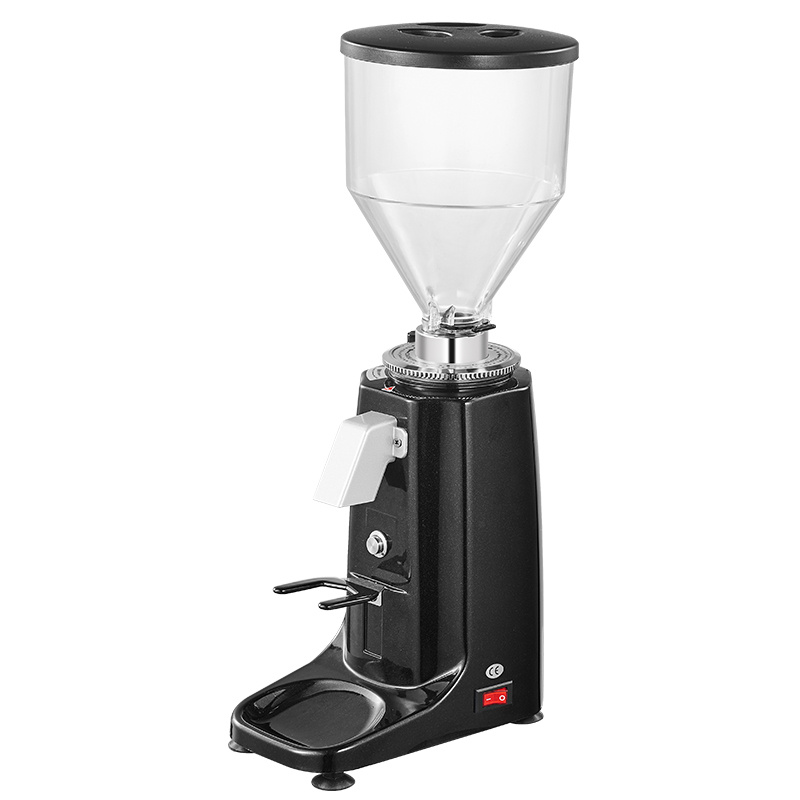
The extra cost is real — gravimetric commercial grinders sit at the top of their class in price — so the question is whether the saved time and coffee cover it. Use the café's own numbers:
- Waste. Suppose a timed grinder over-doses by an average 0.4 g on 180 doses a day. That is 72 g a day, about 1.9 kg a month; at a wholesale coffee cost of 24 per kilo, around 45 a month in your currency. Add the two or three doses spent on each dial-in.
- Time. Each dial-in saves one to two minutes; each shift-start weigh-in is thirty seconds saved.
- Consistency across staff. The larger the crew and the higher the turnover, the more a grinder that cannot be mis-timed is worth.
A rule of thumb from those figures: grind-by-weight tends to pay on bars past roughly 150 doses a day, or that run several coffees and change them often, or that cannot rely on every barista following the routine. Below that, a timed grinder with the five habits is the economical choice, and the money is better spent on burr size and a second grinder for decaf — the sizing question is in espresso grinder burr size and the second-grinder question in how many grinders does a café need.
Two things to check on any gravimetric grinder
The tare routine. The load cell must know the portafilter's weight. Machines differ in whether they tare automatically each dose, once per portafilter, or on a button; a wrong tare is a wrong dose with a confident display. Test with the café's own portafilters before buying — spouted, bottomless, single and double.
Calibration and cleaning. A load cell drifts with knocks and temperature and needs periodic recalibration with a reference weight; grounds under the fork or on the platform throw it off. It adds a line to the cleaning schedule that a timed grinder does not have — the routine is in the commercial coffee grinder cleaning schedule.
FAQ
What is a grind-by-weight grinder?
A grinder with a built-in load cell that weighs the dose as it grinds and stops the motor at a programmed mass — commonly within about ±0.1 g. Timed grinders run the motor for a set number of seconds instead, so the mass delivered depends on hopper level, grind setting and the beans.
Is a grind-by-weight grinder worth it for a café?
Usually from about 150 doses a day, or when the bar runs several coffees, changes them often, or has a large or changing crew. Below that, a timed grinder run with a shift-start weigh-in and re-timing after adjustments reaches nearly the same consistency for much less money.
Why does my timed grinder dose change during the day?
Hopper level is the usual cause — a full hopper feeds the burrs faster than a nearly empty one, by up to around 1.5 g on the same setting — followed by grind adjustments, a change of coffee, and static clumping. Keep the hopper in a fill band and weigh three doses each shift.
How accurate are gravimetric grinders?
Manufacturers commonly quote about ±0.1 g at the dose. In an independent test the gravimetric grinder landed closest to target on average, while one timed grinder showed a tighter spread of doses — so accuracy at the target and consistency across doses are two different measures.
Do you supply grind-by-weight grinders?
The commercial grinders we supply are timed grinders — the 60 mm YS-020/021 series, 64 mm YS-900 series and flat-burr YS-C98pro — with programmable dosing on the on-demand models; we do not currently supply a gravimetric model. Run with the five habits above they hold doses within a few tenths of a gram through a shift.
Does grind-by-weight save coffee?
Yes, in two ways: it removes the over-dose that a drifting timed grinder accumulates — a few tenths of a gram on every shot adds up to kilos a month on a busy bar — and it saves the two or three doses spent finding a new time after each grind change.
Final Thoughts
Grind-by-weight buys accuracy at the target and faster dial-in; a timed grinder with a hopper band, a shift-start weigh-in and re-timing after adjustments buys most of the consistency for less. As a wholesale supplier of commercial coffee grinders, we supply timed on-demand models such as the YS-C98pro and will tell you honestly which bars outgrow them.
Get a quote or message Leon on WhatsApp at +86 184 0771 4607.
Get a Quote → WhatsApp +86 184 0771 4607Last updated: September 23, 2026
Pingback: How to Dial In an Espresso Grinder: Café Procedure
Pingback: Espresso Grinder Burr Size: 64, 75 or 83 mm for Your Café's Peak Hour