
Turkish, Greek and Arabic coffee all start from coffee ground to a powder as fine as flour. No espresso grinder does it, most guides are written for a kitchen, and a commercial Turkish coffee grinder is a different machine. A café, a spice shop or a small roastery selling Turkish coffee by the kilo faces three engineering questions instead: how fine the grinder goes, how long it runs before heat spoils the coffee, and how many kilos an hour it delivers. This guide takes the three in turn.
How fine is Turkish?
Brewing methods sort by particle size, and Turkish sits at the bottom of the range:
| Method | Typical particle size |
|---|---|
| French press | Around 1000 µm and coarser |
| Filter / drip | Roughly 500–800 µm |
| Espresso | Roughly 200–300 µm |
| Turkish / Arabic | Below 100 µm — commonly 50–100 µm, with most particles under 100 |
A single bean broken to Turkish fineness becomes tens of thousands of particles, against a few hundred at a French-press grind. That is the first constraint: most burr grinders bottom out somewhere around 200–300 µm on their finest setting — fine enough for espresso, nowhere near Turkish. A Turkish grinder is built to close the burrs far tighter, with burr geometry or stone discs that cut rather than crush at that gap, and a feed that keeps the powder moving out of the chamber instead of packing in it.
Heat: the constraint nobody mentions until the coffee tastes flat
Grinding to powder is work, and work is heat. Industrial suppliers who measure it report that a conventional Turkish grinder running continuously reaches 60–80 °C within the first hour and around 100 °C by the second, needing a long cool-down before the next run — and that aromatic compounds begin to leave the coffee at burr temperatures of around 40 °C. A grinder that can reach Turkish fineness and one that can keep it for a shift are different machines.
Three ways the industry manages it. Duty cycle: shop grinders run in bursts and cool between them, which is fine for a café grinding to order and wrong for a factory. Mass and ventilation: heavier burr chambers and ventilated motors run longer before the temperature climbs. Active cooling: industrial Turkish mills use water-jacketed or otherwise cooled grinding chambers and can run continuously; one manufacturer quotes chamber temperatures held in the low twenties for round-the-clock production. The general relationship between speed, duty cycle and heat is in coffee grinder rpm and heat.
Kilos per hour: matching the machine to the business
| Scale | Typical machine | Output | Power | Who |
|---|---|---|---|---|
| Café, grind to order | Shop grinder with Turkish-capable burrs | Grams per order; a few kilos a day | Single phase, about 1 kW | Cafés, kiosks serving cezve coffee |
| Shop, grind for retail | Shop or light-industrial Turkish grinder | Roughly 15–20 kg/h in bursts | Single phase, 1–2.2 kW | Spice shops, small roasteries, café-roasters |
| Small factory | Industrial Turkish mill with stone or steel discs | Roughly 60–100 kg/h continuous | Three phase, 5–6 kW | Roasteries packing Turkish coffee for wholesale |
| Plant | Cooled roller or disc mill | Several hundred kg/h continuous | Three phase, larger | Brands supplying a region |
The middle two rows are where most buyers sit and where the price jumps: established European and Turkish makers' shop-scale Turkish grinders and general-purpose commercial grinders with Turkish burrs sit in the low thousands of dollars, and the industrial stone-disc mills at 60 kg/h and above run well beyond that with three-phase power and manufacturer servicing.
The mill in our range
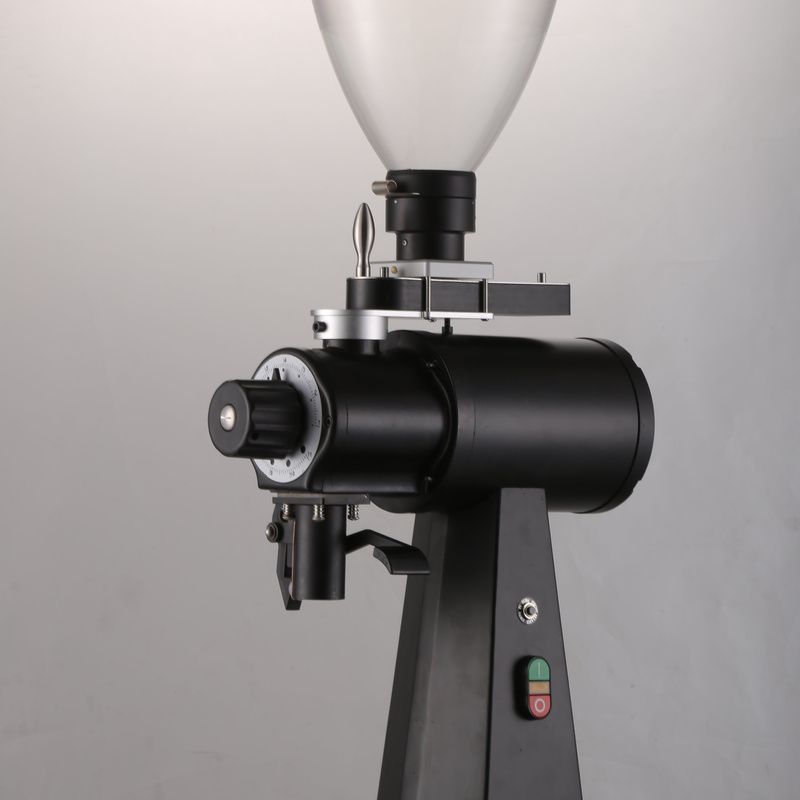
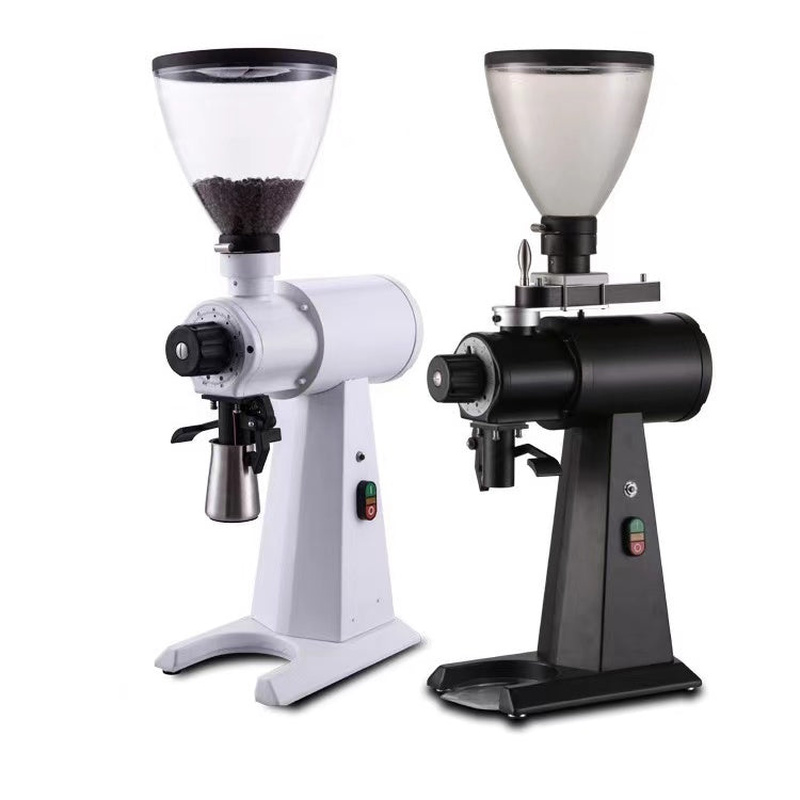
For the shop and small-roastery rows we supply the YS-2200M industrial mill: stainless steel, 120 mm flat burrs at 1420 rpm, a 1.5 L hopper, a 2.2 kW motor on single or three phase at 110/220 V, and a grind range of 20–200 mesh. Its rated throughput is 20 kg/h at Turkish fineness, 40 kg/h at espresso and 50 kg/h at drip. It is the only model in our range built to reach Turkish and Arabic fineness — the smaller YS-1100M (120 mm burrs, 1.1 kW, 15–40 kg/h at 50–200 mesh, USD 608 EXW Shenzhen, USD, 2026) is the espresso-and-filter retail mill — and it is priced at USD 688 EXW Shenzhen, USD, 2026. Both ship in stock within 7–15 working days, carry a one-year warranty with parts failing without human damage sent by air express at our cost, and come with 24/7 lifetime phone and online technical support.
Two honest notes. Mesh and microns are not the same scale — 200 mesh corresponds to roughly 75 µm, so the top of the YS-2200M's range sits inside the Turkish band, and we advise a sample of your own coffee ground at the setting you intend before you commit. And 20 kg/h at Turkish fineness is a burst rating for a shop or small roastery, not a continuous plant figure; a business grinding hundreds of kilos a day belongs in the cooled industrial class above, which we do not supply. For the retail-grinding case generally, see bulk coffee grinders for roasteries.
What to check before buying, at any scale
- A ground sample of your coffee at Turkish setting, rubbed between the fingers and, better, brewed in a cezve: it should be flour, not sand, and leave the classic fine sediment.
- Continuous-run rating and what the maker says about cooling — ask how long it can grind before it must rest.
- Burr material and life at this fineness: steel burrs wear faster grinding powder; stone discs are dressed rather than replaced. Replacement burrs are in when to replace grinder burrs.
- Electrical supply: single or three phase, and the frequency — the 50/60 Hz effect on motor speed applies to mills as much as to bar grinders; the market question is in commercial coffee grinder voltage: 110 V vs 220 V.
- Powder handling: a discharge that does not clog with flour-fine coffee, a dust-tight bag or container connection, and easy access to clean the chamber — Turkish grind packs into every corner.
- Dedicated use: a Turkish grinder should not share duty with espresso; the fines contaminate everything else.
FAQ
What grind size is Turkish coffee?
A powder below 100 µm — commonly 50–100 µm, with most particles under 100 — finer than espresso by a factor of two or three. Most standard burr grinders bottom out around 200–300 µm, so Turkish needs a grinder built to close the burrs far tighter.
Can an espresso grinder grind Turkish coffee?
Generally not: its finest setting stops around espresso fineness and its burrs are not designed to cut at a Turkish gap. Some large all-purpose commercial grinders reach Turkish with special burrs; otherwise a dedicated Turkish grinder or an industrial mill with a Turkish setting is needed.
Why does grinding Turkish coffee generate so much heat?
Because reducing a bean to tens of thousands of particles is far more work than an espresso grind. Conventional grinders run continuously reach 60–80 °C in an hour, and aromatics start leaving the coffee at around 40 °C, so shop grinders run in bursts and industrial mills are cooled.
How many kilos per hour does a Turkish grinder produce?
Shop-scale machines around 15–20 kg/h in bursts; industrial stone or steel disc mills 60–100 kg/h continuously on three-phase power; plant mills several hundred. Our YS-2200M is rated 20 kg/h at Turkish fineness for shops and small roasteries.
Do you supply a grinder for Turkish coffee?
Yes: the YS-2200M industrial mill, 120 mm flat burrs, 2.2 kW, 20–200 mesh, rated 20 kg/h at Turkish fineness, at USD 688 EXW Shenzhen, USD, 2026, from stock within 7–15 working days. It is the only model in our range built for Turkish and Arabic fineness; we suggest a ground sample of your coffee before ordering.
Stone burrs or steel burrs for Turkish coffee?
Stone discs are the traditional industrial choice — dressed rather than replaced, and run in large three-phase mills. Steel burrs are standard on shop and light-industrial machines and wear faster at powder fineness, so budget for replacements. Either can reach the fineness; cooling and duty cycle decide the quality over a shift.
Final Thoughts
Three questions — fineness below 100 µm, heat over a shift, kilos per hour — sort Turkish grinders into shop, small-factory and plant classes. As a wholesale supplier of industrial coffee grinders, we supply the YS-2200M and YS-1100M mills — the first for Turkish fineness at shop and small-roastery scale, the second for espresso and filter retail grinding; send us your coffee and the daily volume and we will confirm the fit.
Get a quote or message Leon on WhatsApp at +86 184 0771 4607.
Get a Quote → WhatsApp +86 184 0771 4607Last updated: September 23, 2026