
Grinder speed has become a selling point — "low rpm for cooler grinding" on one box, "high speed for busy bars" on another — and the two claims contradict each other. The published evidence is more specific than either. This guide to coffee grinder rpm and heat sets out what burr speed changes, why heat is not simply a function of rpm, the four levers over grinder temperature, and why a grinder rated at 50 Hz runs about a fifth faster on a 60 Hz supply.
What speed changes in the grounds
Tests on variable-speed grinders point the same way: at the same grind setting, higher rpm produces a finer grind with more fines and a less peaked distribution. But the effect is very close to what you get by simply turning the grind finer — one experienced tester found that after compensating with the burr gap, extraction and taste at high and low speed were the same. Data from a commercial variable-speed grinder showed one difference beyond fineness: grouped by shot time, the lower speed gave slightly higher extractions. So speed is a real variable, but a second-order one, and any comparison between speeds is meaningless unless the grind is re-dialled at each.
Two practical consequences for a café:
- Change the speed, re-dial the grind. Otherwise a faster grinder simply runs finer and shots slow down.
- Faster grinding is less accurate on a timed dose. More coffee passes per second, so the same timer error is a bigger mass error. Grinders built for high speed sometimes slow down for the last fraction of the dose for that reason.
Heat: the counter-intuitive part
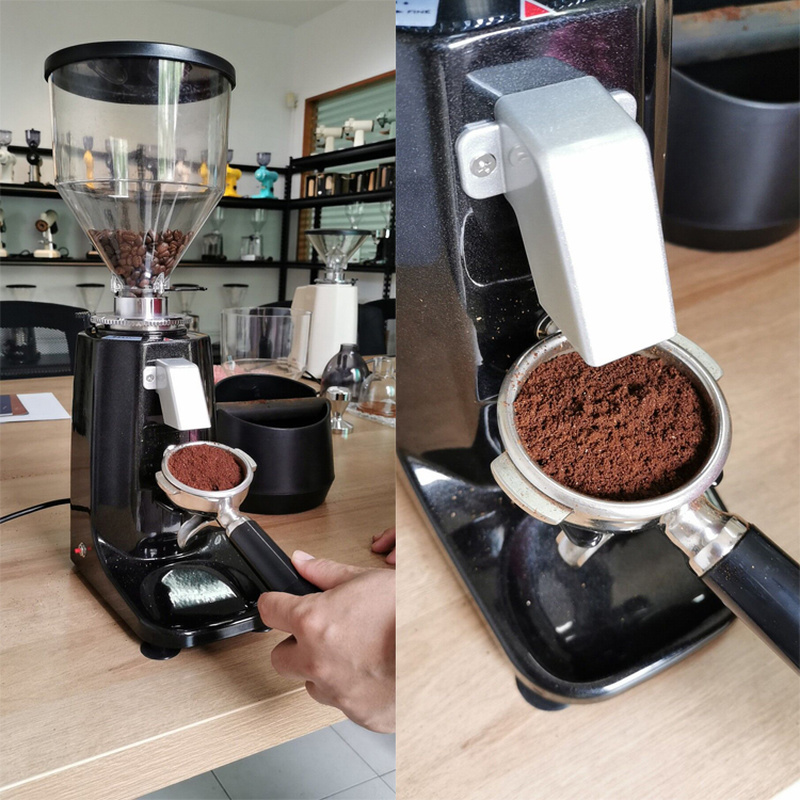
The common claim is that lower rpm means cooler grounds. The published measurements are more mixed. One set of home-grinder tests recorded burr temperature rises after ten consecutive doses of roughly 3–4 °C on a very low-speed grinder, 8–11 °C on a mid-speed grinder and 14–19 °C on a high-speed one. A technical presentation from a commercial grinder manufacturer argued the opposite for production grinders: at higher rpm the coffee passes through the chamber faster and the motor runs for less time per dose, so the grounds pick up less heat.
Both are right about their own machines, which is the point. Heat at the burrs comes from four things at once:
| Lever | What it does | Who controls it |
|---|---|---|
| Burr speed | Friction per revolution rises with speed; time per dose falls with it | Grinder design; variable on a few models |
| Burr size | Larger burrs finish a dose in fewer revolutions | Purchase decision — see below |
| Duty cycle | Continuous grinding builds heat; pauses shed it | The bar's peak hour and how many grinders share it |
| Chamber and motor design | Metal mass, ventilation, whether the motor sits under the burrs | Grinder design |
A grinder's rpm on its own does not tell you how hot the coffee will get. What tells you is the duty cycle in your peak hour on that particular machine. The sizing method — doses, seconds per dose, duty cycle — is in espresso grinder burr size.
Why heat matters, and how much
Warm grounds lose volatile aromatics faster, and warm burrs expand slightly and shift the grind finer through a rush, which is one reason the afternoon's shots run differently from the morning's. The effect is real on a bar grinding continuously and negligible on one that grinds ten doses an hour. Three things a café controls:
- Spread the load. A second grinder for decaf or a second coffee halves the duty cycle on the main grinder in the rush — the arithmetic is in how many grinders does a café need.
- Keep the hopper out of the sun and the grinder out of the machine's exhaust. Beans that go in warm come out warmer.
- Clean the chute and burr chamber. Packed grounds insulate the burrs; the schedule is in the commercial coffee grinder cleaning schedule.
Low-speed and high-speed grinders as sold
The trade uses the terms loosely. "Low-speed" home grinders often mean a small conical burr on a geared-down motor — inexpensive and not intended for espresso. Commercial "high-speed" grinders run flat burrs on a direct-drive motor at anything from about 1400 to 2500 rpm, and it is here that the real choices sit. A few commercial and prosumer models offer variable speed — typically somewhere between 300 and 1500 rpm — for baristas who want to tune fines for a particular coffee; most cafés do not need it, and a fixed-speed grinder with the grind dialled in gives the same cup.
The grinders we supply are fixed-speed flat-burr models at three speeds: the 64 mm YS-900 series and the 74 mm model at 1450 rpm, the 60 mm YS-020 series at 2000 rpm, and the YS-C98pro at 2500 rpm. The lower-speed 64 and 74 mm units are the natural choice for a bar that grinds steadily through a long peak; the faster 60 mm units for lighter duty where speed per dose matters more than thermal margin.
50 Hz vs 60 Hz: the export detail that changes your dose
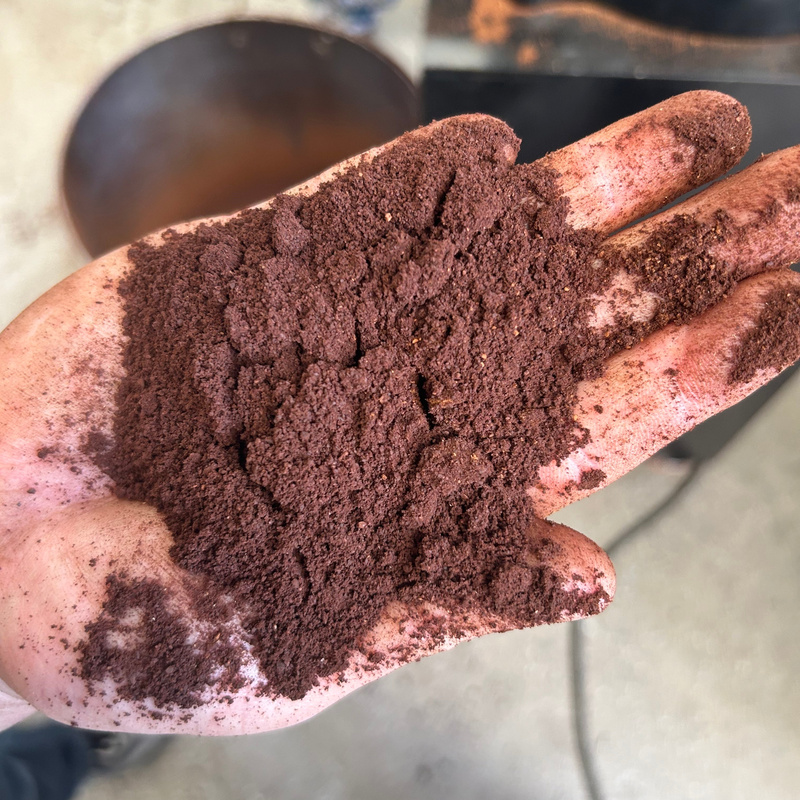
Most commercial grinders use an AC induction motor, and an induction motor's speed follows the frequency of the mains supply. A grinder rated at 1450 rpm on 50 Hz — the frequency across most of Europe, Asia, Africa and Australia — turns at roughly 1750 rpm on a 60 Hz supply, which is the standard in North America, most of South America, and parts of Asia including the Philippines, Korea, Taiwan and Saudi Arabia. The motor is not faulty; it is doing what the physics says.
Three things follow for an importer:
- The timed dose changes. A grinder that delivers 18 g in 6 seconds at 50 Hz delivers more at 60 Hz, because the burrs are turning faster. Re-time the dose on installation and treat the manufacturer's rpm figure as a 50 Hz figure unless stated otherwise.
- The grind runs finer at the same setting, by the mechanism above, so re-dial as well as re-time.
- Heat behaviour shifts by a similar proportion — usually not a problem, but a grinder near its duty-cycle limit at 50 Hz has less margin at 60 Hz.
The speeds we quote for the grinders we supply are the manufacturer's ratings; tell us your country's voltage and frequency when you enquire and we confirm the specification the grinder ships with. Voltage — 110 V versus 220 V — is a separate question from frequency and is covered in commercial coffee grinder voltage: 110 V vs 220 V.
FAQ
Does grinder rpm affect espresso taste?
Indirectly. Higher speed grinds finer with more fines at the same setting, which changes the shot much as turning the grind finer would; once the grind is re-dialled the difference is small. Speed also affects dose accuracy on timed grinders and heat at volume. It is a second-order variable behind burr geometry and grind setting.
Is a low rpm coffee grinder better?
Not automatically. Lower speed reduces friction per revolution but lengthens each dose; higher speed does the reverse. Which runs cooler depends on burr size, duty cycle and chamber design. Compare grinders on the peak-hour duty cycle they will run, not on the rpm figure.
Do coffee grinders overheat in a café?
Only when grinding continuously through a long peak on one grinder. Warm burrs shift the grind finer and warm grounds lose aroma faster. A second grinder, a hopper out of the sun and a clean chamber remove most of the problem without changing the machine.
What is a variable speed coffee grinder?
A grinder whose burr speed can be adjusted — typically across a few hundred to about 1500 rpm — so the barista can tune fines and body for a particular coffee. It is a specialty-bar tool; a fixed-speed grinder with the grind dialled in produces the same cup for most cafés.
Why does my grinder run faster in a 60 Hz country?
Because an induction motor's speed follows mains frequency: a 50 Hz rating of 1450 rpm becomes about 1750 rpm at 60 Hz. The grinder is fine; re-time the dose and re-dial the grind at installation, and check the duty cycle if the bar is busy.
What rpm are the grinders you supply?
Manufacturer ratings: 1450 rpm for the 64 mm YS-900 series and the 74 mm model, 2000 rpm for the 60 mm YS-020 series, and 2500 rpm for the flat-burr YS-C98pro. Tell us your country's frequency and we confirm the specification your grinder ships with.
Final Thoughts
Treat rpm as one setting among four that decide heat, re-dial whenever speed changes — including the change from 50 Hz to 60 Hz — and size the duty cycle before the diameter. As a wholesale supplier of commercial coffee grinders, we supply fixed-speed flat-burr models from the 60 mm YS-020 to the 74 mm class, built to your country's supply.
Get a quote or message Leon on WhatsApp at +86 184 0771 4607.
Get a Quote → WhatsApp +86 184 0771 4607Last updated: September 23, 2026
Pingback: Espresso Grinder Burr Size: 64, 75 or 83 mm for Your Café's Peak Hour
Pingback: How to Dial In an Espresso Grinder: Café Procedure