
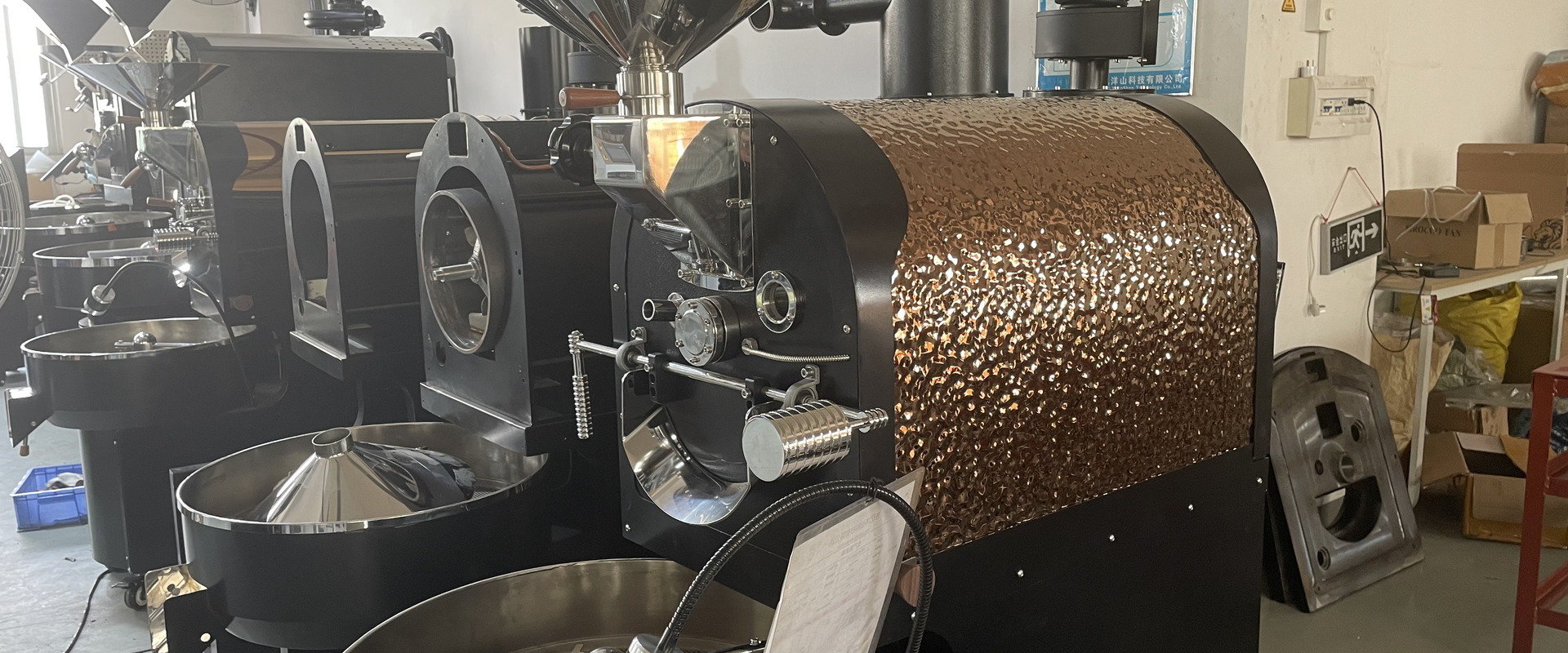
If you are a dealer or a coffee brand looking at putting your own name on a coffee roaster, you will meet two terms: OEM and ODM. Most of the people who ask us for "OEM" actually need ODM, and the difference decides your cost, your minimum order and your timeline. Here is how to tell which one you are, what each involves, and the three things to lock down whichever you choose.
First, Which One Are You?
Answer one question: do you want to change how the machine is built, or how it looks and what it is called?
- You want it in your colour, with your logo, built for your market's voltage, maybe with a different control panel language. That is ODM — the factory's proven design, finished for your brand. It is fast, it has low or no minimum order, and it is what nine out of ten brand enquiries turn out to be.
- You have your own drawings, a different drum geometry, a control system you specify, a feature nobody else has. That is OEM — the factory building your design. It involves engineering time, tooling, prototypes, and a minimum order that justifies them.
If you are not sure, you are ODM. OEM projects know they are OEM before they call.
(One more thing to clear up: "private label coffee" in search results usually means roasted beans packed under your brand. This page is about the machine.)
What ODM Actually Includes
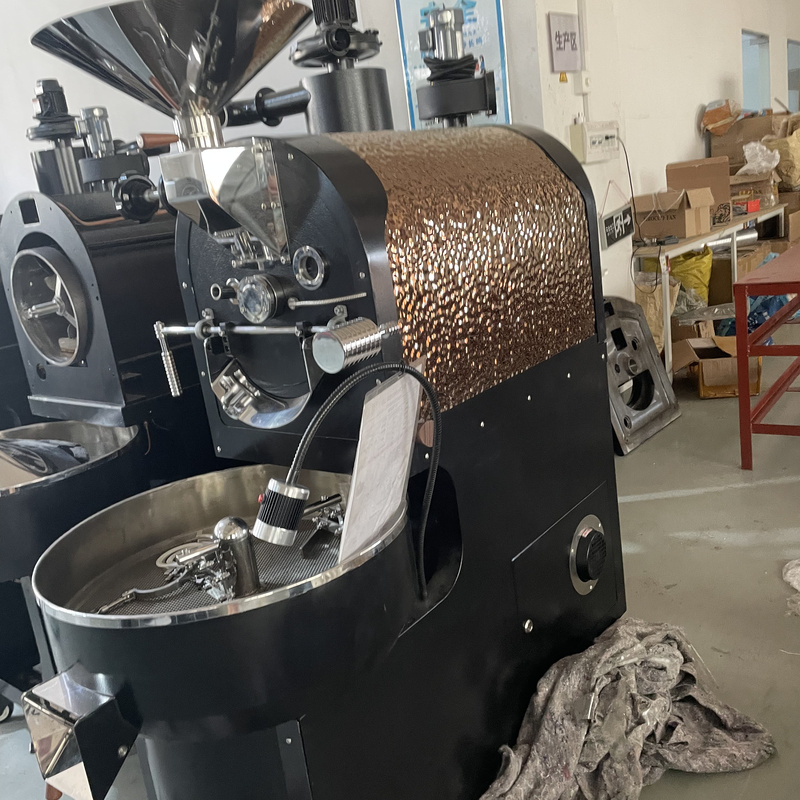
On our range, an ODM order can change all of the following without touching the engineering:
| You can specify | What it means in practice |
|---|---|
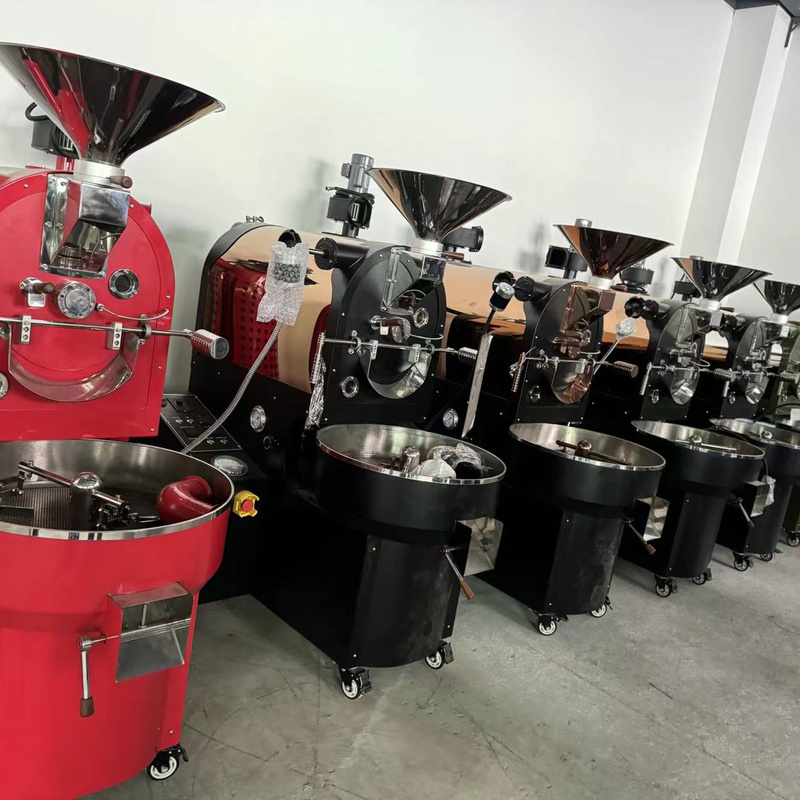
| Colour | Any RAL or Pantone shade on the body; cooling tray, hopper and sight-glass trim can be plated or colour-matched. On the DY and YS series, body colour and logo are included at no charge; on the SD series paint colours are free and electroplated finishes are priced |
| Branding | Your logo on the body, the control panel and the nameplate; your name on the manual |
| Voltage and frequency | Built for your market — 220–240V/50Hz, 110–120V/60Hz, or three-phase for electric builds |
| Gas type | Burner jetted for LPG or natural gas |
| Control panel language | Touch-screen interface in your market's language on PLC models |
| Packaging | Your branding on the export crate and documentation |
| Accessories | Matched destoner, loader, afterburner or filter under the same brand |
What ODM does not change is the drum, the burner, the airflow or the frame — the parts that are already proven. That is the point: you get a machine with a track record, in your brand, in weeks rather than a year.
Lead time is longer than a standard machine because of the finishing, and it is worth confirming at quotation. Minimum order on ODM is typically one machine for colour and logo; volume pricing starts as quantities rise.
When OEM Is the Right Answer
You need OEM when your brand's value is in something the standard machine does not do. Then the process looks like this:
- Specification and drawings. Yours, or developed with our engineers from your requirements.
- Engineering review. Can it be built safely, does it meet the certification your market needs, what does it cost to tool.
- Prototype. One machine, tested, revised.
- Certification. Test reports and documentation for the new design — for Europe, that means the CE file is yours to hold.
- Production. Against an agreed minimum order that covers the engineering and tooling.
Expect months rather than weeks, and expect to commit to volume. If that sounds heavier than what you had in mind, ODM is almost certainly what you need.
Three Things to Lock Down Either Way
Whichever route you take, these are the clauses that matter to a brand — and the table in the next section shows where each item sits by default.
Exclusivity. Under ODM the colour and logo are yours; the machine underneath is sold to others unless you buy territory or finish exclusivity, which is negotiable on volume and must be in writing. Under OEM your design is yours; make sure the agreement says so.
Certification ownership. Who holds the CE file — and whose name the test reports are in — decides whether you can ever move production. The CE guide explains what the documents look like.
Spare parts commitment. Your customers will come to you for parts. Get a parts-availability commitment in writing — five years on core components is reasonable — and agree how warranty parts travel; the after-sales guide shows the working arrangement.
Who Owns What: The Table to Settle Before the Deposit
The OEM/ODM label does not decide ownership; the agreement does. Sourcing guides all make the same point — drawings, tooling, software, certification files and even later improvements can each sit with a different party — and brands that skip this table find out at the worst moment, usually when they want to move production or a competitor appears with the same machine. Here is the default position on our range, and what is negotiable.
| Item | ODM (our design, your brand) | OEM (your design) |
|---|---|---|
| Drum, burner, frame drawings | Ours; stay in our catalogue | Yours, if you supplied or paid for them — say so in the contract |
| Tooling and moulds | Ours, no charge to you | Yours if you paid for them; typically thousands to tens of thousands, held at our factory |
| Control software and interface | Ours; your language and logo on the screen | Yours if specified by you; source code ownership must be written down |
| Certification file (CE etc.) | Ours; DoC issued with your brand on the nameplate | Yours to hold, because the design is yours — and yours to renew |
| Logo, colour references, packaging artwork | Yours | Yours |
| Improvements made during the project | Ours unless agreed | Agreed case by case; the default is whoever paid |
| Right to sell the same machine to others | We keep it — unless you buy exclusivity by model, colour or territory | You keep it |
Two practical outcomes. Under ODM, the thing you can genuinely own is the look: register the colour-and-logo combination as your trade dress in your market and ask us for exclusivity on that finish, which is cheap, rather than on the model, which is not. Under OEM, the certification file is the asset that matters most — without it you cannot move the design to another factory even if you own the drawings — so make sure the test reports are issued in your name, not ours.
How an ODM Order Runs
Send us the model, the colour reference, your logo file, your market's voltage and gas, and the language you want on the panel. We confirm the finish, the lead time and the price, build one machine for your approval — with a test video before it ships — and then run the quantity. Dealers usually add a matched set of accessories under the same brand so the whole line looks like one range; the equipment page shows what can be matched, and the DY series and SD series pages show the base models most dealers brand.
If you are still deciding which models to build a range on, the small business sizing guide explains where each size sells, and the factory tour shows how the machines are built.
Frequently Asked Questions
Can I start with ODM and move to OEM later?
Yes, and it is the usual path: a dealer sells the ODM range under their brand for a year or two, learns what their market asks for that the standard machine does not do, and brings that list to an OEM conversation with volume behind it. The ODM colour, logo and manuals carry over; the OEM engineering starts from the feature you could not sell without.
Who pays for the prototype on an OEM project?
The brand, normally, as a priced engineering and tooling stage before the production order — sometimes credited back against the first batch. It is not a deposit on machines; it is payment for drawings, a built and tested unit and the certification testing of a new design, which is why OEM only makes sense with volume that covers it. Ask for the stages and their prices as separate lines.
Can I have a different control panel language and manual under ODM?
Yes — the touch-screen interface on the PLC models and the printed manual can both be produced in your market's language, with your logo, as part of the ODM finish. Allow for the translation time in the lead time and send the terminology you want used; a panel that says "charge" and a manual that says "load" confuses your own technicians.
What lead time should I plan for a branded first order?
Longer than a standard machine by the finishing time — paint, plating, logo, panel language — and confirmed on the quote rather than estimated. Send the colour reference and the vector logo file with the order; the commonest delay on a first branded order is a logo file that arrives after the panels are painted.
Does branding change the warranty or the support?
No. The warranty, the video-call support and the spares supply are the same on a branded machine as on a standard one, and the CE declaration is issued with your brand on the nameplate. What changes is who your customer calls first — you — so agree at the start whether we support your customers directly or through you, per client.
Final Thoughts
Most brands that ask for OEM need ODM: a proven machine in their colour, their logo and their market's voltage, in weeks. Real OEM is for brands changing the engineering, and it carries the commitment that implies. We have built both at our own factory since 1990. Tell us what you want to change and we will tell you which route it is. Talk to our engineers.
Get a Quote → WhatsApp +86 184 0771 4607Last updated: September 17, 2026
Pingback: Coffee Roaster for the Philippines: 60 Hz, Resellers, Barako | Yoshan
Pingback: Giesen Alternative: What You Are Paying For, and How to Check | Yoshan
Pingback: CE Certified Coffee Roaster: Declaration, Not the Sticker | Yoshan
Pingback: YOSHAN, Coffee Roaster Manufacturer in China: What We Build | Yoshan
Pingback: Probat Alternative: Where the Brand Wins, Where It Does Not | Yoshan