
If you are comparing a drum roaster against a fluid bed roaster for a business, you will find plenty written about flavour and not much about the thing that actually decides it: whether the amount you roast per batch is going to change. It will. So this guide covers how each machine heats coffee and what that does to the cup — and then the practical difference that matters once you are selling.
How Each One Heats the Coffee
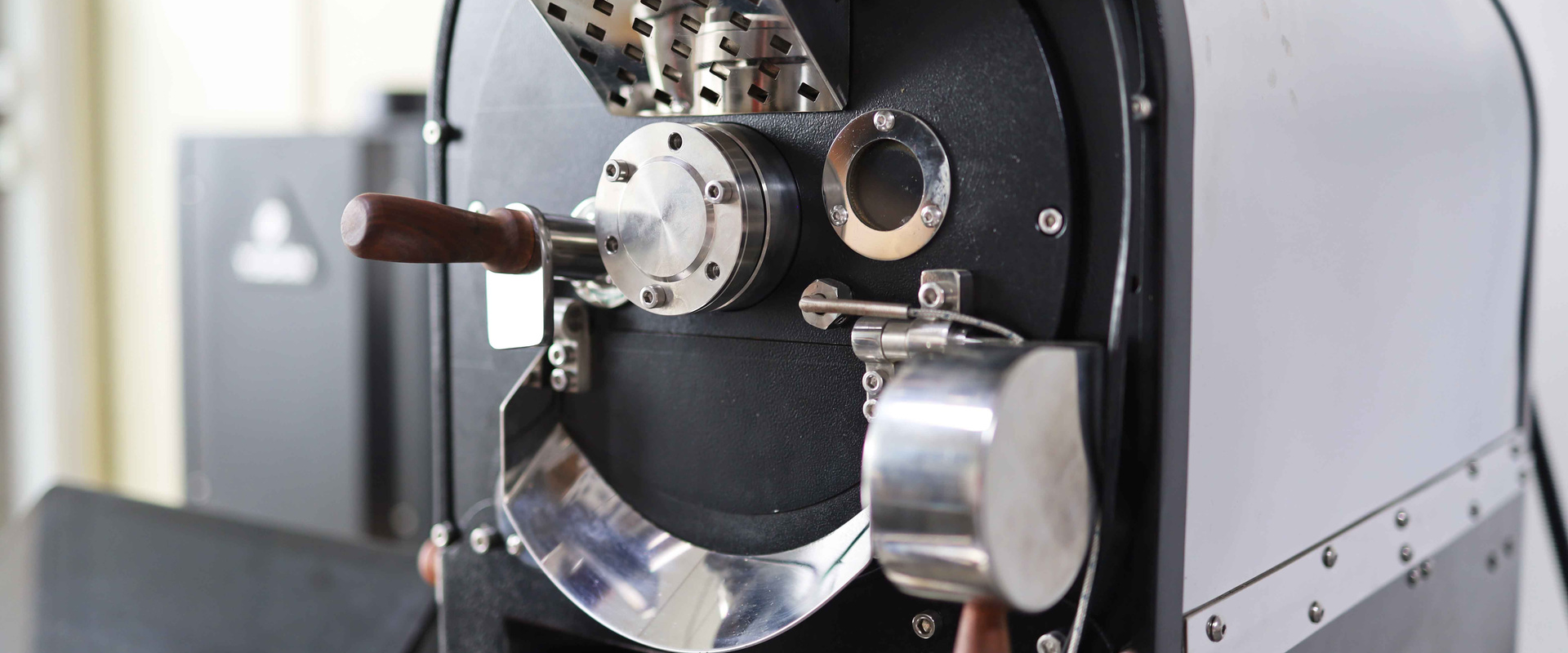
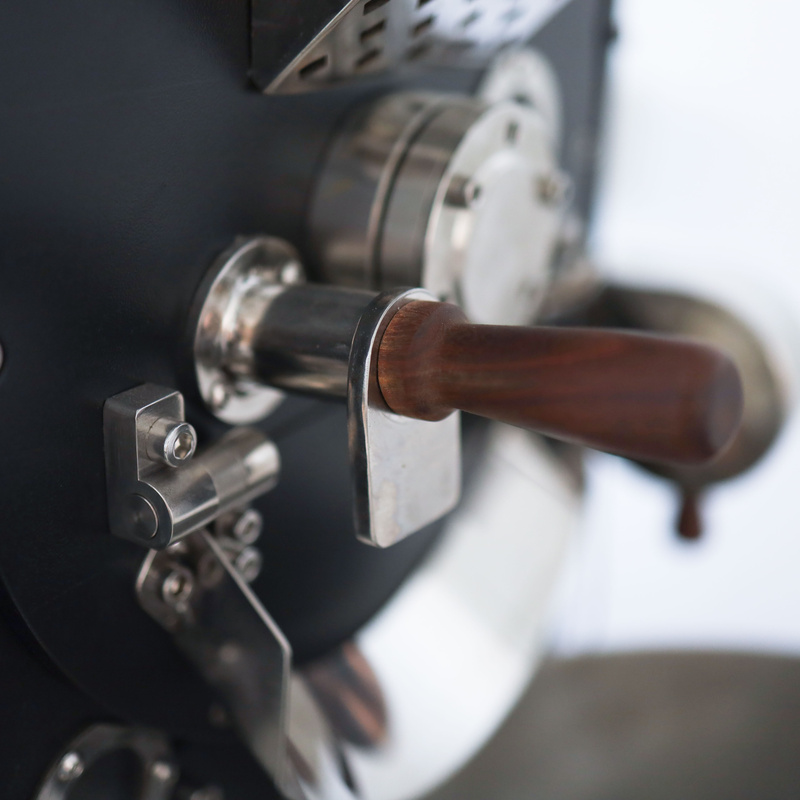
A drum roaster tumbles the beans inside a rotating steel or cast iron drum with a burner underneath or behind it. Heat reaches the beans two ways: from contact with the hot drum wall, and from hot air pulled through the drum by a fan. The drum stores heat, so once it is up to temperature it carries a lot of momentum from batch to batch.
A fluid bed roaster has no drum. A strong stream of hot air lifts the beans and keeps them floating, so they never touch a hot surface. All the heat comes from the air. There is very little stored heat — when the air changes, the roast changes immediately.
That one difference — stored heat versus none — explains almost everything else.
What It Does to the Cup
Roasters who compete at world level and use both types describe the same pattern. On a drum, sweetness and body come forward; the stored heat drives development inside the bean. On air-only heating, the cup is very clean and bright, but can lack body — the bean's outside dries quickly and the inside develops less.
Neither is wrong. A fluid bed suits a light-roast, high-acidity, single-origin programme. A drum suits everything from that through to espresso blends and dark roasts. The overwhelming majority of commercial coffee is drum-roasted, which is why "what coffee is supposed to taste like" to most of your customers is a drum-roasted profile.
The Difference That Matters for a Business
Here is the part that gets skipped. A fluid bed roaster is designed around one batch size. The air has to be strong enough to lift the beans and no stronger; change the load and the airflow is wrong. Larger fluid beds exist — production units up to about 20 kg — but each is still built around one design load, and most of the market sits under 5 kg because the machine is simple and cheap to build at that size: a chamber and a fan.
A drum roaster works across a range. Our drums are rated for a maximum batch and roast well from about half of that up to full — a 6 kg drum is happy at 3 kg on a quiet day and 5 kg on a busy one. As your volume grows, you load more; when it jumps, you move to the next drum and the profile transfers with sensible adjustment.
If you are roasting one coffee at one batch size for one shop, that flexibility is worth little. If you are building a business, it is the whole game: your batch size will change, and a drum lets it.
What "Semi-Hot-Air" Means on Our Drums
Our SD, YS and DY machines are drum roasters described as semi-hot-air, half direct fire. In plain terms: the burner heats the drum wall for contact heat and body, and a fan draws hot air through the bean mass for the clean, even development you would associate with air roasting. You control the balance with the airflow — more air for a cleaner, brighter cup; less for more body. It is the reason a well-run drum can roast a delicate washed Ethiopian and a dark espresso blend on the same afternoon, which an air-only machine struggles with at the dark end and a pure direct-fire drum struggles with at the light end.
When Fluid Bed Is the Right Answer
Be fair to it. Choose air roasting if:
- You roast light, bright coffees only, and want the cleanest possible cup.
- Your batch size is fixed and small — a few kilos or less — and you do not expect that to change.
- You need the lowest possible machine cost and the simplest mechanics.
- You have no gas supply and no room for a drum; small electric air roasters are compact.
If two of those are true, it is a sensible choice. If none are, a drum will serve you longer.
"Twice the Batches an Hour" — What That Claim Is Worth
Air-roaster makers lead with speed: a 5–7 minute roast, up to six batches an hour, against a drum's 10–15 minutes plus cooling. The numbers are true. Whether they help you depends on two things they leave out.
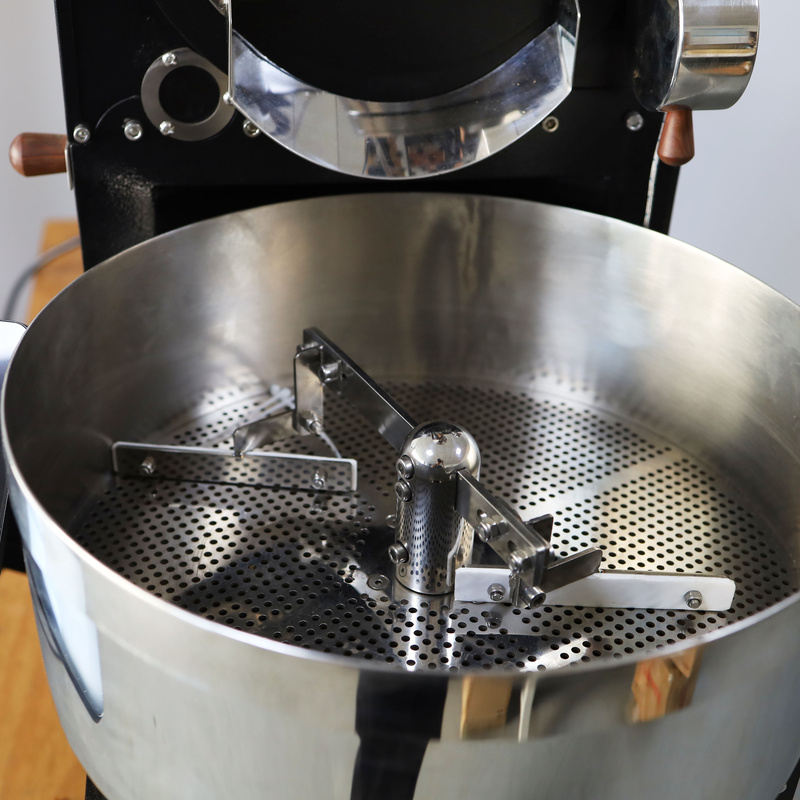
First, cooling. The "plus 5–8 minutes" only applies to a drum that cools in the drum. Every one of our drums from 1 kg up cools in a separate tray with its own fan, so the next batch charges while the last one cools — a 6 kg drum runs three to four batches an hour, not two. The gap is real but smaller than advertised.
Second, what a fast roast is. A six-minute roast is not a twelve-minute roast done quicker; it is a different coffee. The short time is what gives air roasting its clean, bright cup — and its thinner body, because the inside of the bean has less time to develop. If your customers drink espresso with milk, that is the wrong trade. If they drink pour-over from a single origin, it may be the right one. Speed and flavour are the same lever here, not two separate benefits.
What the speed claim is genuinely good for is a cafe that roasts small amounts often and wants to be seen doing it. For a roastery that needs 40 kg a day, the honest comparison is kilos per hour at the batch size you will actually run — and a drum sized at 60–80% load, with a separate cooler, is usually the cheaper way to get there.
Which One for You
| Your situation | Drum | Fluid bed |
|---|---|---|
| Batch size will grow over the next two years | ✓ | — |
| You roast espresso blends or anything past medium | ✓ | — |
| You want body and sweetness in the cup | ✓ | — |
| You roast only light single origins at one fixed small batch | ✓ | ✓ |
| Lowest machine cost, simplest build | — | ✓ |
| No gas, very small footprint, electric only | ✓ (small electric drums exist) | ✓ |
| Wholesale customers expecting consistency at volume | ✓ | — |
For most businesses the right-hand column stays empty past the first line, which is why we build drums. If you are working out what size, the sizing guide takes you from weekly kilos to a batch size; if you are weighing gas against electric heating on a drum, that is a separate decision covered in our gas vs electric guide.
Frequently Asked Questions
Can a fluid bed roaster be retrofitted with a chaff cyclone and an afterburner?
Chaff collection is built into most air roasters, because the airflow carries the chaff out; what they rarely have is the exhaust flange and stack a duct contractor expects, so treatment equipment is harder to add later. If your rules require an afterburner or a filter, size it to the air roaster's much higher exhaust volume, which often costs more than the difference between the machines.
Which type is easier to learn on?
The drum, oddly, because it is slower: a twelve-minute roast with stored heat gives you time to see a stall or a crash coming and correct it, while a six-minute air roast is over before a beginner has read the curve. Air roasters are simpler mechanically and forgiving of scorching, which is a different kind of easy. If you will be the only roaster and are learning, learn on the drum.
Does the cup difference survive milk?
Mostly not. The clarity that air roasting is prized for shows in filter coffee and in straight espresso from a light roast; in a flat white it disappears behind the milk, and the drum's body is what carries through. That is the plain reason milk-led cafes are drum cafes, and pour-over bars are where air roasters make sense.
What about hybrid machines that claim both?
Every drum with adjustable airflow is already a hybrid — ours are semi-hot-air, with a burner on the drum and a fan pulling hot air through the beans, and you move the balance batch by batch. Machines marketed as "both" are usually drums with a strong fan or air roasters with a heated chamber; ask which one heats the beans first, and the cup will follow that answer.
How does the choice change the building?
A drum needs a gas point or a heavy circuit, a duct with a cleanout and, from 15 kg, an afterburner position on the drawing; an air roaster needs a bigger fan, a bigger duct for the same batch, and — because it runs electric at small sizes — a dedicated circuit rather than a gas fitter. Neither is "no installation", whatever the brochure says; the ventilation guide has the sizing for both.
Final Thoughts
Drum or fluid bed comes down to one question for a business: will your batch size change? If it will — and it will — a drum grows with you and roasts the whole range. We build semi-hot-air drums from 1 kg to 300 kg at our own factory. Tell us what you roast and how much, and we will size one. Talk to our engineers.
Get a Quote → WhatsApp +86 184 0771 4607Last updated: September 17, 2026
Pingback: Roast Profile Scaling: What Transfers Sample to Production | Yoshan
Pingback: Types of Commercial Coffee Roasters: Heat Transfer, Source & Scale