
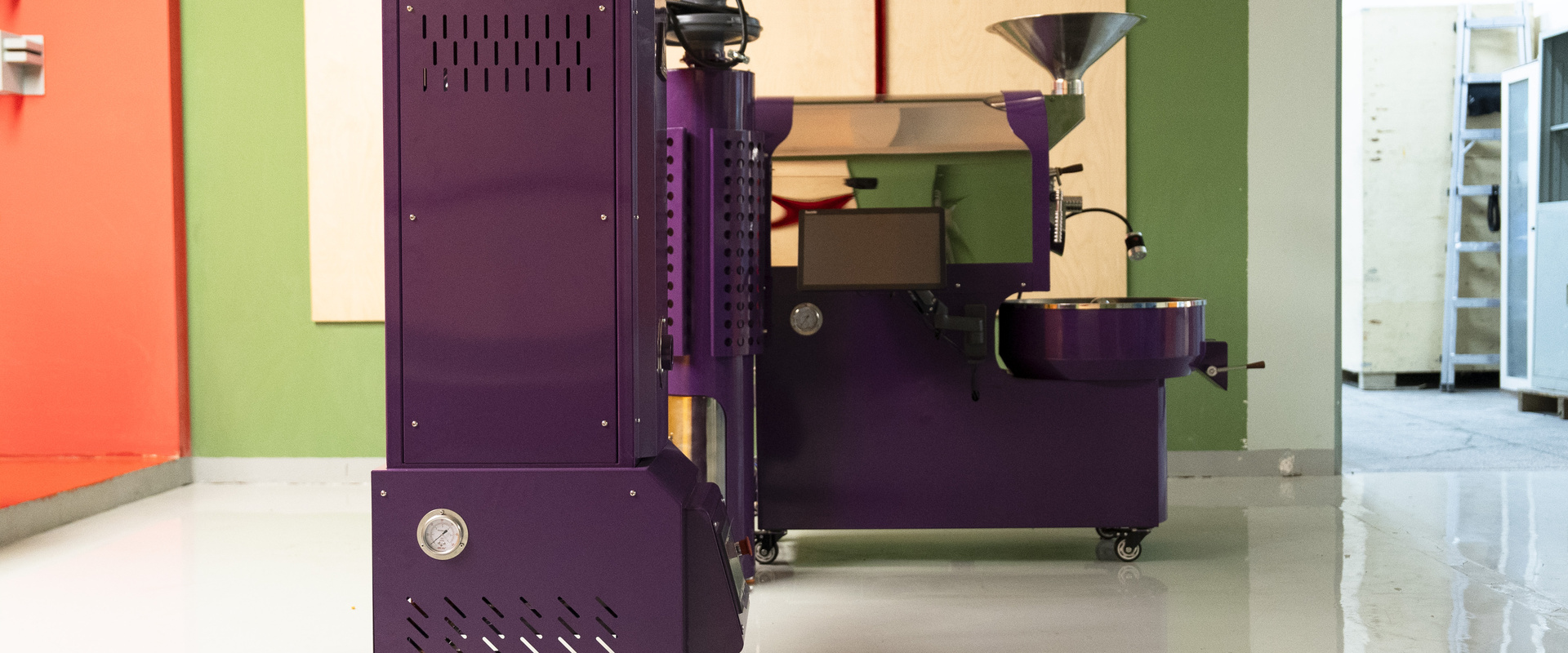
If you have chosen your roaster and are now asking what else the roastery needs, the honest answer is: less than the catalogue suggests on day one, and more than you expect by month twelve. Here is the coffee roastery equipment list sorted the way you will actually buy it — by your weekly volume, and by when each machine starts paying for itself — with what each costs from our factory.
The Six Machines, in One Line Each
| Machine | What it does for you | Our models |
|---|---|---|
| Roaster | Everything else is sized around it | DY, SD, YS series, 1–300 kg |
| Destoner | Pulls stones and metal out of green coffee before they chip the drum or crack a grinder burr | YS-Q3 (USD 1,299), YS-Q12 (USD 2,109) |
| Green bean loader | Lifts green coffee to the hopper so nobody carries 60 kg sacks up a ladder | Included with SD-6 Pro and above |
| Smoke filter (ESP) | Removes visible smoke and oil for neighbours and landlords | JD-3K (USD 1,500) up to JD-Q10 |
| Afterburner | Destroys odour and VOCs where the rules require it | YS-HB3 (USD 4,300) and up |
| Filling and sealing | Weighs, fills and seals your own bags | Semi-auto filler + band sealer |
The equipment page lists every unit; the single-machine guides — destoner, loader, smoke filter, afterburner, packaging — go deeper on each. This page is about which ones you need, and when.
If You Roast for Your Own Cafe (25–60 kg a Week)
| Buy with the roaster | Add at six months | Add at a year, if at all |
|---|---|---|
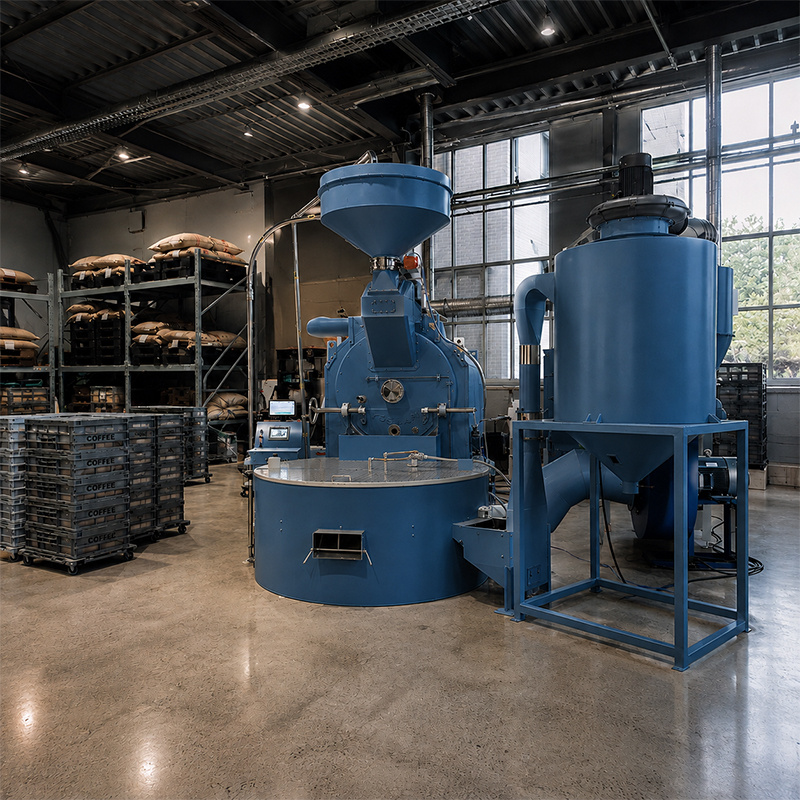
| SD-3 (USD 4,599) or DY-2 (USD 3,399); cyclone and cooling tray come with it | Small destoner YS-Q3 (USD 1,299) once you buy naturals or lower grades | ESP filter JD-3K (USD 1,500) if a neighbour has complained |
| A hand scale, buckets, a heat sealer for retail bags | A sample roaster if you start buying green by the sack rather than the bag | — |
At this size the loader is your arm, the smoke goes up a duct, and packaging is a heat sealer. Spend the money on green coffee and a month of practice instead.
If You Are a Small Roastery (60–300 kg a Week)
| Buy with the roaster | Add at six months | Add at a year |
|---|---|---|
| SD-6 Pro (USD 12,999, loader included) or YS-6 (USD 7,499) / YS-12 (USD 9,980); destoner YS-Q3 | ESP filter sized to the drum (JD-Q4 for 3–6 kg) — most town-centre units need it by the first summer | Semi-automatic filler and band sealer once you pack more than 300 bags a week |
| Bench scale, a sample roaster for incoming green | Bulk grinder if you sell ground coffee to accounts | Second roaster or the step to 12–15 kg |
The destoner moves into the first column here because your wholesale customers' grinders are now your problem: one stone in a bag costs you an account.
If You Are Building a Production Line (300 kg a Week and Up)
| Buy together, as one specification | Add at six months | Add at a year |
|---|---|---|
| SD-15 Pro (USD 16,999) or SD-20 Pro with loader and destoner; afterburner on the drawing from day one — the SD-30 Pro full set (USD 51,499) and SD-60 Pro full set (USD 61,999) ship with loader, destoner and afterburner | Auger filler with date coder; bulk grinder sized to the filler | Green storage silos and conveying; colour sorter if you buy lower grades |
| Cupping lab: sample roaster, moisture meter, colour reader | ESP ahead of the afterburner to protect it from oil | Second line |
At this size "add it later" stops being cheap: the afterburner changes the stack height and the duct route, and the loader changes the hopper height, so they go on the drawing even if the cheque comes later. The plant setup guide covers the building side.
How a Line Grows: A Roastery in Oman
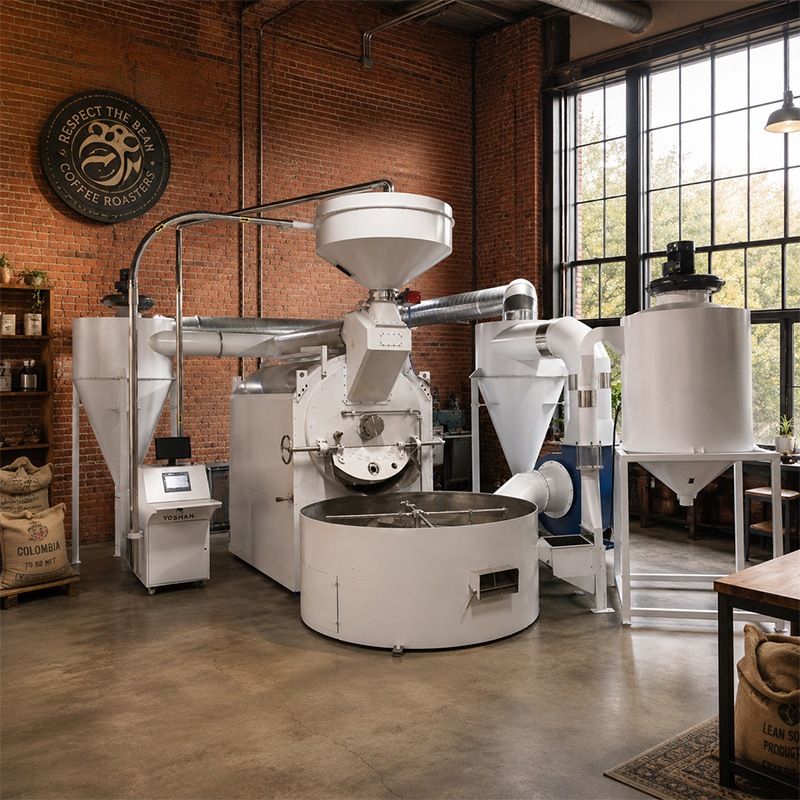
A roastery in Oman asked us about one machine — a YS-6 in custom white with their logo, on LPG. By the time the order shipped it was the roaster, a loader, smoke suppression for their location, and a filling and sealing machine so they could bag their own brand from the first week. They did not need all of it on day one; what mattered was that the power, the floor space and the duct were sized for the line rather than the machine, so nothing was rebuilt when the packaging arrived. The full story is in the Oman case study.
Three Reasons to Specify the Line Together, Even If You Buy It in Stages
- Voltage and gas are set once. Every machine in the line is built for the same supply — 220–240 V single phase up to 15 kg, three-phase where the electric heating or the larger fans need it — so nothing arrives with the wrong plug. The voltage guide shows what to send us.
- Heights and flanges match. A loader built for your hopper, a destoner that discharges into it, an afterburner flanged to your cyclone outlet. Retrofitting someone else's unit means adaptors and a technician's day.
- One shipment, one clearance. A roaster plus loader plus destoner in one crate set ships cheaper and clears customs once; the shipping guide explains the sequence.
The Matching Rule
Size the ancillaries to the drum, not to the dream:
| Roaster batch | Loader | Destoner | Smoke control | Packaging |
|---|---|---|---|---|
| 1–3 kg | By hand | YS-Q3 when you buy naturals | Duct only; JD-3K if neighbours are close | Heat sealer |
| 6–12 kg | Included on SD-6 Pro; optional on YS | YS-Q3 / YS-Q12 | ESP JD-Q4 / JD-Q6 | Semi-auto filler + sealer |
| 15–30 kg | Standard | YS-Q12 | ESP; afterburner where rules require | Auger filler + sealer |
| 60 kg and up | Bulk feed | Inline | Afterburner standard, ESP ahead of it | Automated line |
Tell us your weekly kilos and your address and we will mark which column you are in and which cells wait. The small business sizing guide gets you from kilos to a drum; the price guide has every model's factory price.
Frequently Asked Questions
Do I really need a destoner at 3 kg?
Not on day one if you buy washed, graded coffee from a specialty importer. Buy it the month you start buying naturals, lower grades or direct from a farm, because that is when stones arrive — and buy it before you sell to a cafe, because a stone that reaches their grinder is your account gone. At USD 1,299 the YS-Q3 is cheaper than one burr set, which is the comparison that matters.
Can I add a green bean loader to a roaster I already own?
Yes — it is the most common retrofit we supply. Send the model, the hopper height and a photo of the hopper mouth and we build a pneumatic or elevator loader to that height with a matching discharge. It ships by sea in a small crate and your technician fits it in a morning; the loader guide shows the two types and when each suits.
What is the lead time for a complete line?
Longer than a single machine, because the ancillaries are built to the roaster's dimensions after the roaster is specified. Plan on a few weeks longer than the roaster alone, and get the figure on the quote. If your opening date is fixed, tell us and we schedule the roaster first so you can commission it while the packaging equipment follows on a second sailing.
Can I buy the line in stages and still get matched equipment?
Yes, as long as we specify it together at the start. We record your hopper height, flange sizes, voltage and gas on the first order, so a loader or afterburner bought a year later is built to the machine you have rather than to a guess. Many customers do exactly this: roaster and destoner first, ESP the first summer, packaging when the bag count justifies it.
When does a filling machine pay for itself?
When you pack more bags a week than one person can hand-fill in a shift — usually around 300. Below that a bench scale and a band sealer are faster than you expect and cost a few hundred dollars. Above it the semi-automatic filler saves a wage, and the auger filler with a date coder comes in when wholesale accounts start asking for consistent weights and batch codes.
Should the afterburner come with the roaster or later?
Buy the unit when your budget or your permit says so; decide its position now. We mark it on every line drawing from 15 kg up whether or not it is on the first invoice, so the duct and the ceiling are right when it arrives. If your rules require one — the afterburner guide has the three questions — order it together, because the permit application needs its figures.
Final Thoughts
Your coffee roastery equipment list is not one purchase; it is three columns, and which cells you fill first depends on your weekly kilos. Buy the roaster with what protects it, add what your neighbours and your customers make necessary, and draw the rest in from day one. Send us your volume and your address and we will fill in the columns. Talk to our engineers.
Get a Quote → WhatsApp +86 184 0771 4607Last updated: September 23, 2026
Pingback: Coffee Roastery Startup Costs: Full Project Budget Guide
Pingback: 3 kg Coffee Roaster: Output, Gas or Electric, Which Model | Yoshan
Pingback: Coffee Roasting Plant Setup: Six Things to Settle in Order | Yoshan
Pingback: Green Coffee Storage & Buying: How Much to Hold, Four Numbers | Yoshan