
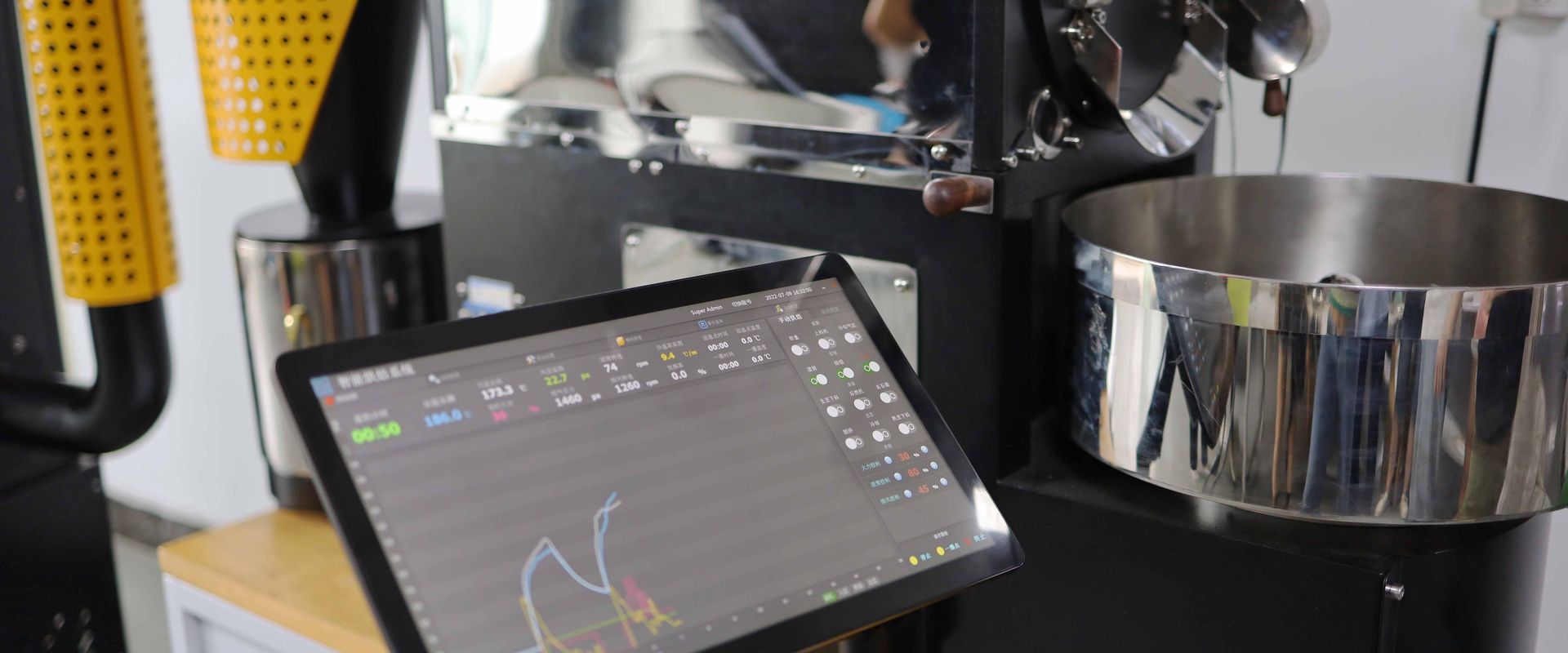
Most of what is written about robusta and arabica is written for drinkers: caffeine, bitterness, altitude. For a roastery in Vietnam, Uganda, India or Brazil — or one anywhere building an espresso blend — the useful comparison is what happens in the drum and on the schedule. Roasting robusta coffee is a different job: it takes heat differently, cracks quietly, tolerates a longer roast and makes more smoke, and that changes profiles, batch sizes and SKUs. This guide covers the roast, then the production line.
Why robusta roasts differently
The two species differ in the bean before any heat is applied.
| Property | Arabica | Robusta | Effect in the drum |
|---|---|---|---|
| Growing altitude | Roughly 600–2200 m | Roughly 200–800 m | Lower altitude usually means lower density |
| Caffeine | About 0.8–1.4% | About 1.7–3.5% | Contributes to bitterness; not a roasting variable |
| Density | Higher, especially high-grown lots | Lower on the scale — but a more rigid cell structure | Behaves like a dense bean despite the number |
| Sugars and lipids | Higher | Lower | Less caramelisation to work with; body from other compounds |
| First crack | Clear, audible | Quiet, sometimes barely audible | Cannot be roasted by ear |
| Tolerance of a long roast | Moderate | High — the structure survives longer development | Room to extend without collapse |
The point roasters who work with both stress most: robusta's low measured density is misleading. The cell walls are rigid, so it takes heat like a dense arabica and needs a profile of its own, not a copy of the arabica curve with the numbers shifted.
What the profile changes
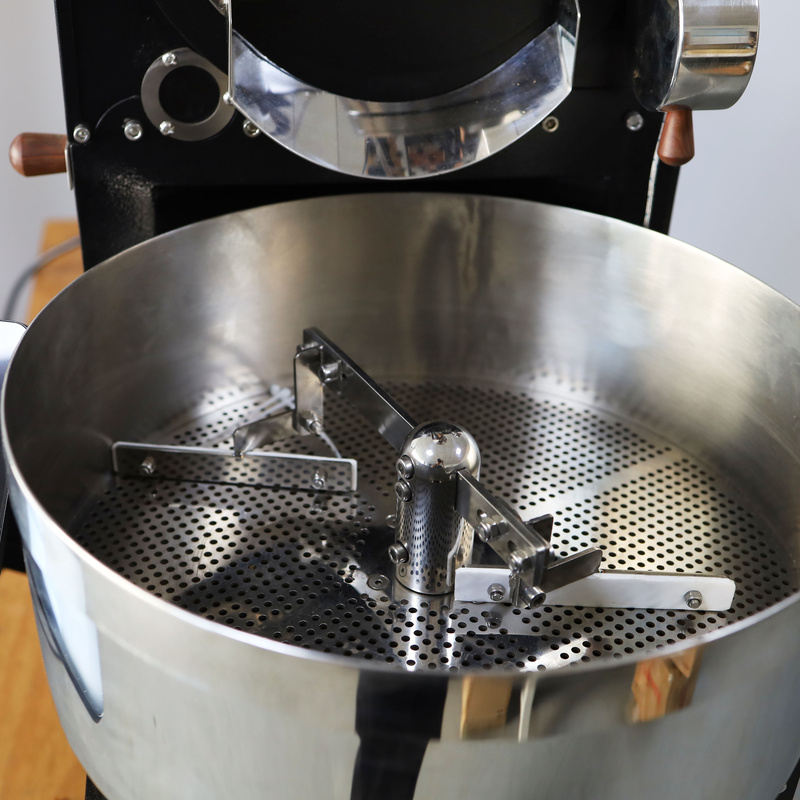
Roasters do not fully agree on the details — some charge robusta hotter, some cooler and longer — which is itself the lesson: robusta varies far more from lot to lot than arabica, from commercial conilon to washed fine robusta. The points of broad agreement:
- Expect a longer roast. Times toward nine or ten minutes on a shop-size drum bring out the chocolate and spice notes good robusta has; the structure tolerates it.
- Expect a higher end temperature for the same apparent colour — roasters commonly quote around 5–7 °C above the arabica profile on the same machine and probe.
- Do not listen for first crack. It is quiet and comes later than the arabica crack on many probes; the bean probe and the rate-of-rise curve are the only reliable markers — the method in rate of rise in production roasting.
- Rate of rise is steadier. Robusta is described as more forgiving through development, with fewer crashes and flicks, which makes it a good coffee for a newer operator to learn control on.
- Aim medium to medium-dark for espresso and blends. The traditional darker roast tames bitterness; very light robusta is difficult and rarely what the customer wants.
A first-batch method that avoids arguing about charge temperature: on a sample roaster, run the same lot three ways — the house arabica profile unchanged, the same profile with a 10 °C higher charge, and the same profile with development extended by a minute — then cup blind. The trial costs a few hundred grams; our EC-500G handles 200–500 g per batch for exactly this. The reference figures above are other roasters' numbers on their probes; the trial gives you yours.
What changes on the production line
This is the part the roasting guides leave out.
A separate profile and SKU. Robusta cannot share the arabica curve, so it is its own recipe, its own batch group and — if sold on its own — its own bag. The costs of a second profile are worked through in roasting for espresso vs filter; robusta adds a third.
Blend separately or together? A robusta–arabica espresso blend can be roasted pre-mixed or as components. Because the two develop so differently, most roasters who take the blend seriously roast them separately and combine after — the trade-offs are in pre-blend vs post-blend roasting. Pre-blending works only when the robusta is a small, dark-tolerant share of a dark blend.
Fewer batches per hour. A longer roast is fewer batches per hour of the robusta SKU; on a 12–15 minute cycle, an extra minute is about 7% of capacity. Plan the week accordingly with the between-batch protocol.
More smoke and more gas. Longer and hotter means more volatile compounds released and more fuel burned per batch. Dark robusta is the heaviest-smoking coffee most roasteries run; if the site has an emissions rule or a neighbour, this is the coffee that finds it. The four layers of control are in how to reduce smoke from a coffee roaster.
Batch size by volume, not weight. Lower-density beans take more room per kilo. A drum charged with its usual arabica weight in robusta runs fuller, tumbles less freely and roasts less evenly. Start at the lower end of the machine's stated batch range — our YS-6 is rated 1–7 kg and the SD-6 Pro 3.5–7 kg — and increase as the profile proves out.
Degassing. Robusta releases more gas after roasting than arabica, which matters for bag valves and for how soon a dark robusta espresso is dialled in; timings are in coffee degassing before packaging.
Running both species on one machine
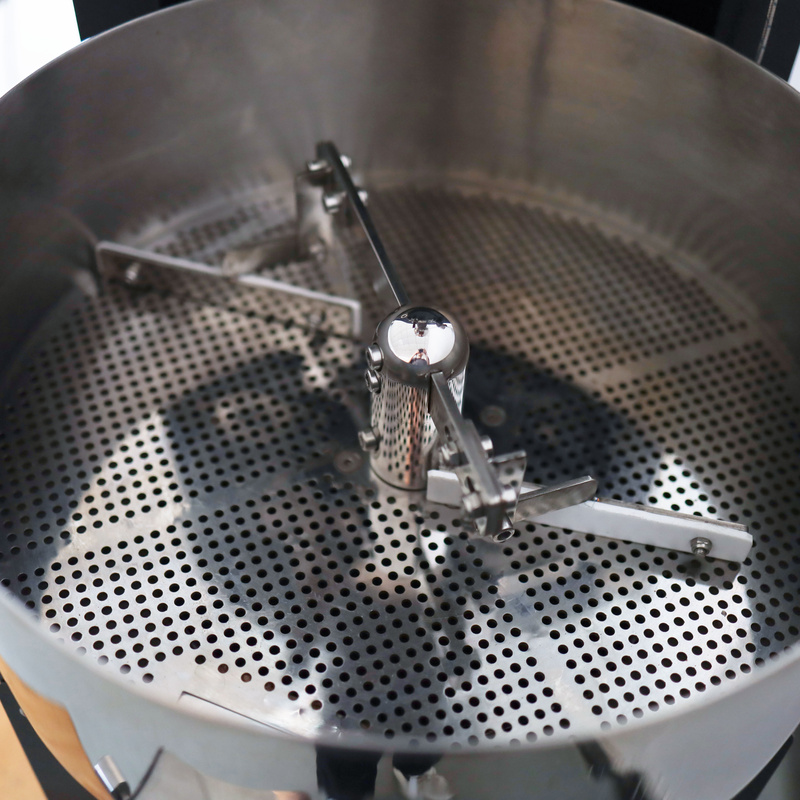
A roastery that sells arabica single origins and a robusta-containing espresso blend runs both on the same drum every day. What makes it workable:
- Stored profiles. On our SD Pro series both curves sit on the PLC touch screen and the operator selects one at charge; on the DY series they are reference curves in Artisan. Switching by memory on a manual machine is where robusta batches go wrong.
- Group the batches. Run the robusta batches together, ideally after the arabica run, so the drum's thermal state suits the longer, hotter profile and the smoke comes in one block rather than all day.
- Thermal mass helps. The steady decline robusta rewards is easier on a cast-iron drum that gives heat back through development — the construction of our SD and YS series — than on a light stainless drum; the trade-off is in cast iron vs stainless steel drums.
- Two grinders downstream. If the roastery also grinds, robusta blends and arabica single origins should not share a grinder.
FAQ
How is roasting robusta different from arabica?
Robusta has a rigid cell structure that takes heat like a dense bean, a quiet first crack, and a tolerance for a longer roast. Roasters commonly run it longer, to an end temperature around 5–7 °C above the arabica profile on the same machine, and follow the probe rather than the ear.
What roast level is best for robusta?
Medium to medium-dark for espresso and blends, where the chocolate and spice notes come through and bitterness is tamed. Very light robusta is difficult to read and rarely wanted; very dark turns ashy quickly. Fine robusta lots can be roasted lighter than commercial grades.
Should robusta and arabica be roasted together in a blend?
Usually separately, then combined, because the two develop at different rates and a shared profile under-develops one or scorches the other. Pre-blending works only when the robusta is a small share of a dark blend and the components are physically similar.
Does robusta make more smoke when roasting?
Yes. A longer, hotter, typically darker roast releases more volatile compounds and burns more gas per batch. A roastery with an emissions limit or close neighbours should plan smoke control around its robusta batches.
Can I use the same batch size for robusta?
Start lower. Robusta's lower density means more volume per kilo, so a drum charged with the arabica weight runs fuller and roasts less evenly. Begin at the low end of the machine's rated range and increase as the profile proves.
Is robusta easier to roast than arabica?
In one sense: its rate of rise is steadier and it forgives small mistakes in development. In another it is harder: first crack is quiet, colour misleads, and lots vary widely, so it demands probes, logged profiles and a trial on every new lot.
Final Thoughts
Roast robusta as its own coffee — longer, hotter, by probe — and plan it as its own line: separate profile, grouped batches, lower volume charge, more smoke. We build the cast-iron SD series with stored profiles and the wide-range YS series that producing-country roasteries run both species on every day.
Get a quote or message Leon on WhatsApp at +86 184 0771 4607.
Get a Quote → WhatsApp +86 184 0771 4607Last updated: September 23, 2026
Pingback: Pre-Blend vs Post-Blend Roasting: The Production Arithmetic
Pingback: Coffee Roaster for Ethiopia & East Africa: Voltage, Gas, Ports
Pingback: Green Coffee Moisture, Density & Water Activity Checks