
Two temperature lines run across every roast log, and new operators expect them to agree. They never do, and the gap between them is where most of the useful information lives. This guide explains what each probe on a drum roaster is actually measuring, why the readings differ, why the same coffee shows different numbers on different machines, and how to use the pair together instead of trusting either one alone.
Two probes, two different questions
A drum roaster typically carries at least two thermocouples.
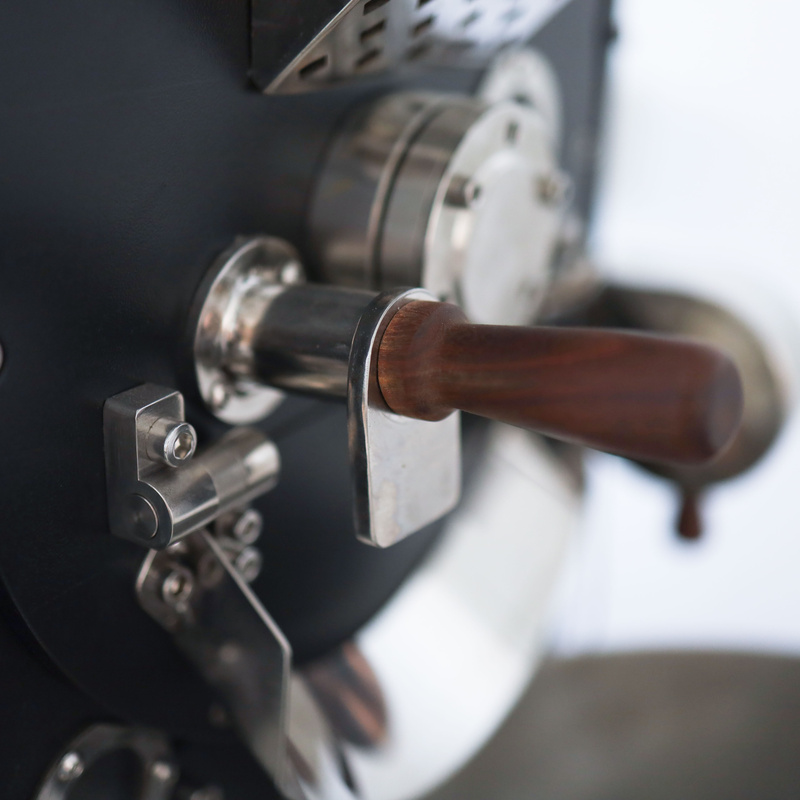
The bean temperature probe (BT) sits low in the drum, in the path of the tumbling bean mass. Once the drum has enough coffee in it to bury the tip, it reads something close to the surface temperature of the beans. It is the line you roast by: first crack, development, drop temperature are all read from it.
The exhaust or environment probe (ET) sits in the air stream — in the drum above the beans, or in the exhaust duct as the air leaves. It reads the temperature of the hot air passing over the coffee. It tells you what the machine is delivering, not what the beans have received.
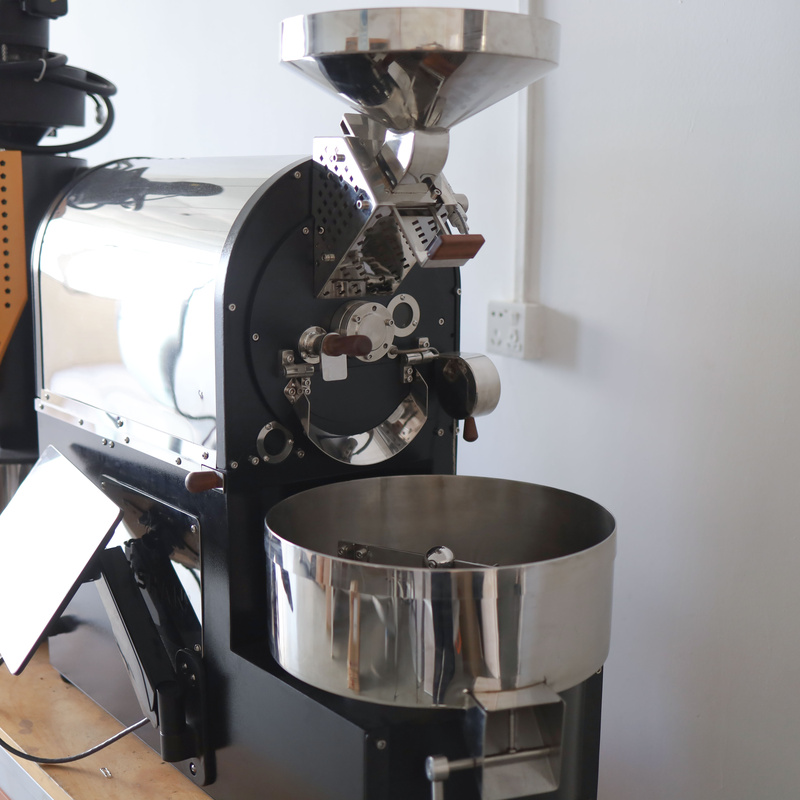
Put simply: ET describes the roaster; BT describes the coffee. The machine heats the air and the drum; the air and the drum heat the beans; the beans lag behind. Two probes let you see both sides of that hand-off, which is why our YS machines fit dual German thermocouples as standard rather than a single bean probe.
Why the two readings disagree — and should
At charge, ET is high and BT drops sharply as cold coffee absorbs heat from the drum, then turns and climbs. Through the roast, ET normally sits above BT, and the difference between them narrows as the beans catch up. Near first crack the beans start releasing heat of their own, and on many machines BT climbs faster while ET can flatten or dip as the operator cuts gas.
That gap — often written as ΔT — is the number to watch. A wide gap means the machine is pushing heat the beans have not yet absorbed; a narrowing gap means the beans are approaching the air temperature and momentum is falling. Operators who roast by BT alone see the effect; operators who watch both see the cause coming a minute earlier, which is the difference between adjusting the burner and reacting to it.
Why probe size and position change the numbers
Two things are decided by the manufacturer, and they explain most disagreements between machines.
Probe thickness. A thermocouple is a metal rod; the rod itself has to heat up before it reports a change. A thin probe — around 3 mm is a common compromise — responds in seconds. A thick, robust probe of 6–8 mm can lag by a minute or more and will always read lower during a rising phase, because it is still catching up. Exhaust probes are often thicker than bean probes, which is one reason ET readings look lower than the air actually is.
Probe position. A bean probe mounted a little higher, or a little further from the drum wall, spends more of the roast reading air instead of coffee, especially on small charges that do not bury it. An exhaust probe placed just past the drum reads differently from one placed further down the duct. Neither is wrong; they are simply different points in the same machine.
The practical result is that a roast profile is a description of one machine's probes, not of the coffee. A first crack at 196 °C on one roaster may be 201 °C on another with the same beans. When a roastery moves from one machine to another — a sample roaster to a production machine, or one brand to another — the numbers have to be re-learned, not copied. Our guide to scaling a roast profile covers that transition.
Using both probes in practice
Preheat and stability. Before the first charge, both probes should be steady, not just the bean probe. A stable BT with a still-rising ET means the drum has not equalised and the first batch will run differently from the rest. See preheating a commercial coffee roaster.
Charge. Note the ET at charge as well as the BT. Charging at the same BT but a different ET is a different roast, because the air is delivering a different amount of heat into the first minutes.
Drying phase. Watch the gap. If ET is climbing away from BT, the beans are not absorbing what the machine is delivering — often too little airflow, sometimes an oversized batch. If ET sits close to BT early, the machine is under-firing and the roast will stall.
Approach to first crack. The gap should be narrowing steadily. Cut the gas before first crack and ET responds first; BT follows. If BT keeps accelerating while ET drops, the exothermic phase has taken over and airflow, not gas, is your remaining control. Our guide to coffee roaster airflow covers that lever.
Between batches. Both probes are the definition of "ready": return the machine to the same ET and BT before every charge, and successive batches behave the same. That routine is the between-batch protocol.
What a probe reading cannot tell you
Neither probe measures the inside of a bean. Both report surface or air conditions; the core of the bean is always cooler during a rising phase and the difference is larger on big, dense coffees. This is why colour, sound, smell and the trier still matter, and why a profile that "hit the numbers" can still be underdeveloped. Roast defects and their causes are in our article on coffee roast defects.
Probes also drift. A thermocouple that has been in a drum for years, coated in oil and chaff, reads slower and sometimes lower than it did new. If profiles seem to be shifting with no change in coffee or routine, check and clean the probes before changing anything else — and keep a spare, as we suggest in coffee roaster spare parts.
Logging both lines
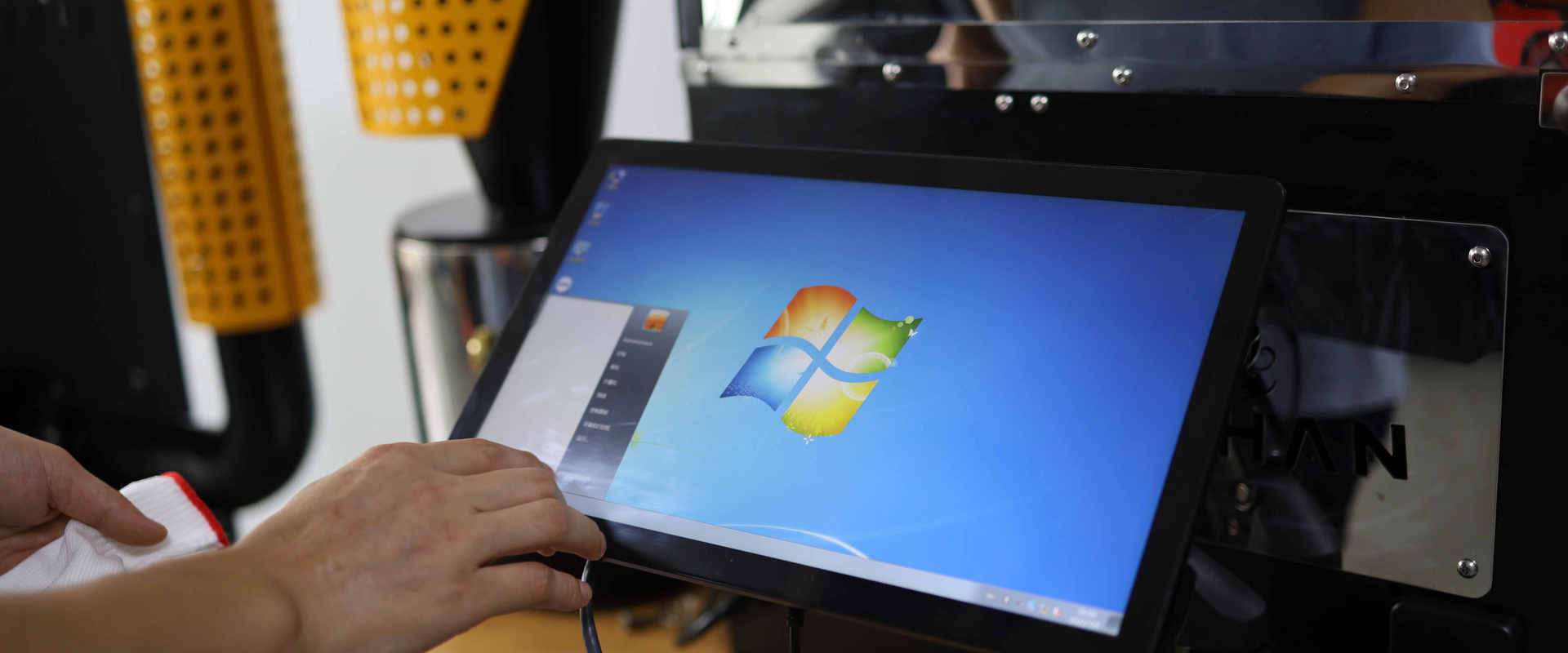
Machines with a data port or a control screen log both readings, and software such as Artisan will chart them together with the calculated rate of rise. Watching rate of rise on BT alongside the raw ET line is the fastest way to learn a new machine. Our DY, SD and YS roasters connect to Artisan, and the PLC versions store the two curves with each profile; how to connect is in connecting a coffee roaster to Artisan.
FAQ
Which probe should I roast by, bean temperature or exhaust temperature?
Roast by bean temperature for milestones — first crack, development time, drop — and use exhaust temperature to anticipate what the bean probe will do next. ET responds first to every gas change; BT follows. Reading both gives you a minute of warning that reading one does not.
Why is the exhaust temperature lower than the bean temperature on my roaster?
Usually because the exhaust probe is thicker and slower than the bean probe, or because it sits further down the duct where air has cooled. Late in the roast, beans also generate their own heat, so BT can genuinely pass ET. It is normal for one machine and meaningless as a comparison to another.
Can I copy a roast profile from a different roaster?
Not directly. Profiles describe one machine's probe positions and thicknesses. The same coffee shows different temperatures on a different machine, so milestones must be re-learned by cupping. Use the old profile for the shape of the curve and the timing of changes, not for the numbers.
What thermocouple size is best for a bean probe?
Thin enough to respond quickly, thick enough to survive the drum: about 3 mm is a common compromise. Thicker probes lag noticeably during rising phases and read lower than the beans are. If your machine's probe is thick, roast to its behaviour rather than to published temperatures.
Does batch size affect the bean temperature reading?
Yes. A small charge may not bury the probe, so it reads partly air and shows higher, more erratic numbers. Most machines have a minimum batch for reliable BT. For a 12 kg roaster charged with 3 kg, expect the probe to behave differently from a full charge.
Should I clean or replace roaster thermocouples?
Clean them as part of routine maintenance; oil and chaff coating slow their response. Replace them when readings drift or lag noticeably compared with new, or on a schedule for production machines. Keep a spare on site — a failed probe stops roasting immediately and shipping one takes weeks.
Do your roasters have both probes?
Yes. Our YS series fits dual German thermocouples for bean and air temperature as standard, the SD Pro logs both to its profile system, and the DY series reports both through Artisan. Which machine suits you depends on batch size and control level rather than the probes.
Final Thoughts
One probe tells you what the roaster is doing, the other what the coffee is doing, and the gap between them is the roast. Learn your own machine's numbers rather than borrowing anyone else's. Every roaster we build — from the YS series with its dual German thermocouples to the SD series — reports both, so you can roast by the coffee and anticipate by the machine.
Request a factory-direct quote or message us on WhatsApp at +86 184 0771 4607.
Get a Quote → WhatsApp +86 184 0771 4607Last updated: September 23, 2026
Pingback: Coffee Roaster Airflow and Damper Control by Roast Phase
Pingback: Coffee Roaster Thermocouple Calibration: 3 Checks First
Pingback: Parts of a Commercial Coffee Roaster: What Each Component Decides
Pingback: Coffee Roaster Spare Parts: 9 Items to Keep on the Shelf
Pingback: Rate of Rise in Production Roasting: RoR for Machine & Consistency