
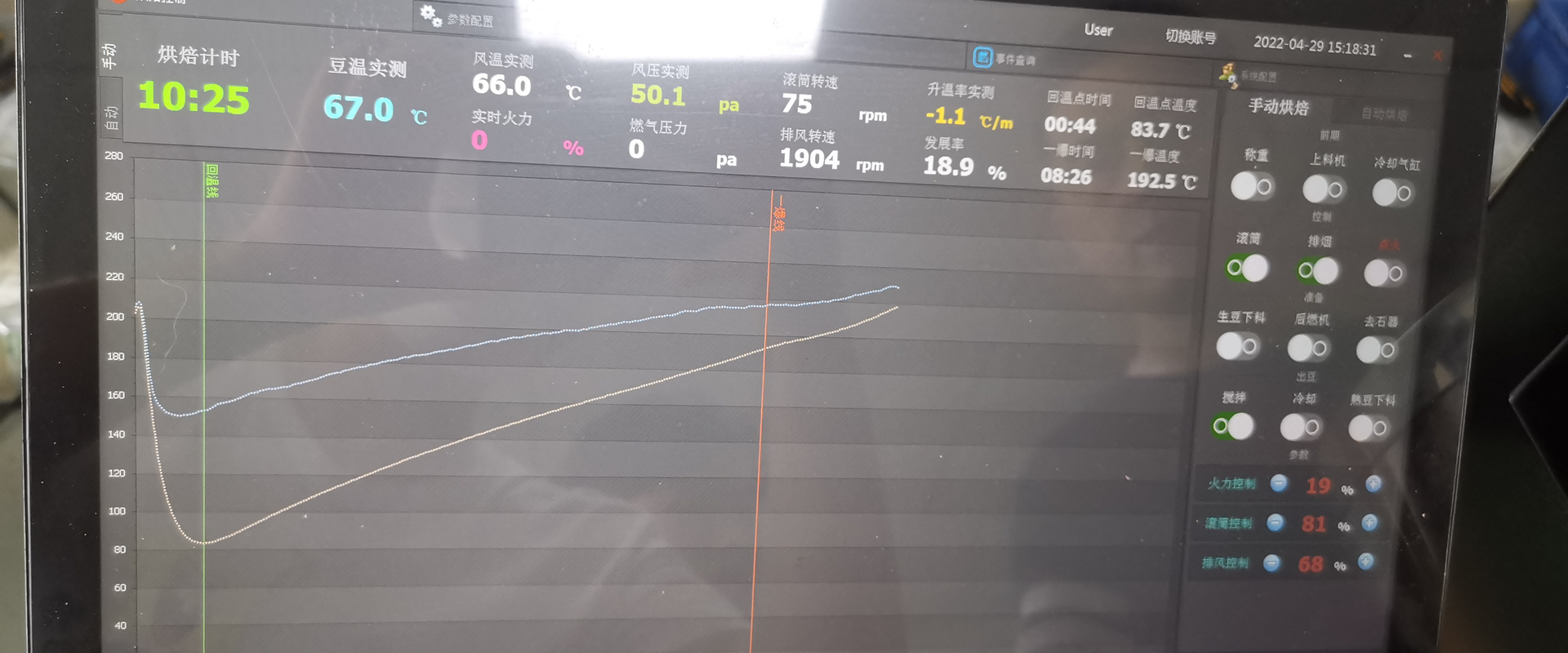
The first batch of the day is the one most likely to be wrong, and the reason is almost always the preheat. A bean probe reading charge temperature is not a warm machine; it is a warm probe. The iron behind it takes far longer, and until it catches up the roaster cannot deliver what the profile expects. This guide covers how to preheat properly, how to tell when the machine is ready, and what the time and fuel cost.
What preheating actually has to achieve
A drum roaster is a few hundred kilograms of metal. The burner heats the air and the drum surface quickly; the drum body, the front plate, the shaft and the housing take much longer, because heat has to conduct into them. The bean probe, being small and sitting in the air stream, reads charge temperature long before any of that mass has arrived there.
Charge into a machine in that state and the cold metal draws heat out of the air and out of the beans. The roast starts slow, the drying phase drags, and the operator adds gas to compensate — producing a curve that does not look like the second batch, cannot be repeated and cannot be logged usefully. Preheating is the process of bringing that mass, not the probe, to a stable temperature.
The definition of ready is therefore not a temperature reading. It is a temperature reading that has stopped moving, on both probes, with the burner at a modest steady setting.
How long it takes — by drum, not by clock
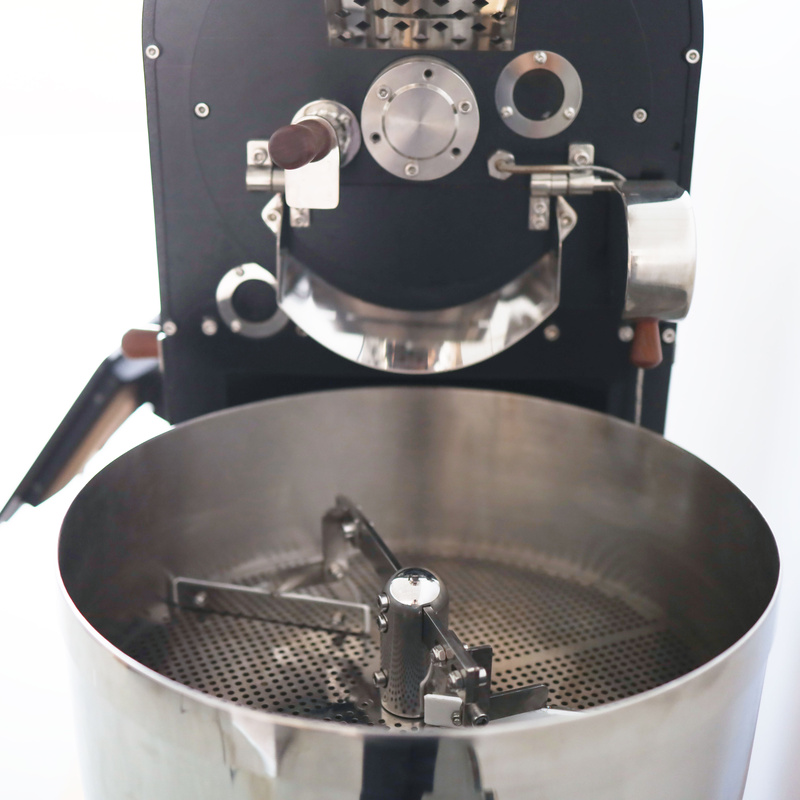
Published figures of "20 to 30 minutes for a commercial roaster" are averages across machines that differ enormously in mass. The honest answer depends on what the drum is made of and how big it is.
| Machine type | Typical preheat to a stable state |
|---|---|
| 1–2 kg stainless steel drum (our DY series) | 15–20 minutes |
| 3–6 kg cast iron drum | 25–35 minutes |
| 12–15 kg cast iron drum (YS-12, SD-12 Pro) | 35–50 minutes |
| 30 kg and above, cast iron double wall | 50–70 minutes |
These are times to stability, not times to a probe reading. A 15 kg cast iron machine will show charge temperature on the bean probe within twenty minutes and will not be stable for another twenty. The material difference is explained in cast iron vs stainless steel drums: mass that makes a machine consistent through a production day is the same mass that makes it slow to warm.
A preheat procedure
- Check the machine before lighting. Cooling tray clear, cyclone emptied, damper free, gas supply open, extraction running. A preheat is also the daily safety check — see coffee roaster fire safety.
- Light at a moderate gas setting, drum turning, damper partly open. High gas from cold heats the surface faster than the interior and overshoots; moderate gas gives a more even warm-through. Airflow keeps heat moving through the drum rather than pooling at the burner.
- Bring the machine above charge temperature. Most operators preheat to somewhat above their charge temperature — a modest overshoot — then let it settle back. This puts more heat into the mass than a straight climb to the target would.
- Reduce gas and hold. Set the gas to a low steady level and let both probes settle. Watch the exhaust probe as closely as the bean probe: on a cold machine the ET will keep drifting for some minutes after the BT looks stable, because the metal around the exhaust path is still absorbing heat.
- Ready when both readings hold within a couple of degrees for several minutes at a constant gas setting. If you have to keep moving the gas to hold the probe reading, the machine is not stable yet.
- Charge from the between-batch state. Many roasteries end the preheat by running one full between-batch protocol — cool slightly, climb back, hold — so the first charge starts from exactly the state every later charge will. This is the single most effective way to make the first batch match the rest.
On a PLC machine the preheat sequence and the between-batch state can be stored and run automatically; our SD Pro profile system does this, which removes the judgement from the morning routine.
Why the first batch still differs, and what to do
Even with a good preheat, the first batch often runs a little slower than the second. There are two reasons, and one common wrong response.
The first reason is that some parts of the machine — the cyclone, the ducting, the cooling tray side — only reach working temperature after a batch has passed through. The second is that green coffee kept in a cool store is colder than the room, and a cold charge takes more from the drum.
The wrong response is to roast the first batch harder to make it match. That produces a batch that is different in a second way. The better responses are: let the green coffee sit in the roasting room for an hour before charging so it starts at room temperature; run a full between-batch protocol at the end of preheat; and, if the first batch is still consistently different, treat it as a warm-up batch — a house blend or a coffee you know well — rather than the most demanding coffee of the day.
Some production roasteries go further and roast a deliberate "seasoning" batch of an inexpensive coffee to bring everything to temperature, then begin the schedule. On a large cast iron machine this is often cheaper than losing the first batch of a premium lot.
What preheat costs, and how to schedule around it
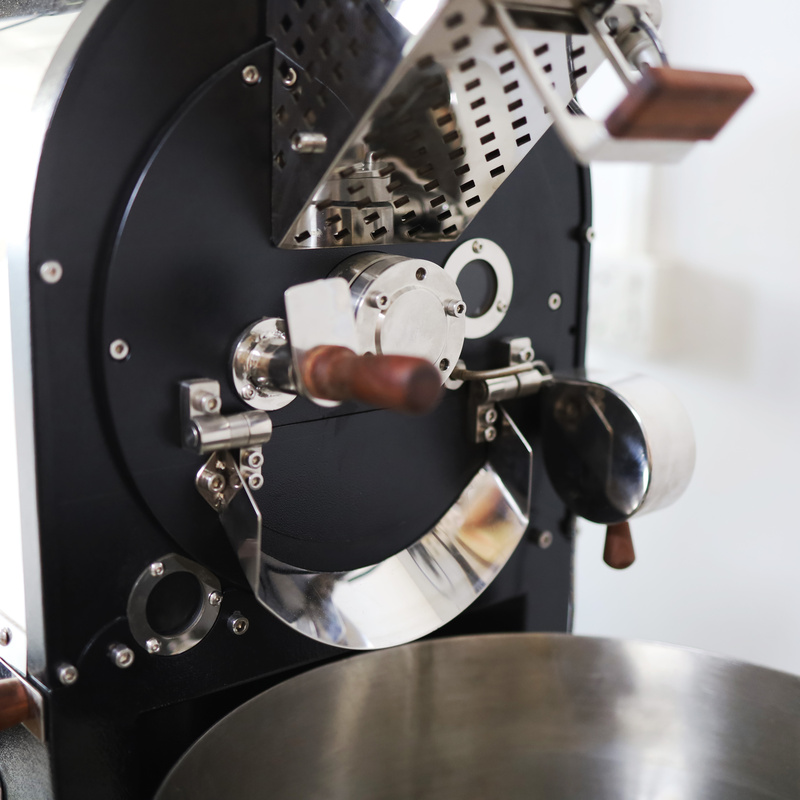
Preheat burns gas and time with no coffee coming out. On a 12 kg machine at a moderate burner setting that is forty minutes of fuel every roasting day; on a 30 kg machine more. Two scheduling consequences follow.
Roast in blocks. Two sessions in a day means two preheats. One longer session with a between-batch protocol between coffees costs one preheat and produces more consistent coffee, because the machine stays in a known state. This is why production roasteries roast all day on fewer days rather than a few batches every day.
Count the preheat in the cycle. When calculating how many batches a day the machine can do, subtract the preheat from the shift. A 12 kg roaster with a 15-minute cycle does not do 32 batches in eight hours; it does around 28 after preheat and protocol time. The method is in our batch size guide, and the fuel side in coffee roaster running costs.
Electric machines preheat differently — steadily and without the surface overshoot of a gas burner — but they are not faster; the mass still has to warm. Plan the same time.
FAQ
How long should a commercial coffee roaster preheat?
Until both probes hold steady at a modest constant gas setting — not until the bean probe first reads charge temperature. For a small stainless drum that is 15–20 minutes; for a 12–15 kg cast iron machine 35–50 minutes; for 30 kg and above up to an hour or more. Drum mass, not the clock, sets the time.
What temperature should I preheat a coffee roaster to?
Slightly above your charge temperature, then let it settle back and hold. The modest overshoot pushes heat into the drum mass rather than only the surface. The exact figure depends on your machine and profile; the stability of the reading matters more than the number.
Why is my first batch always slower than the rest?
Because parts of the machine and the ducting only reach working temperature after a batch, and because green coffee from a cool store starts colder. Let the green reach room temperature, finish the preheat with a full between-batch protocol, and roast a familiar coffee first rather than the most demanding one.
Should I preheat with high gas to save time?
No. High gas from cold heats the drum surface and the probe quickly while the mass behind them stays cold; the reading looks ready and the first batch proves it was not. A moderate setting with the drum turning and airflow on gives an even warm-through and a genuinely stable machine.
Does an electric roaster preheat faster than gas?
Not meaningfully. Electric heating warms more steadily without the burner's surface overshoot, but the drum mass has to reach temperature either way, and that takes the same time. Plan the same preheat for an electric machine as for the gas version of the same size.
Is it worth roasting a warm-up batch?
On large cast iron machines, often yes. A batch of an inexpensive coffee brings the cyclone, ducting and cooling side to temperature and costs less than a mis-roasted batch of a premium lot. On small stainless machines it is rarely necessary; a good preheat and protocol are enough.
Can the roaster preheat itself automatically?
On PLC machines, yes. Our SD Pro series stores the preheat and between-batch sequence in its profile system and runs them to a defined end state, so the morning routine does not depend on the operator's judgement. Manual and semi-automatic machines follow the same procedure by hand.
Final Thoughts
Preheat until the metal is ready, not the probe: both readings steady, gas constant, then one full between-batch protocol before the first charge. Plan the time into the day and roast in longer blocks to pay for it once. On the SD Pro the sequence runs itself; on the YS series both probes are on screen to judge it. Tell us your production rhythm and we will recommend the drum.
Request a factory-direct quote or message us on WhatsApp at +86 184 0771 4607.
Get a Quote → WhatsApp +86 184 0771 4607Last updated: September 22, 2026
Pingback: Between-Batch Protocol for Consistent Back-to-Back Roasting
Pingback: Coffee Roaster Running Costs: Per Hour, Per Kilo, Per Year | Yoshan
Pingback: Bean Temperature vs Exhaust Temperature on a Coffee Roaster