
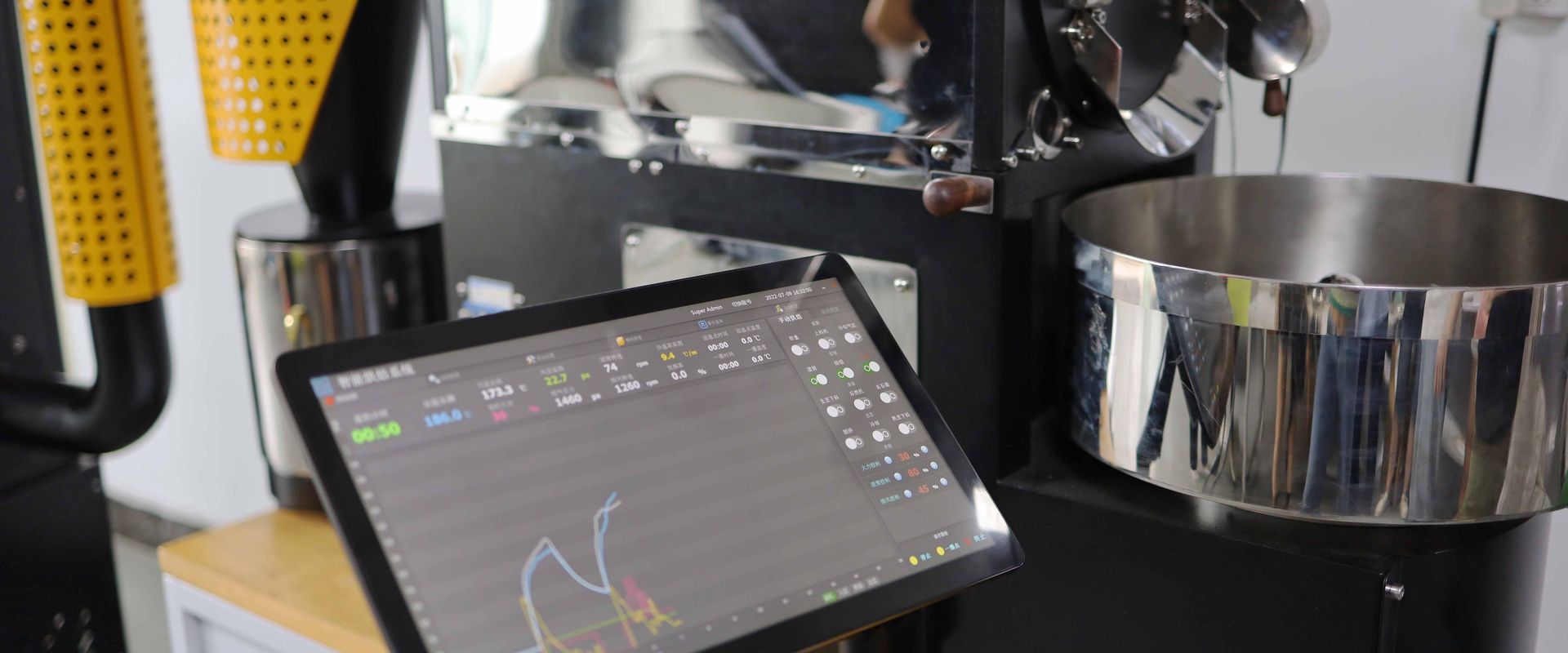
The gas valve gets the attention on a drum roaster. The damper does as much work and is far less understood, because it controls three things that pull in different directions: how heat reaches the beans, how chaff and smoke leave the drum, and whether the machine stays safe. This guide takes the roast phase by phase and explains what airflow does in each — and how to set it on your own machine.
What airflow is on a drum roaster
A fan behind the drum pulls air through it: past the burner, through the bean mass, out through the cyclone and the flue. The damper is a plate in that path that opens or closes to set how much air moves. Some machines set airflow with the damper, some with fan speed, some with both. The effect is the same.
That moving air does three jobs.
It carries heat. On a semi hot air drum roaster — the design of almost every machine from 1 kg to 15 kg, including our DY and YS machines — part of the heat reaches the beans by conduction from the drum wall and part by convection from the air passing through. More airflow shifts the balance toward convection: the air brings more heat in but also takes more heat out.
It removes what the roast produces. Chaff, water vapour, smoke and combustion gases all leave with the air. Too little airflow and they stay in the drum, where chaff accumulates and smoke settles onto the coffee.
It keeps the machine safe. Chaff that is not carried out builds up around the drum and in the ducting, and chaff burns. Airflow that is too low for too long is a fire risk as much as a flavour problem. See coffee roaster fire safety.
Because those three jobs conflict — low airflow holds heat in but keeps smoke in too — the damper is never simply "open" or "closed". It is set per phase.
Phase one: drying, from charge to yellowing
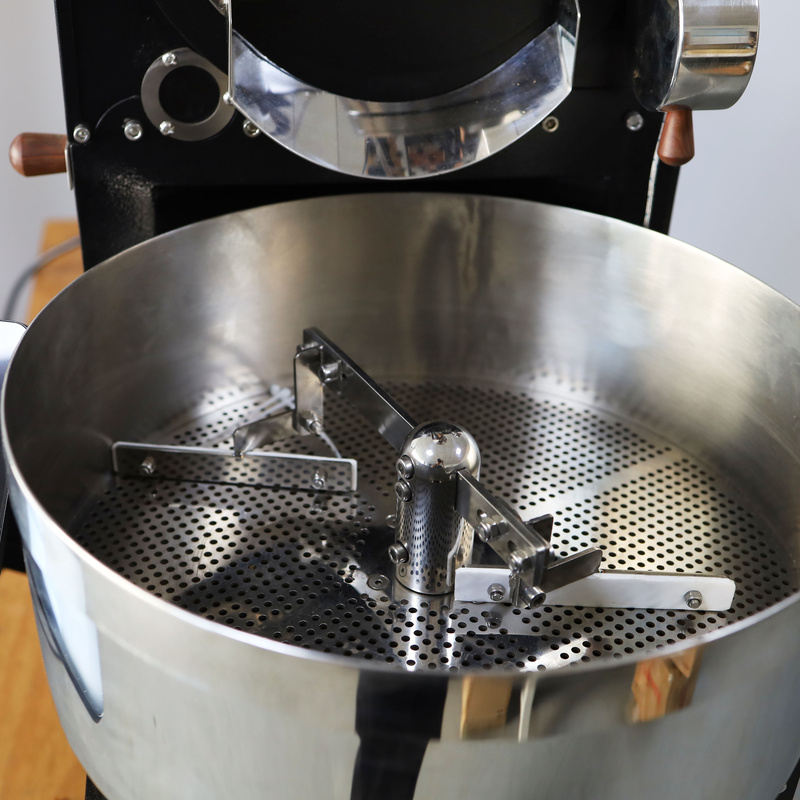
The beans are cold and wet. The job is to get heat into them without losing it up the flue.
Lower airflow in this phase keeps the drum's heat around the coffee and lets the drying phase move along. Too much air here pulls heat straight out of the drum, the drying phase drags, and the roast loses the momentum it needs for the rest of the curve.
But not too low. Water vapour has to leave; if it does not, it sits in the drum and the beans dry unevenly. Fresh-crop coffee with high moisture sometimes needs a brief increase in air during drying to clear steam, then a return to the lower setting.
The mistake in this phase: running the damper nearly closed for the whole drying phase. Uneven drying and tipping — small scorched spots on the bean tips — are the usual results, because the drum wall is doing all the work with no convection to even it out.
Phase two: yellowing to first crack
The beans are drying out, chaff is starting to release, and the roast is producing its first smoke.
Airflow comes up. Enough to carry chaff out of the drum as it separates — chaff left in the drum burns and taints the coffee — and to keep the exhaust temperature from running away as the beans approach first crack. Many operators step airflow up once or twice through this phase rather than in one move.
Watch the two probes. If exhaust temperature climbs away from bean temperature, the air is carrying heat the beans are not taking; more airflow will not fix that and gas should come down. If bean temperature is stalling with the gas already high, the drum may be under-ventilated and the burner starved. Reading the pair is covered in bean temperature vs exhaust temperature.
Phase three: first crack and development
The beans are now producing heat of their own and releasing a great deal of gas and smoke. Gas is usually reduced; airflow becomes the main control.
Higher airflow through development clears smoke so it does not settle back on the coffee — smoke retained in the drum here produces the ashy, bitter note that gets blamed on "over-roasting" when it is actually under-ventilation. It also removes the heat the beans are generating, which slows the roast down and gives the operator control over development time.
The mistake in this phase: opening the damper fully at the first pop. The temperature drops sharply, the roast stalls after first crack, and development is flat. Airflow through development is a lever to move in steps, not a switch.
Setting airflow on your machine, not from a chart
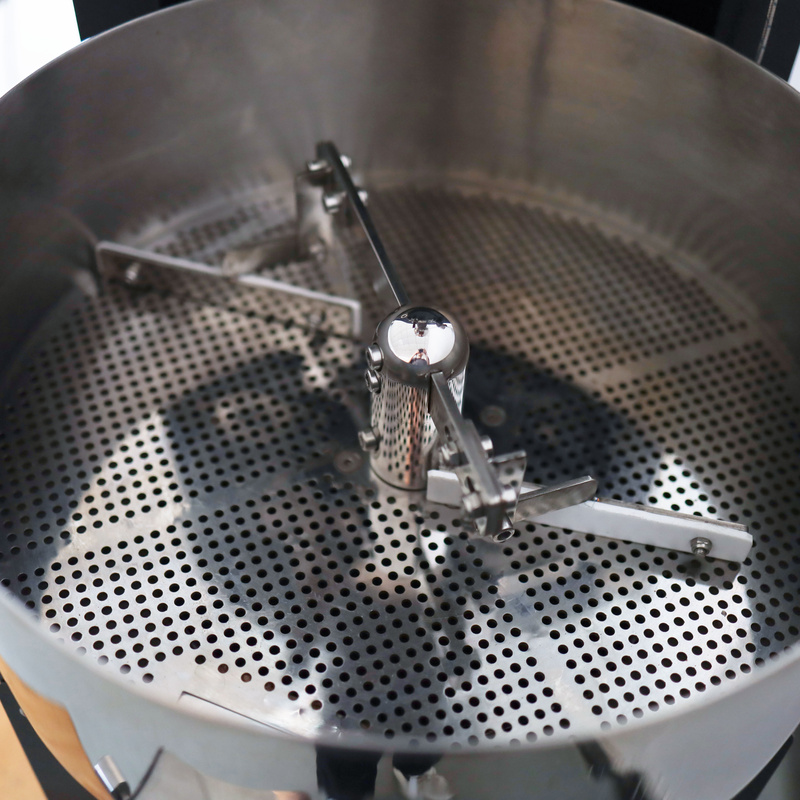
Published damper settings — "30 to 50 percent open in drying" and the like — describe one machine. The same percentage on a different roaster, with a different fan, cyclone and flue, moves a different amount of air. Two things make the numbers non-transferable.
First, the flue. A long duct with elbows adds resistance, so a damper at half open moves less air than the same damper on a short vertical stack. Change the ducting and the airflow behaviour changes with it — one reason installation and layout decisions show up in the cup, as our ventilation requirements guide explains.
Second, the machine's design. Fan size, drum perforation, cyclone resistance and probe placement all differ. So learn airflow by what it does to the exhaust probe on your machine: find the setting where ET responds cleanly to a damper move, then note that as your reference and build the phases from it. Once set, the machine's airflow behaviour is stable — which is why it can be stored and replayed on a PLC machine. Our SD Pro fully automatic roasters record damper and fan settings alongside gas in each profile.
A quick diagnostic table
| What you see | Likely airflow cause | Move |
|---|---|---|
| Tipping, scorched bean tips, uneven colour | Too little air in drying | Open slightly earlier in the drying phase |
| Drying phase dragging, roast losing momentum | Too much air in drying | Reduce airflow until yellowing |
| Smoky, ashy, bitter cup on a normal-looking curve | Too little air through development | Increase airflow from first crack |
| Roast stalls right after first crack | Airflow opened too far, too fast | Step airflow up gradually, not in one move |
| Chaff in the drum after drop, chaff smell during roast | Airflow too low from yellowing onward | Bring air up as chaff releases |
| ET climbing away from BT with gas steady | Air carrying heat the beans are not absorbing | Reduce gas, not airflow |
FAQ
What does the damper do on a coffee roaster?
It sets how much air the fan pulls through the drum. That air carries heat to the beans by convection, carries chaff, steam and smoke out of the drum, and keeps chaff from accumulating and burning. Because those jobs conflict, the damper is adjusted through the roast rather than set once.
Should airflow be high or low during the drying phase?
Lower, to keep heat in the drum while the cold beans absorb it, but not closed: water vapour still has to leave. Very low airflow through the whole drying phase causes uneven drying and tipping. High-moisture coffee sometimes needs a brief air increase to clear steam.
Why does my coffee taste smoky or ashy?
Most often because airflow was too low from first crack onward, so smoke stayed in the drum and settled on the beans. It is usually blamed on roast degree but is a ventilation issue. Raise airflow in steps through development and the note typically disappears at the same drop temperature.
Can I use the same damper settings on a different roaster?
No. A percentage of damper opening moves a different amount of air on each machine, depending on fan, cyclone, drum design and flue length. Use published settings as a starting shape only, and calibrate to how the exhaust probe responds on your own machine.
Does the flue affect airflow?
Yes, significantly. A long duct with several elbows adds resistance and reduces the air moved at any damper position; a short vertical stack does the opposite. Changing the ducting changes the roaster's behaviour, which is why the flue route should be settled before profiles are developed.
Is airflow more important than gas after first crack?
Often, yes. Once the beans generate their own heat, cutting gas has a delayed effect while airflow acts quickly on both smoke and temperature. Most operators reduce gas approaching first crack and manage development mainly with airflow, moved in steps rather than all at once.
Do automatic roasters control airflow?
PLC machines that store full profiles record damper or fan settings alongside gas and drum speed and replay them. Our SD Pro series does this; the YS series logs the roast while the operator drives airflow from the control screen. Either way the settings are learned on the machine first.
Final Thoughts
Airflow moves heat, clears the drum and keeps the machine safe, and the right setting changes with every phase. Learn it on your own roaster by watching the exhaust probe, then keep it consistent. Our DY and YS roasters give you direct damper control; the SD Pro stores it in the profile. Tell us your batch size and we will match the machine.
Request a factory-direct quote or message us on WhatsApp at +86 184 0771 4607.
Get a Quote → WhatsApp +86 184 0771 4607Last updated: September 17, 2026
Pingback: Green Coffee Moisture, Density & Water Activity Checks
Pingback: Coffee Roast Profile Development: Your First Profile | Yoshan
Pingback: How to Reduce Smoke from a Coffee Roaster: 4 Layers Before Buying Gear