
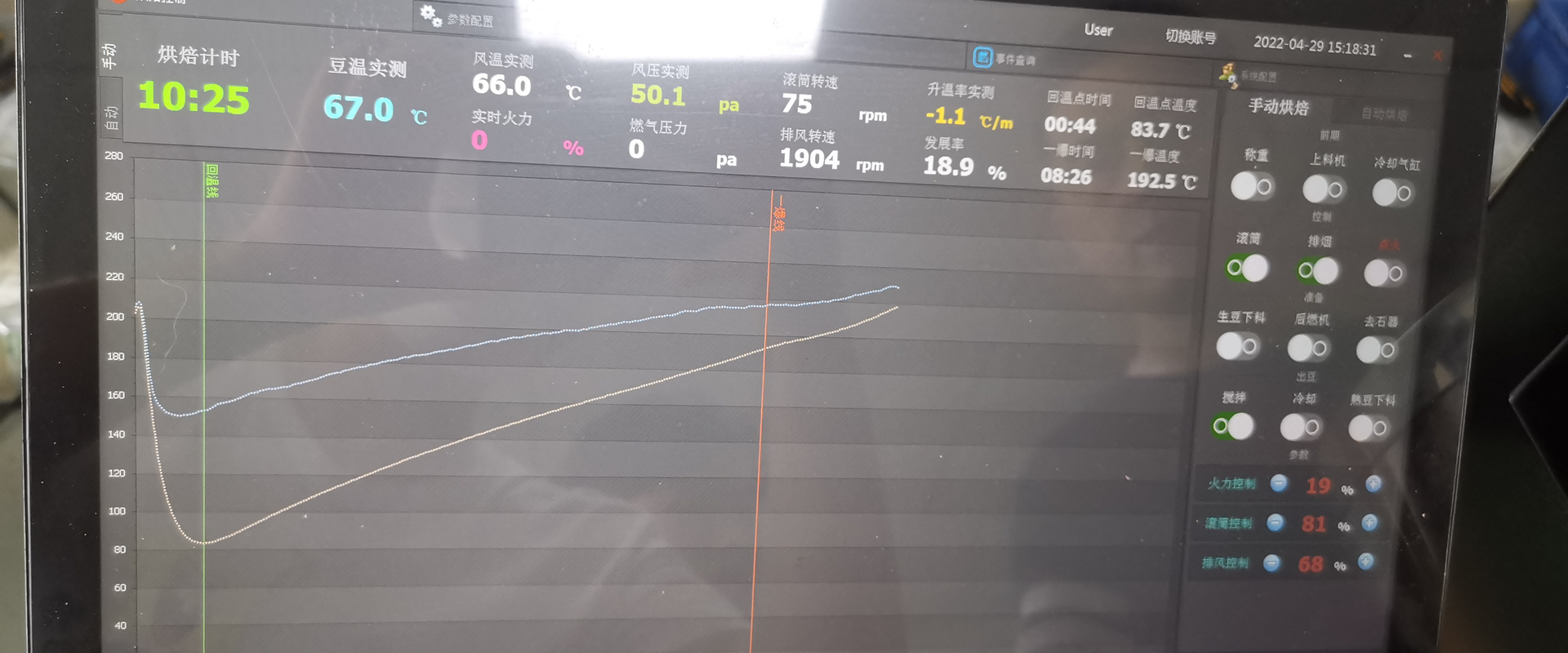
A roaster installed in Manila, Riyadh or Bogotá does not behave like the same model in a temperate workshop, and most roasting advice is written for the temperate workshop. Humidity changes the green coffee before it reaches the drum. Heat changes cooling, electronics and smoke filtration. Altitude changes the burner. This guide covers what each does and what to specify on the machine so the climate is handled at the factory rather than discovered on site.
Start with the coffee, not the roaster
In a humid climate the first variable is not the machine — it is the moisture content of the green coffee sitting in your store.
Green coffee is dried at origin to roughly 10–12% moisture. Left in ambient tropical humidity it takes moisture back on; left in desert air-conditioning it dries out. Either way, the coffee that goes into the drum on Monday is not the coffee that went in the previous Monday, and no profile will hold when the input keeps changing. Symptoms are familiar: first crack drifting earlier or later week by week, drying phases that vary in length, and a persistent flat or baggy note in humid regions where beans have gone above 13%.
The fix is storage, and it is cheaper than any adjustment to the roaster: a sealed green store held around 50–70% relative humidity, beans in lined bags or bins off the floor and away from external walls, and a moisture meter used on every lot before roasting. Our guide to green coffee storage sets out the conditions. In a tropical roastery, the dehumidifier is the first piece of ancillary equipment, ahead of any loader or destoner.
Humidity in the roasting room
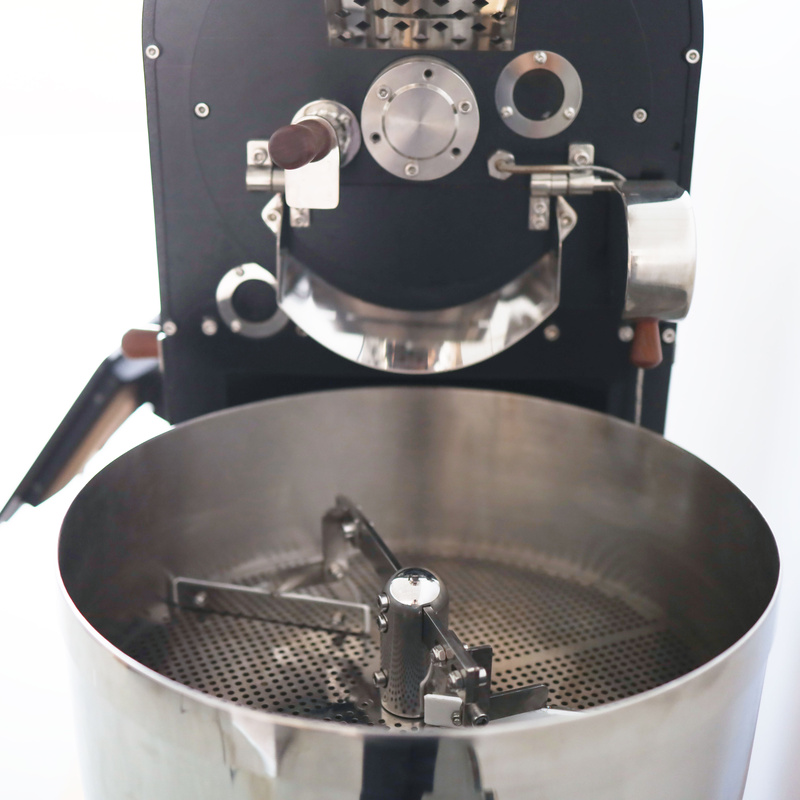
Humid air is a slightly better carrier of heat than dry air. In practice roasts in humid conditions tend to run a little faster, with first crack arriving earlier than in dry conditions on the same settings. Operators in the wet season often find they need a slightly lower charge temperature or a small reduction in gas approaching first crack; in the dry season, the reverse.
This is not a machine fault and needs no hardware. It needs a routine: note ambient humidity on the roast log, expect seasonal drift, and adjust the profile rather than chasing it batch by batch. A stable between-batch protocol removes most of the day-to-day noise so the seasonal signal is visible.
Where humidity does need hardware attention is the electrical side. Control cabinets, PLC screens and relays in a roasting room at 85% humidity see condensation when the machine cools overnight. Specify sealed control cabinets, keep panels closed, and give the room some ventilation when the roaster is off. Ask us about control-cabinet sealing for tropical installations when you order.
Heat: what a 40 °C roasting room changes
High ambient temperature changes three things that the profile does not show.
Cooling slows. The cooling tray pulls room air through the beans. At 20 °C ambient that takes a few minutes; at 40 °C the beans reach ambient more slowly and ambient is itself hotter. Batches that cooled in three minutes in a temperate room take longer, and the next charge waits. On a production line this eats capacity — plan for it in throughput calculations, and consider larger cooling capacity for hot-climate lines. See coffee roaster cooling and quenching.
Electronics run hotter. Motors, drives and controllers have rated ambient limits. A cabinet at 40 °C room temperature with the roaster radiating beside it can exceed them. Position the machine with clearance around the cabinet side, keep it out of direct sun, and ventilate the room. In Gulf installations we recommend the roaster be positioned so the control side is away from the burner and the room's hottest zone.
Smoke filtration suffers. Electrostatic smoke filters work by charging particles; their efficiency falls as the exhaust gets hotter and as plates foul, which happens faster in hot, humid air. Size the filter with margin in hot climates or move to an afterburner earlier than you would elsewhere. The comparison is in when a roastery needs a destoner, loader or afterburner.
Green storage matters here too: coffee stored at 35 °C oxidises faster, and roasted stock stales faster. Roasted coffee in a hot room should be bagged with a valve and moved into cool storage quickly.
Altitude: the burner problem
Above about 1,500 m the air is thinner, and thinner air changes combustion. A gas burner sized at sea level delivers less heat at 2,500 m — the same burner draws less oxygen per unit volume of air, and atmospheric burners in particular lose output. Roasteries in Bogotá, Addis Ababa or Mexico City often report machines that seem underpowered on a full batch, long drying phases and a struggle to reach charge temperature on cold mornings. The machine is not faulty; it is under-fired for the altitude.
Two things address it.
Burner margin. Specify the burner for the altitude at order. On our gas machines we can fit a burner and jets sized for high-altitude sites; tell us the installation altitude with the order and we build to it. Discovering the shortfall after installation means a burner change on site.
Burner type. Forced-draught premix burners — the Weishaupt units on our full hot air machines from 20 kg upward — mix air and gas under fan pressure and are far less sensitive to air density than atmospheric burners. For large machines at altitude they are the right choice for that reason alone. The difference between burner types is covered in how a drum roaster is heated.
Altitude also lowers the boiling point of water, which shortens the drying phase slightly, and lower air density reduces fan resistance so a given damper setting moves a little more air. Both are minor and are absorbed into profile development once the burner is right.
What to specify at order for a hot, humid or high site
- Altitude of the installation, so the burner and jets are sized for it.
- Fuel and confirmed gas pressure — in hot climates LPG cylinder pressure is not the issue, but natural gas pressure under load still is. See LPG vs natural gas coffee roasters.
- Voltage, phase and frequency, and whether the site's supply sags in summer when air-conditioning load peaks — a common cause of drive faults in the Gulf and Southeast Asia.
- Control cabinet sealing for humid rooms.
- Cooling capacity with margin if room temperature routinely exceeds 30 °C.
- Smoke filter sizing with margin, or an afterburner earlier than temperate guidance would suggest.
- A dehumidified green store in the layout from the start, not added later.
We have built and commissioned roasters for Southeast Asian, Gulf, East African and Andean customers for years, and the machines that run best in those markets are the ones specified for them before they shipped.
FAQ
Does humidity affect coffee roasting?
Yes, in two ways. Green coffee absorbs ambient moisture in humid storage, changing how it roasts from week to week; and humid air transfers heat slightly faster, so roasts run a little quicker with first crack earlier. Sealed, dehumidified green storage fixes the first; profile adjustment handles the second.
How should green coffee be stored in a tropical climate?
In a sealed room or containers held around 50–70% relative humidity, off the floor and away from external walls, with a dehumidifier running. Check moisture content with a meter before roasting each lot. Storage is the most important piece of equipment in a tropical roastery after the roaster itself.
Do I need a different roaster for high altitude?
The same model, specified differently. Gas burners lose output in thin air, so the burner and jets should be sized for the altitude at order. For larger machines, a forced-draught premix burner is far less affected by altitude than an atmospheric burner. Tell the manufacturer the site altitude before the machine is built.
Why does my roaster seem underpowered at altitude?
Because a burner sized for sea level draws less oxygen per unit of air at 2,000 m and delivers less heat. Symptoms are slow preheat, long drying phases and difficulty on full batches. The fix is a burner sized for altitude, ideally specified before shipment rather than changed on site.
Does hot weather change roasting time?
It shortens the roast slightly, since the beans and the machine start warmer, and it lengthens cooling noticeably, because the cooling tray is pulling hot room air. On a production line the cooling delay matters more than the roast time change; plan throughput for it.
Can electrostatic smoke filters work in hot climates?
They work, but efficiency drops as exhaust and plate temperatures rise and as plates foul, which is faster in hot, humid air. Size the filter with margin, clean plates more often, or choose an afterburner sooner than temperate guidance suggests. Confirm local emission rules either way.
How do I protect the roaster's electronics in a humid room?
Specify sealed control cabinets, keep panels closed, position the control side away from the burner and out of sun, and ventilate the room when the machine is off so condensation does not form overnight. Ask about additional sealing for tropical installations at order.
Final Thoughts
Climate is a specification, not a surprise. Store the green coffee dry, size the burner for the altitude, give the electronics and the cooling tray margin for heat, and the same machine that works in a temperate workshop works in the tropics or the Andes. Our YS and SD series roasters ship to those markets every month — tell us your city and altitude and we will specify for it.
Request a factory-direct quote or message us on WhatsApp at +86 184 0771 4607.
Get a Quote → WhatsApp +86 184 0771 4607Last updated: September 17, 2026
Pingback: Coffee Roaster for the Philippines: 60 Hz, Resellers, Barako | Yoshan
Pingback: Coffee Roaster for Saudi Arabia & the Gulf: SABER, 60 Hz, LPG