
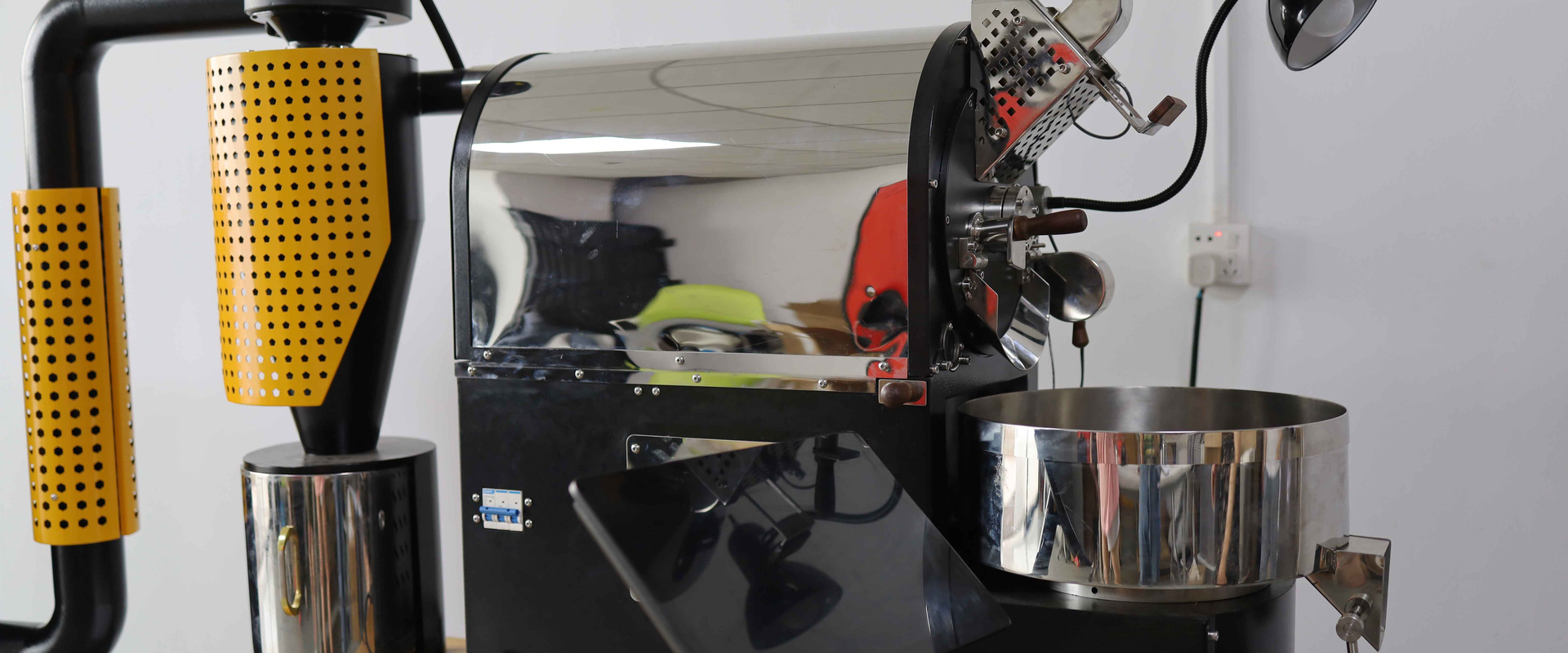
If you are buying a coffee roaster for Saudi Arabia or the Gulf, three things decide whether the machine clears the port and runs on day one — and none of them is the drum. They are the SABER conformity certificate, a 220V/60Hz build, and a burner set up for bottled LPG. Get those three on your order and the rest is the same as anywhere. Here is how each works, and what a typical Gulf order looks like.
The Three Hard Conditions
1. SABER conformity. Saudi customs requires a SABER certificate for the shipment, backed by SASO conformity for the product. It is a per-shipment document, issued through an approved body, and it needs the machine's technical file — the same test reports and declarations that sit behind CE marking. CE helps; it does not replace SABER. Your importer of record handles the SABER application; we supply the technical file. Ask about it at quotation, not at the port. The UAE uses ESMA/ECAS conformity; Oman, Qatar and Kuwait have their own GSO-based schemes. Our CE guide explains the technical file.
2. 220V / 60 Hz. Saudi Arabia runs 220V at 60 Hz for single phase and 380V three-phase; most of the Gulf is 220–240V/50 Hz. The frequency matters for motors and fans. We build to your supply — tell us which country and which building.
3. Bottled LPG. Piped natural gas is rare outside industrial zones, so nearly every Gulf roaster we ship runs on cylinder LPG. The burner is jetted for LPG at order; ask your gas supplier for the regulator output pressure and give it to us. Electric heating is an option if gas is not permitted in your building, but note the three-phase requirement on larger machines.
What a Typical Gulf Order Looks Like
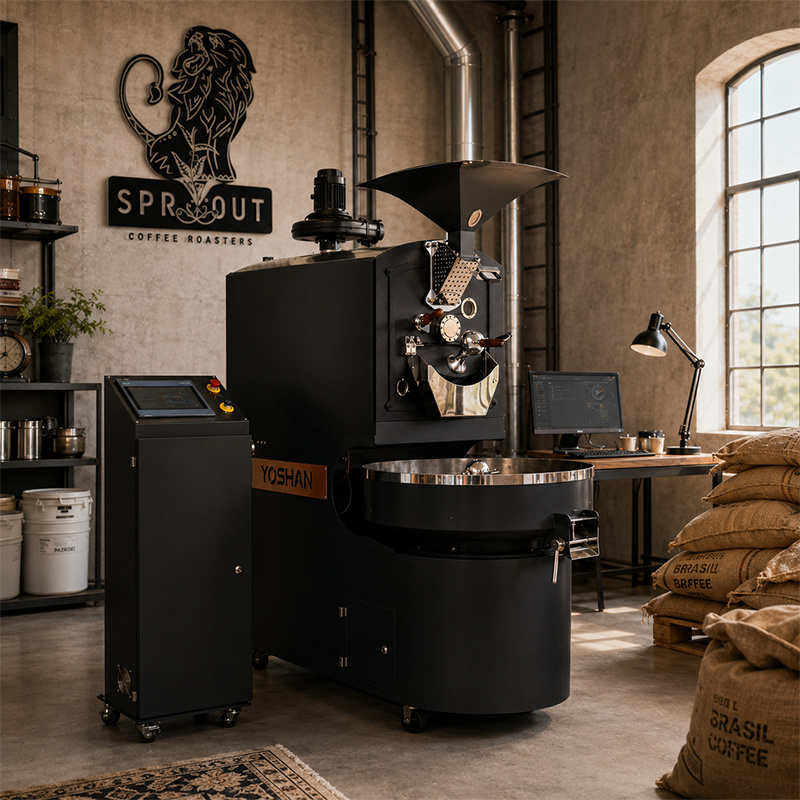
A roastery in Oman ordered a YS-6 in custom white with their logo, on LPG, with a filling machine and a sealing machine in the same shipment — one specification, one container, one point of contact. It is a common shape for a Gulf order: the roaster in your brand's colour, packaging equipment alongside, and everything built for your local supply. The full story is in the Oman case study.
Sizing for the Gulf Market
Saudi Arabia now has around 5,100 branded coffee shop outlets — close to half of all the branded cafes in the Middle East — and the largest home-grown chain alone has passed 800 stores, so the typical buyer is either a cafe group roasting for its own branches or a wholesale roaster supplying them. That lands most Gulf orders in two bands:
| Your situation | Weekly roasted volume | Machine |
|---|---|---|
| Cafe group roasting for 2–5 branches | 60–200 kg | YS-6 or YS-12, Siemens PLC so branch staff can run saved profiles — USD 7,499 / 9,980 ex-works |
| Wholesale roaster or private label | 300 kg and up | YS-20 / YS-30 with loader; afterburner or filter depending on the municipality — USD 18,999 / 23,999 |
| Industrial / national brand | 1,000 kg a day and up | SD-60 Pro full set USD 61,999 and above — see the industrial guide |
Both the YS series and the SD series can be finished in your colour with your logo, which Gulf buyers ask for more than any other market. Prices are ex-works; freight to Jeddah, Dammam or Jebel Ali, SABER and clearance are your own lines — the price guide has every model.
Why Gulf Buyers Size One Step Up — and the Two Site Conditions Nobody Mentions
The Gulf coffee market is a chain market. Cafes open as groups of branches, drive-throughs open in batches, and the state-backed Saudi Coffee Company is putting more than USD 300 million behind the local industry over ten years. For a roaster that means the branch count you have today is rarely the one you will be roasting for in eighteen months, which is why Gulf buyers more than any others order the next drum up — a YS-12 where the numbers say YS-6 — and why our advice here is the opposite of what we say in Europe: size for the plan, not just the present, provided you can still load the drum to at least half.
Two conditions on the site itself change the specification, and neither shows up in a generic buying guide:
Ambient heat. A roastery at 42–45 °C in summer cools beans more slowly, because the cooling fan is pulling in hot air. Order the larger cooling fan option at this size, keep your cooling tray shaded from direct sun, and expect your cooling to run two to three minutes rather than one to two. The same heat means green coffee must be stored in an air-conditioned room, not the warehouse — a sack that sits at 40 °C for a month loses the acidity you paid for.
Light Roasts and Gahwa: What It Asks of the Machine
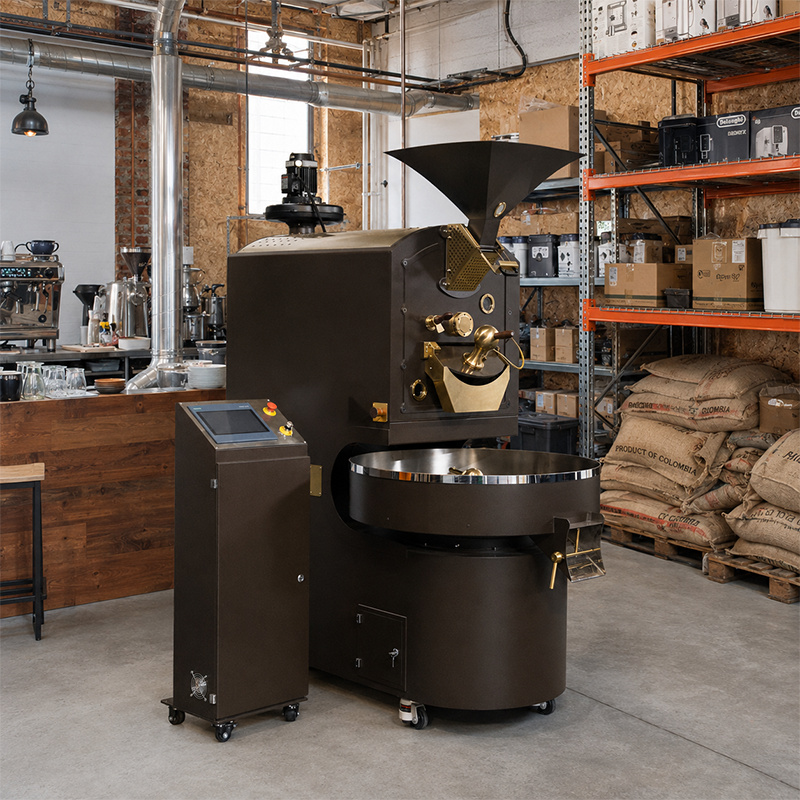
Much of the Gulf drinks very light roasts — Saudi gahwa is roasted lighter than almost anything in Europe — alongside specialty espresso, and Saudi Arabia is now planting over a million coffee trees in Jazan, Asir and Al-Baha, so roasters are increasingly roasting the local crop light to showcase it. That is not a recipe question for us to answer, but it does say something about the machine: you need fine airflow control to keep a light roast clean, and fast cooling to stop it exactly where you want. Our drums are semi-hot-air with adjustable airflow, and the cooling tray drops a batch in one to two minutes. Tell us your roast range at enquiry and we will confirm the burner and airflow setup.
Shipping to Gulf Ports
Sea freight from our factory to Jeddah, Dammam, Jebel Ali or Sohar runs several weeks, then clearance by your importer. Your SABER certificate must be in place before arrival — that is the single most common delay on Gulf shipments, and you avoid it entirely by starting the application when the machine goes into production. We supply export documents, packing photos and the pre-shipment test video; the shipping guide has the sequence.
After-Sales in the Region
Support is by video call, with parts couriered — the model that works across every market we serve. Gulf time zones overlap our working day well, so most diagnoses happen the same day. Keep the starter spares kit that ships in your crate; if you run a cafe group we recommend one shared kit per city. The after-sales guide shows real cases.
Frequently Asked Questions
What about lead time around Ramadan and the Hajj?
Our build runs through both; what slows is your side — customs and haulage in the Kingdom run short hours in Ramadan and the ports around Jeddah are busy through the Hajj season. If your opening date is near either, order so the vessel arrives a month before, and start the SABER application the day the machine goes into production so the certificate is not the thing waiting.
Can I get the machine in my brand colour?
Yes, and Gulf buyers ask for it more than any other market: any RAL or Pantone colour on the body and your logo on the front panel and nameplate, on both the YS and SD series, with the DY series including it at no charge. Send the colour reference and a vector logo with the order; the finish adds to the lead time and is quoted with the machine.
How do I run a roastery through a Gulf summer?
Move the roasting to the early morning if the room cannot be cooled — a drum charged in a 45 °C room starts every batch hotter than the profile was built for — and give the green its own air-conditioned space rather than a corner of the warehouse. Log the ambient temperature with each batch through July and August; the drift you see is the reason to adjust the charge temperature seasonally rather than fight it batch by batch.
Is there a Gulf-based technician for warranty work?
Not in every city; support is by WhatsApp and video call, with a technician of your own on the call and parts couriered to Jeddah, Riyadh or Dubai in days — the model that works across the region, and our working day overlaps yours completely. For a cafe group we recommend one shared spares kit per city; the after-sales guide shows real cases.
Do you supply the packaging and filling machines for a Gulf order?
Yes, in the same container: the Oman line shipped as roaster, loader, filling machine and sealer, one specification and one clearance. Gulf roasteries selling retail bags from opening day usually order the filler with the roaster, sized to the bag and the weekly count; the equipment list says what to add when and the packaging guide covers bags and valves.
Final Thoughts
A coffee roaster for Saudi Arabia or the Gulf is a normal order once SABER, 60 Hz and LPG are on the paperwork from the start. We build every machine to the destination supply, finish it in your colour, and ship packaging equipment alongside it in one container. Send us your country, your building's supply and your weekly volume and we will quote it Gulf-ready. Get a quote.
Get a Quote → WhatsApp +86 184 0771 4607Last updated: September 23, 2026
Pingback: CE Certified Coffee Roaster: Ask for the Declaration, Not the Sticker | Yoshan
Pingback: Shipping a Coffee Roaster from China: Landed Cost in 5 Lines | Yoshan
Pingback: Coffee Roaster Voltage Guide: 110V, 220V, 380V by Country | Yoshan
Pingback: دليل شراء محمصة القهوة من المصنع: سابر و60 هرتز والغاز المسال | Yoshan