
If you are comparing roasters, you have probably asked about batch size, fuel and voltage — and almost certainly not about cooling. That is a mistake: coffee keeps roasting after you drop it, and the cooling stage is where an otherwise perfect roast is quietly ruined. Here is what happens after first crack, why coffee roaster cooling speed matters, when water quenching helps, and what to check on the cooling system before you order.
1. Why Cooling Speed Matters
Coffee keeps roasting after you drop it. The beans hold enough internal heat to continue developing for another minute or more in the cooling tray — this is called carry-over or residual roasting. If cooling is slow, your light roast drifts into a medium, and your carefully planned roast profile and development time is wrong by the time the beans reach room temperature.
The industry benchmark: a commercial roaster should bring a full batch from drop temperature (~200–215°C) down to near ambient in under 4 minutes. Anything slower and profile repeatability suffers — the exact thing your wholesale customers are paying for.
2. How a Cooling Tray Actually Works
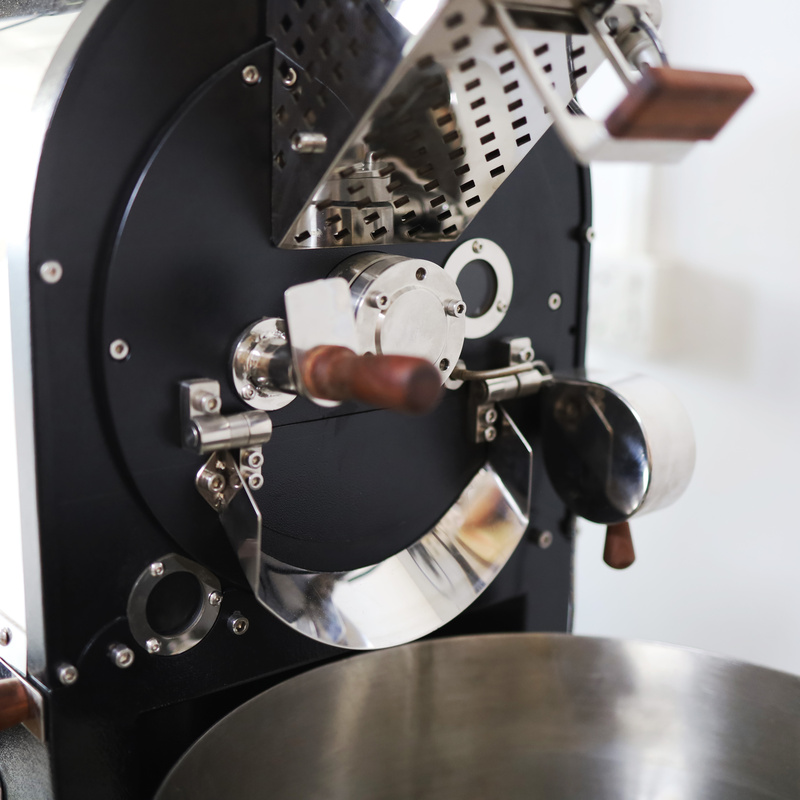
A proper cooling tray combines two forces:
-
A perforated bed that pulls ambient air up through the bean mass with a dedicated cooling fan.
-
A motorized stirring arm that keeps beans moving so no layer sits still and over-roasts.
Both matter. Air alone leaves the bottom layer hot; stirring alone without airflow just circulates warm beans. Every Yoshan roaster from 3kg up ships with a powered stirring arm and a separate cooling blower sized to the drum — the cooling fan is not the same fan as the exhaust.
3. Cooling Capacity Must Match Batch Size
This is the number most first-time buyers overlook. A cooling tray that is too small for the drum becomes the bottleneck: you finish a batch, but you cannot charge the next one until the tray clears. This is closely tied to your minimum and maximum batch load.
| Roaster batch | Recommended cooling tray | Practical cycle |
|---|---|---|
| 1–3 kg | Integrated round tray | Cools while drum reloads |
| 5–15 kg | Full-diameter tray + dedicated blower | ~3–4 min per batch |
| 20–60 kg | Oversized tray, high-CFM fan | Sized to sustain back-to-back batches |
| 60 kg+ | External cooling bin / cyclone | Continuous production |
Rule of thumb from our production data: if you plan back-to-back roasting for wholesale, your cooling tray must clear a batch faster than your drum roasts one, or throughput collapses. Our YS series and SD series are sized accordingly — tell us your target kilograms-per-day and we match the tray.
4. Water Quenching: When It Helps and When It Hurts
Quenching means spraying a fine mist of water at drop to flash-cool the bean surface. On large industrial roasters (60kg+) a metered quench system is standard — it stops carry-over instantly and saves cooling time at volume.
For small and mid-size commercial roasters, we generally advise against aftermarket water quenching: too much water re-absorbs into the beans, shortens shelf life, and can be used to hide weight loss (a practice serious roasters avoid). If your batches are under 30kg, a well-sized air cooling tray is the honest, better answer.
5. What to Check Before You Buy
-
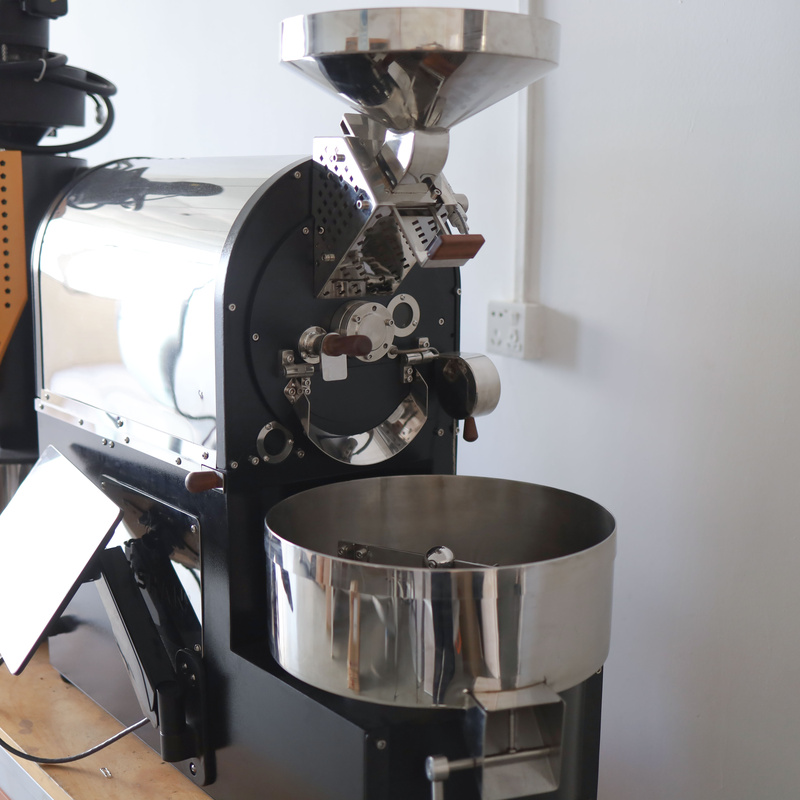
Separate cooling fan — confirm the cooling blower is independent from the exhaust fan and your ventilation and exhaust setup.
-
Stirring arm motor — powered, not manual, on anything above 2kg.
-
Tray diameter vs drum — ask for the cooling-to-batch ratio, not just the drum size.
-
Chaff separation — the cooling airflow should route chaff to the cyclone, and a destoner keeps stones out of the bean path.
-
Noise and placement — cooling fans are the loudest part of a roaster; plan the layout.
A serious factory will answer all five in writing. If a supplier only quotes drum size and dodges cooling capacity, that is a signal.
What Slow Cooling Looks Like in the Cup
You can taste a cooling problem before you can measure it. A batch you dropped at a light colour that tastes like a medium — flatter, sweeter in a dull way, the acidity gone — has kept developing in the tray, and the finished bean will read darker than the drop temperature predicted. Two checks confirm it: weigh the roast loss, which creeps up when carry-over is long, and time the tray from drop to a bean you can hold comfortably; anything past four minutes on a 3–15 kg machine is the tray, not the profile.
What Slow Cooling Looks Like in the Cup
You can taste a cooling problem before you can measure it. A batch dropped at a light-roast colour that tastes like a medium — flatter, sweeter in a dull way, the acidity gone — has kept developing in the tray, and the colour of the finished bean will read darker than the drop temperature predicted. Two checks confirm it: weigh the roast loss, which creeps up when carry-over is long, and time the tray from drop to a bean you can hold comfortably; anything past four minutes on a 3–15 kg machine is the tray, not the profile. The roast defects guide lists it beside baking because the fingerprint is similar and the fix is different.
Frequently Asked Questions
How do your cooling trays perform, by size?
Every drum from the DY-1 up cools in a separate tray with its own fan and, from 3 kg, a powered stirring arm; the DY-2 and SD-3 bring a batch down in one to two minutes, and the larger SD Pro and YS trays are sized so the next batch charges while the last one cools. Because the cooling fan is separate from the exhaust, the drum never waits for the tray — which is what keeps back-to-back roasting at three to four batches an hour.
Does hot weather slow the cooling?
Yes — the tray pulls in room air, so at 40 °C ambient a batch takes noticeably longer to reach a safe temperature than at 20 °C, and carry-over increases. In hot climates order the larger cooling fan option, keep the tray out of direct sun and away from the roaster's radiant heat, and expect two to three minutes rather than one to two; the Gulf guide covers the same point for that region.
Can slow cooling be read on the curve or in the cup?
Not on the curve, which ends at drop — that is exactly why it hides. What gives it away is the batch record: the same drop reading producing a darker colour and a higher weight loss than last week, batch after batch, with nothing changed on the profile. Cross-check against the tray time you logged and the pattern is obvious; then look at the tray fan and the stirrer before you touch the profile.
How do I keep the cooling tray from becoming a fire risk?
Brush the perforated bed and the fan screen every session, because chaff and oil collect underneath and the cooling fan is a bellows. Never dump a batch that may still be smouldering into the tray — cut the gas and choke the airflow first — and keep the tray fan off until you are sure. The fire safety guide has the sixty-second routine.
Is a water quench system available on your industrial lines?
On the 60 kg and larger industrial roasters, a metered quench at drop is an option specified with the line, sized so the water flashes off the bean surface and does not re-absorb. On anything under 30 kg we do not recommend it, and we would rather size the air tray properly; tell us your batch and your target kilos per day and we match the tray and the fan.
Final Thoughts
Coffee roaster cooling is the last stage of the roast and the one buyers check least: a tray that clears a batch in under four minutes, with its own fan and a powered stirrer, is what protects the profile you worked for. Check the tray before you buy, keep it clean, and leave water quenching to the industrial lines. Send us your batch size and daily kilos and we match the cooling. Talk to our engineers.
Get a Quote → WhatsApp +86 184 0771 4607Last updated: September 17, 2026
Pingback: Coffee Roast Profile Development: A Factory Guide
Pingback: Coffee Roaster Batch Size Guide: Usable Window, What Breaks | Yoshan
Pingback: Coffee Roast Defects: Tipping, Scorching, Baking and the Fix | Yoshan
Pingback: Coffee Roastery Layout and Space Requirements by Capacity