
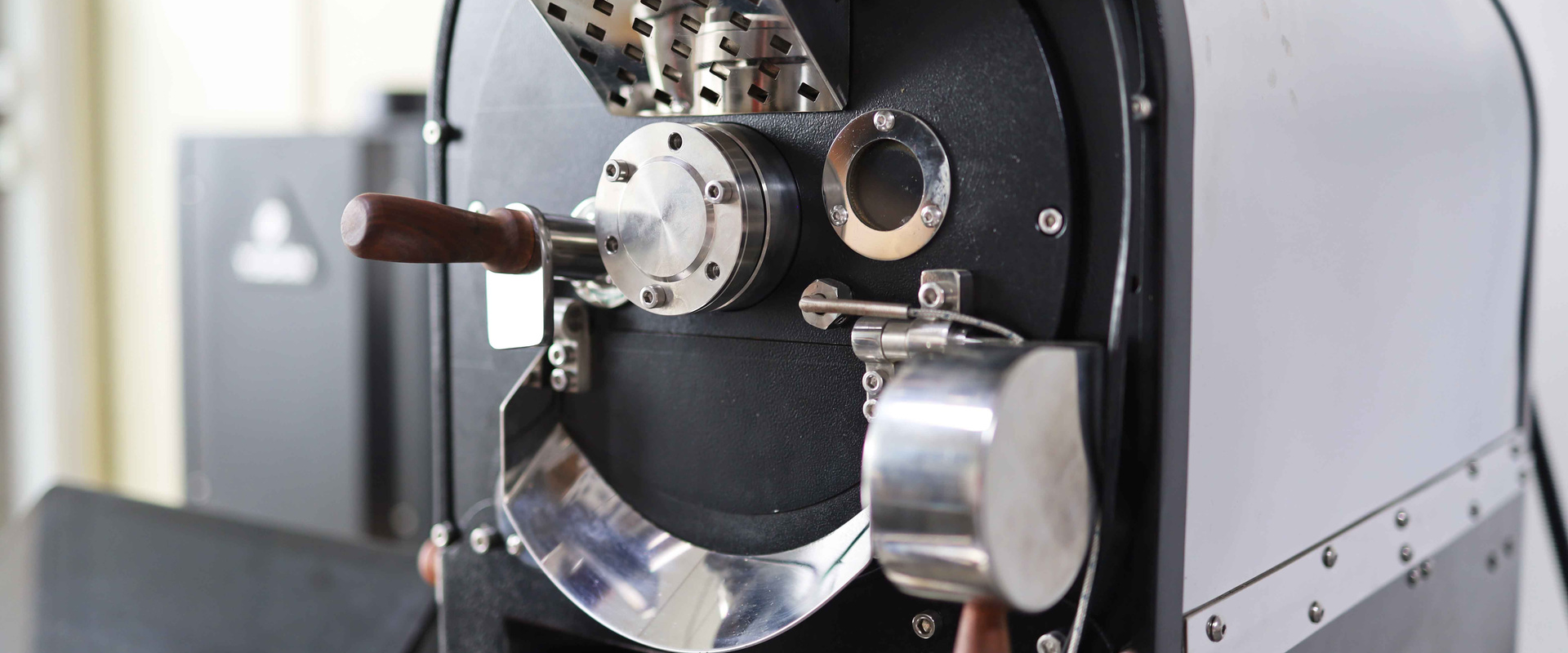
Spec sheets describe roasters as "direct fire", "semi hot air" or "full hot air", and most explanations online blur the third into fluid-bed roasting, which it is not. All three are drum roasters. What differs is where the flame is and how the heat reaches the beans — and that decides preheat time, how stable the machine is batch to batch, and how much control you have. Here is what each one is.
What "heating method" means on a drum roaster
Heat reaches coffee in a drum two ways. Conduction: the beans touch the hot metal of the drum. Convection: hot air moves through the bean pile. Every drum roaster uses both; the heating method sets the balance between them, and that balance is what people are describing when they talk about roast "character".
Direct fire pushes the balance toward conduction. Full hot air pushes it toward convection. Semi hot air — the majority of machines sold, including most of ours — sits in between. None is wrong. Each suits different production.
1. Direct fire
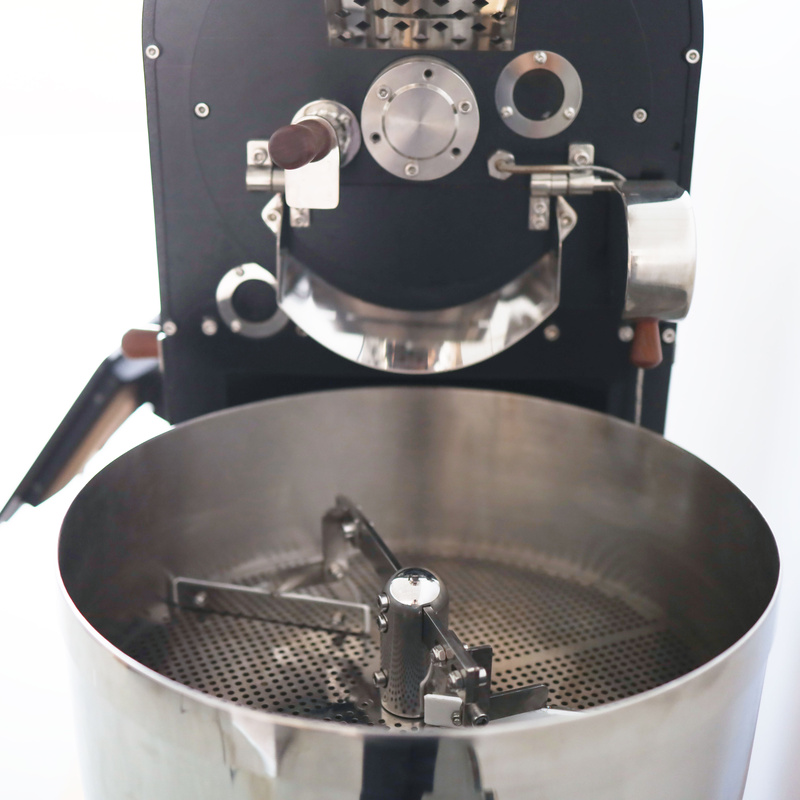
How it works. The drum is perforated, and the burner sits directly beneath it. Flame and combustion gases pass through the holes and contact the beans, while the drum wall itself also gets hot. Heat transfer is mostly conductive and radiant, with the flame close to the coffee.
What that gives you. The fastest preheat of the three, because the drum wall is thin and the flame is close. Strong development of body and sweetness in the cup, which is why direct fire has a following among roasters of traditional darker styles.
What it costs you. Control margin. With flame in contact with the beans, the surface can roast faster than the core — scorching, tipping, uneven development — unless the operator manages heat carefully through the roast. Chaff can ignite in the drum. Batch-to-batch stability depends heavily on the person at the machine.
Who it suits. Experienced roasters who want that particular cup and are prepared to work for it, on small to mid-size batches. It is the least forgiving method and the least common in production roasteries today.
2. Semi hot air (half direct fire, half hot air)
How it works. The drum is solid, not perforated. The burner sits beneath it and heats the drum wall; a fan pulls air past the burner and through the drum, so hot air flows through the bean pile at the same time. Conduction from the wall and convection from the airflow act together, and the airflow damper lets the operator shift the balance during the roast.
What that gives you. The most versatile combination. Preheat is reasonable, control is good in both directions — more air for a cleaner, faster development, less air for more body — and the solid drum keeps flame away from the beans, so scorching risk is far lower than direct fire. Consistency is good with a decent between-batch routine.
What it costs you. It is a compromise by design: not as fast to preheat as direct fire, not as purely convective as full hot air. For most roasteries that is exactly the point.
Who it suits. Nearly everyone from 1 kg to 15 kg. This is the heating method on our DY series, the YS 6, 12 and 15 kg, and the SD line up to 15 kg. Electric versions of these machines replace the gas burner with heating elements under the drum and keep the same principle: an electric-heated drum with airflow through it is a semi hot air roaster with a different heat source.
3. Full hot air (indirect heating)
How it works. This is the one most often confused with fluid-bed roasting, so be precise. The burner does not sit under the drum at all. It fires into a separate combustion chamber, heats air there, and a fan drives that hot air through the drum. The drum wall is heated by the air passing through it, not by flame. Beans are still tumbled in a rotating drum — they are not suspended in the airstream as they would be in a fluid bed.
What that gives you. The most convective heat transfer of the three, with no flame contact with the drum wall. Drum surface temperature is lower and more even, so conductive scorching is minimal. Airflow is the primary control and can be set with precision. Because the drum wall runs cooler, drum life and cleanliness improve, and the fire risk inside the roaster is lower. The cup tends toward clarity and evenness.
What it costs you. More machine: a combustion chamber, a larger fan, a more capable burner, and more energy to heat air rather than metal. Preheat is not fast. This is why full hot air drum roasters live at the production end of the market.
Who it suits. Wholesale, industrial and continuous production, where evenness across large batches matters more than preheat time. Our SD-20 Pro and larger, and the YS-120 kg and above, are full hot air drum roasters fitted with Weishaupt burners — the same burner family used on the best-known European production machines. Details are on our industrial coffee roasters page.
Fluid-bed roasters, by contrast, have no drum: beans float on the airstream. That is a separate comparison, covered in drum roaster vs fluid bed.
Burner type: the detail underneath the heating method
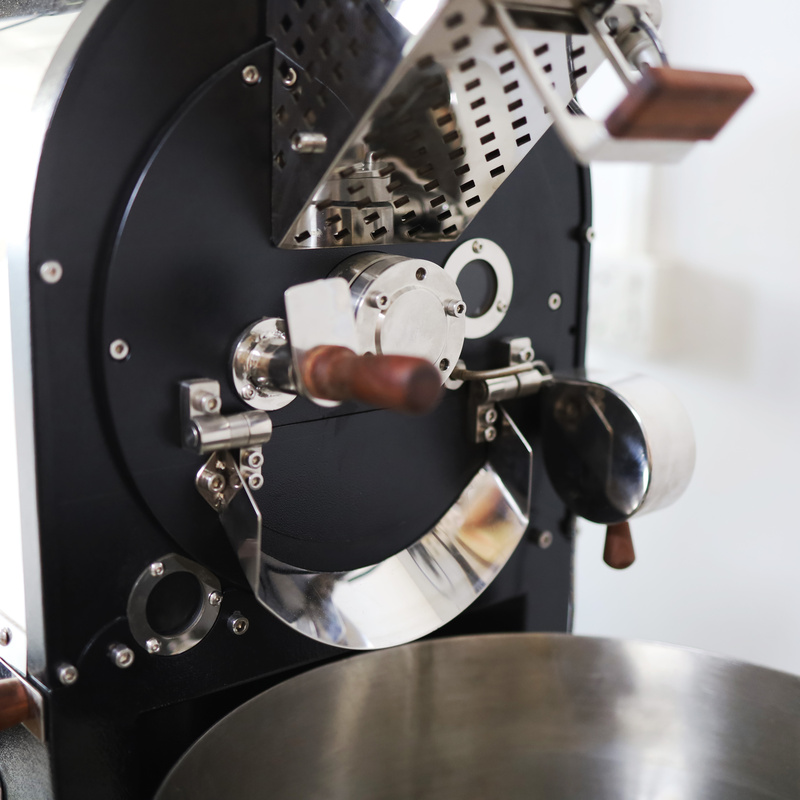
The heating method says where the flame is. The burner type says how well that flame can be controlled, and it is worth reading on a spec sheet.
Atmospheric burners draw combustion air from the room by the natural draw of the flame. They are simple, reliable and inexpensive, and they are what you find on most roasters up to about 15–20 kg. Their limitation is range: turn them down too far and the flame becomes unstable, so fine modulation at the low end is limited, and performance shifts a little with room temperature and humidity.
Premix or forced-draught burners — the Weishaupt family is the well-known example — use a fan to mix air and gas before combustion. The flame is stable across a much wider range, so the burner can modulate finely from very low to very high fire, and it is largely indifferent to conditions in the room. They cost more and need a competent installation. On a 20 kg or larger machine, they are the difference between a roaster that can hold a gentle drying phase on a full batch and one that cannot.
In practice: atmospheric burners on our machines up to 15 kg, Weishaupt premix burners on the full hot air production machines from 20 kg upward. The fuel — LPG or natural gas — is a separate decision covered in LPG vs natural gas coffee roasters.
Choosing between them
| Priority | Best fit |
|---|---|
| Fast preheat, traditional body, experienced operator | Direct fire |
| Versatility across coffees and roast styles, café to mid-production | Semi hot air |
| Large batches, evenness, continuous production, lowest scorching | Full hot air drum with premix burner |
| Site without gas | Semi hot air, electric heated |
If you are choosing your first production machine, semi hot air is almost always the right answer. If you are choosing a machine to run all day at 20 kg and above, full hot air with a premix burner is what that job is designed around. Direct fire is a deliberate stylistic choice, made with eyes open.
FAQ
Is a full hot air drum roaster the same as a fluid-bed roaster?
No. A full hot air drum roaster still tumbles beans in a rotating drum; the difference from other drum roasters is that the burner heats air in a separate chamber instead of heating the drum directly. A fluid-bed roaster has no drum and suspends the beans in the airstream. They are different machines.
What does "semi hot air" mean on a coffee roaster?
The burner heats a solid drum from below while a fan draws hot air through the drum at the same time, so beans are heated by both conduction from the wall and convection from the airflow. It is the most common design in commercial roasters from 1 kg to about 15 kg.
Are direct fire roasters better for dark roasts?
They are traditionally associated with them, because flame contact develops body and sweetness strongly. They are also the least forgiving, with a higher risk of scorching and uneven development. A semi hot air roaster with reduced airflow reaches similar results with more control, which is why most production dark roasting uses it.
Why do large roasters use full hot air?
Because at 20 kg and above, evenness across the batch and lower drum surface temperature matter more than fast preheat. Heating air rather than the drum wall reduces scorching, extends drum life, lowers fire risk and gives precise airflow control, all of which are worth more in continuous production than in a café.
What is a Weishaupt burner on a coffee roaster?
A forced-draught premix burner from a German manufacturer widely used on production roasters. It mixes air and gas with a fan before combustion, giving a stable flame across a wide modulation range and independence from room conditions. We fit them on our full hot air machines from 20 kg upward.
Does an electric roaster count as hot air?
An electric roaster with heating elements under a solid drum and a fan drawing air through it is a semi hot air roaster with an electric heat source. A true electric full hot air design heats air in a separate chamber; that configuration is available as an option on some of our YS machines.
Can the heating method be changed after purchase?
Not in any practical sense. The combustion chamber, drum construction, fan and burner are the machine's architecture. Airflow and burner settings adjust the balance within a design; they do not turn a semi hot air roaster into a full hot air one. Choose the method at order.
Final Thoughts
Three heating methods, three balances of conduction and convection, three kinds of production. Semi hot air covers most roasteries and is what we build on the DY, YS 6–15 and SD up to 15 kg. Full hot air with Weishaupt burners is what we build for continuous production on the SD Pro from 20 kg and the industrial YS line. Tell us your batch size and daily hours and we will recommend the design.
Request a factory-direct quote or message us on WhatsApp at +86 184 0771 4607.
Get a Quote → WhatsApp +86 184 0771 4607Last updated: September 23, 2026