
The guides to importing coffee equipment each cover one link of the chain — a voltage table, a customs code, a definition of EXW — and leave the buyer to assemble the rest. This is the whole sequence for a café, a small chain or a distributor importing commercial espresso machines from China, in the order the steps happen, with the numbers and documents at each one. It is written from the supplier's side, where most of the questions arrive.
Step 1 — specify the machine, and the electricity, before the price
Groups, boiler layout, pump type, tank or plumbed — the buying questions in the commercial espresso machine buyer's guide — and then the one that decides whether the machine works on arrival: the destination's electrical supply. Voltage, frequency and plug standard differ by market:
| Region | Typical supply | Frequency | Note |
|---|---|---|---|
| Europe, Middle East, most of Africa and Asia, Australia | 220–240 V | 50 Hz | Plug types vary: round-pin, rectangular three-pin, angled three-pin |
| North America, parts of Central and South America, Japan | 100–127 V | 60 Hz | Commercial machines often on 208–240 V circuits |
| Philippines, Korea, Taiwan, Saudi Arabia and others | 220–240 V | 60 Hz | Frequency matters for pumps and motors |
A commercial machine is built for one supply and cannot be adapted afterwards with a plug adapter — an adapter changes the pins, not the voltage — and rewiring voids warranties. The machines we supply are built for 220–240 V; a two-group at 4.2 kW draws about 18 A and, like most commercial machines above about 3 kW, is connected by an electrician to a dedicated circuit rather than through a domestic socket. Tell us the country at enquiry and we confirm the supply the machine will be built for and whether your market's requirement can be met. Circuit sizing is in commercial espresso machine power consumption.
Step 2 — quotation, terms and what the price includes
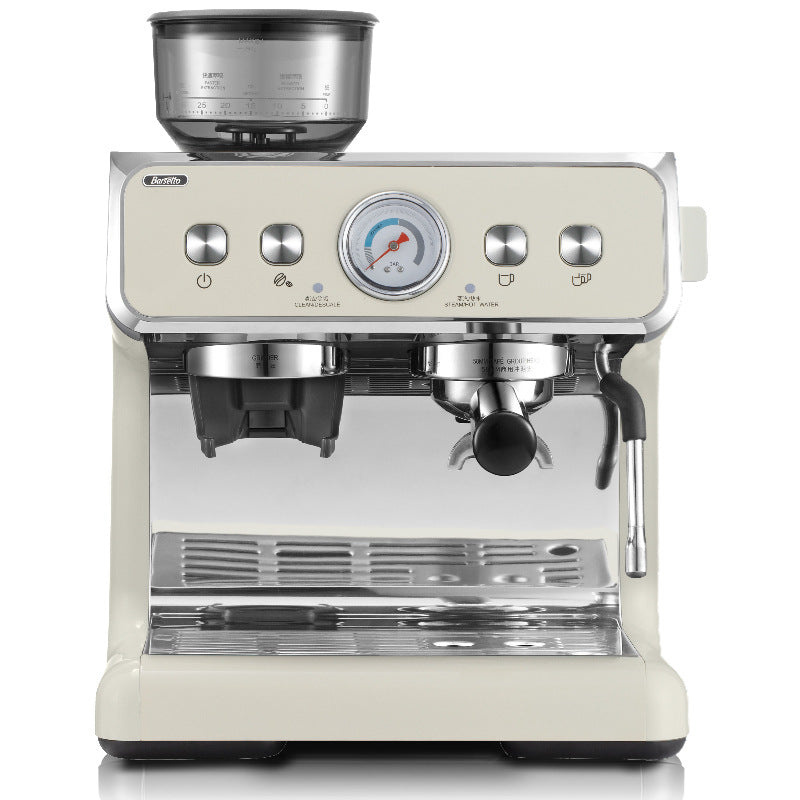
A factory quotation is EXW — ex works — the price at the supplier's door in Shenzhen, in USD, with everything after the door the buyer's cost and risk. Our current two-group pricing, EXW Shenzhen, USD, 2026: the YS-3120 at 1,299 for one unit, 1,249 for two or more and 1,199 for ten or more; the volumetric YS-3201 at 1,499 / 1,459 / 1,399; the tank-fed YS-Tank at 1,399 / 1,359 / 1,299; the three-group SD-103 at 1,999 / 1,899 / 1,799. The tiers are what make the same quotation work for a single café and for a distributor.
Payment: 50% deposit before production or reservation from stock, 50% balance before shipment, by T/T, L/C, PayPal or credit card, with Alibaba Trade Assurance available. Lead time: in-stock models ship within 7–15 working days, and dispatch follows within 5–7 working days of the balance being received. Warranty: one year — parts failing without human damage replaced and sent by air express at our cost — with 24/7 lifetime phone and online technical support.
Ask the quotation to state the model, voltage, accessories included, crate dimensions and gross weight, and the HS code the supplier uses; the forwarder and the bank need all of them.
Step 3 — inspection before it ships
A buyer three time zones away cannot walk the factory floor, so inspection is done by record. Ask for the pre-shipment test report and photographs or video of the machine running — pressures on the gauges, steam, hot water — and of the crate before it is closed. For larger orders a third-party inspection service can attend at the supplier's location before the balance is paid. Keep the report; it is the reference for any arrival claim.
Step 4 — shipping: EXW, the forwarder and the mode
Under EXW the buyer's freight forwarder collects at the factory, handles export clearance, books the freight, and delivers to the port or door at destination. If you have no forwarder, most forwarders in your country have a Shenzhen agent; ask us which have collected from us in Shenzhen before. The choice and the contract remain the buyer's.
| Mode | Suits | Typical transit | Notes |
|---|---|---|---|
| Courier / air express | One or two machines, urgent | Days | Priced by volumetric weight; a crated two-group is bulky for air |
| Air freight | Several machines, deadline | About a week plus clearance | Cheaper per kilo than courier for pallets |
| Sea, less-than-container (LCL) | One to a few crates, no rush | Two to six weeks by route, plus port time | The usual choice for a café order |
| Sea, full container | Distributors | Same | Machines share space with grinders, packaging, roasters |
A two-group ships in a plywood crate — the YS-Tank's is about 105 × 85 × 72 cm at 75 kg gross — so the forwarder can quote from the packing list before the order is placed. Because risk passes at the factory door, arrange cargo insurance for the machine's value plus freight through the forwarder or your own insurer.
Step 5 — customs: classification, duty and documents
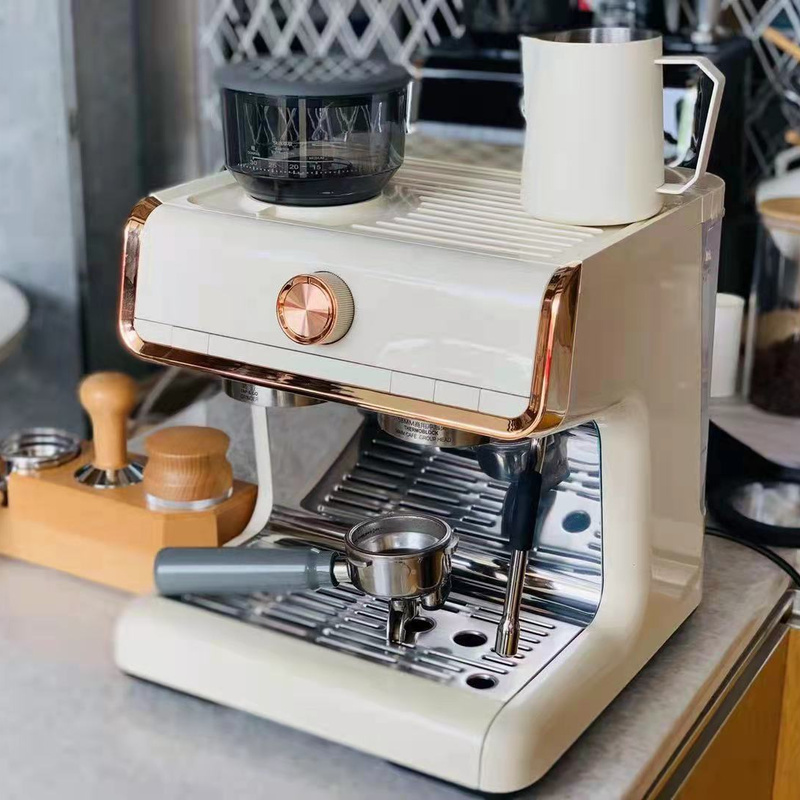
Commercial espresso machines are classified under the Harmonised System by function; buyers and brokers report two headings in use — the electrothermic coffee-machine heading 8516.71, and machinery heading 8419 for some commercial units — and the correct one for your country is the customs broker's call, not the supplier's. Duty rates then follow the country: importers quote low single-digit percentages in some markets, higher in others, sometimes zero under a free-trade agreement, and local sales tax or VAT on top. Ask your broker for the landed cost before ordering rather than after.
The documents the broker will ask the supplier for: commercial invoice, packing list, bill of lading or air waybill from the forwarder, certificate of origin if a trade agreement applies, and the machine's conformity documents — for our machines, CE certification under the Machinery and Low Voltage Directives. Some markets require additional electrical safety marks for commercial food-service equipment; tell us the country at enquiry and we confirm what documentation applies before you commit.
Step 6 — arrival: check, connect, commission
Photograph the crate before opening and note any damage on the delivery receipt; check the contents against the packing list; record the serial number and nameplate; confirm the supply and circuit match the nameplate before connecting; then fill, heat, purge and flush, and check brew and steam pressures against the manual. The full unboxing sequence is in moving, shipping and unboxing a commercial espresso machine. Commissioning questions are what the 24/7 support line is for in the first week.
Step 7 — the warranty across a border
The model that works for an imported machine: diagnosis by video call with the supplier, the part sent by air, the fitting done by a local espresso technician or a competent in-house person. Group gaskets, shower screens, steam tips, valves and pumps are standard fittings a local technician stocks; the parts that are model-specific come from us. What to check in the café before calling, and which symptoms mean stop, is in commercial espresso machine troubleshooting.
The sequence on one page
| Step | Buyer does | Supplier provides |
|---|---|---|
| 1 Specify | Model, groups, tank or plumbed, country's supply | Confirmation of voltage build |
| 2 Quote and pay | 50% deposit; balance before shipment | Pro-forma invoice with model, voltage, accessories, crate size, HS code |
| 3 Inspect | Review test report; optional third-party inspection | Test report, photos or video |
| 4 Ship | Appoint forwarder; choose mode; insure | Crate ready at factory; packing list |
| 5 Clear | Broker classifies and pays duty | Invoice, packing list, origin certificate, CE file |
| 6 Arrive | Photograph, check, connect to the correct supply, commission | Support line |
| 7 Run | Local technician for hands-on work | Video diagnosis; parts by air for the first year |
FAQ
What voltage do commercial espresso machines from China come in?
The machines we supply are built for 220–240 V; the destination's frequency and connection are confirmed at order. A commercial machine cannot be adapted afterwards with a plug adapter, and rewiring voids the warranty, so state your country's supply at enquiry.
What does EXW mean when buying an espresso machine?
Ex works: the price is for the machine at the supplier's door, and freight, export clearance, insurance, duty and delivery are the buyer's cost and risk from that point. Your freight forwarder collects at the factory; most forwarders have a Shenzhen agent.
What is the HS code for a commercial espresso machine?
Two headings are in use — 8516.71 for electrothermic coffee machines and 8419 for some commercial units — and the correct one for your country is your customs broker's decision. Ask the broker for the duty rate and landed cost before you order.
How long does it take to import an espresso machine from China?
In-stock machines ship within 7–15 working days of order, dispatching 5–7 working days after the balance is paid; sea freight then takes roughly two to six weeks by route plus port and clearance time, and air freight about a week. Courier is faster for a single machine but priced by volume.
How is the warranty honoured on an imported espresso machine?
By video diagnosis with the supplier, parts sent by air, and fitting by a local technician. On machines we supply, parts failing without human damage in the first year are replaced and shipped by air express at our cost, with 24/7 lifetime phone and online technical support.
Should I inspect the machine before it ships?
Yes, by record: the supplier's pre-shipment test report and photographs or video of the machine running and the crate before closing, and for larger orders a third-party inspection at the factory before the balance is paid. Keep the report as the reference for any arrival claim.
Final Thoughts
Specify the electricity before the price, understand EXW, pay 50/50, inspect by record, let your forwarder and broker handle the border, and unbox with a camera. As a wholesale supplier of commercial coffee machines we have shipped the YS-3120 and its stablemates to cafés and distributors in dozens of countries, and the sequence above is the one we run.
Get a quote or message Leon on WhatsApp at +86 184 0771 4607.
Get a Quote → WhatsApp +86 184 0771 4607Last updated: September 23, 2026
Pingback: How to Move a Commercial Espresso Machine Safely
Pingback: Commercial Espresso Machine Price: What Moves the Number | Yoshan
Pingback: Espresso Machine Wholesale from China: Sample, Video, Spares | Yoshan
Pingback: Used vs New Commercial Espresso Machine: The Third Option Guides Skip