
Every used vs new commercial espresso machine guide is written from a country with an active second-hand market and a dealer network: buy refurbished locally and save, or buy new from the dealer and get a warranty. For a café in most of the world there is a third option — a new machine from a factory abroad at a fraction of the dealer price, with parts by air and support by video. This guide compares the three, then gives the used-machine inspection checklist.
The three options
| Used local machine | New from a local dealer | New imported from the factory | |
|---|---|---|---|
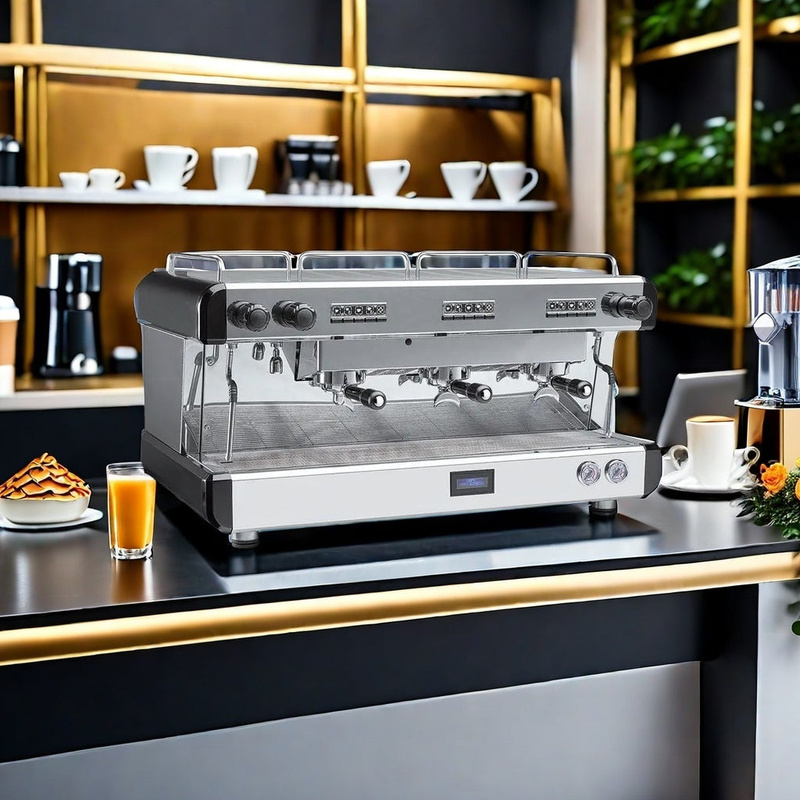
| Purchase price | Lowest headline; commonly 30–60% under new | Highest | Low — a two-group we supply is USD 1,299 EXW Shenzhen, USD, 2026 for one unit, 1,249 for two or more and 1,199 for ten or more |
| Costs on top | Inspection, repairs, missing accessories, possibly a voltage conversion | Delivery, installation | Freight, duty, installation; the buyer's forwarder collects at the factory |
| Lead time | Immediate | Days to weeks from dealer stock; longer for orders | 7–15 working days from stock, plus shipping |
| Warranty | Seller's, if any; rarely transfers from the maker | Manufacturer's, typically one year, sometimes two | One year: parts failing without human damage replaced and sent by air express at our cost; 24/7 lifetime phone and online technical support |
| Service | Local technician, at the buyer's cost | Dealer's technician, often on a contract | Local technician for hands-on work; diagnosis by video with the supplier |
| Parts | Depends on the model's age and the brand's support | Dealer stock | Air-freighted; common wear parts are standard items |
| Voltage and plug | Whatever it was built for — a risk with imports resold second-hand | Correct for the market | Built to the destination's supply, confirmed at order |
| History | Unknown unless records exist | New | New, with test records |
The honest summary: a refurbished machine from a good local dealer with a written refurbishment standard and a one- to three-year warranty is a sound buy; a used machine from a marketplace with no records is a gamble; a new imported machine is the lowest-risk way to get a new machine at a used-machine price, provided the buyer accepts that hands-on service is local rather than the supplier's.
The arithmetic
Guides that do the sums show why the headline price misleads. A worked example from a dealer's own comparison: a used two-group at a low headline price plus an inspection and a first round of repairs came to about 70% of the new dealer price — before anything else failed. Run the same shape for the three options with your own local numbers:
| Line | Used | New, dealer | New, imported |
|---|---|---|---|
| Machine | your quote | your quote | USD 1,299 (YS-3120, one unit) |
| Inspection before purchase | technician's fee | — | — |
| Repairs and worn parts at purchase | gaskets, valves, possibly pump or element | — | — |
| Freight, duty, clearance | — | included or local delivery | your forwarder's quote |
| Installation and commissioning | local | dealer or local | local, with video support |
| Voltage conversion, if needed | possible | — | built to your supply |
| First-year parts risk | on you | dealer warranty | air-freighted at our cost |
Fill in the blanks from your own quotes; the imported column is usually the cheapest new machine and often close to the used machine's true cost.
When each option is right
Used, from a reputable refurbisher: you can see and test the machine, it comes with records and a written warranty, parts are available locally, and it is the correct voltage. The refurbisher's standard matters — some replace only what is broken, others strip and rebuild.
New from a local dealer: you want a dealer's technician on a contract, an opening date that cannot slip, and a brand your baristas know. You are paying for the dealer's service and margin, and that is a legitimate choice.
New imported: you want a new machine at the lowest price, you have — or can find — a local technician for hands-on work, and you are comfortable with diagnosis by video and parts by air. Most of our café customers fall here, and the questions they ask first are voltage, payment terms and what happens when something fails; the answers are in importing commercial espresso machines from China and commercial espresso machine troubleshooting.
The used-machine inspection checklist
If the used route is the one, treat it like a used car: identity, history, inspection, test.
- Identity. Make, model, year and serial number from the nameplate — photographed — and the nameplate voltage and frequency. A machine built for another market is a conversion project, not a bargain.
- Ownership. Confirm the seller owns it outright; leased and financed machines are sometimes offered for sale.
- Records. Service history, descaling records, the water it ran on. Missing records do not condemn the machine; they raise the inspection budget.
- Manufacturer support. Are parts still made? Is the model still serviced in your country?
- Physical inspection, cold. Boiler exterior for corrosion or leak traces — a leaking, corroded boiler is a walk-away; heating element resistance; pump condition; group gaskets and shower screens (cheap to replace, but a clue to care); wands and valves; wiring condition; scale visible at the level probe or fittings.
- Freeze history. A machine stored in an unheated space over winter may have a split heat exchanger or boiler; one documented case cost as much to repair as the machine was worth. Ask, and look for repaired joints.
- Test hot. Warm-up time, boiler pressure holding steady, blind-basket brew pressure climbing to spec and holding, steam dry and strong, no drips from the anti-vacuum valve after warm-up, no leaks under load. The tests are in espresso brew pressure explained.
- Technician's opinion. Pay a local espresso technician to inspect before you commit; the fee is small against the repairs it prevents.
- Warranty in writing. Whatever the seller offers, in writing, with what it covers and who does the work.
Lifespan, for context
A traditional commercial espresso machine maintained on schedule runs ten years or more; bean-to-cup machines shorter, around five to seven. A well-refurbished ten-year-old machine can give another decade; a neglected five-year-old one may not give two. What decides it is water treatment and descaling, which is why the records matter — the case is made in how long does a commercial espresso machine last.
FAQ
Is it better to buy a used or new commercial espresso machine?
A refurbished machine from a reputable local reseller with records and a written warranty is a sound buy; a marketplace machine with no history is a gamble. A new machine imported from a factory is often the cheapest new option and close to a used machine's true cost once inspection and repairs are counted.
How much cheaper is a used espresso machine?
Headline prices run 30–60% under new. Add an inspection, the first round of repairs and any missing accessories and the gap narrows; one dealer's example put the used total at about 70% of the new price before anything else failed.
What should I check when buying a used espresso machine?
Nameplate identity and voltage, proof of ownership, service records, whether parts are still available, boiler corrosion and leak traces, freeze history, and a hot test of warm-up, steam pressure, blind-basket brew pressure and leaks. Pay a technician to inspect before committing.
Does the warranty transfer on a used espresso machine?
Rarely from the manufacturer. Refurbishers offer their own, typically one to three years on rebuilt machines; get it in writing with what it covers and who does the work. A new imported machine from us carries a one-year parts warranty by air express and lifetime remote support.
How long do commercial espresso machines last?
Ten years or more for a traditional machine maintained on schedule with treated water; bean-to-cup machines around five to seven. Descaling and water treatment records are the best predictor of how much life a used machine has left.
Why is an imported new machine cheaper than a dealer's new machine?
No dealer margin, no local service contract built into the price, and direct-from-supplier terms. The buyer adds freight, duty and local installation, and takes hands-on service locally with diagnosis by video and parts by air from the supplier.
Final Thoughts
Compare three options on total cost, lead time, warranty, parts and voltage — not on headline price — and inspect any used machine like a used car. As a wholesale supplier of commercial coffee machines, we ship new two-groups such as the YS-3120 from stock, built to your supply, with air-freighted parts for the first year.
Get a quote or message Leon on WhatsApp at +86 184 0771 4607.
Get a Quote → WhatsApp +86 184 0771 4607Last updated: September 23, 2026
Pingback: How Long Does a Commercial Espresso Machine Last? Replace vs Repair