
Troubleshooting lists for espresso machines are long and flat: forty symptoms, each with "clean it" or "call a technician." On a café floor at eight in the morning the useful question is narrower — what can the person on shift check in three minutes, and which signs mean stop and get help. This guide is organised that way, symptom by symptom, for commercial machines, and ends with how remote diagnosis and parts supply work for an imported machine.
Before anything else: the three-minute checks
Most "the machine is broken" calls resolve with one of these.
- Water supply. Is the inlet tap open, the filter cartridge not overdue, the line not kinked? On a tank machine, is the tank seated and above the low-level mark?
- Power. Is the machine switch in the run position — on some machines position 1 powers the electronics only and position 2 enables heating — and has the breaker tripped?
- The click. Press a brew button and listen at the group: a distinct click is the solenoid valve opening. No click means an electrical or valve fault, not a water fault.
- The reset. Switch the machine off at its own switch, wait five seconds, switch on. A boiler-level warning that clears on restart was a fill-cycle timeout, not a failure.
If none of these changes anything, go to the symptom.
Symptom 1 — no water, or a slow trickle, at the group
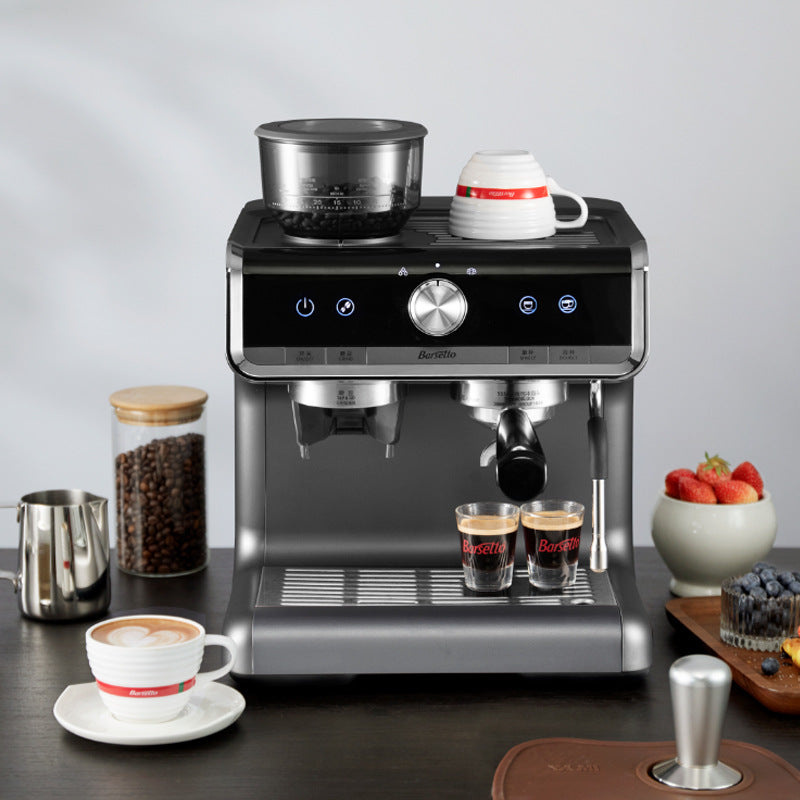
In the café: check supply (above); coarsen the grind or use a blind basket to rule out a choked puck; remove the shower screen and look for scale or grounds; backflush if the machine has a three-way valve. A flow that starts and then stops is usually a blockage; no flow with no click is the valve or its circuit.
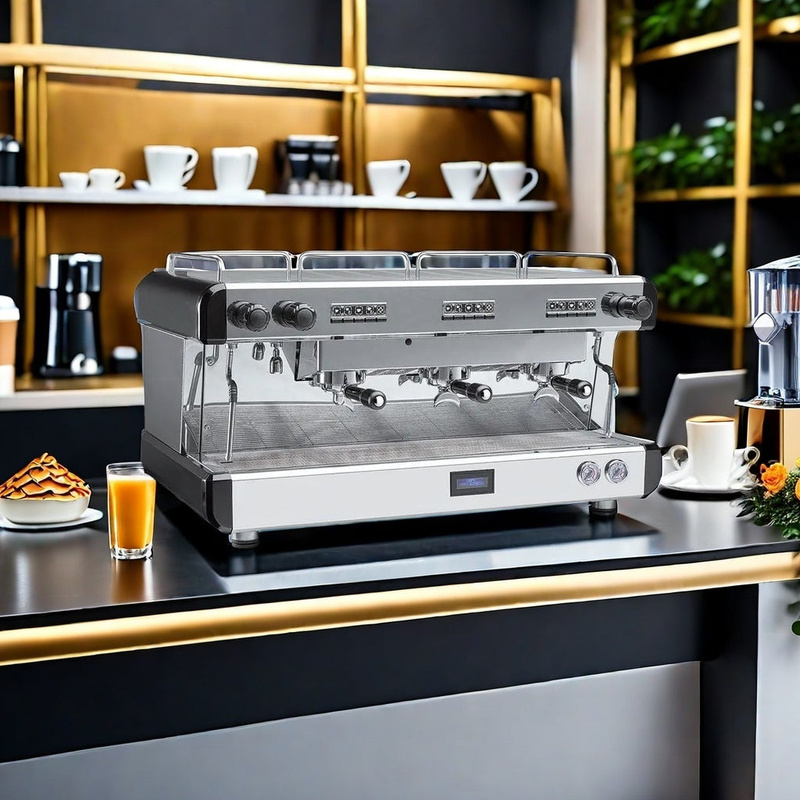
Stop and call: the solenoid clicks and the pump runs but nothing arrives — the group's metering jet or the valve body is blocked with scale and needs stripping; or the pump note has changed and pressure is not building. On plumbed rotary-pump machines like the two-group YS-3120 we supply, the pump is fed by the mains line, so a closed tap upstream produces exactly this symptom first.
Symptom 2 — low or unstable brew pressure
In the café: in most cases the cause is the coffee, not the machine — grind too coarse, dose too low, stale beans. Fit a blind basket and run the pump: a healthy machine climbs to its set pressure within a few seconds and holds. If it holds with the blind basket, the machine is fine and the puck is the problem.
Stop and call: pressure that hunts up and down on the gauge during a shot, a pump that climbs slowly or peaks well below its normal reading, or a burnt smell at the pump. Those are pump, bypass valve or scale in the pump circuit. How to read the gauge and what the numbers mean is in espresso brew pressure explained.
Symptom 3 — machine not heating, or coffee lukewarm
In the café: allow the full warm-up — a dual-boiler two-group needs twenty minutes or more from cold; check the switch position; on a PID machine check the set-point has not been changed. A machine that heats but slowly, or that reaches temperature and then loses it during a rush, is usually scaled.
Stop and call: no heating at all with the switch correct — safety thermostat tripped, heating element or its relay failed; or repeated tripping of the breaker when the element switches on. Descaling on a schedule is what prevents the slow version; the routine is in espresso machine maintenance and descaling.
Symptom 4 — weak steam, wet steam, or none
In the café: the steam tip is blocked with milk — soak it and clear the holes with a pin; the boiler pressure gauge should sit in its normal band, commonly around 1–1.5 bar on commercial machines, before you judge the steam. Wait for recovery after heavy use. A wand that drips water rather than steam when the boiler is up to pressure points to an over-full boiler.
Stop and call: boiler pressure that never reaches the band — element, pressure switch or level control; water from the wand with the tap closed — valve seat or gasket; or a boiler that over-fills, which is a level probe coated with scale telling the fill circuit the boiler is empty. A boiler-level light that keeps flashing after the five-second reset is the same fault.
Symptom 5 — leaking
In the café: locate it. Water from under the machine during shots with a drip tray that is not full is usually the drain hose — blocked, kinked or lifted off its outlet. Coffee weeping around the portafilter is a worn group gasket, replaced as a matter of routine every six to twelve months, or a dented basket rim. Steam from a wand joint is an O-ring.
Stop and call: a leak inside the case that persists with the machine idle — a fitting, a hose or a boiler seal — or water reaching electrical components. Switch off at the machine and isolate.
Symptom 6 — wet, sloppy pucks and a group that spits on removal
In the café: this is the three-way solenoid not venting the group after the shot. Backflush with a blind basket and detergent; scale and grounds in the valve's small ports often clear.
Stop and call: if backflushing changes nothing, the valve needs stripping or replacing. Not urgent, but the mess will get worse.
Symptom 7 — volumetric doses drift
On machines with programmed volumes — the YS-3201 we supply is volumetric — a drift in shot volume at the same grind is the flow meter. In the café: clean the shower screen and check that grind has not changed. Stop and call: the flow meter's turbine is scaled or fouled and needs cleaning or replacement. How volumetric dosing works is in volumetric vs semi-automatic espresso machines.
Symptom 8 — noise
In the café: a rattle is a loose panel or a machine on an uneven bench; a change in pump note after descaling is trapped air, cleared by running water from the hot-water tap. Stop and call: a grinding or screeching pump, or a hum from the pump motor with no pressure — the pump or its motor.
The chart
| Symptom | Three-minute check | Call when |
|---|---|---|
| No water at group | Supply, grind, blind basket, screen, click | Click but no flow; pump note changed |
| Low pressure | Grind and dose; blind-basket test | Hunting gauge; slow climb; burnt smell |
| Not heating | Warm-up time, switch, set-point | No heat; breaker trips |
| Weak steam | Clear tip; boiler pressure band; recovery | No boiler pressure; wand leaks; over-fill |
| Leaking | Drain hose; group gasket; wand O-ring | Internal leak; water near electrics |
| Wet pucks | Backflush | No change after backflush |
| Volume drift | Screen; grind | Flow meter fouled |
| Noise | Panels, bench, purge air | Pump grinding or humming |
What "call" means for an imported machine
The worry with a machine bought from overseas is who comes when it fails. In practice the model that works is three-part. Remote diagnosis first: a video call with the symptom on screen resolves most faults to a part in one session — every machine we supply comes with 24/7 lifetime phone and online technical support for exactly this. Parts by air: within the first year, parts that fail without human damage are replaced and sent by air express at our cost. Local hands: the fitting itself — a solenoid, a gasket, a pump, an element — is standard work for any local espresso-machine technician or a competent in-house person following the call. Keep group gaskets, a steam tip and shower screens on the shelf; they cover most of the table above without waiting for anything.
FAQ
Why is there no water coming from my espresso machine group head?
Check the supply tap and filter, rule out a choked puck with a blind basket, clean the shower screen, then listen for the solenoid click at the group. Click but no flow means the group jet or valve is blocked with scale; no click means an electrical or valve fault. Both need service.
Why is my espresso machine pressure low?
Most often the coffee — grind too coarse, dose too light, beans stale. Fit a blind basket and run the pump: if it climbs to its set pressure and holds, the machine is fine. If the gauge hunts or climbs slowly, the pump, bypass valve or scale is the cause.
Why is my espresso machine steam wand not working?
Usually a tip blocked with dried milk — soak and clear it — or a boiler not yet back to pressure after heavy steaming. If the boiler gauge never reaches its normal band, or the wand drips water with the tap closed, the element, pressure switch, valve or level probe needs attention.
Why is my espresso machine leaking water?
From underneath during shots: the drain hose. Around the portafilter: the group gasket, replaced every six to twelve months. At a wand joint: an O-ring. An internal leak that continues with the machine idle, or water near wiring, means switch off and call.
What does a flashing boiler level light mean?
The fill circuit timed out. Switch the machine off for five seconds and restart; if the light returns, the water supply is closed, or the boiler level probe is coated with scale and cannot sense water. The second case needs the probe cleaned.
Who repairs an imported commercial espresso machine?
A local espresso technician or in-house person does the fitting; diagnosis is done remotely by video with the supplier. On machines we supply, 24/7 lifetime online support is included, and parts failing without human damage in the first year are sent by air express at our cost.
Final Thoughts
Check supply, power, the click and the reset; then work the symptom to the line that says call. As a wholesale supplier of commercial coffee machines, we back the two-group YS-3120 and every machine we sell with remote diagnosis and air-freighted parts, so "call" never means waiting for a container.
Get a quote or message Leon on WhatsApp at +86 184 0771 4607.
Get a Quote → WhatsApp +86 184 0771 4607Last updated: September 23, 2026
Pingback: Espresso Brew Pressure: What 9 Bar Means & How to Check It
Pingback: Used vs New Commercial Espresso Machine: The Third Option Guides Skip
Pingback: Importing Commercial Espresso Machines from China: A Guide
Pingback: Espresso Machine Maintenance and Descaling: Keep the Warranty | Yoshan