
The usual answer is ten to fifteen years, which hides the number that matters. A machine that has poured fifty drinks a day for fifteen years and one that has poured four hundred a day for five have done the same work. Lifespan is measured in drinks and in water quality, not on a calendar. This guide gives you the real drivers, a part-by-part wear picture, and the three signals that say replace rather than repair.
Count drinks, not years
Every drink cycles the pump, opens and closes a group valve, heats and cools the group, and passes water through the boiler. Steam use adds thermal cycling on the steam boiler. So a commercial machine's life is best thought of as a number of cycles, and its age in years is just that number divided by how busy the bar is.
A useful frame:
| Bar volume | Drinks per year | Typical working life of a well-maintained commercial machine |
|---|---|---|
| Light — small café, office | 15,000–30,000 | 15 years or more; usually replaced for reasons other than wear |
| Medium — busy café | 50,000–100,000 | 10–12 years |
| Heavy — high-street, multi-machine | 150,000+ | 6–8 years, with major refurbishment midway |
Two conditions sit underneath those figures: the machine was built for commercial duty in the first place — a rotary pump, proper boilers, serviceable parts — and it ran on treated water. Remove either and the numbers shorten sharply.
Water decides more than brand
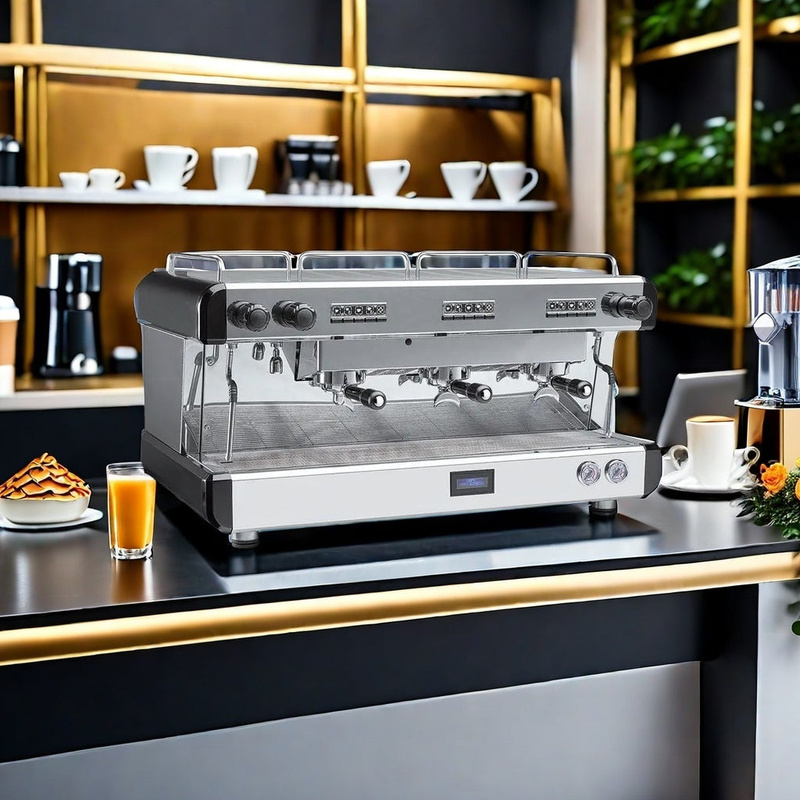
If one factor sets the life of an espresso machine, it is what comes out of the tap. Hard water lays scale inside the boilers, on the heating elements and in the narrow passages of the group. Scale insulates the elements so they run hotter and fail early, narrows the flow paths, sticks valves, and eventually cracks or perforates a boiler. Very soft or demineralised water does the opposite kind of damage: it is corrosive to copper and brass and confuses the level probe.
A machine on properly treated water for its whole life will typically reach the top of the ranges above. The same machine on untreated hard water can be in serious trouble inside three years. If you take one thing from this article, take the water: our guide to espresso machine water treatment sets out the targets.
What wears, and roughly when
Different parts of the machine age at different rates. Knowing which is which turns a "the machine is getting old" feeling into a service plan.
Consumables — months. Group head gaskets harden and leak; on a busy bar they last three to six months, on a quiet one up to a year. Shower screens and dispersion plates clog and pit. Steam wand tips and o-rings wear. These are routine replacements, not signs of age.
Wear parts — a few years. Solenoid valves, vacuum breakers, anti-suction valves, pressure switches and the pump itself work hard. A rotary pump on treated water lasts many years; on scaled water its vanes and seals suffer. Flow meters on volumetric machines drift as they wear. Group head internals — the piston or valve assemblies — need refurbishing after a few years of heavy use.
Structural — the life of the machine. Boilers, the frame, the group castings. A boiler on treated water lasts as long as the machine. A boiler on hard water accumulates scale that cannot fully be removed, thins the metal and eventually fails. When a boiler goes, the repair cost approaches the cost of a machine, which is where the replace-or-repair decision usually lands.
Electronics — variable. Control boards and PID controllers can last the life of the machine or fail early from heat, moisture or power spikes. Their availability, more than their lifespan, is the issue on older machines.
The three signals that mean replace
Repairs are normal. These three patterns are not, and any one of them is enough.
1. A single repair costing more than about a third of a new machine. Typically a boiler replacement, a group assembly, or a control board on an older model. Spending a third of the price of a new machine on a machine that is already years into its life buys a short extension, not a fresh start.
2. The third breakdown in twelve months. Faults come singly on a healthy machine. When they cluster — a pump, then a solenoid, then an element within a year — it means components that aged together are failing together, and the next one is already on its way. Each breakdown also costs a day of trading, which the repair bill never shows.
3. Parts or service no longer available. A machine from a brand that has left the market, or a model whose boards are no longer made, is a machine whose next fault may be its last, regardless of its condition today.
Beyond those three, the cup is the early warning. Shots that run sour or bitter, weak crema, unstable temperature between drinks — after a proper clean and descale — usually mean internal wear in the group, the pump or the temperature control, and are the point at which a technician's assessment should decide whether the machine is worth the next round of parts.
What repair still makes sense
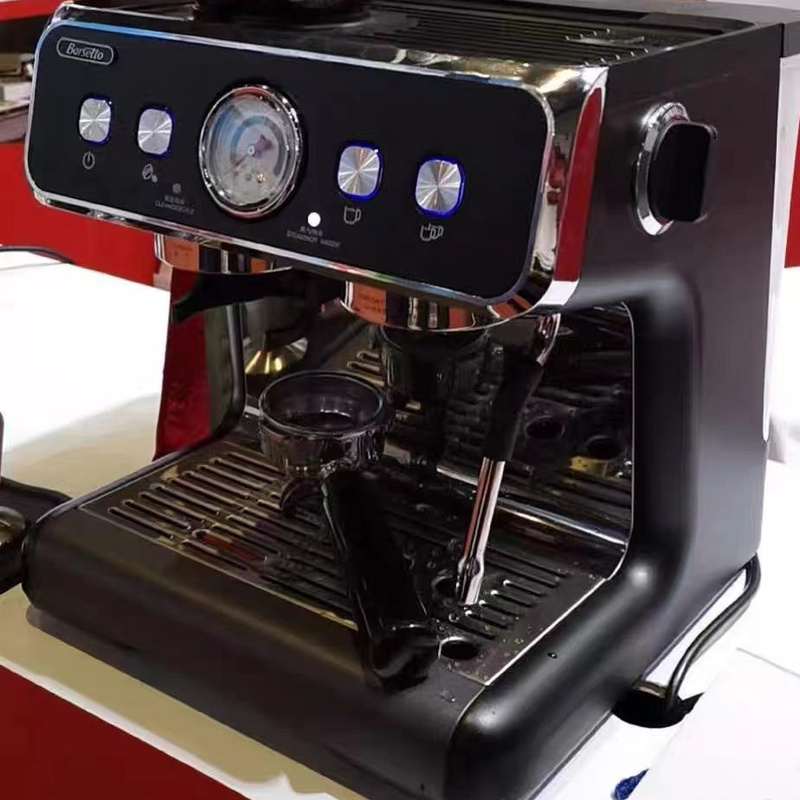
Everything in the consumable and wear-part categories, on a machine with a sound boiler and available parts. A machine of five or eight years with a scaled group and a tired pump is a refurbishment candidate, not a replacement: new gaskets, screens, valves, a pump service and a descale return most of its performance for a fraction of a new machine.
The line between the two is the boiler. Ask the technician one question: what is the boiler's condition? Sound boiler, keep repairing. Thinned or scaled beyond recovery, start planning the replacement.
Extending the life you have
The order of impact, from largest to smallest:
- Treated water, with cartridges changed on schedule.
- Daily backflushing and steam wand cleaning, so coffee oils and milk do not build up in the group and wand. The routine is in our guide to espresso machine maintenance and descaling.
- Gaskets and screens replaced before they fail, not after they leak. A hardened gasket forces the barista to over-tighten, which wears the group.
- An annual technician service: pump pressure, boiler pressure, safety valves, element check, descale if the water history warrants it.
- Stable power, with the machine on its own protected circuit. Boards fail from bad electricity far more than from age.
Cafés that follow a written maintenance schedule see far fewer emergency call-outs and get to the top of the lifespan ranges. Cafés that wait for faults get to the bottom.
Planning the replacement before it is forced
A machine does not usually die; it becomes uneconomic. The mistake is waiting for the day it stops. When a machine reaches the last quarter of its expected life for your volume — around year eight on a medium-volume bar — start the replacement plan: budget, model, installation requirements. That way the change happens on a quiet Monday morning, not on a Saturday with a queue.
Replacing also resets the water and installation baseline. A new machine on a fresh filter, a dedicated circuit and a proper drain — see commercial espresso machine installation requirements — starts its own count from a better place than the old one ever had.
FAQ
How many years does a commercial espresso machine last?
Ten to fifteen years is typical for a well-maintained machine on treated water at ordinary café volume. The more useful measure is drinks: light bars get fifteen years or more, medium bars ten to twelve, heavy high-street bars six to eight with a mid-life refurbishment. Water quality moves every figure.
What usually fails first on an espresso machine?
Group head gaskets and shower screens, which are consumables lasting months. Next come solenoid valves, vacuum breakers, pressure switches and flow meters over a few years. Boilers and group castings are last, and when a boiler fails on an older machine the repair cost usually decides that it is time to replace.
Is it worth repairing a ten-year-old espresso machine?
If the boiler is sound and parts are available, often yes: gaskets, valves, a pump service and a descale restore most performance cheaply. If the repair exceeds about a third of a new machine, it is the third breakdown in a year, or parts are unavailable, replacement is the better use of the money.
How does hard water shorten espresso machine life?
Scale builds on heating elements, inside boilers and in the group's narrow passages. Elements overheat and fail, valves stick, flow narrows, and eventually the boiler thins or cracks. A machine on untreated hard water can need major work within three years; the same machine on treated water reaches the top of its lifespan range.
How often should group head gaskets be replaced?
Every three to six months on a busy bar, up to a year on a quiet one. Replace before they harden and leak rather than after; a hard gasket makes the barista over-tighten the portafilter, which wears the group. Shower screens are usually changed at the same time.
What are the signs an espresso machine needs replacing?
Shots that stay sour, bitter or thin after a full clean and descale; temperature that will not hold between drinks; faults clustering within a year; a repair quote near a third of a new machine; or a model whose parts are no longer available. Any of the last three is decisive on its own.
Does a rotary pump last longer than a vibration pump?
Yes, considerably, under commercial use. A rotary pump is a continuously rated industrial component that typically outlasts most of the machine on treated water. A vibration pump is rated for intermittent use and wears quickly on a busy bar. The comparison is in our rotary versus vibration pump guide.
Final Thoughts
Measure a machine's life in drinks and in water, replace when a repair passes a third of a new machine, when faults cluster, or when parts run out — and plan that replacement a year ahead. As a wholesale supplier of commercial coffee machines, we supply two- and three-group machines like the SD-103 built on standard serviceable components, with spares available for the life of the machine.
Request a quote or message us on WhatsApp at +86 184 0771 4607.
Get a Quote → WhatsApp +86 184 0771 4607Last updated: September 17, 2026
Pingback: Commercial Espresso Machine Price: What Moves the Number | Yoshan