
Commercial espresso grinders come in two layouts. A doser grinder grinds into a chamber and the barista pulls a lever to drop a portion into the portafilter. An on-demand grinder grinds straight into the portafilter per shot and stores nothing. The industry has moved firmly toward on-demand, for good reasons — but the doser survives on some bars for reasons that are also good. This guide covers speed, freshness, waste and cleaning, and which bars are which.
How the two work
A doser grinder has a chamber beneath the burrs divided into segments. The motor runs — on a timer, on a level switch, or on a manual switch — and fills the chamber with ground coffee. The barista places the portafilter under the outlet and pulls a lever; each pull rotates the chamber and drops one segment's worth of coffee. The dose is set by how full the segments are and how many pulls the barista makes.
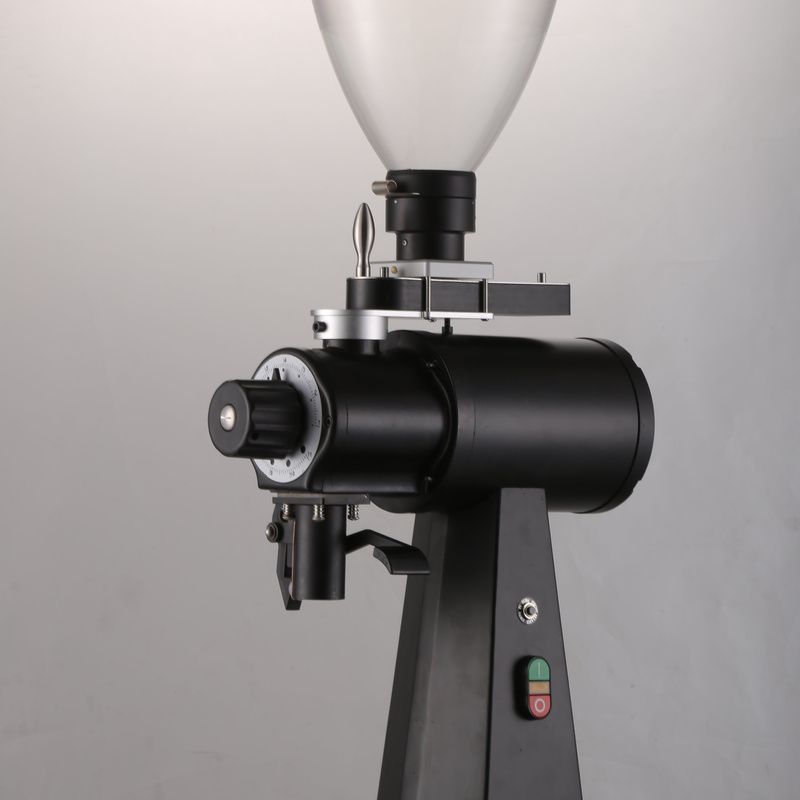
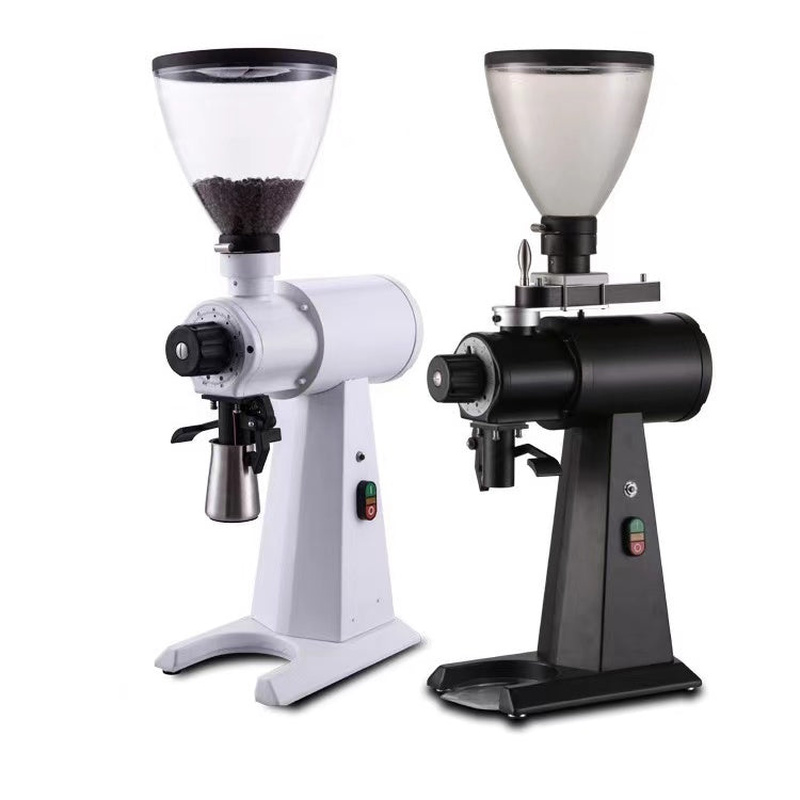
An on-demand grinder — also called doserless or grind-by-weight, depending on the mechanism — has no chamber. The barista places the portafilter in the fork, presses a button or trips a switch, and the grinder runs for a programmed time (or until a programmed weight) and stops, delivering that dose directly into the basket.
The machines we supply for café use are on-demand: the YS-C98 Pro, for example, runs a programmable dosing panel with manual and automatic inching control, so a dose can be set once and repeated, or topped up by hand.
Freshness
This is the reason the industry moved.
Ground coffee loses aroma within minutes of grinding, and a doser chamber is a store of ground coffee waiting to be used. On a busy bar the chamber turns over quickly and the coffee in it is a few minutes old. On a quiet bar, or during a lull, the last dose in the chamber may be twenty minutes old — and it is the first dose served when the next customer arrives. A bar that changes coffee, or serves decaf from the same grinder, has the previous coffee's grounds sitting in the chamber for the first shots of the next.
On-demand grinding removes the store. Each shot is ground when ordered, and the only residue is the small amount retained in the chute, covered in our article on grinder retention and static. For a bar that sells on flavour, that difference is audible in the cup and it is why on-demand is the default recommendation.
Speed
Here the doser has its argument.
A doser dispenses a dose in the time it takes to pull a lever — under a second — because the grinding already happened. On a rush, a barista can dose two portafilters in a few seconds while the machine runs. An on-demand grinder takes as long as the grind takes, typically several seconds for a double dose, and the barista or the portafilter has to be there while it does.
In practice the gap is smaller than it sounds. On-demand grinders with strong motors and large burrs grind a double in a handful of seconds, and a barista who starts the grind before steaming loses nothing. But on a single-coffee bar doing very high volume through one grinder — a hundred or more drinks an hour at peak — the doser's ability to grind ahead during the rush is a genuine advantage. The alternative, which most high-volume bars now choose, is two on-demand grinders.
Waste and dose consistency
A doser's segments dispense by volume, and volume varies with how the chamber fills, how the coffee settles and how the lever is pulled. Doses vary by a fraction of a gram or more between pulls, and the chamber is rarely empty at close — that last quantity of ground coffee is thrown away every day. Over a year it adds up.
An on-demand grinder dispensing by time is consistent as long as the burrs and the beans are consistent; dispensing by weight is consistent regardless. Nothing is ground that is not served, and the only waste is chute retention. For a bar that costs its coffee carefully, on-demand is the lower-waste layout.
Cleaning
The doser chamber is the dirtiest part of the grinder. Oily grounds coat it, fines pack into the segments, and the lever mechanism collects both. It has to be emptied and brushed daily and washed regularly, and it is the part most often skipped. An on-demand grinder has a chute and an exit to keep clean, which is quicker. Both share the burrs and hopper — the cleaning routine for either is in commercial coffee grinder cleaning schedule.
Which bars are which
| Bar | Layout | Why |
|---|---|---|
| Specialty bar, several coffees, decaf, changing menu | On-demand, one per coffee | Freshness and no cross-contamination between coffees |
| Standard café, one house blend, moderate volume | On-demand | Freshness, low waste, easy cleaning; speed is not limiting |
| Very high volume, one coffee, one grinder, peak over ~100 drinks/hour | Doser, or two on-demand | Grinding ahead through the rush; second on-demand is the modern answer |
| Bar with mixed-skill staff | On-demand with programmed dose | Removes lever technique as a variable |
| Existing doser grinder in good condition | Keep it for the house blend, add on-demand for decaf and guest coffees | Lowest-cost path to freshness on the coffees that need it |
Two on-demand grinders solve almost every case a doser once solved, which is why the doser is rare on new bars. Where a bar already owns a good doser, it still earns its place on the busiest single coffee.
What to look for on an on-demand grinder
Since that is where most bars land, the features that matter:
- Programmable doses — at least single and double, with a manual top-up.
- Motor and burr size adequate for the volume, so a double grinds in seconds and the burrs do not heat through a rush. Burr diameter and motor power are the two spec-sheet numbers; the trade-off is covered in the commercial coffee grinder buyer's guide.
- Low retention in the chute, and an anti-clumping exit.
- A portafilter fork that holds the handle steady without the barista's hand.
- Easy burr access for the weekly clean.
- Voltage matched to the site, since grinders are motor loads and the frequency matters as well — see commercial coffee grinder voltage.
FAQ
What is the difference between a doser and a doserless grinder?
A doser grinder grinds into a chamber and dispenses a portion each time the barista pulls a lever; a doserless or on-demand grinder grinds directly into the portafilter for each shot, on a programmed time or weight, and stores nothing. The difference is whether ground coffee waits between grinding and use.
Are doser grinders still used in cafés?
Yes, but mostly on bars that already own one, or on very high-volume single-coffee bars where grinding ahead through a rush is useful. New bars almost always choose on-demand for freshness, consistency and lower waste, and add a second grinder if one cannot keep up.
Is an on-demand grinder slower?
Per dose, slightly: the grind takes several seconds where a doser lever takes under one. In practice a barista starts the grind while steaming and loses nothing. Only at very high volume through a single grinder does the gap matter, and a second on-demand grinder closes it.
Does a doser grinder waste coffee?
Some, every day: the chamber is rarely empty at close and its contents are discarded, and lever-dispensed doses vary in weight. An on-demand grinder grinds only what is served, so its waste is limited to chute retention. Over a year the difference is worth costing.
Which grinder is better for decaf?
On-demand, ideally its own. Decaf through a doser grinder leaves the previous coffee in the chamber for the first shots and decaf in the chamber afterward. A dedicated on-demand grinder for decaf, even a smaller one, removes the cross-over completely.
How do I keep a doser grinder clean?
Empty and brush the chamber daily, wash it at each deep clean, and keep the lever mechanism free of packed fines. It is the dirtiest part of the grinder and the most often skipped. The burr and hopper routine is the same as for an on-demand grinder.
Do the grinders you supply have dosers?
The café grinders we supply are on-demand with programmable dosing panels and manual top-up — the YS-C98 Pro, for example — which suits the freshness and consistency most bars want. Ask us about pairing two for high-volume or multi-coffee bars.
Final Thoughts
On-demand grinding is the right default: fresh, consistent, low-waste, easy to clean. A doser earns its place only on a very busy single-coffee bar, and a second on-demand grinder usually does that job better now. As a wholesale supplier of commercial coffee grinders, we supply programmable on-demand models such as the YS-C98 Pro and can pair them for bars that need two.
Request a quote or message us on WhatsApp at +86 184 0771 4607.
Get a Quote → WhatsApp +86 184 0771 4607Last updated: September 17, 2026
Pingback: Coffee Grinder Retention & Static: The 20-Minute Sample Test | Yoshan
Pingback: Commercial Coffee Grinder Buyer's Guide: Size the Burrs | Yoshan
Pingback: Grind-by-Weight vs Grind-by-Time: What a Café Gains