
On a semi-automatic machine the barista starts the shot and stops it. On a volumetric machine the barista presses a button and the machine stops the shot when a programmed amount of water has passed. That single difference is what most of the price step between the two buys, and it is worth understanding exactly what it does — and does not — deliver before paying for it.
How the two work
A semi-automatic machine has a start/stop control for each group: a button, a lever or a paddle. The pump runs until the barista ends it. What goes into the cup depends on the dose, the grind, the tamp and the barista's judgement of when to stop — by time, by weight on a scale, or by eye.
A volumetric machine adds a flow meter in the water line to each group. The meter is a small turbine that pulses as water passes; the controller counts pulses. The barista programs a button by pulling a shot manually and pressing the button again when the shot is right, and from then on that button delivers the same volume of water every time and stops itself. Most volumetric machines offer several buttons per group — single, double, long — plus a manual button that works as a semi-automatic.
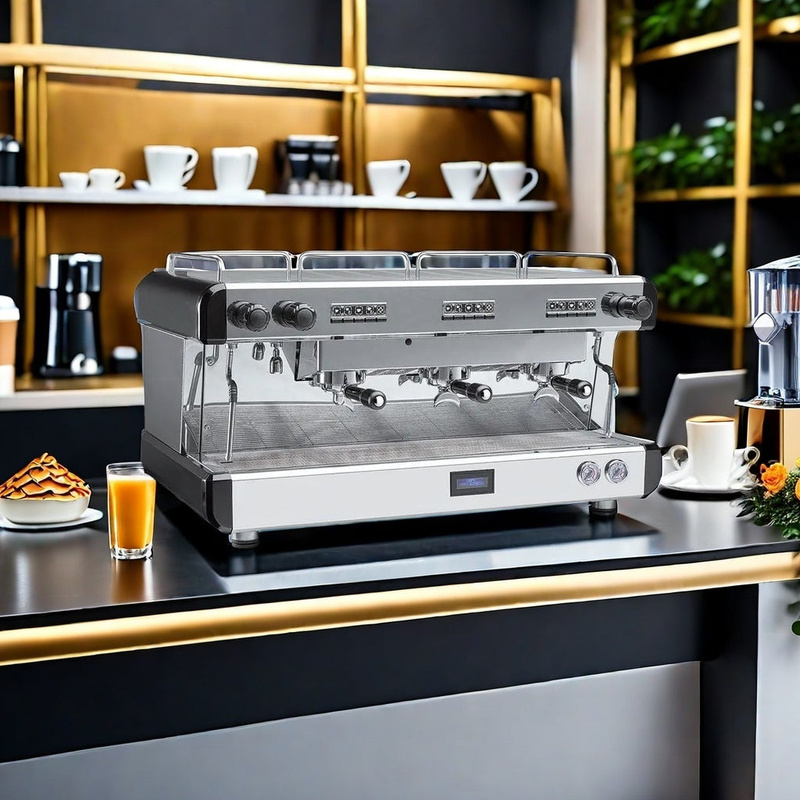
The machines we supply for café use are volumetric: the YS-3120 and YS-3201 two-groups have a sixteen-button electronic panel with programmable doses per group, and the three-group SD-103 has five buttons per group. Each also keeps a manual start/stop, so the semi-automatic mode is always there.
What volumetric dosing actually buys
Be precise about it, because it is easy to over-claim.
Consistency across people. With the grind and dose set, the machine delivers the same water volume to every shot regardless of who pressed the button. On a bar with several baristas of mixed experience, or with staff turnover, this is the main benefit and it is real. The best barista's shot recipe becomes the bar's shot recipe.
Speed on a rush. A barista who does not have to watch a shot can steam milk, start the next grind or serve. Across a peak hour that is a meaningful number of extra drinks from the same two hands, and it is where the labour case for volumetric comes from.
Fewer wasted shots. A semi-automatic shot stopped late or early is poured away or served wrong. A programmed shot is stopped where the recipe says. Over a year the coffee saved is not trivial.
Repeatability for training. A new barista learns grind and tamp against a fixed water volume, which isolates one variable and shortens training.
What it does not buy
Better espresso. The programmed volume was set by a person tasting. A volumetric machine reproduces that decision; it does not improve it. If the recipe is wrong, it is wrong consistently.
Weight-based dosing. A flow meter measures water in, not espresso out. As a coffee ages, or the grind shifts, the same water volume yields a different weight in the cup, and the shot drifts even though the machine is "consistent". Bars that dose by output weight put a scale under the cup and run the machine in manual mode, or use machines with built-in scales — a different category. Volumetric consistency is consistency of input.
Immunity to bad water. The flow meter is a small turbine in the water path, and it is the first component that scale and debris disturb. A fouled meter under-counts, shots run long, and the "consistent" machine becomes inconsistent in a way that is hard to diagnose. Water treatment is part of owning a volumetric machine; see espresso machine water treatment.
Which bars should pay for it
The deciding question is the same one that decides roaster automation: who is at the machine, and will that change?
- One or two experienced baristas, consistent staff, a menu of a few coffees. Semi-automatic is enough. Programmed buttons add little that these people do not already do, and the manual paddle gives them control they will use.
- Several baristas, mixed experience, turnover, or multiple sites. Volumetric. The recipe lives in the machine rather than in the staff.
- High volume with a queue. Volumetric, for the hands it frees during each shot.
- A bar built around output-weight dosing and single-origin rotation. Semi-automatic with scales, or a machine with integrated scales; volumetric adds less here.
- Anyone unsure. Volumetric with a manual button, which is how most commercial machines — including ours — are built. You lose nothing by having the programmed buttons available.
Volume alone is not the trigger; staffing is. A busy bar with one long-serving barista runs beautifully on a manual machine; a quiet bar with weekend casuals benefits from programmed doses.
Setting up a volumetric machine properly
Programmed dosing is only as good as its programming, and it needs maintaining.
- Dial in manually first. Set grind and dose to the recipe using the manual button and a scale, tasting as you go.
- Program each button by running the shot on the manual button and pressing the target button at the stop point. Repeat for single, double and any long-shot button. Do it for each group; groups differ slightly.
- Re-check after any change — new coffee, new burrs, a grinder clean, a service. The volume that made a good shot last week makes a different shot on a fresher coffee.
- Keep a scale on the bar for periodic checks of output weight against the programmed volume. Drift between the two is the earliest sign of a grind change or a fouling flow meter.
- Service the flow meters as part of maintenance, with the water treatment that protects them. The routine is in espresso machine maintenance and descaling.
Reading the spec sheet
Volumetric machines are described in several ways: "volumetric", "automatic", "programmable dosing", or simply a button count — "16-button panel", "5 buttons per group". A machine described as "semi-automatic" or with "start/stop" or "paddle" control has no flow meters. The presence of a manual button on a volumetric machine is worth confirming; most have one, and it is the mode you dial in with. Where a machine sits among the wider types is covered in the commercial espresso machine buyer's guide.
FAQ
What is a volumetric espresso machine?
One with a flow meter on each group that counts the water passing and stops the shot at a programmed volume. Buttons are programmed by pulling a shot manually and pressing the button at the right moment; thereafter each button delivers that volume automatically. Most also keep a manual start/stop button.
Does a volumetric machine make better espresso than a semi-automatic?
No. It reproduces a recipe a person set by tasting; it does not improve it. What it adds is the same shot from every barista and hands freed during the shot. If the programmed recipe is wrong, the machine repeats it consistently.
Is volumetric dosing the same as weighing the shot?
No. The flow meter measures water into the group, not espresso into the cup. As coffee ages or grind shifts, the same water volume produces a different output weight, so shots drift despite consistent input. Bars dosing by output weight use scales in manual mode or machines with integrated scales.
Which cafés should choose volumetric?
Bars with several baristas, mixed experience, staff turnover or multiple sites, where the recipe should live in the machine, and high-volume bars where freeing the barista's hands during each shot adds drinks per hour. A stable bar with experienced staff runs well on semi-automatic.
How often should programmed doses be re-checked?
After every change: new coffee, new burrs, a grinder clean, a service, and periodically in between with a scale under the cup. The programmed volume does not change; the coffee and the grind do, so the shot it produces drifts. Re-programming takes a minute per button.
What goes wrong with volumetric machines?
Mostly the flow meters, which are small turbines in the water path and the first thing scale and debris disturb. A fouled meter under-counts, shots run long and the consistency disappears. Water treatment and routine service protect them; a scale on the bar catches the drift early.
Can I use a volumetric machine as a semi-automatic?
Yes. Almost all volumetric commercial machines, including the ones we supply, keep a manual start/stop button on each group, and that is the mode used for dialling in and for output-weight dosing. Buying volumetric gives you both; buying semi-automatic gives you one.
Final Thoughts
Programmed dosing buys the same shot from every pair of hands and more drinks from a rush; it does not buy a better recipe. Decide by who is at the machine, keep a scale on the bar, and protect the flow meters with treated water. As a wholesale supplier of commercial coffee machines, we supply volumetric two-groups such as the YS-3201 with programmable panels and manual mode on every group.
Request a quote or message us on WhatsApp at +86 184 0771 4607.
Get a Quote → WhatsApp +86 184 0771 4607Last updated: September 17, 2026