
If you are importing a commercial espresso machine, you will be told it is CE certified. Most are, on the sticker. What protects you at customs, with your insurer and with the health inspector is the paperwork behind it — and on an espresso machine there is a question most guides skip: the boiler is a pressure vessel. Here is what CE covers, when the boiler needs its own assessment, and the four documents to demand.
What CE Covers on an Espresso Machine
CE is the manufacturer's declaration that the machine meets every EU rule that applies. On the commercial espresso machine you are looking at, that is usually:
- Electrical safety — the Low Voltage rules and the EN 60335 standards for heating appliances. This is the heart of the file you should ask to see: elements, wiring, earthing, insulation.
- Electromagnetic compatibility — the machine does not interfere with, or suffer from, other equipment.
- Machinery — where the machine has moving parts beyond the pump (built-in grinders, automatic milk systems), the machinery rules apply as well.
- Food contact — materials touching water and coffee must be suitable; this is usually evidenced by material declarations rather than a directive on the CE line.
The Boiler Question
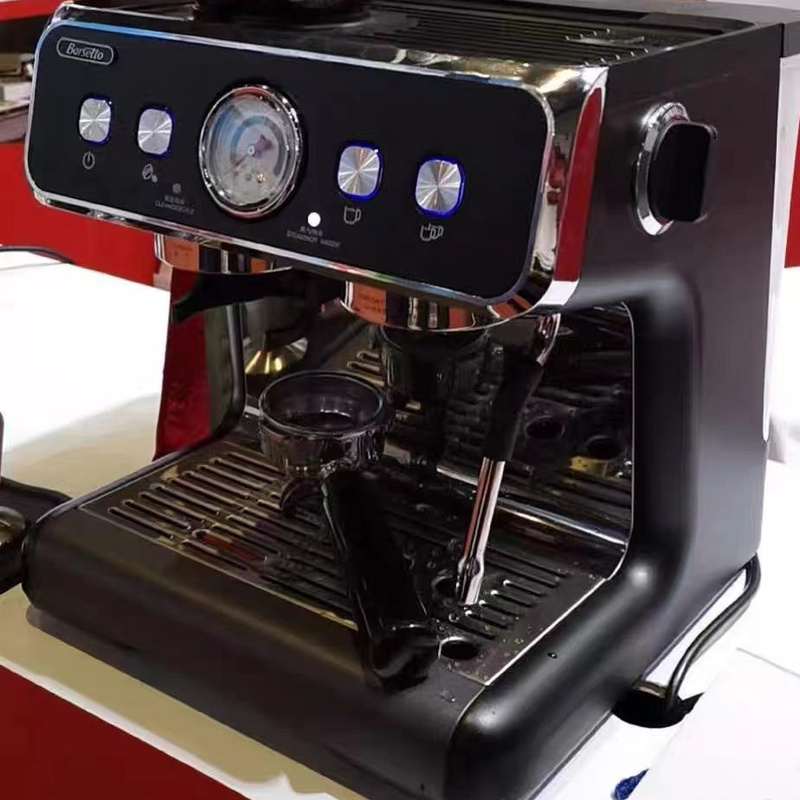
An espresso boiler holds hot water under pressure. Above a threshold of pressure × volume, EU rules treat it as pressure equipment and require its own conformity assessment — the level depends on the boiler size and working pressure. Small single-boiler machines often sit below the threshold; the larger multi-boiler and 3-group machines you would run on a busy counter often do not.
Why it matters to you: an inspector or insurer who asks "what category is the boiler?" needs an answer from the file, not a guess. Ask any supplier, for the specific model: what is the boiler volume, the maximum working pressure, and the pressure-equipment position on the declaration? A manufacturer knows; a reseller has to find out.
The Sticker Versus the Declaration
The CE sticker is applied at the factory; anyone can print one. The Declaration of Conformity is the document that makes it legal, and it must show the manufacturer, the model number matching the nameplate, the directives and regulations applied, the standards used, and a signature and date. Ask for it before you pay and check the model against your nameplate. If it is generic, lists only one directive for a multi-boiler machine, or says nothing about the boiler, ask why. The roaster CE guide shows what a complete declaration looks like — the logic is the same.
Outside the EU
- United Kingdom — UKCA for Great Britain, with CE accepted for many categories on a shifting basis. As the importer you hold the technical file; confirm the current rule with your customs agent.
- Saudi Arabia and the Gulf — SABER conformity for Saudi imports, ESMA for the UAE; CE supports but does not replace them. See the Gulf guide for how SABER works.
- Australia and New Zealand — electrical safety approval for the appliance; pressure equipment has its own scheme.
- Elsewhere — many markets accept CE as evidence; ask your agent before you order rather than at the port.
The Four Documents to Demand
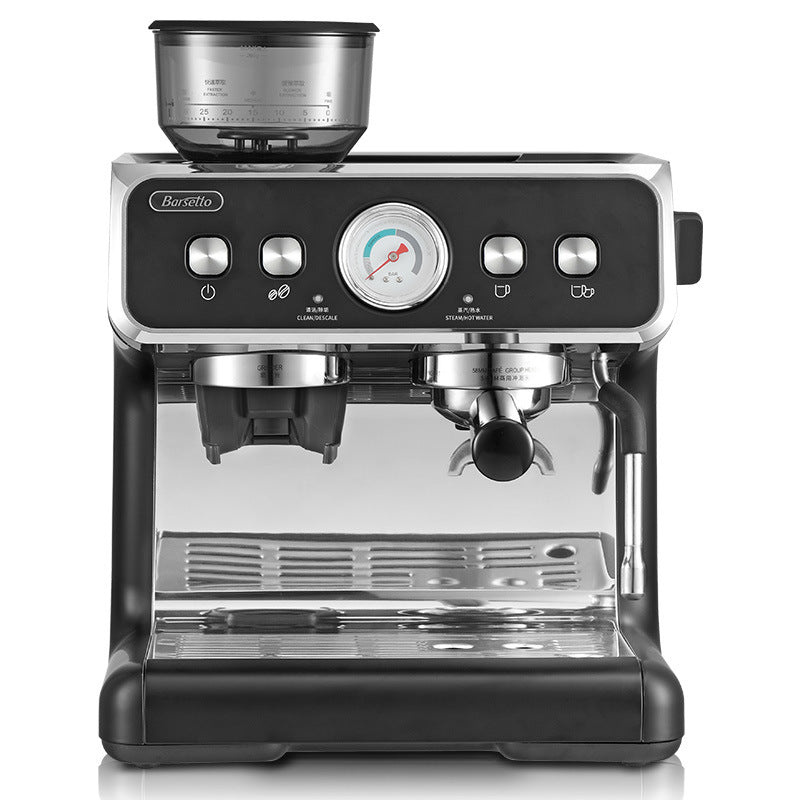
For every model in the order, before the deposit:
- Declaration of Conformity with the model number and the directives, including the boiler position.
- Test reports named on the declaration — electrical safety and EMC at minimum.
- Nameplate specification — voltage, frequency, power, model, serial — matching your order.
- Manual and wiring diagram in your language, plus a parts book.
A supplier who sends all four in a day is one you can import from. The wholesale guide puts these in the order process.
How We Deliver Them
We supply the commercial coffee machine range and its grinders rather than manufacture them, so our job on certification is to specify the model to your market, obtain the manufacturer's declaration and test reports, and put them in the document pack with the nameplate matching your voltage order. We send the pack at quotation when asked, and the pre-shipment test video shows the nameplate on your machine. For branded or dealer orders the documentation carries your details on the manual and packaging.
Who Is Legally Responsible — and What to Keep
One point that surprises first-time importers: once the machine is on your market, you are the responsible party, not the factory. In the EU and Great Britain the importer who places a product on the market carries the legal duty to ensure it conforms, to hold the technical documentation, and to produce it on request from a market surveillance authority for years after the sale. The manufacturer's declaration is what you rely on; it does not transfer the responsibility.
That changes what you keep and for how long:
- Keep the declaration of conformity, the test reports and the manual for every model — the EU expects the technical file to be available for ten years after the last unit is placed on the market.
- Keep the nameplate details and serial numbers matched to your invoices, so any unit can be traced to its batch and its documents.
- Keep the commissioning record and the water test — not a certification requirement, but the first thing an insurer asks for after a boiler incident.
For a dealer this is the difference between a range you can defend and one you cannot: if a customer's inspector asks for the boiler position on a 2-group you sold two years ago, the answer has to come out of your file in a day. Ask us for the pack per model at quotation and file it before the first unit ships; the wholesale guide puts it in the order sequence.
Frequently Asked Questions
What does the health inspector ask for on an espresso machine?
Usually not the CE file: food-contact materials on the parts that touch water and milk, a cleaning schedule that is followed, and evidence the water is treated. Keep the material declaration for the boiler and the wands with the CE declaration in one folder, and the maintenance log next to it; inspectors are reassured by a folder that opens to the right page.
Do package deals with grinders need separate certification?
Yes — a grinder is its own appliance with its own declaration covering the machinery and electrical rules, and a bundle does not merge them. Ask for the declaration per model in the package, with the model number on each, and file them together. The grinder buyer's guide lists the other documents to ask for with a grinder order.
Is a pressure-vessel test certificate different from the CE declaration?
It is part of the technical file behind it: where the boiler's pressure and volume bring it under the pressure-equipment rules, the file includes the vessel's design category and test record, and the declaration cites the pressure-equipment directive alongside the machinery and electrical ones. Ask whether the declaration lists it; a machine whose boiler was never assessed will not.
Who signs the declaration, and does it matter?
The manufacturer's responsible person, by name, with the date — and it matters because that signature is who answers to a market-surveillance authority. On a machine we supply, the declaration is issued by the factory that built it and carries the model and serial range; on a branded batch it is issued with your brand on the nameplate but the same responsible signatory behind it.
Does a used or refurbished espresso machine need a new declaration?
No — the declaration stays with the model and serial it was issued for, and a change of owner does not renew it. What a refurbisher takes on is responsibility for the work done: a replaced boiler, a rewired board or a changed voltage can put the machine outside the original assessment, and a serious refurbisher documents that on their own letterhead. Buying used, ask for the original declaration and the refurbishment record together.
Final Thoughts
Commercial espresso machine certification comes down to a complete declaration — model, directives, boiler position — backed by test reports, a matching nameplate and a manual you can read. Demand the four documents before the deposit and ask what your own market needs on top. We put the pack together for every model we supply. Get a documented quote.
Get a Quote → WhatsApp +86 184 0771 4607Last updated: September 17, 2026
Pingback: Espresso Machine Wholesale from China: Sample, Video, Spares | Yoshan
Pingback: Commercial Espresso Machine Buyer's Guide: Start at Peak Hour | Yoshan