
If you are looking for a Probat alternative, you have probably had a quote from the brand and done the arithmetic. What you want to know now is not "is there something cheaper" — there always is — but where a Probat-style drum roaster from a factory will let you down and where it will not. Here is an honest split: three things the name genuinely buys you, four things you can verify on any alternative, and how to decide.
Three Things the Brand Genuinely Buys You
Be fair to it. A Probat is the machine most of the industry learned on, and three advantages are real:
1. A service network in your country. In much of Europe and North America there is a Probat-trained technician within a day's drive. That is worth money on the day something fails.
2. Resale value. A well-kept Probat sells used for a large fraction of its price years later. That matters if you expect to trade up.
3. The name on the wall. For some roasteries — those selling to customers who know equipment — the brand is part of the story.
If those three are worth the difference to you, buy the brand. The rest of this page is for everyone else.
Four Things to Verify on Any Probat-Style Roaster
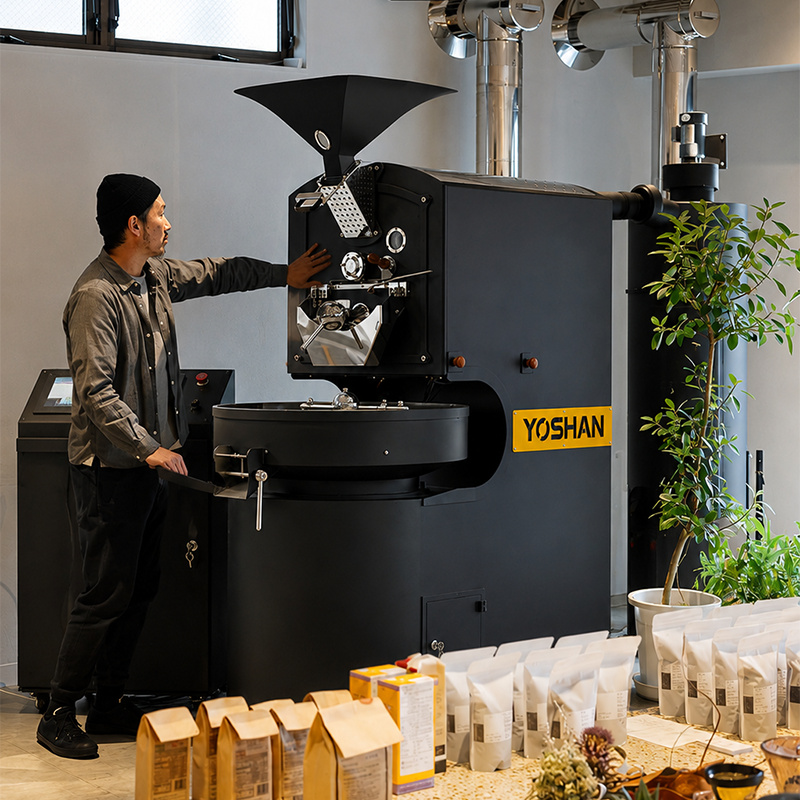
The engineering that makes a classic European drum roaster good is not secret. It is four things, and each is checkable on a spec sheet, a video or a visit:
1. The drum. Cast iron, properly insulated, with the mass to hold heat between batches. A thin steel drum in a Probat-shaped body is where cheap alternatives cut the cost. Ask for drum material and wall thickness. Our SD Pro drums are full cast iron.
2. The burner and the heat path. The classic layout runs a premium pre-mix burner with hot-air roasting on the larger sizes. Our machines are semi-hot-air, half direct fire across the range: the burner heats the drum for contact heat and body, the fan draws hot air through the bean mass, and you set the balance with the airflow. Ask any supplier which burner is fitted, whether it is jetted for your gas, and how the airflow is controlled.
3. The control. Traditional Probats are manual drums; newer ones add automation. Our SD Pro machines run a PLC touch screen with saved profiles and a manual mode, and from the SD-60 Pro upward Siemens automation is standard. Ask whether you can save and repeat a profile, and whether you can take over by hand.
4. The paperwork. CE declaration with the gas regulation covered, wiring diagram, test roast video before shipment. A factory has these; a reseller has to ask. Our CE guide shows what the document should contain.
A machine that passes all four is a serious alternative. One that fails any is a cheaper machine, not a cheaper Probat.
Capacity for Capacity: Where Our Range Sits
We map by batch size, not by the other maker's model names:
| If you were quoted a Probat-class machine at… | Our Probat-style machine | Batch | Rated output |
|---|---|---|---|
| Shop size, up to ~5 kg | SD-3 / SD-3 Pro | 2–3 kg | 8–12 kg/h — USD 4,599 / 8,889 |
| Shop size, ~5–6 kg | SD-6 Pro | 3.5–7 kg | 18–28 kg/h — USD 12,999 with loader |
| Small production, ~12 kg | SD-12 Pro | 3.5–13 kg | 18–52 kg/h — USD 15,999 with loader |
| Production, ~15–25 kg | SD-15 Pro / SD-20 Pro | 13–22 kg | 39–80 kg/h |
| Production, ~30 kg | SD-30 Pro | 25–38 kg | 90–120 kg/h — USD 51,499 full set |
| Industrial, 60 kg and up | SD-60 to SD-360 Pro | 60–300 kg | 150–240 kg/h |
Prices are ex-works factory figures — the price guide lists every model. The SD-6 Pro and SD-12 Pro ship with a green bean loader; the SD-20 Pro and above ship as roaster, loader and destoner, with the afterburner quoted when your rules need it. Full detail on the industrial range.
When to Buy the Brand, and When Not To
Buy the brand if a Probat technician is within reach, you expect to sell the machine on within a few years, or your customers buy the name.
Buy the alternative if the difference funds a loader, an afterburner, a second machine or a year of green coffee; if you are in a market where the brand's service network does not reach anyway — most of Southeast Asia, Africa, the Middle East and Latin America; or if you want PLC control at a size where the brand offers manual.
The mistake in the middle is paying brand money for a machine you cannot get serviced, or paying alternative money without checking the four points.
The Used-Probat Sum, and the Software Line Under It
Two numbers from the open market change how the decision looks.
A used Probat costs what a new alternative costs. Dealers have listed a used 12 kg Probat at around USD 42,000 — within a few thousand of the reported new list price — because the brand holds its value so well. That is good news if you already own one. If you are buying, it means the "buy a used Probat" route does not save you money; it costs roughly what a new machine from an American competitor costs, and close to three times what our SD-12 Pro costs new at USD 15,999 with the loader. A used machine also carries no factory warranty and whatever wear the previous roastery left in the bearings and burner. If the resale value is the reason you wanted the brand, notice that it cuts both ways: you pay for it on the way in.
Profiling software is often a separate line. On a manual drum the roast log comes from third-party software, and the subscription versions run into the thousands over five years; several competitors now lead their comparison pages with "software included" for exactly that reason. Ask the same question of any machine, brand or alternative: does the controller record the curve, save the profile and repeat it, or do you buy that separately? On our SD Pro line the PLC does all three; on the manual DY machines the free Artisan software logs by USB or Bluetooth, and on the SD machines an Artisan interface is a priced option you specify at order — the Artisan guide shows the connection.
Put those two lines into your comparison and the gap between "the brand" and "a machine that passes the four checks" is usually wider than the quote alone suggested.
Due Diligence Before You Commit
- Ask for the drum material, burner type and control system in writing.
- Ask for a video of your model roasting on the test bench.
- Ask for the CE declaration and the wiring diagram.
- Get the delivery term, packing list and spares kit on the quote.
- Send us a hard technical question and time the answer — our after-sales guide shows what support looks like in practice, and the factory tour shows where the machines are built.
Frequently Asked Questions
How do I compare a quote from the brand with yours line by line?
Put both on one sheet with the same delivery term and the same inclusions: machine, loader, destoner, afterburner, spares kit, freight to your port, duty, installation, and the software line if the brand's is separate. Most of the gap on the machine line survives that exercise; some of it moves to freight and installation, which are the same size for both. The price guide shows what our figure includes.
Will my technician recognise the parts on an SD Pro?
The parts that wear — bearings, belts, probes, gaskets, burner jets — are trade-standard items, and the PLC on the larger machines is Siemens, which an automation technician anywhere has seen. What is ours is the drum and the body, which do not need a technician. We supply the wiring diagram and parts book in your language so the person who services your espresso machine can service this one.
Can I trade the machine up later, as I would with the brand?
Not through a dealer network, because there is not one — that is part of the price difference — but our customers do sell on their machines, and a well-kept SD Pro with its log and documents finds a buyer among the next roasteries starting where you started. Plan the step up by sizing one size above today's kilos rather than by resale value, and the trade-up question rarely arises.
How do I know the drum is really cast iron before it ships?
Ask for the drum on the test bench in the pre-shipment video with the door open and the flange visible, and for the drum material and wall thickness written on the quotation. Cast iron is heavy and matte and rings differently from steel when tapped — an inspector can tell in a minute. We put the material on the quote and the nameplate rating on the video for exactly this question.
What if I want the brand's finish but your price?
Colour and logo are yours on any SD or YS model, and the classic Probat-style layout is what the SD Pro line is built on, so the machine on your floor looks the part. What you cannot buy at our price is the name on the front and the dealer's technician down the road; the OEM and ODM guide shows what the finish can be.
Final Thoughts
A Probat alternative is worth buying when it passes on the four things that make the classic drum good — cast iron, burner, control, paperwork — and when the brand's three advantages are not worth the difference where you are. We build the SD Pro line to that layout at our own factory since 1990. Send us the quote you were given and we will match capacity for capacity. Get a factory-direct quote.
Get a Quote → WhatsApp +86 184 0771 4607Last updated: September 23, 2026
Pingback: 20 kg Coffee Roaster: What Changes Stepping Up From 12 kg | Yoshan
Pingback: Coffee Roaster Factory Tour: Our Floor, and What to Check on Any
Pingback: Giesen Alternative: What You Are Paying For, and How to Check | Yoshan
Pingback: Commercial Coffee Roaster Price 2026: Every Yoshan Model, Ex-Works