
If you run a cafe group or sell equipment, "a DF64-style grinder" is probably the request you hear most — usually with two follow-ups: does it come in 110 V, and how long do the burrs last? We supply 64 mm flat burr grinders in single-dose bodies to buyers in more than forty countries, so here is why the format won, what to check on the spec sheet, and how to buy a batch without regretting it.
Why 64 mm Flat Burrs Won
Three things line up at this size.
The cup. A grinder never produces one particle size; it produces a spread. Flat burrs produce a tight, uniform spread — most particles close to the set size, few fines — which extracts evenly and reads clean and bright. That is the character specialty bars chasing clarity in light roasts want, and the reason flat burrs are the espresso standard there. The espresso vs filter burr guide covers the conical alternative and its fuller, more forgiving cup.
The size. 64 mm is large enough to grind your espresso dose in seconds without cooking it, and small enough for a bench-top single-dose body at a fraction of an 83 mm commercial grinder's price.
The ecosystem. 64 mm is an industry-standard diameter. Upgraded burr geometries are widely available, replacement sets stay affordable, and your technician has seen the format before.
What Single-Dosing Changes for a Cafe
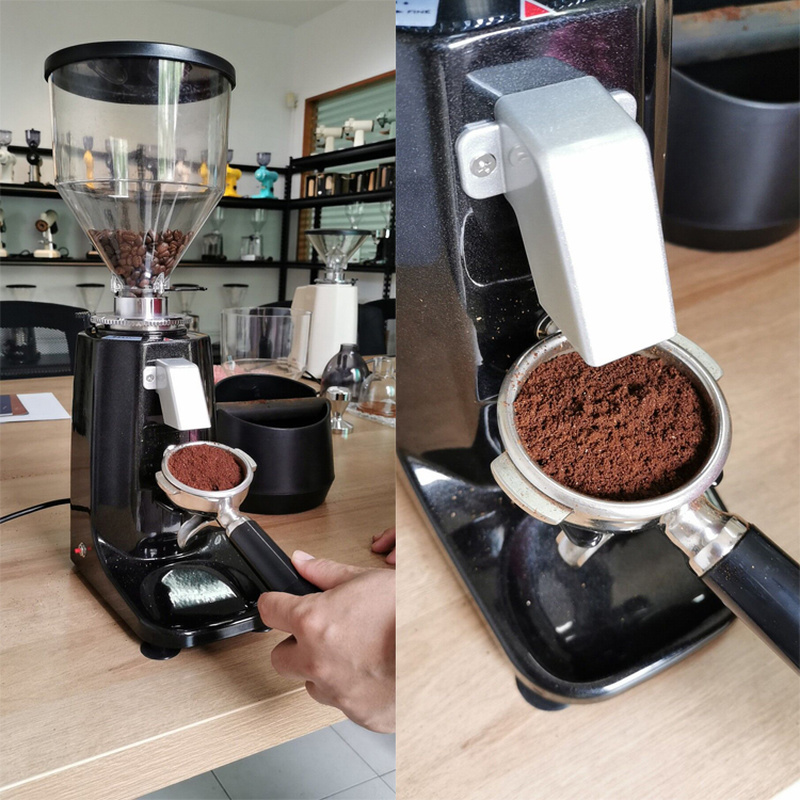
If you run a hopper grinder, it holds a kilo of your beans and traps grams of old grounds in the chute. A single-dose grinder does the opposite: weigh one dose, grind it all through, clear the chamber with the bellows. For your cafe that means no stale beans sitting all day, no coffee wasted on dial-in, and switching from a single-origin espresso to decaf to filter with no purge between. If your bar runs three coffees, it is the difference between offering three and profitably serving three.
The Spec Checklist Before You Order
| Spec | What to look for |
|---|---|
| Burr material | Hardened steel as standard; titanium-coated sets last roughly twice as long |
| Retention | Under 0.5 g with bellows — ask for the measured figure, and run the 20-minute test on the sample |
| Adjustment | Stepless or micro-step; espresso needs finer moves than click-only filter grinders allow |
| Motor and RPM | Lower RPM runs cooler; check duty cycle if it will serve a bar at the rush |
| Voltage | 110 V/60 Hz and 220–240 V/50–60 Hz are different motor builds — state your country in the first enquiry |
| Alignment | Factory-aligned burrs, checked with a marker test; misalignment throws away the flat-burr advantage |
110 V or 220 V
Half our grinder enquiries lead with "110 V commercial electric coffee grinder" — buyers in Canada, Colombia, Ecuador and the Philippines need the right motor from the factory. Voltage and frequency are build decisions: free to specify before production, expensive after. Tell us your country and the batch is built for your grid; a 60 Hz motor on a 50 Hz supply, or the reverse, changes speed, throughput and bearing life.
Burr Life: The Consumable Nobody Budgets
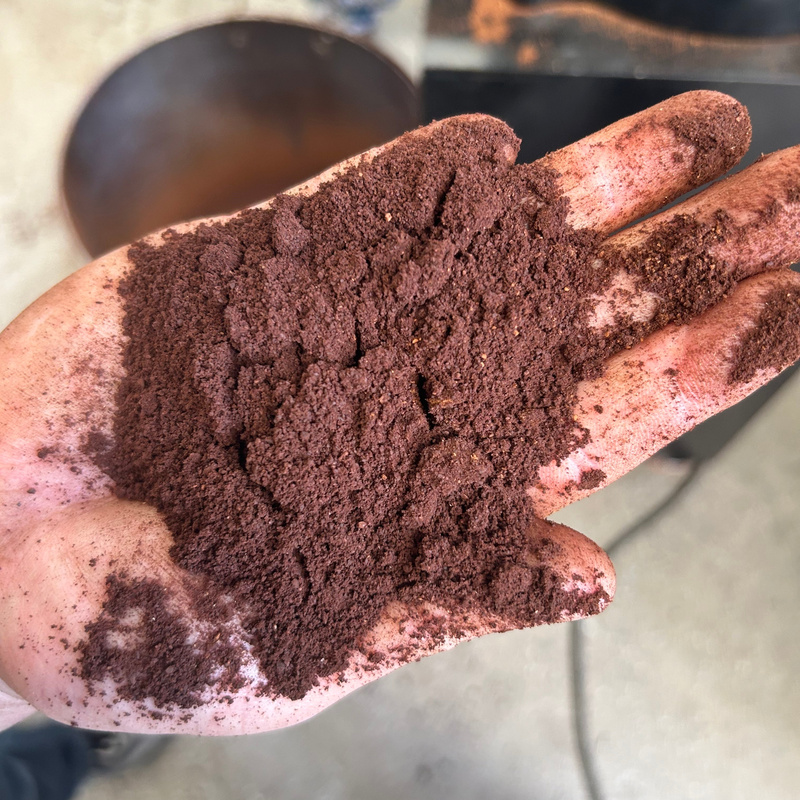
Steel 64 mm espresso burrs stay sharp for roughly 300–500 kg of coffee — your busy single-dose bar gets there inside a year. Dull burrs show as shots running faster at the same setting, more fines and bitterness, and a warmer chamber. Confirm at order that replacement sets are stocked for you; we keep sets for every model we supply and courier them worldwide. The burr replacement guide has the intervals by burr size.
What We Supply, and What It Costs
| Model | Class | Price, ex-works |
|---|---|---|
| YS-020 | Electric flat burr, bench-top; the entry into this segment | USD 119 |
| YS-C98pro | Larger-format single-doser for the specialty bar | USD 1,099 |
Both ship in 110 V and 220–240 V builds; the full range is on the commercial coffee grinder page and the buyer's guide sizes burrs to drinks per day. We supply the grinders and espresso machines alongside the roasters built in our own factory, which is why a cafe group can equip a whole bar from one quotation.
Buying a Batch: Three Steps
- Sample first. One or two units by courier in 5–10 days; test with your beans and your voltage; then carton or pallet quantities. The sample is credited against the batch.
- Ask for the numbers before the container closes. Retention measurement and a burr-alignment video for your batch — we provide both as standard — plus the four purchase clauses in the retention guide.
- Consolidate. Grinders ride cheaply with espresso machines or a roaster; the wholesale guide covers the mixed container and the document pack. A one-year warranty, video-call support and stocked spares come with every unit.
Frequently Asked Questions
Is 64 mm enough for a busy bar, or do I need 83 mm?
For a specialty bar pulling up to about 150 drinks in the peak hour, a 64 mm flat set at a sensible RPM keeps up and stays cool. Above that, or on a bar that grinds continuously for hours, the larger burr's extra surface grinds faster per dose with less heat, which is what the bigger commercial grinders are for. Size to your peak hour, not your daily total.
Are titanium-coated burrs worth the premium?
If the grinder will do a full commercial day, usually yes: the coating roughly doubles the interval before the edges dull, which for a bar at 300–500 kg a year on steel means one burr change instead of two, and fewer weeks of drifting shots you did not notice. For a low-volume site or a training room, steel is fine and cheaper to keep as a spare.
How do I check retention on a sample?
Weigh 100 g of beans in, grind everything through with the bellows, weigh what comes out; the difference is retention, and under 0.5 g is the target for this class. Then pull ten 18 g doses and note the spread — within ±0.3 g is what your customers will accept. Record both on every sample, because a factory can change a chute moulding between runs.
Do you have 110 V versions?
Yes — both motor builds ship, and we need two things from you: the country, and for anything bigger than a bench-top unit, the frequency, because the same motor behaves differently at 50 and 60 Hz. Put both in your first message; a grinder specified correctly costs nothing extra, one converted after arrival costs a motor.
What should the warranty and spares look like on a wholesale order?
One year on the unit, with wear items — burrs, bellows, gaskets — excluded as consumables and priced as a kit per machine on the quote. Ask for a parts-availability commitment of several years on motors and boards, and agree the courier convention: warranty parts free, express courier at your cost when you want it fast. The after-sales guide shows how the arrangement works in practice.
Final Thoughts
The 64 mm flat burr single-dose grinder became the standard because it puts the clean, uniform grind of a flat burr into a bench-top body at a price a specialty cafe can justify. Buy it by the spec sheet, test the sample for retention, and build it for your grid. Send us your country and your quantity for a quote. Talk to us.
Get a Quote → WhatsApp +86 184 0771 4607Last updated: September 17, 2026
Pingback: Coffee Grinder Retention & Static: The 20-Minute Sample Test | Yoshan
Pingback: Commercial Coffee Grinder Buyer's Guide: Size the Burrs | Yoshan