
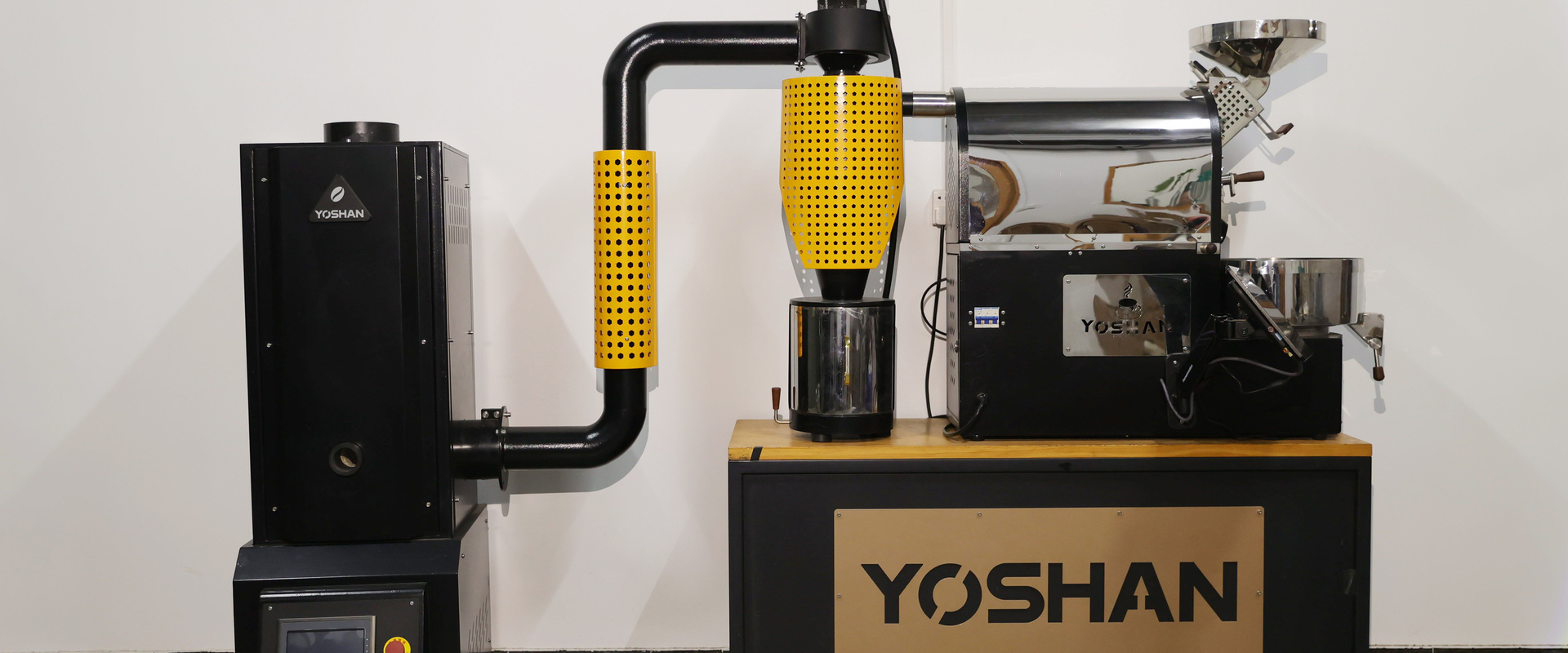
If you are choosing a coffee roaster in Malaysia, Indonesia or Thailand, your practical questions are the same from Kuala Lumpur to Chiang Rai: does it run on 230 V, does it burn LPG, how long to Port Klang or Tanjung Priok, and can it handle the coffee you actually roast — robusta, wet-hulled Sumatra, or a kopi-o dark roast. Here are the answers, country by country, with prices and the shortest sea freight we ship anywhere.
1. Power: 230 V / 50 Hz, With Two Things to Confirm
All three countries run 220–230 V at 50 Hz — simpler than the Philippines' 60 Hz case, which has its own guide. Two things about your site still need specifying:
- Single or three-phase. Gas machines up to 15 kg run on ordinary single phase; 20 kg and up, or electric heating, need 380 V three-phase — common on Indonesian and Thai industrial estates, worth confirming for a shophouse.
- Grid stability. For outer-island Indonesia and rural sites, choose gas heating, whose electrical load is only the motors and controls, and add a modest stabiliser for the control board. The voltage guide has the logic.
2. Fuel: LPG Everywhere
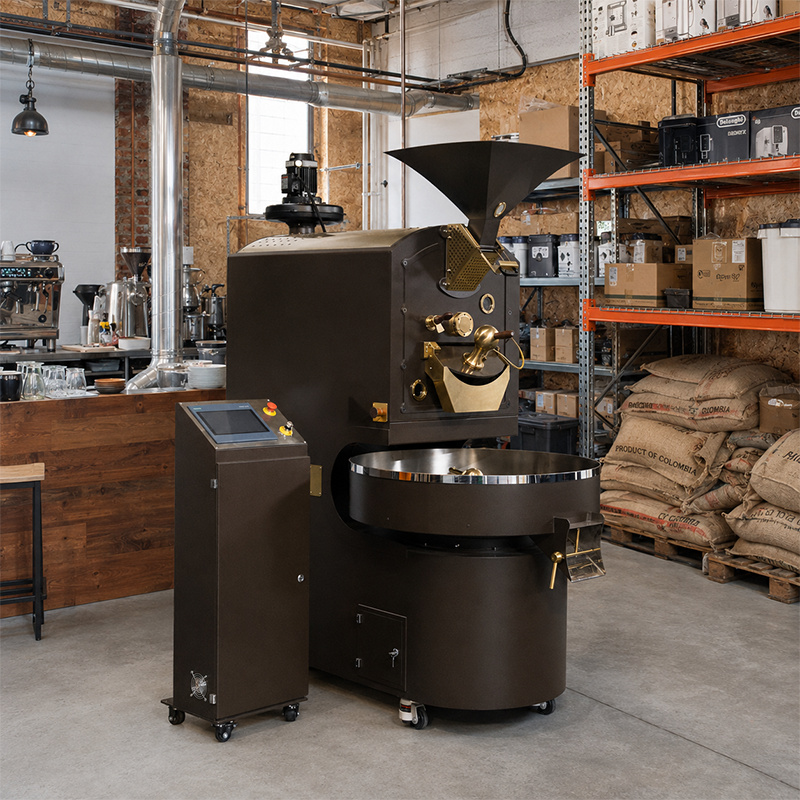
Cheap, ubiquitous cylinder LPG is your regional standard, and our burners ship jetted for it with the regulator pressure on the quotation. City natural gas — parts of Bangkok and KL — is a factory option; say which you have. Electric 1–3 kg DY machines suit mall cafes where cylinders are prohibited.
3. What Each Country Roasts, and What It Asks of the Machine
Malaysia — kopi-o and the specialty cafe side by side. Traditional dark roasts of robusta, sometimes finished with sugar or margarine in separate equipment, run long and hot; a cast-iron drum that holds heat steadily through a slow, dark development is what those profiles need, and your exhaust carries more oil, so your cyclone and duct cleaning interval shortens. KL and Penang specialty cafes want the opposite: repeatable light profiles on 1–6 kg machines, often electric in a mall.
Indonesia — the origin roaster. Sumatran wet-hulled (giling basah) arabica and island robusta carry higher and less even moisture than washed coffee. You want strong burner turndown and airflow control to dry your lots gently without scorching, which is standard on our YS and SD drums, and a machine that a local technician can service in the field — one reason the SD series with its simple mechanics sells well at source.
Thailand — oliang and the northern specialty crop. Bangkok's oliang tradition is another dark, long profile; Chiang Rai and Chiang Mai arabica is where the specialty growth is, and profile repeatability sells there — the Siemens PLC on the YS series logs every curve, and the manual DY and SD machines log to Artisan by USB (Artisan guide).
4. Which Size, and What It Costs
| Your business | Machine | Note | Factory price, ex-works |
|---|---|---|---|
| Specialty cafe in KL, Bangkok, Jakarta | DY-1 / DY-2 electric, or SD-3 | Mall-friendly; no gas permit on electric | USD 2,599 / 3,399 / 4,599 |
| Roastery supplying cafes | YS-6 / YS-12 on LPG | The region's most-ordered class | USD 7,499 / 9,980 |
| Origin roaster at source (Sumatra, Chiang Rai) | SD-6 Pro / SD-12 Pro / SD-15 Pro | Robust build, easy field service, loader included | USD 12,999 / 15,999 / 16,999 |
| Traditional kopi factory or private label | SD-30 Pro to SD-120 Pro line | With destoner and smoke treatment | SD-30 Pro full set USD 51,499; larger on the quote |
The price guide lists every model; the small business sizing guide turns weekly kilos into a drum size.
5. Shipping: The Shortest Routes We Have
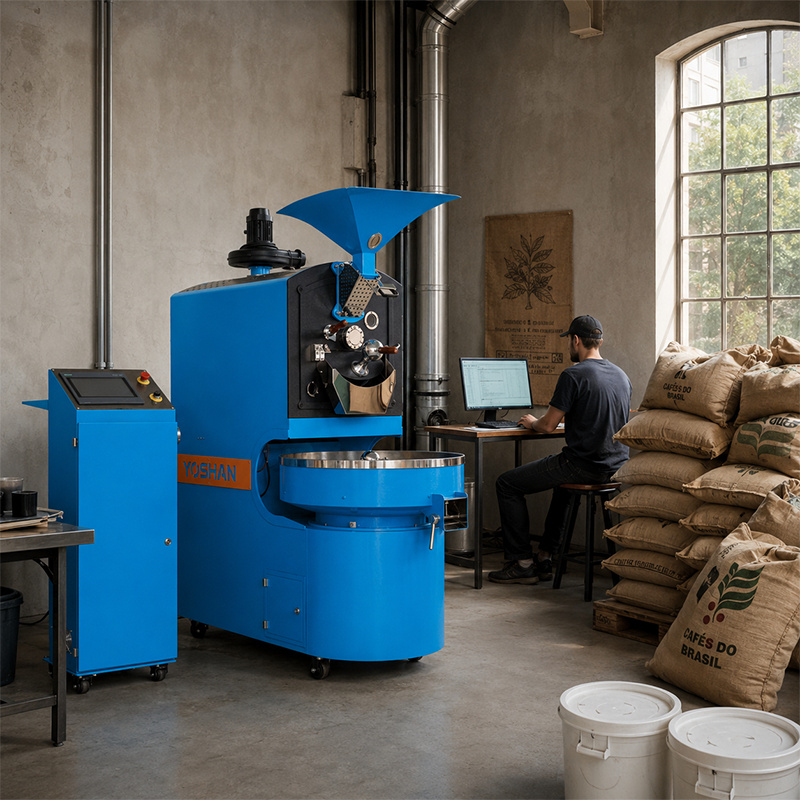
- Sea from Shenzhen: Port Klang or Penang 5–9 days on the water; Tanjung Priok (Jakarta) 7–12; Laem Chabang or Bangkok 5–8.
- Documents: commercial invoice, packing list, certificate of origin — Form E where you claim the ASEAN–China tariff preference, which many buyers do; ask your broker for the current rate and tell us before shipment so the right certificate is issued. CE file under heading 8419.
- Packing: plywood case with moisture barrier, built for tropical transit and monsoon ports.
- Small machines by air or courier, a matter of days rather than weeks.
With in-stock models shipping in 7–15 working days, door to door is commonly under six weeks — the shipping guide has the landed-cost lines.
6. Support Across the Region
One-year warranty on the complete machine; video-call support in English for the life of the machine, voice notes welcome; consumable spares couriered to Malaysia, Indonesia or Thailand in 3–5 days. A running video of your machine reaches you before the balance payment as standard, so you see it roast before you pay. Real cases are in the after-sales guide.
Frequently Asked Questions
Do your roasters work on Malaysian, Indonesian or Thai power?
Yes — all three markets are 220–230 V at 50 Hz, which is our standard build. What you need to tell us is whether the site has three-phase, because 20 kg drums and electric heating require it and a shophouse often does not have it, and whether the grid is stable, because an outer-island site should take a gas build with a small stabiliser rather than an electric one.
Can the machine handle robusta and wet-hulled beans?
Yes, and it is the reason for two features to insist on: a burner that turns down far enough to dry high-moisture giling basah gently, and airflow you can adjust through the roast so a long, dark robusta profile stays clean instead of smoky. Both are standard on our YS and SD drums; the cast-iron SD drum in particular holds the heat those traditional profiles need.
How long is delivery to Jakarta or Kuala Lumpur?
Production of 7–15 working days for in-stock models (60–90 working days for YS-20 and larger), then five to twelve days on the water depending on the port, then your broker's clearance: commonly under six weeks door to door, the shortest of any market we ship to. Custom colour, a mixed container or a Form E claim add a little; a launch date is best sent with the enquiry so we schedule backwards from it.
Is there an ASEAN tariff preference for Chinese machines?
Often, under the ASEAN–China free trade agreement with a Form E certificate of origin — many of our buyers clear that way. The current rate for your commodity code is your broker's to confirm, and the certificate has to be issued before shipment, so tell us at order that you intend to claim it rather than asking after the vessel has sailed.
Which machine for an outer-island site with unreliable power?
A gas-heated drum, because its electrical load is only the motors and the controls — a DY-2 draws about 220 W on gas against 4.4 kW on electric heating — with a small stabiliser for the control board and, if you have a generator, one that carries the exhaust fan so a power cut never leaves a hot drum without airflow. Send us the site and we specify the build.
Final Thoughts
A coffee roaster for Southeast Asia is built for 230 V and LPG as standard; what decides the model is what you roast — kopi-o, wet-hulled Sumatra or northern Thai arabica — and whether your site has three-phase and a steady grid. Freight is the shortest we ship. Send us your city, your coffee and your weekly kilos. Talk to our engineers.
Get a Quote → WhatsApp +86 184 0771 4607Last updated: September 23, 2026