
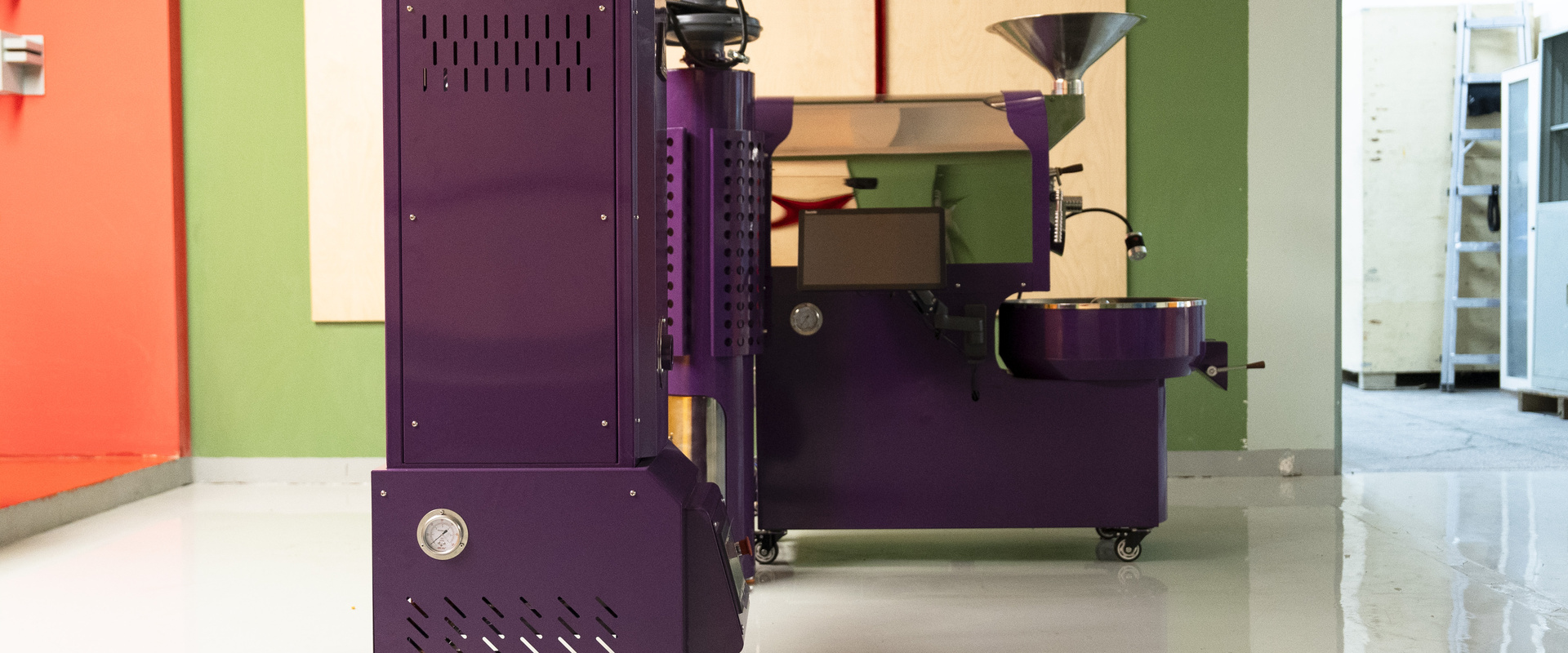
Every list of coffee roaster installation requirements has the same items — power, gas, exhaust, floor space — but almost none says when each one has to be settled, and that is where new roasteries lose months. A flue that needs a wall opening is easy to arrange before you sign a lease and expensive after. This checklist is organised by deadline instead of by topic: five points in time, what must be true at each, and who signs it off.
Why the order matters more than the list
Three items on any installation list depend on decisions you make earlier. Your exhaust route decides whether you need an afterburner, which decides your electrical load and gas flow, which decide your circuit and meter, which decide whether your landlord will allow the change at all. Work backwards from your delivery date and the sequence falls out: site first, then permits, then the order, then the building work, then commissioning. Shipping to Southeast Asia, the Gulf and Latin America, we see three to six months from lease to first roast when you follow that order — and a year when you do not.
Deadline 1 — before you sign the lease
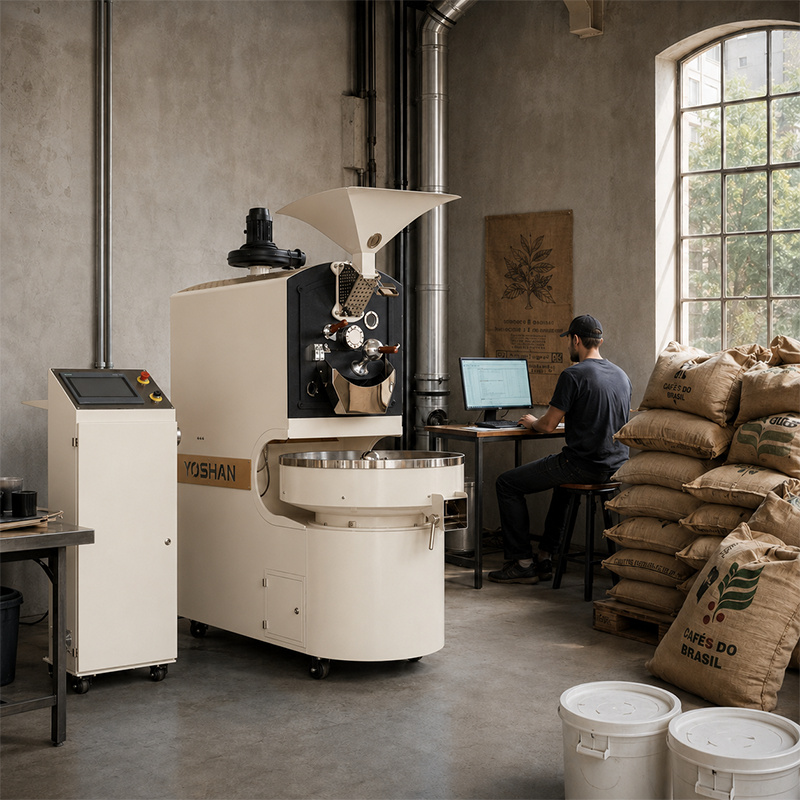
What must be true before you sign: the building can physically take your machine and its exhaust.
- Exhaust route. Where will your flue exit — roof or wall — and will the landlord permit the opening? Your exhaust runs hot and has to reach outside in double-wall insulated stainless pipe with a low-resistance rain cap; flexible duct is not acceptable anywhere on that run. Long horizontal runs and elbows cut your airflow, so a short, mostly vertical route is worth paying more rent for. Details are in coffee roaster ventilation requirements.
- Zoning. Get it in writing that roasting — with its smoke and smell — is permitted at your address. Light-industrial zones rarely object; retail zones sometimes do, and you do not want to discover that after the fit-out.
- Access. Measure every door and corridor between the street and your roasting spot against the crate, yourself, with a tape. Our YS-6 stands 2151 × 720 × 2000 mm and weighs 600 kg; the YS-12 and YS-15 are 2290 × 1881 × 2279 mm at 758 kg. Some panels come off for the move, but a doorway narrower than the machine is your lease problem, not your forwarder's delivery problem.
- Floor. Level, and rated for your machine plus your green stock. One pallet of green coffee puts around 700 kg on a single square metre, so ask about the floor loading, not just the area.
- Space. Plan on roughly 100 m² if you will handle 500 kg a week, and about 50 m² more for each further 500 kg. Most of that is your green storage and packing, not the machine — which is why a unit that looks generous around the roaster can still be too small by year two.
What you should hold at the end of this step: a signed lease, or written landlord consent that names the flue opening and the gas supply.
Deadline 2 — before you place the order
What must be true before you order: you know which version of the machine your site can actually run.
- Energy. Gas or electric, and which gas — decide this from what your site can supply, not from preference. Natural gas needs at least 3 kPa at the machine on our range; LPG is bottled and needs a regulator and a safe location for the bottles. Electric heating on our DY-1 draws 4.19 kW and on the DY-2 4.42 kW, single phase; the SD-3 on electric needs 220 V or 380 V three-phase; the SD Pro machines on electric are full hot air and need 380 V three-phase. Tell us the site voltage, phase and frequency with the order — we build to it.
- Exhaust treatment. Ask the local air authority, in writing, whether your batch size needs an afterburner or an electrostatic filter. Thresholds vary; some regions require thermal treatment somewhere around 11–16 kg per batch, others above 5 kg, others not at all. This answer changes the order: an afterburner adds gas consumption and a second flue connection, an electrostatic filter adds an electrical load and cleaning time. Which one fits which roastery is in when a roastery needs a destoner, loader or afterburner.
- Layout drawing. Send us a sketch with the flue exit, gas point and power point marked. We return the machine's connection drawing with dimensions, so your contractor can quote before you pay a deposit.
- Documents you will need later. CE certification under the Machinery and Low Voltage Directives comes with every machine. For the gas side, tell us your country at quotation and we confirm which burner documentation your inspector will accept.
What you should hold at the end of this step: a purchase order stating your energy type, voltage, exhaust treatment and delivery address, plus a paid 50% deposit. Payment terms and what happens next are in ordering a coffee roaster from the factory.
Deadline 3 — before shipment (during production)
What must be true while your machine is being built: your building work is booked and your permits are filed.
- Flue installation booked with a contractor who has fitted roaster exhaust before — ask them directly, because a kitchen-hood fitter will quote you cheaper and get the rating wrong. Your pipe and gaskets must be rated well above exhaust temperature, over 1,000 °C on an afterburner line, and the fan must be sized for your actual duct length and bends, not for a straight run.
- Gas line run to the machine position by a licensed fitter, with an isolation valve your operator can reach without leaning over a hot machine, and a pressure test on completion. Keep that test certificate; your insurer will ask for it.
- Electrical circuit run to the position: a dedicated circuit for the roaster, a second for the afterburner or filter if you have one, and a residual-current device for electric-heated machines, which ship without a plug for that reason. Our voltage guide is in coffee roaster voltage requirements.
- Permits filed. Building permit for your wall or roof opening, air permit if your region requires one, fire department notification for a gas appliance. File them while the machine is in production and the lead time works for you instead of against you — YS-20 and larger take 60–90 working days, and 1–15 kg machines vary, so ask us for the current figure when you order.
What you should hold at the end of this step: accepted contractor quotes, lodged permit applications, and your balance payment scheduled for before shipment.
Deadline 4 — before delivery
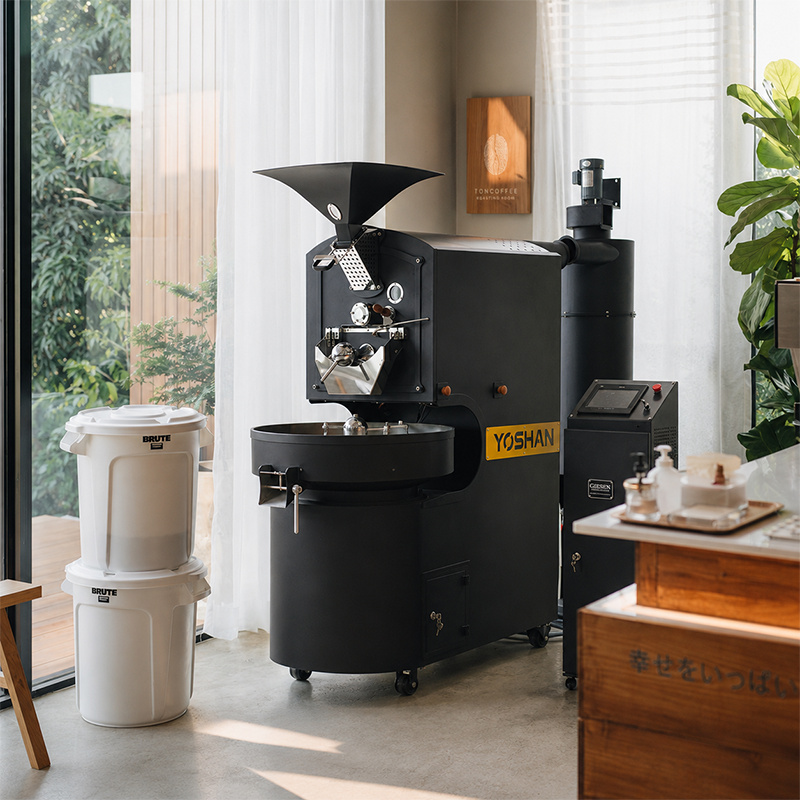
What must be true on delivery day: your machine can come off the truck and reach its position without improvisation.
- Unloading. Arrange a forklift or pallet jack rated for your crate weight, and walk the route from truck to door yourself first. Curbside delivery means the driver will not unload for you — that is your job, booked in advance.
- Uncrating and positioning. Two people for a DY machine; a pallet jack and a third person for SD and YS. Level it on its feet before you connect anything. The step-by-step is in receiving, unloading and positioning a coffee roaster.
- Connections ready but not made. Flue terminated at the machine position, gas capped at the isolation valve, power terminated in an isolator. Connect nothing until the machine is level and you have checked the crate contents against the packing list — that check is far easier while the forwarder is still standing there.
- Utilities live. Gas meter installed and your account open; electricity at the correct voltage, measured at the isolator rather than assumed from the drawing.
What you should have at the end of this step: your machine standing level in position, with every service terminated within reach of it.
Deadline 5 — before the first roast
What must be true before your first batch: every connection is tested and the drum is seasoned.
- Gas leak test on every joint after connection, done by your fitter with soap solution or a gauge — the same test we run before crating. Get the certificate in your folder the same day.
- Exhaust check with the machine cold: confirm the fan pulls, your damper moves through its full range, and the flue draws at the cap.
- Electrical check: rotation direction of drum and fans, your emergency stop, and probe readings at room temperature — write those readings down, because they are your baseline for every drift check later.
- Preheat and season. Bring the drum up slowly and run your first batches at reduced load — do not put saleable coffee through it on day one. The procedure is in commissioning and drum seasoning.
- Inspection sign-off if your permits require a visit before you operate. Have the CE file and burner documentation on the bench, not in an email you have to search for while the inspector waits.
What you should hold at the end: your first production batch, and one folder with the lease consent, permits, contractor test certificates and our commissioning notes. That folder is what your insurer and your next inspector will ask to see.
The checklist in one table
| Deadline | Must be true | Who | Document produced |
|---|---|---|---|
| Before lease | Flue route, zoning, access, floor, space | You + landlord | Lease consent naming flue and gas |
| Before order | Energy type, exhaust treatment, layout, documents | You + air authority + us | PO with voltage, fuel, treatment; deposit |
| Before shipment | Flue, gas, power booked; permits filed | Contractors + you | Quotes, permit applications |
| Before delivery | Unloading, positioning, services terminated | You + contractors | Machine level in position |
| Before first roast | Leak test, exhaust, electrical, seasoning, sign-off | Fitter + you (+ inspector) | Test certificates, commissioning notes |
If you only take one thing from the table: the first two rows are decisions you cannot buy your way out of later. Everything below them is scheduling.
FAQ
What will installation cost me beyond the machine itself?
Budget for five separate trades or line items: the flue run and its wall or roof penetration, the gas line and its test, the dedicated electrical circuit, unloading and positioning on delivery day, and permit fees. None is huge on its own and together they surprise people, because the machine quotation covers none of them. Ask your contractor to price all five before you pay the deposit.
Which parts of this can my own team do, and which need a licensed trade?
Your team can position and level the machine, check the crate against the packing list, and run the cold electrical checks. The gas line, the flue penetration and the final electrical connection need licensed trades in almost every country — and their certificates are what your insurer and inspector will ask for later, so the paperwork matters as much as the work.
Can I put a roaster on an upper floor or in a basement?
Both are done, and both add cost. Upstairs means a lifting plan and a floor loading check for the machine plus your green pallets; a basement means a long vertical flue and make-up air that has to come from somewhere. Get a structural opinion and a flue quote before you commit to either — retrofitting the answer is far more expensive than asking now. Our 6 kg roaster page lists the weights and footprints you will need for that conversation.
The landlord is hesitant about the flue. What usually convinces them?
A drawing rather than a description. Show them your route, the double-wall insulated stainless pipe, the rain cap, and the fact that you can make the opening good when you leave. If smell is the objection, price an electrostatic filter or afterburner at the same time — being able to say what the treatment is and who maintains it moves most conversations.
Can I run the machine before the inspection if everything is connected?
Do your commissioning and seasoning batches, yes. Do not start selling coffee from it if your permit requires a pre-operation visit — that is the kind of detail that turns a routine inspection into a stop order. Keep the seasoning batches logged; they are useful evidence that the machine was commissioned properly.
What should I keep after the first roast, and for how long?
The lease consent, permits, gas and electrical test certificates, the CE file, the packing list and the commissioning notes — one folder, kept for the life of the machine. You will need it at your insurance renewal, at any later inspection, and on the day you sell the machine.
Final Thoughts
Your installation goes smoothly when each requirement is settled at its own deadline: flue and zoning before the lease, energy and exhaust treatment before the order, building work during production, unloading before delivery, tests before the first roast. We supply the connection drawing, the CE file and commissioning support with every commercial coffee roaster and industrial line we build. Send us your site sketch and we will mark up the connections.
Get a quote or message Leon on WhatsApp at +86 184 0771 4607.
Get a Quote → WhatsApp +86 184 0771 4607Last updated: September 23, 2026
Pingback: Coffee Roastery Layout and Space Requirements by Capacity