
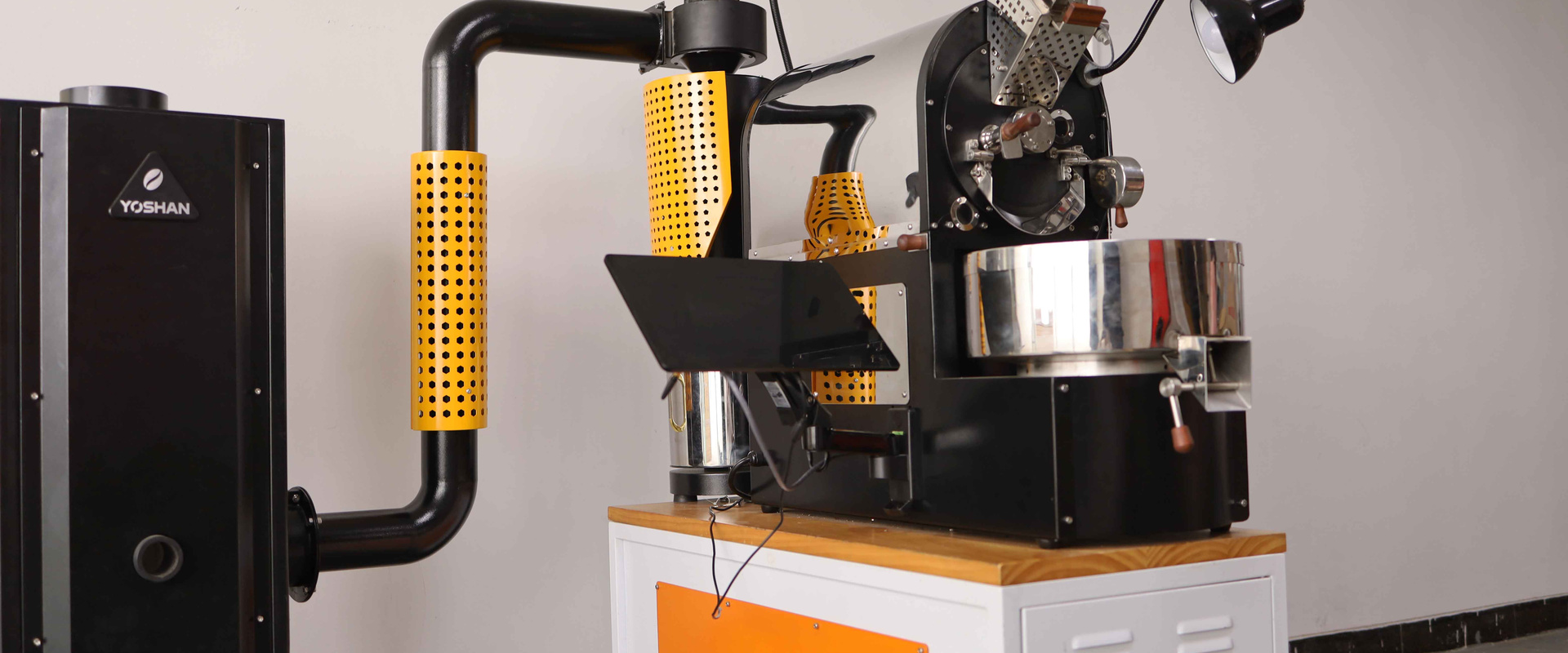
If you are buying a coffee roaster for Canada from overseas, two things will decide whether the project goes smoothly: the voltage your building actually has, and how your inspector treats a machine without Canadian certification. Most guides skip the second one because it is awkward. We will not — because finding out at the port is the worst possible time. Here is what to check, in the order it matters.
1. Voltage: Ask Your Electrician Before You Ask Us
Canada runs 120V single phase at 60 Hz for ordinary outlets, 208V or 240V for commercial single- and three-phase, and 600V three-phase in some industrial buildings. Which one comes into your space decides the build.
- Gas-heated roasters up to 15 kg need only power for the motor, fans and controls. We build them for 240V/60 Hz single phase as standard for Canada; 208V is possible on request. A 120V build for the smallest DY machines is available — tell us.
- Electric-heated machines draw more: a DY on electric heating pulls over 4 kW, which needs a dedicated circuit; an electric SD Pro needs three-phase.
- 600V sites need a transformer. Your electrician will know if this is you.
Send us the panel voltage, phase and frequency — not what you assume, what the electrician reads. It is the single most common reason a machine arrives and does not run. The voltage guide shows what to look for.
2. Certification: CE Is Not the Canadian Standard
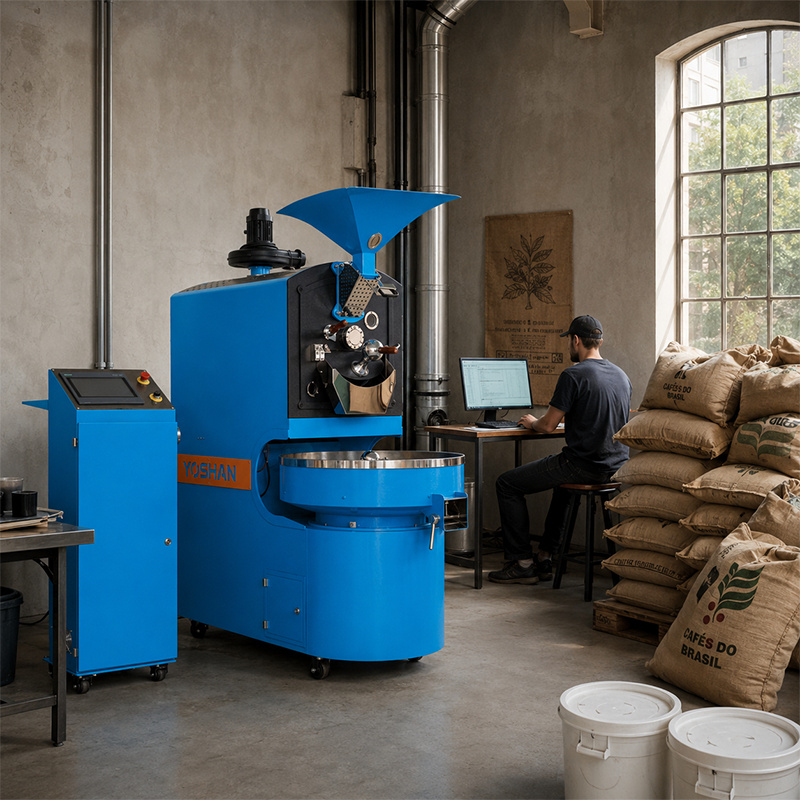
This is the part to read twice.
Our roasters carry CE marking for Europe. CE is not recognised as a Canadian approval. Canada expects gas and electrical equipment to be certified to Canadian standards — CSA, or an equivalent mark such as cULus or ETLc — before an inspector approves the installation. Very few roaster makers anywhere hold a full CSA design certification; the ones that do market it heavily, for good reason.
For a machine without it, the route is field evaluation: a recognised Canadian body inspects the installed machine on site — wiring, gas train, ignition, guarding — against the relevant standards, and issues a label that satisfies the inspector. It is a real cost and a real timeline, and it varies by province and by machine size. Budget for it, ask your gas inspector and electrical inspector what they will accept before you order, and get their answer in writing.
What we do to make that easier: we build to your specified voltage and gas, supply the wiring diagram, gas train schematic and CE technical file that the evaluator will ask for. What we will not do is tell you it is a formality. It is not.
Field Evaluation in Practice: Two Labels, Not One
A gas-heated roaster in Canada is two pieces of equipment to an inspector — an electrical machine and a gas appliance — and field evaluation covers them under two different codes. Knowing that before you book the evaluator saves a second visit.
- Electrical — SPE-1000. The evaluator checks the wiring, enclosure, overcurrent protection and that the components inside — contactors, breakers, the PLC power supply — carry marks recognised in Canada, then witnesses the machine run. The result is a serialised label on the machine, per unit, with no annual fee.
- Gas — CSA B149.3. A separate assessment of the gas train: valves, regulator, ignition and the safety devices — flame failure, pressure switches — with a function test of each. The licensed gas fitter's installation is checked at the same time.
The recognised bodies (CSA Group, UL Solutions, Intertek and others) can do both at the installation site. Costs are quoted per job and depend on the machine size and your province; plan on a four-figure sum and a few weeks from booking to label, and get the quote when you have the wiring diagram, not after the crate lands.
Two things shorten the process. First, specify at order that the electrical components should carry North American recognised marks where available — we can build to that on request, and it removes the most common finding. Second, send the evaluator our wiring diagram, gas train schematic and CE technical file before the visit so they arrive knowing the machine. We have supplied machines through this process; the ones that passed first time were the ones where the evaluator was booked before the ship sailed.
3. Gas: Natural Gas or Propane
Most Canadian shops have piped natural gas; rural sites and some leased units run on propane. The burner is jetted differently for each, so tell us which at order. If you may switch later, say so — a jet change and re-tune is straightforward if it is planned.
Gas installation must be done by a licensed gas fitter, and that fitter's sign-off is part of what the inspector looks at. Involve them before the machine ships.
4. Two Cold-Climate Details Most Guides Skip
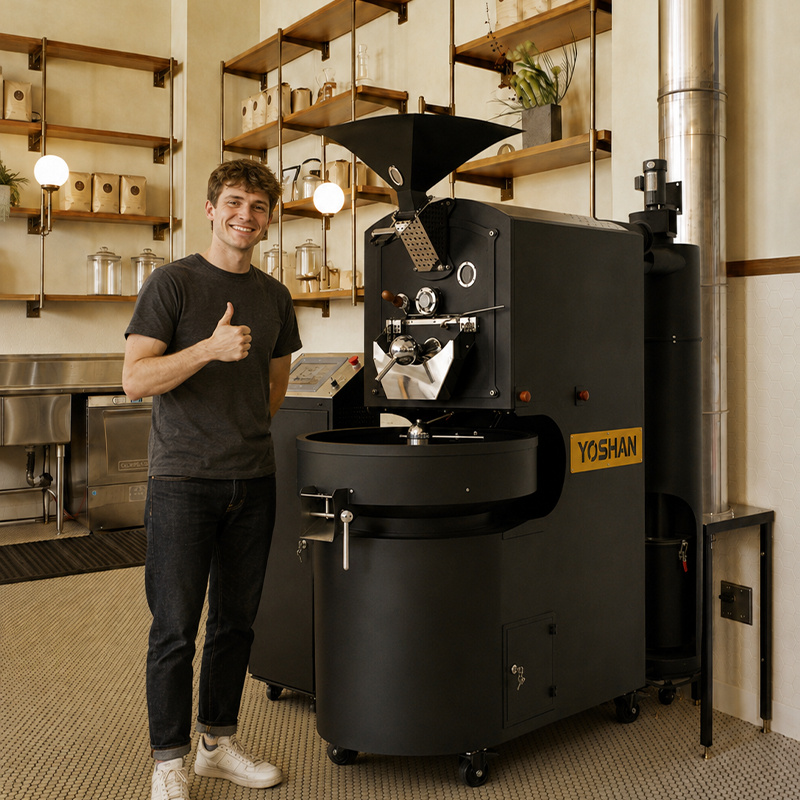
Exhaust in winter. A duct that runs through an unheated space or a long outside run will condense roasting vapour into tar. Keep the run short, insulate it, slope it so condensate drains back, and clean it more often in winter. The ventilation guide covers duct sizing.
Make-up air. A sealed, well-insulated Canadian building starves the burner and the exhaust fan of air in winter. You need a make-up air path — a louvre or a ducted inlet — sized for the exhaust volume. Your HVAC contractor can specify it; do it before the first cold snap, not after the first smoky afternoon.
5. Shipping and Customs
Sea freight lands at Vancouver for the west and Montreal or Halifax for the east, then rail or truck inland. Count several weeks port to port, plus clearance. You will need a business number for import, a customs broker for the entry, and the HS code for a coffee roaster to confirm the duty rate — it is generally low on food-processing machinery, but confirm it. GST/HST applies on import and is recoverable for a registered business. The shipping guide has the sequence and documents.
Choosing the Machine
Once voltage, certification and gas are settled, sizing is the same as anywhere: start from the kilos you sell in a week. For a cafe roasting its own coffee, the SD-3 (USD 4,599) or a DY-2 (USD 3,399) on 240V; for a cafe plus wholesale, the SD-6 Pro or YS-6 (USD 12,999 with loader / USD 7,499). Prices are ex-works in USD; add freight to Vancouver or Montreal, duty, GST/HST and the field evaluation — the price guide lists every model. The sizing guide walks through it. Quebec buyers will find the same guidance in French in our torréfacteur guide.
Frequently Asked Questions
Do you support in French for Quebec?
Yes — the manual and wiring diagram in French, the torréfacteur guide for the buying basics, and support calls in French with our team translating on the call where needed. Quebec buyers should also send us their supply reading, because 120 V single phase and 600 V three-phase are both common there and the build differs; the field evaluation is booked through the same recognised bodies as elsewhere in Canada.
Which recognised bodies do field evaluations, and how do I book one?
CSA Group, UL Solutions and Intertek among others; you book directly, give them the machine description and our wiring diagram and gas schematic, and they quote a job at your site. Book when you have the drawings, not when the crate lands — the weeks between are the lead time — and ask whether they can do the electrical and the gas assessment on the same visit.
Will a Canadian insurer cover a field-evaluated machine?
Yes: the serialised label a recognised body applies is what the insurer and the municipal inspector are looking for, and it is the same thing a CSA-certified appliance carries in a different form. Keep the evaluation report with the CE declaration and the gas fitter's sign-off in one file; that file is the difference between a five-minute inspection and a difficult one.
Can I run a small roaster on 120 V while the gas approval is pending?
A gas-heated DY-1 or DY-2 built for 120 V runs its motors and controls on an ordinary circuit, but the burner still needs the gas fitter's sign-off before you light it, so the answer is no for gas. An electric DY-2 on a dedicated 240 V circuit needs only the electrical assessment, which is why some cafes in gas-restricted buildings start electric; the gas vs electric guide covers the trade.
How do the prices compare with a Canadian-certified machine?
Add the evaluation quote, the freight and the taxes to our ex-works figure and put it beside a North American maker's delivered price, which carries the certification inside it. On a 6 kg machine the gap after all of that is usually still several thousand dollars; on a 1–2 kg machine it narrows, because the evaluation fee is the same size whatever the drum. Do the sum with the evaluator's quote in hand rather than assuming either way.
Final Thoughts
A coffee roaster for Canada is a straightforward import once the voltage is confirmed, the gas is specified and you have a clear answer from your inspector on certification. We build to Canadian supply, provide the documents for field evaluation, and tell you the truth about what that involves. Send us your electrician's reading and your city and we will quote a Canada-ready machine. Get a quote.
Get a Quote → WhatsApp +86 184 0771 4607Last updated: September 17, 2026
Pingback: Torréfacteur de Café Professionnel : Voltage, Gaz, Capacité | Yoshan