
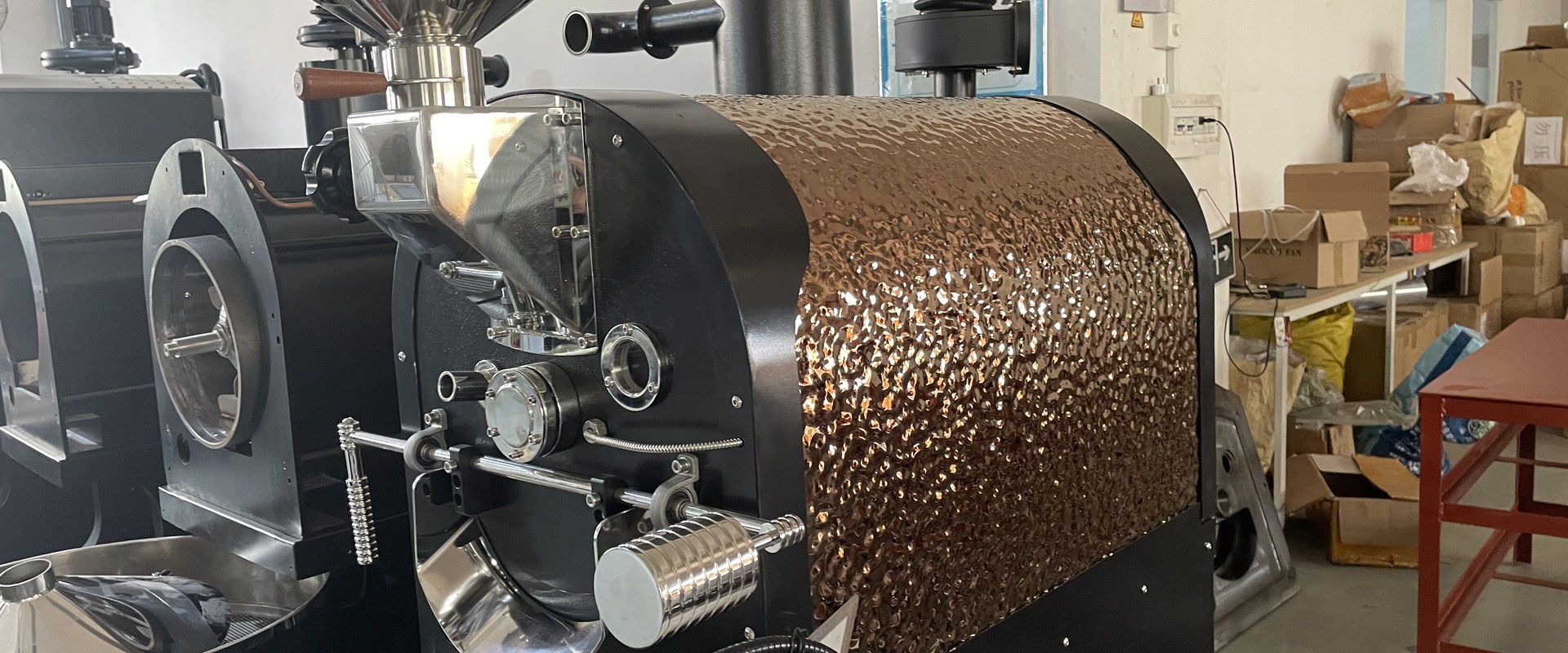
Roasting for other brands looks like roasting your own with more kilograms through the same machine. It is not. A private label roastery is a changeover business: every client means a different coffee, profile and bag, and a customer who notices if any of the three drifts. The equipment that makes money is the equipment that makes switching fast, safe and repeatable. This guide sets out what that is, how to size it, and the process behind it.
What private label actually demands of a roastery
Three things distinguish contract work from roasting your own line.
Repeatability under scrutiny. Your own customers taste your coffee; a private label client compares this month's delivery with last month's and with the approved sample. Drift that a roastery would absorb in its own range is a complaint in contract work.
Frequent changeovers. A roastery with six clients might roast six coffees, six profiles and six pack formats in a day. Every switch is a chance for a mistake — the wrong profile, the wrong bag, cross-contamination of a decaf — and every switch costs time the client is not paying for.
Unfamiliar green coffee. Clients often supply or specify their own green. You do not know its history, its moisture, or whether it was cleaned. Your machine does.
The equipment list follows directly from those three.
The equipment that makes changeover work
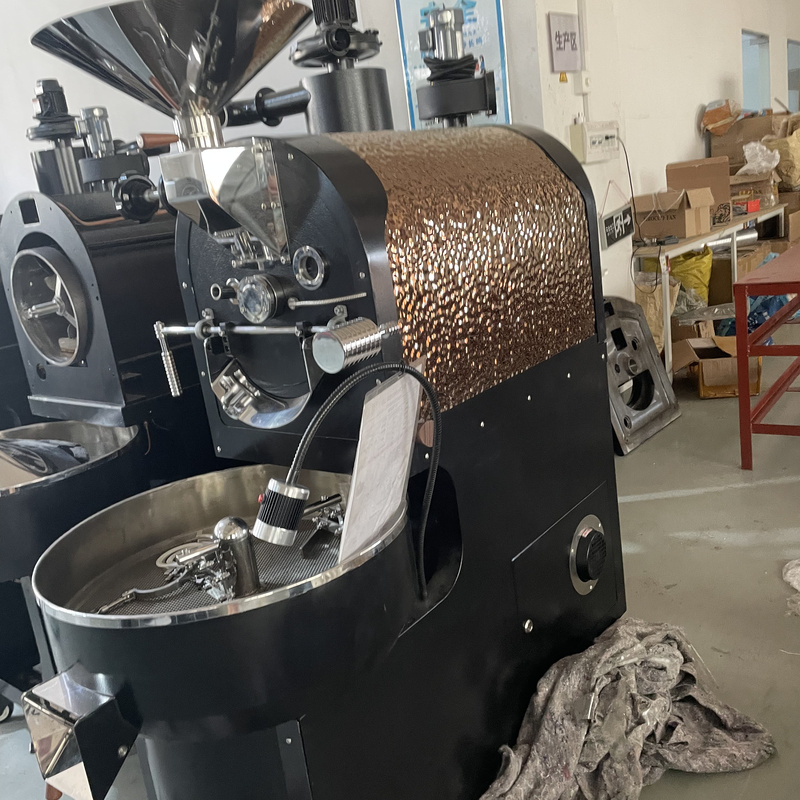
A roaster with stored profiles
The core requirement is that a client's approved profile can be recalled exactly, months later, by whoever is on shift. That means a machine with a profile system that stores gas, airflow and drum speed per profile and replays them — with a between-batch protocol run the same way every time so the replay starts from the same thermal state.
For contract work we recommend the PLC control level: our SD Pro fully automatic roasters store one profile per client coffee and switch between manual mode for development and automatic mode for production. The reasoning is in manual, semi-automatic or fully automatic coffee roasters — automation buys consistency across operators, which is exactly what a client is paying for.
A destoner
When the green coffee is yours, you know its cleanliness. When it is a client's, you do not. A stone or a nail from a client's lot that damages your drum is your downtime, and a stone in a client's retail bag is your reputation. A destoner sized to your batch is not optional in contract roasting — see coffee destoners and when a roastery needs a destoner, loader or afterburner.
Packaging that changes over quickly
Packaging is where contract roasteries lose the most time. Each client has a bag, a weight, a label. A filling machine with stored weight presets and a sealer that handles different bag materials without re-setting turn a thirty-minute changeover into five. Our coffee packaging equipment guide covers fillers and sealers by throughput; for contract work, pick the filler with the most presets, not the fastest.
A sample roaster and a cupping bench
Every client relationship starts with samples and every complaint ends with one. A sample roaster lets you develop a client's profile on 200–500 g before committing a full batch, and a cupping bench with retained samples from every production run lets you settle "this is not the same as last month" with evidence rather than opinion. Retain a sample from every batch, labelled with client, date and profile, for at least the shelf life of the product. See cupping lab and quality control.
Green storage with separation
Client-owned green coffee must be stored separately, labelled, and traceable. That is a layout and a discipline question as much as an equipment one: bins or racking with clear client allocation, and a stock record that shows what is held for whom. Conditions are in green coffee storage.
Sizing: count clients, not kilograms
Contract capacity is not "how many kilograms can the machine roast" but "how many clients can you serve on time". The two differ because changeovers consume capacity.
A working approach:
- List each client's weekly roasted volume and convert to green with the roast loss — divide by 0.85 for medium, 0.80 for dark. The arithmetic is in coffee roasting weight loss.
- Divide each client's green volume by your batch size to get batches per client per week. Round up — a client needing 1.3 batches gets 2, because you do not blend clients in a drum.
- Add a changeover allowance per client per session: cleaning between a dark and a light, a decaf purge, a packaging reset.
- Sum the batches and the changeovers and compare with the batches your machine and shift can deliver after preheat and protocol time.
The rounding in step two is what surprises new contract roasteries: ten small clients at one batch each cost more capacity than one client at ten batches, even at the same total weight. It also argues for a batch size matched to your typical client's order, not to your total volume — a 6 or 12 kg machine serving ten small brands is often more profitable than a 30 kg machine running half-charges for each. Our batch size guide covers minimum and maximum charges by machine.
Minimums matter for the same reason. Most contract roasteries set a minimum order — commonly around a full batch, or 20 kg a week and upward — because below that the changeover costs more than the roasting earns.
The process that holds it together
Equipment makes changeover possible; process makes it reliable. The minimum set:
- One profile record per client coffee, approved by the client against a sample, stored on the machine and on paper, with roast loss and colour recorded.
- A batch sheet for every roast: client, coffee, profile, green weight, roasted weight, loss, operator. This is what you produce when a client questions a delivery.
- A changeover checklist between clients: destoner emptied, cooling tray cleared, packaging filler reset and verified with a test weight, labels confirmed.
- Retained samples from every batch.
- Green stock records by client.
None of this is sophisticated. All of it is what separates a roastery that keeps contract clients from one that loses them after the second complaint.
Where the machine choice lands
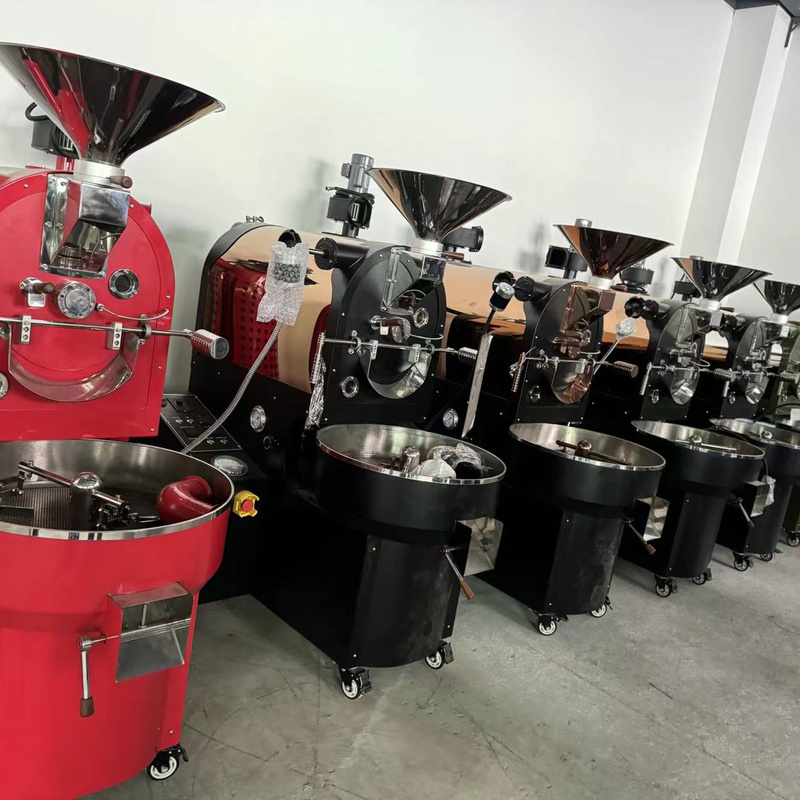
For a roastery adding contract work to an existing operation, the usual path is a second, automated machine sized to typical client orders, with the existing machine kept for house coffees and development. For a roastery built around contract work from the start, a PLC production roaster in the 12–30 kg range with destoner, loader and packaging specified together — our SD Pro lines from 12 kg upward ship as configured sets — is the configuration most of our contract customers settle on.
FAQ
What equipment do I need to roast coffee for other brands?
A roaster with stored, replayable profiles so each client's coffee is repeatable across operators; a destoner, because client green is of unknown cleanliness; packaging with quick changeover between bag formats; a sample roaster and cupping bench for approvals and disputes; and separated, traceable green storage.
What size roaster is best for contract roasting?
One matched to your typical client's order, not your total volume. Clients cannot share a drum, so ten small clients at one batch each need more capacity than one client at ten batches. A 6–15 kg machine serving many small brands is often more efficient than a large machine running half-charges.
Do I need an automatic roaster for private label work?
It is strongly advisable. Clients compare every delivery with the approved sample, and a stored profile replayed from a consistent between-batch state is how that consistency survives shift changes and staff turnover. Manual roasting can match it with one skilled person; automation removes the dependence on that person.
What minimum order should a contract roastery set?
Commonly a full batch or around 20 kg a week and upward. Below that, the changeover — cleaning, profile switch, packaging reset — costs more than the roasting earns. Set the minimum from your changeover time, and offer smaller clients a shared roast day at a higher rate.
How do I handle a client's own green coffee?
Store it separately and labelled, record it by client, destone it before roasting, check its moisture on arrival, and roast a sample before the first production batch. Treat every client lot as unknown until your own machine has proven it.
How should I record contract roasts?
One batch sheet per roast with client, coffee, profile, green and roasted weight, loss, operator and date, plus a retained sample from every batch kept for the product's shelf life. That record is what answers a client's question about consistency with evidence rather than memory.
Can I add contract roasting to an existing roastery?
Yes, and the usual route is a second machine — automated, sized to typical client orders — while the existing roaster keeps house coffees and development. Sharing one machine between your own line and clients works at small scale but changeover cost rises quickly as clients are added.
Final Thoughts
Contract roasting is won on changeover: stored profiles, a destoner, quick-reset packaging, retained samples and clean records. Size the machine to your typical client's batch, count clients rather than kilograms, and set a minimum that covers the switch. Our SD Pro lines are built for exactly this, with destoner, loader and packaging specified as a set — tell us your client list and we will size it.
Request a factory-direct quote or message us on WhatsApp at +86 184 0771 4607.
Get a Quote → WhatsApp +86 184 0771 4607Last updated: September 17, 2026